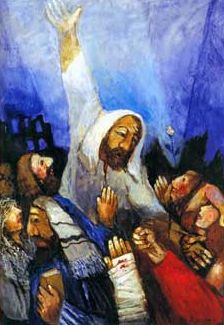
Nothing is Impossible

Fourth Sunday in Ordinary Time. January 31, 2016 [Luke 4:21-30]

“Isn’t this the son of Joseph? (Luk 4:22)”

‘Impossible’ is not part of Jesus’ vocabulary. He multiplied the bread and filled the hungry multitude. He walked on water and calmed the storm. He healed the woman with hemorrhage, opened the eyes of Bartimaeus, and expelled the demons. He forgave the adulterous woman and challenged the legalism of the authorities. He raised Lazarus and Himself resurrected. Not even death can limit Him.

Yet, ‘impossible’ and ‘limitation’ seemed to be the mindset of the people of Nazareth. When they saw Jesus came home and proclaimed the Word of God with authority, the Nazarene amazement was short-lived and they turned the tide against Jesus. One might say, ‘That’s impossible! He is Jesus, the son of the poor carpenter Joseph. He is lowly, ordinary, and incapable. Who does he think himself? God?’ Grace was just around the corner, but they closed their hearts, limited their possibilities, and hampered their own growth. Not only they boxed themselves in narrow-mindedness, they also tried to impose their limitations on Jesus. When Jesus refused to be placed under their closed-mindedness, they attempted to get rid of Jesus. Thus, nothing much happened in Nazareth.

Jesus further explained that this refusal to God’s grace had been a perennial problems of Israel. The great prophets Elijah and Elisha could have done mighty deeds for Israel, but they did not because they were rejected by their own people. Now, this mentality of putting limits to oneself does not solely belong to the Israelites. Unconsciously, this attitude may creep into our lives. We may listen to the Word of God every Sunday in the Eucharist, but do we allow the very Word to be fulfilled in our lives? Is Sunday Worship all about feeling-good experience, and yet going home, we act as if nothing happens to us? We are celebrating the Jubilee Year of Mercy, but does it help us being more merciful and compassionate? Sometimes we are like ‘Shoe’, the main character in old comic strip Shoe by Jeff MacNelly. When Shoe is pitching in a baseball game, in the conference in the mound, his catcher says, “You’ve got to have faith in your curve ball.” “It’s easy for him to say,” grumbles Shoe. “When it comes to believing in myself, I am an agnostic.”

A friend of mine did the incredible in her young age. She finished her doctorate at the age of 27 in Japan. What makes her more incredible is she turned down lucrative offers of big companies and volunteered as elementary school teacher in a far-flung area. She is currently serving the people of Nunukan, North Borneo Province, at the border of civilization. Once she texted me and told how difficult it was to teach, especially when people do not really appreciate yet the importance of education. I was speechless, having no word of consolation, but she immediately replied, ‘It is difficult to love.” Her answer made me smile since I know that despite her troublesome situations, she never stops loving. In the Annunciation, archangel Gabriel said to Mary, “For God, there is nothing impossible.” We shall not put limit to God’s grace, to our own growth in faith and to our ability to love. When we believe and open our hearts to God’s grace, the ‘impossible’ things begin to happen in our lives.

Br. Valentinus Bayuhadi Ruseno,OP

Tidak Ada yang Mustahil

Minggu Biasa ke-4. 31 Januari 2016 [Lukas 4:21-30]

“Bukankah Ia ini anak Yusuf? (Luk 4:22)”

Kata ‘mustahil’ tidak ada di dalam kosa kata Yesus. Dia melipatgandakan roti dan memberi makan kepada ribuan orang yang lapar. Dia berjalan di atas air dan menenangkan badai. Ia menyembuhkan wanita dengan perdarahan, membuka mata Bartimeus, dan mengusir setan. Dia mengampuni perempuan yang berzina dan menantang legalisme dari pihak berwenang. Dia membangkitkan Lazarus dan Dia sendiri bangkit dari kematian.

Namun, kata-kata seperti ‘tidak mungkin’ dan ‘tidak bisa’ tampaknya menjadi pola pikir orang-orang Nazaret. Ketika mereka melihat Yesus datang dan memberitakan Firman Tuhan dengan otoritas, orang Nazaret heran dan mereka mulai menyerang Yesus. Mereka mungkin berkata, Mustahil! Dia adalah Yesus, anak dari Joseph, tukang kayu miskin. Dia itu biasa-biasa saja dan tidak memiliki kemampuan. Memangnya dia pikir dirinya siapa? Tuhan?’ Rahmat Tuhan ada di depan mata mereka, tapi mereka menutup hati mereka, membatasi kemungkinan mereka untuk tumbuh dan berkembang. Tidak hanya mereka mengkotakan diri di dalam pikiran yang sempit, mereka juga mencoba untuk memaksakan keterbatasan mereka pada Yesus. Ketika Yesus menolak untuk dibatasi oleh pikiran mereka yang sempit, mereka berusaha untuk menyingkirkan Yesus. Oleh karena ini, Yesus tidak berbuat banyak di kampung halaman-Nya sendiri.

Yesus sendiri menjelaskan bahwa penolakan akan rahmat Tuhan telah menjadi masalah kuno bangsa Israel. Nabi-nabi besar seperti Elia dan Elisa bisa saja melakukan perbuatan-perbuatan besar bagi Israel, tetapi mereka tidak melakukannya karena mereka ditolak. Ironisnya, justru orang-orang bukan Israel yang malah percaya dan menerima rahmat dari mereka. Sekarang, mentalitas yang membatasi ini bukanlah milik orang Israel semata. Tanpa kita sadari, mental kerdil ini dapat merayap masuk ke dalam hidup kita. Kita mungkin mendengarkan Sabda Tuhan setiap hari Minggu dalam perjamuan Ekaristi, tetapi apakah kita membuka diri terhadap Firman untuk terpenuhi di dalam hidup kita? Kita bernyanyi dan memuji Tuhan pada Sunday Worship, tetapi apakah saat kita pulang, kita bertindak seolah-olah tidak ada yang terjadi pada kita? Tahun ini, kita merayakan Tahun Yubileum Kerahiman Ilahi, tapi apakah ini membantu kita menjadi lebih berbelas kasih kepada sesama? Kadang-kadang kita seperti ‘Shoe’, tokoh utama dalam komik ‘Shoe’ oleh Jeff MacNelly. Ketika Shoe akan menjadi pelempar bola di pertandingan bisbol, teman satu timnya mengatakan, Kamu harus percaya pada lemparan bolamu yang melengkung. Sangat mudah baginya untuk mengatakan itu,” Shoe menggerutu. “Ketika aku harus percaya pada diri sendiri, aku adalah seorang agnostik.”

Seorang teman baik saya melakukan hal yang luar biasa di usia muda. Dia menyelesai pendidikan S3 pada usia 27 di Jepang. Apa yang membuat dia lebih luar biasa adalah ia menolak tawaran menggiurkan dari perusahaan besar dan memilih menjadi guru sukarelawan sekolah dasar di pedalaman. Dia saat ini melayani masyarakat di Nunukan, Provinsi Kalimantan Utara, di daerah perbatasan. Beberapa hari yang lalu dia mengirim pesan dan mengatakan betapa sulitnya untuk mengajar, terutama ketika orang tidak benar-benar menghargai betapa pentingnya pendidikan. Saya terdiam, tidak memiliki kata-kata penghiburan, tapi ia segera menjawab, Mengasihi itu sulit. Jawabannya membuat saya tersenyum karena saya tahu bahwa meskipun situasi sungguh sulit, dia tidak putus asa dan tidak pernah berhenti mengasihi. Dalam Kabar Sukacita, malaikat Gabriel mengatakan kepada Maria, Sebab bagi Allah tidak ada yang mustahil (Luk 1:37).” Diciptakan dalam citra Allah, kita tidak akan membatasi kasih karunia Allah, pertumbuhan kita di dalam iman dan kemampuan kita untuk mengasihi. Saat kita percaya dan membuka diri kita pada rahmat, hal-hal luarbiasa yang kita pikir ‘mustahil’ sungguh akan terjadi di dalam hidup kita.

Frater Valentinus Bayuhadi Rusneo, OP

Melawan Fundamentalisme

Minggu ketiga di Masa Biasa. 24 Januari 2016 [Lukas 1:1-4; 4:14-21]


“setelah aku menyelidiki segala peristiwa itu dengan seksama dari asal mulanya, aku mengambil keputusan untuk membukukannya dengan teratur bagimu, Theophilus (Luk 1: 3)”


Fundamentalisme adalah keputusan kita untuk memeluk sebuah pandangan atau paham sebagai satu-satunya yang benar dan akibatnya, yang lain dianggap sebagai salah dan bahkan harus dimusnahkan. Meskipun kita dengan mudah mengasosiasikan fundamentalisme dengan agama, fundamentalisme dapat terjadi juga di berbagai aspek dari masyarakat. Ada fundamentalisme agama, politik, ilmu pengetahuan/science dan bahkan fundamentalisme ekonomi. Science tentunya baik dan bermanfaat bagi umat manusia, tetapi ketika beberapa orang membuat science, terutama teori-teori tertentu, sebagai satu-satunya jalan untuk mengetahui kebenaran, maka kita memiliki fundamentalisme. Ekonomi sungguhnya diperlukan bagi masyarakat untuk berfungsi, tetapi ketika kita melihat keuntungan sebagai satu-satunya hal yang penting dan bahkan mengorbankan nyawa manusia dan lingkungan hidup untuk ini, maka kita telah jatuh ke dalam fundamentalisme.

Hari ini, kita mendengarkan awal Injil menurut Lukas. Dia sedikit berbeda dari penginjil lain karena ia sengaja menempatkan di prolognya metodologi petulisan Injilnya: aku menyelidiki segala peristiwa itu dengan seksama dari asal mulanya, aku mengambil keputusan untuk membukukannya dengan teratur.” Mungkin karena Lukas, sebagai tradisi mengatakan, adalah seorang dokter dan sebagai dokter, ia dilatih untuk bekerja secara teratur dan menggunakan metode ilmiah yang tersedia pada zamannya. Dalam Lukas, kita bisa menemukan bahwa kisah Yesus ditulis berdasarkan penelitian menyeluruh dan prosedur yang ketat dari waktu itu. Singkatnya, Lukas menulis tentang iman dengan metode ilmiah. Yesus lahir dari seorang wanita, namun Dia dikandung oleh kuasa Roh Kudus. Ia menderita dan wafat, namun ia juga bangkit. Dia benar-benar manusia, namun juga benar-benar Allah. Injil terlahir sungguh untuk mencabut setiap bentuk fundamentalisme dari jiwa Theophilus.

Saat ini saya belajar di Institute of Preaching di Quezon City, Metro Manila, dan di sana, kami belajar bagaimana mewartakan iman dibantu oleh berbagai ilmu pengetahuan seperti retorika, hermeneutika (studi penafsiran), psikologi dan banyak lagi. Kitab Hukum Kanonik telah mengatur bahwa setiap imam masa depan harus mengambil setidaknya empat tahun Teologi. Teologi, menurut definisi yang sederhana, adalah ‘science of God’. Kita mencoba untuk terjun ke dalam misteri Allah melalui berbagai metode ilmiah. Dengan demikian, pelatihan imam yang saya terima adalah untuk mengusir segala bentuk fundamentalisme keagamaan dalam diri saya.

Di jantung Ordo Dominikan adalah Kebenaran. Dan St. Thomas Aquinas, seorang Dominikan dan salah satu pemikir terbesar, telah menunjukkan kepada kita bahwa Kebenaran ini dapat ditemukan juga di filsuf pagan seperti Plato dan Aristoteles, pada sarjana Yahudi dan Muslim, dan teolog lain yang memiliki pandangan yang bertentangan. Dalam opus-nya, Summa Theologiea, kita dapat dengan mudah melihat bagaimana ia dengan nyaman dan teratur mengumpulkan semua pandangan, baik yang pro dan contra, menjadi kesatuan yang indah. St. Thomas mengajarkan kita untuk tidak memonopoli kebenaran, tetapi dengan kerendahan hati, belajar juga dari orang lain, terutama mereka yang berbeda dari kita.

Sekarang, kita mungkin menyadari bahwa kita tidak merangkul absolutisme agama dan pandangan ekstrim, tapi fundamentalisme masih bisa merambat masuk ke dalam kehidupan kita sehari-hari. Ketika kita menjadi suami yang keras kepala yang berpikir bahwa kita selalu benar, ketika kita menjadi orang tua yang mendominasi dan yang menolak untuk mendengarkan anak-anak kita, kita adalah fundamentalis. Ketika seorang imam bertindak seperti raja dan semua umatnya harus mematuhi, ketika suster pimpinan berprilaku seperti ratu dan memperlakukan lainnya seperti pelayannya, ini adalah fundamentalisme. Kita harus ingat bahwa kita Katolik dan menjadi seorang Katolik fundamentalis sebenarnya kontradiksi. Katolik berarti universal, pria dan wanita bagi semua orang, dan kita tidak boleh dibatasi oleh bentuk-bentuk fundamentalisme.


Frater Valentinus Bayuhadi Ruseno, OP

Against Fundamentalism

Third Sunday in the Ordinary Time. January 24, 2016 [Luke 1:1-4; 4:14-21]

“I too have decided, after investigating everything accurately anew, to write it down in an orderly sequence for you, most excellent Theophilus (Luk 1:3)”

Fundamentalism is man’s decision to hold a particular view as the only one that is right and consequently, the others are considered as dissenting views and even dead wrong. Though we easily associate fundamentalism with religions, fundamentalism can take place also in other realms of our human society. There are religious, politic, scientific and even economic fundamentalism. Science doubtless is good and beneficial for humankind, but when some people make science, especially certain theories, as the only way to know the truth, then we have fundamentalism. Economics is necessary for human society to function, but when people consider profit as the only thing that matters and even sacrifice other human lives and environment for this, then we have fundamentalism.

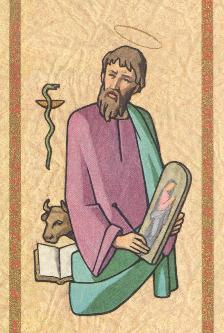
Today, we listen to the beginning of the Gospel according to Luke. He slightly differed from other evangelists because he intentionally placed in his prologue his methodology of writings: “investigating everything accurately anew, to write it down in an orderly sequence.” It may be because Luke, as the tradition says, was a physician and being one, he was trained to work in orderly fashion and use the available methods and scientific tools in his own time. In Luke, we may discover that even the story of Jesus was written based on a thorough research and rigorous procedures of that time. In short, Luke comfortably wrote about faith in scientific manners. Jesus was born from a woman, yet He was conceived by the power of the Holy Spirit. He suffered and died, yet He also resurrected. He was truly divine, yet truly human. The Gospel was born precisely to uproot any fundamentalism in the heart of Theophilus.

I am currently studying at the Institute of Preaching in Quezon City, Metro Manila, and there, we learn how to preach our faith aided by various human sciences like rhetorics, hermeneutics (study of interpretation), psychology and more. The Code of Canon Law has legislated that every future priest shall take at least four years of Theology. Theology, by simple definition, is ‘science of God’. We try to plunge into the mystery of God through various scientific methods. Thus, my priestly training is to drive away any form of religious fundamentalism in me.

In the heart of the Dominican Order is the Truth. And St. Thomas Aquinas, a Dominican and one of the greatest Christian thinkers, has showed to us that event this Truth can be discovered in pagan philosophers like Plato and Aristotle, in Jewish and Muslim scholars, and other theologians who had opposing views. In his opus, Summa Theologiea, we can easily see how he comfortably and orderly gathered all the views, both against and for his main argument, into single unity. St. Thomas taught us not to monopolize truth, but with humility, to learn also from the others, especially those who are different from us.

Now, we may be aware that we don’t subscribe to any religious absolutism and extreme views, but fundamentalism still can creep in our daily lives. When we become stubborn husbands who think that we are always right, when we become domineering parents who refuse to listen to our children, those are fundamentalism. When a priest acts like a king and all his parishioners have to obey, when a sister superior behaves like an empress and treats other like her servants, these are fundamentalism. We must remember that we are Catholic and being a fundamentalist Catholic is actually contradiction in term. Catholic means universal, man and woman for all, and we must not be limited by any form of fundamentalism.

Br. Valentinus Bayuhadi Ruseno, OP

We Are Brave

Second Sunday in the Ordinary Time. January 17, 2016. [John 2:1-11]

“Woman, how does your concern affect me (Jn 2:4)?”

We desperately needs courageous people. Our world is torn by so many violence and evil deeds. Wars are raging in many nations. Millions are fleeing their homelands, and facing hunger, exhaustion and uncertainty of their future. Poverty consumes lives across the globe and forces people to horrendous human trafficking. The earth is getting warmer and this causes a tidal wave of destruction to all creatures. In desperation, the world needs brave people to bring a better tomorrow.

However, there is a subtle yet crucial distinction between courage and insanity. Some people called themselves ‘bold and fearless’ as they blew themselves up in Jakarta and shot people at random few days ago. Some people tag themselves as the ‘brave men of God’ as they slaughter the children and turn young women as their sex slaves in the Middle East and Africa. Others exalt themselves as the ‘fighters of freedom and choice’ by aborting innocent and defenseless babies in America and Europe. Yet, what is courage all about?

Today’s Gospel drives home a powerful message. The host was running out of wine. The servants were panicking. The lovely wedding was at the edge of embarrassment and disaster. That was a bad news. A brave woman came into the scene. She implored the Lord of Heaven to help the couple, but she was coldly denied. “Woman, how does your concern affect me?” Adding salt to the wound, this Lord of Heaven is her own Son. Yet, instead succumbing into despair, our mother showed us the true meaning of courage. She pushed herself to the limit and defied even God Himself to save the crumbling humanity. Jesus was moved by her courage and compassion, and the true God came out in the wedding of Cana. The first sign: the ordinary water was turned into the best wine. From Mary, we learn that courage is only genuine if it does not only push us to very limit of our existence but also it is for building up human society and the earth.

Some people, believing doing things in the name of God, destroy human lives and exploit the mother earth. Yet, Mother Mary has taught us even to ‘defy’ our false and poisonous conception of ourselves, of others and of God. The real courage is when we dare to plunge ourselves into the vast sea of human problems and refuse to oversimplify them into one-fit-all answer. It is pretty stupid and even blasphemous to say “God is the only solution and thus, everyone who does not follow our God, is as good as dead.” As we struggle to find the better ways of living in this earth, we join Mary in pushing our own limit of existence and in defying our little gods inside us. The world needs courageous people and it needs people who dare to sacrifice their ego for a better future of our earth.

Br. Valentinus Bayuhadi Ruseno, OP


Making Our Heavenly Daddy Proud

The Feast of the Baptism of the Lord. January 10, 2016 [Luke 3:15-16, 21-22]

“You are my beloved Son; with you I am well pleased (Luk 2:22).”

Why do we need to be baptized? There are two simple and obvious biblical reasons. The first point is that Jesus Himself chose to be baptized and second one is that before He ascended into heaven, He commanded baptism as the requirement of salvation (see Mark 16:16). Let us focus on the first one.

Some theological discussions have arisen due to this baptism of Jesus. Why did Jesus want to receive John’s baptism that signified the repentance of sins? Was Jesus a sinner who needed repentance? Surely no! Was John superior and more powerful than Jesus? Certainly not! Jesus is sinless and thus, baptism of John is inconsequential in this respect. So, why did Jesus insist to be plunged into water?

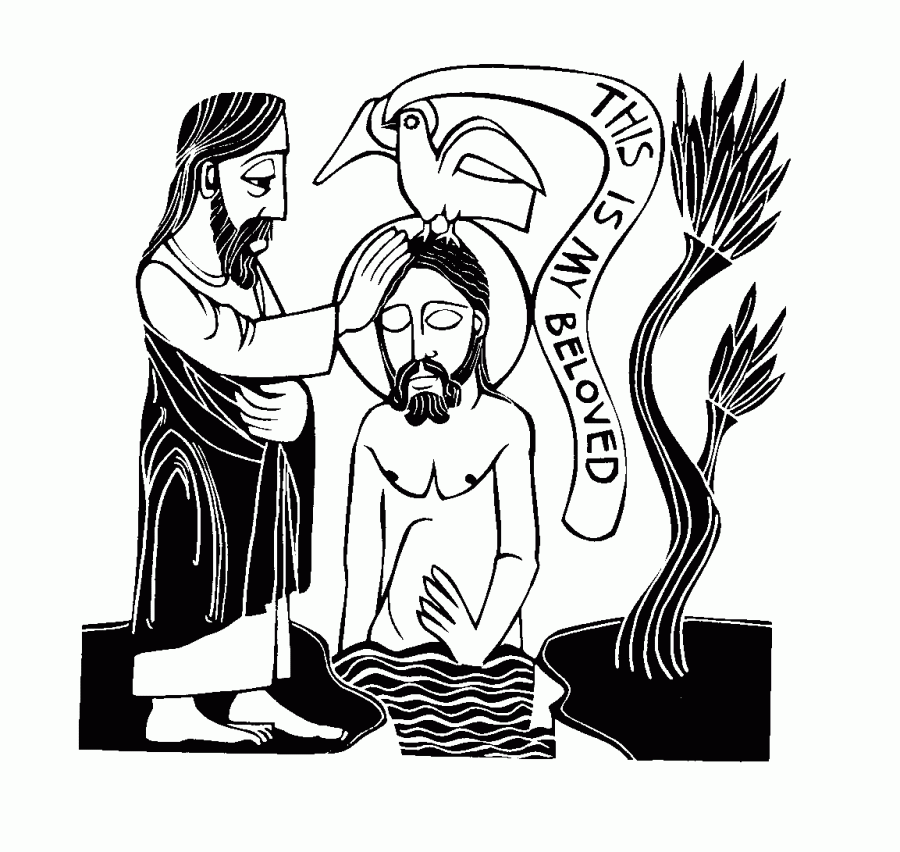
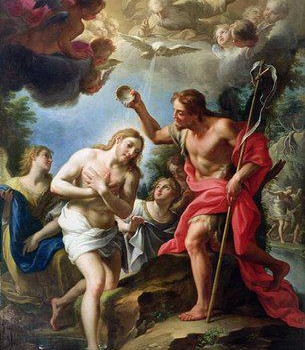
One possible reason is that Jesus wished to present to us the most significant effects of baptism. In today’s Gospel, we see that after Jesus came up from the Jordan River, the Holy Spirit immediately descended upon Him. If we follow also Jesus in baptism, we are assured that the Holy Spirit will also come upon us and grant His many gifts and blessings. The Holy Spirit particularly renders the salvific merit of Jesus’ death and resurrection to be efficacious in us. Thus, we are cleansed from sins, both original and actual.

After the descent of the Holy Spirit, Jesus heard the voice coming from heaven, “You are my beloved Son; with you I am well pleased.” This is the second effect of baptism: we are reborn to be the children of God. Like Jesus was proclaimed to be the Son of God, we share also in this glory. When the priest pours water upon our forehead or immerse us into water, all the angels in heaven rejoice exultantly because God embraces His newly born babies. Like an earthly father is exuberant to receive the good news of his newborn child, so too our heavenly Father is well pleased with us.

At birth, we were created in the image of God, and in baptism, we are re-created specifically in the image of the Son of God, Jesus Christ. As Christians, we have the supreme privilege to be called the children of God. And as the same sons and daughters of God, we gather into one community, one family with Christ as the head who is the firstborn. The community of the children of God is what we call the Church. In baptism, we receive a immediately bonus: Church’s membership.

Now, we can see the divine privileges being offered to us in baptism for free. Yet, grace is indeed free, but it is never cheap. If we read closely, after Jesus was baptized, the first thing He did was to pray. All the unique benefits of baptism only bear fruit in our lives if we persevere in faith and prayer. Nobody will believe us as the children of God, if we never pray and communicate with our Father in heaven. Everyone will jeer at us if we claim to be Christians, but we are never actively involved in the Church. Many will raise their eyebrows if we don’t know how to love and serve each other.

In the Feast of the Baptism of the Lord, Jesus calls us once again to be renew our commitment as the children of God and even go deeper into the life of prayer and faith. God the Father is well-pleased with us and now this our turn to make our heavenly Daddy proud.


Br. Valentinus Bayuhadi Ruseno, OP

Membuat Ayah Surgawi kita Bangga

Pesta Pembaptisan Tuhan. 10 Januari 2016 [Lukas 3:15-16, 21-22]

“Engkaulah Anak-Ku yang Kukasihi, kepada-Mulah Aku berkenan (Luk 2:22).”

Mengapa kita perlu dibaptis? Setidaknya ada dua alasan alkitabiah sederhana. Poin pertama adalah bahwa Yesus sendiri memilih untuk dibaptis dan yang kedua adalah bahwa sebelum Ia naik ke surga, Ia memaklumatkan bahwa pembaptisan sebagai secara keselamatan (lih. Markus 16:16). Mari kita fokus pada yang alasan yang pertama.

Beberapa pertanyaan teologis muncul tentang pembaptisan Yesus ini. Mengapa Yesus ingin menerima pembaptisan Yohanes yang menandakan pertobatan dosa? Apakah Yesus orang berdosa yang membutuhkan pertobatan? Tentunya tidak! Apakah Yohanes lebih unggul dan lebih kuat daripada Yesus? Tentu tidak! Yesus tidak berdosa dan dengan demikian, pembaptisan Yohanes adalah tidak relevan dalam hal ini. Jadi, mengapa Yesus bersikeras untuk dipermandikan?

Salah satu alasannya adalah bahwa Yesus ingin menunjukan bagi kita efek-efek paling signifikan dari pembaptisan kita. Dalam Injil hari ini, kita membaca bahwa setelah Yesus dibaptis di Sungai Yordan, Roh Kudus segera turun ke atas-Nya. Jika kita mengikuti Yesus juga dalam pembaptisan, kita yakin bahwa Roh Kudus juga akan turun atas kita dan memberikan banyak karunia dan berkat-Nya. Secara khusus, Roh Kudus menjadikan rahmat keselamatan yang dari wafat dan kebangkitan Yesus bermanfaat di dalam diri kita. Dengan demikian, kita dibersihkan dari dosa, baik dosa asal dan aktual.

Setelah turunnya Roh Kudus, Yesus mendengar suara yang datang dari surga, “Engkaulah Anak-Ku yang Kukasihi; dengan Anda Aku berkenan.” Ini adalah efek kedua dari pembaptisan: kita dilahirkan kembali sebagai anak-anak Allah. Seperti Yesus diproklamasikan sebagai Putra Allah dalam pembaptisan, kita berbagi juga dalam kemuliaan ini. Ketika imam menuangkan air pada dahi kita atau membenamkan kita ke dalam air, semua malaikat di surga bersukacita karena Allah merangkul putra-putri-Nya yang baru lahir. Seperti ayah duniawi yang riang menerima kabar baik karena anaknya yang baru lahir, demikian juga Bapa surgawi kita sungguh berkenan dengan kita di pembaptisan kita.

Saat kita dilahir, kita diciptakan menurut citra Allah, dan dalam pembaptisan, kita diciptakan kembali secara khusus di dalam citra sang Putra Allah, Yesus Kristus. Sebagai orang Kristiani, kita memiliki hak istimewa yang amat luhur yakni dipanggil sebagai anak-anak Allah. Dan sebagai putra dan putri Allah Bapa yang sama, kita berkumpul dalam satu komunitas, satu keluarga dengan Kristus sebagai kepala dan anak yang sulung. Komunitas anak-anak Allah ini adalah yang kita sebut sebagai Gereja. Jadi, dalam pembaptisan, kita menerima bonus: keanggotaan Gereja.

Sekarang, kita dapat melihat hak ilahi yang ditawarkan kepada kita dalam pembaptisan dengan cuma-cuma. Namun, kita harus ingat kasih karunia memang diberikan secara cuma-cuma, tetapi tidak berarti murahan. Jika kita membaca dengan seksama, setelah Yesus dibaptis, hal pertama yang Dia lakukan adalah berdoa. Semua efek-efek unik pembaptisan hanya berbuah dalam hidup kita jika kita bertekun dalam iman dan doa. Tak seorang pun akan percaya kepada kita sebagai anak-anak Allah, jika kita tidak pernah berdoa dan berkomunikasi dengan Bapa kita di surga. Semua orang akan mengejek kita jika kita mengaku Kristiani, tapi kita tidak pernah terlibat aktif di Gereja. Banyak yang akan mengangkat alis mereka jika kita tidak tahu bagaimana mengasihi dan melayani sesama.

Dalam Pesta Pembaptisan Tuhan, Yesus memanggil kita sekali lagi untuk menjadi memperbaharui komitmen kita sebagai anak-anak Allah dan bahkan masuk lebih dalam ke kehidupan doa dan iman. Allah Bapa sungguh berkenan kepada kita dan sekarang giliran kita untuk membuat Ayah surgawi kita bangga.


Frater Valentinus Bayuhadi Ruseno, OP

Shocking Appearance of the Lord

The Epiphany of the Lord. January 3, 2016 [Mathew 2:1-12]

“They were overjoyed at seeing the star, 11 and on entering the house they saw the child with Mary his mother (Mat 2:10-11).”

Today we are celebrating the Epiphany of the Lord. The word Epiphany comes from the Greek word ‘epiphananie’, meaning ‘appearance’. Therefore, today is also known as the feast of the manifestation of the Lord. This celebration is considered to one of the oldest and most important because the Baby God invited not only the Jews, but also the Gentiles, represented by the three Magi, to visit and finally worship Him. In His earliest appearance, Jesus brought light to all the nations.

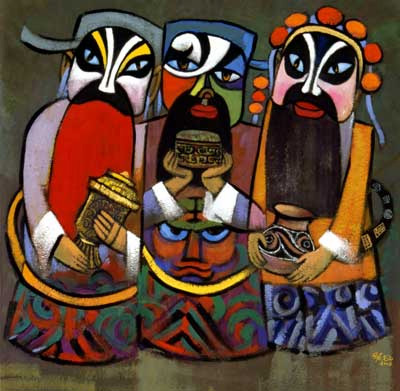
One little question may linger: why did the three Magi from the East follow the star? Their journey was based on an ancient belief that the birth of a great king was signified by the appearance of new star in the sky. Yet, we are never sure what ‘star’ the Magi actually saw. Was it a comet, a supernova, unusual constellation, a planet, or supernatural light? One thing we are sure of. This star possessed a greatest importance, that Gaspar, Balthazar and Melchior abandoned the comfort of their homeland, traveled thousand miles westward and faced all the dangers and uncertainties.

Yet, just like many Israelites who expected a Messiah-King, the first thing the Easterners did was to visit a palace. And just like the entire Jewish nation, they were mistaken. They discovered Herod who did not wish to have another ruler except himself and the Jewish religious leaders who did not see the star coming. There was no infant-King in that strong and richly decorated castle.

The experience of epiphany shocked everyone. The Magi, however, reacted differently from king Herod and the high priests. While Jewish leaders ignored the divine guide, and selfish Herod secretly conspired the murder of the baby, the three good men chose to learn from their mistake and move on in their journey. In fact, going away from the center of power and pride was a liberating and joyful experience for the three. Re-directing their expectation and re-aligning with the star, they finally found the baby Jesus. Yet again, the noblemen from the East were puzzled to see the great King at the most unworthy place. The Prince of Heaven was the son of a poor carpenter and a simple woman from an unassuming village, Nazareth. The Creator was born among lowly men, animals and plants at the unhygienic manger. Despite all these unexpected events, the old good men found overjoyed because they saw God. Indeed, our God is the God of surprises.

Epiphany or the appearance of the Lord in our lives will certainly jolts us, shatters our expectations and blow away our plans. Are we going to be like the Jewish leaders who dismiss the presence of God in the unlucky events? Are we going to be like Herod who was totally upset and force things according to his will? Or, like the Magi, we allow ourselves to be surprised and to embrace it as the moment of grace?

When I asked a friend on what his plans and expectations on 2016, he replied, “I don’t plan, but God plans for me!” Perhaps, in the same spirit, the best answer when some people asking me, “When will my ordination be?” my surest answer was ‘In God’s time!’ What are your plans and resolutions in 2016? Are you ready to be surprised? Are we prepared to see God and be blessed this year?

Br. Valentinus Bayuhadi Ruseno, OP

Penampakan Tuhan yang Mengejutkan

Hari Raya Penampakan Tuhan. 3 Januari 2016 [Matius 2:1-12]

“Ketika mereka melihat bintang itu, sangat bersukacitalah mereka. Maka masuklah mereka ke dalam rumah itu dan melihat Anak itu bersama Maria, ibu-Nya, (Mat 2: 10-11).”

Hari ini kita merayakan Hari Raya Epifani Tuhan. Kata Epifani berasal dari kata Yunani ‘epiphananie’, yang berarti ‘penampakan’. Oleh karena itu, tidak salah jika hari hari ini juga dikenal sebagai Hari Raya Penampakan Tuhan. Perayaan ini dianggap salah satu yang tertua dan paling penting karena Bayi Allah mengundang tidak hanya orang-orang Yahudi, tetapi juga bangsa-bangsa lain, diwakili oleh tiga orang Majus, untuk mengunjungi dan akhirnya menyembah Dia. Di awal hidup-Nya, Yesus memperlihatkan sendiri sebagai Raja segala bangsa.

Satu pertanyaan kecil mungkin belum terjawab: mengapa tiga orang Majus dari Timur mengikuti sang bintang? Perjalanan mereka didasarkan pada kepercayaan kuno bahwa kelahiran seorang raja besar ditandai dengan penampilan bintang baru di langit. Namun, kita tidak pernah yakin ‘bintang’ seperti apa yang benar-benar dilihat orang Majus. Apakah itu sebuah komet, supernova, konstelasi tidak biasa, planet, atau cahaya supranatural? Satu hal yang kita yakin. Bintang ini memiliki arti sangat penting, dan Gaspar, Balthazar dan Melchior berani meninggalkan kenyamanan di tanah air mereka, berjalan ribuan mil dan menghadapi semua bahaya dan ketidakpastian.

Namun, seperti banyak orang Israel yang mengharapkan Mesias sebagai raja, hal pertama yang orang-orang dari Timur lakukan adalah mengunjungi istana. Dan seperti seluruh bangsa Yahudi, mereka keliru. Mereka menemukan Herodes yang tidak ingin memiliki penguasa lain kecuali dirinya sendiri dan para pemimpin agama Yahudi yang tidak melihat bintang itu datang. Tidak ada sang Raja di dalam istana yang indah dan penuh perhiasan.

Pengalaman Epifani mengejutkan semua orang. Namun, Orang Majus menunjukkan reaksi yang berbeda dari Raja Herodes dan para imam tinggi. Sementara pemimpin Yahudi mengabaikan panduan ilahi, dan Herodes yang egois diam-diam bersekongkol untuk membunuh sang bayi, ketiga orang baik memilih untuk belajar dari kesalahan mereka dan melanjutkan perjalanan mereka. Bahkan, pergi menjauh dari pusat kekuasaan duniawi adalah pengalaman yang membebaskan dan membahagiakan bagi mereka bertiga. Memperbaharui harapan mereka dan menyelaraskan dengan sang bintang sekali lagi, mereka akhirnya menemukan bayi Yesus. Sekali lagi, para bangsawan dari Timur terkejut melihat Raja besar di tempat yang paling tidak layak. Pangeran Surga menjadi anak dari seorang tukang kayu miskin dan seorang wanita sederhana dari desa sederhana, Nazareth. Sang Pencipta terlahir diantara manusia, hewan dan tanaman di palungan tidak terlalu higienis. Meskipun semua peristiwa ini tak terduga, orang-orang bijaksana dari Timur menemukan kegembiraan karena mereka melihat Allah. Memang, Allah kita adalah Allah yang penuh kejutan.

Epifani atau penampakan Tuhan terjadi di dalam hidup kita, dan pastinya akan mengoncangkan kita, menghancurkan ekspektasi kita dan merusak rencana-rencana kita. Apakah kita akan menjadi seperti para pemimpin Yahudi yang menolak kehadiran Allah di depan mata mereka? Apakah kita akan menjadi seperti Herodes yang benar-benar marah dan memaksa sesuatu menurut kehendaknya? Atau, seperti orang Majus, kita membiarkan diri kita dikejutkan dan menerimanya sebagai momen kasih karunia?

Ketika saya bertanya pada seorang teman tentang apa rencana dan harapannya pada 2016, dia menjawab, “Saya tidak merencanakan, tapi Tuhan berencana untuk saya!” Mungkin, dalam semangat yang sama, jawaban terbaik ketika beberapa orang bertanya padaku, Kapan tahbisan?” Jawaban yang paling pasti ‘In His time!’ Apa rencana dan resolusi anda pada tahun 2016? Apakah anda siap untuk dikejutkan oleh Allah? Apakah kita siap untuk melihat Allah dalam kejutan-Nya dan akan diberkati tahun ini?

Frater Valentinus Bayuhadi Ruseno, OP