Featured

Why Parables

5th Sunday in Ordinary Time [A]

July 12, 2026

Matthew 13:1-23

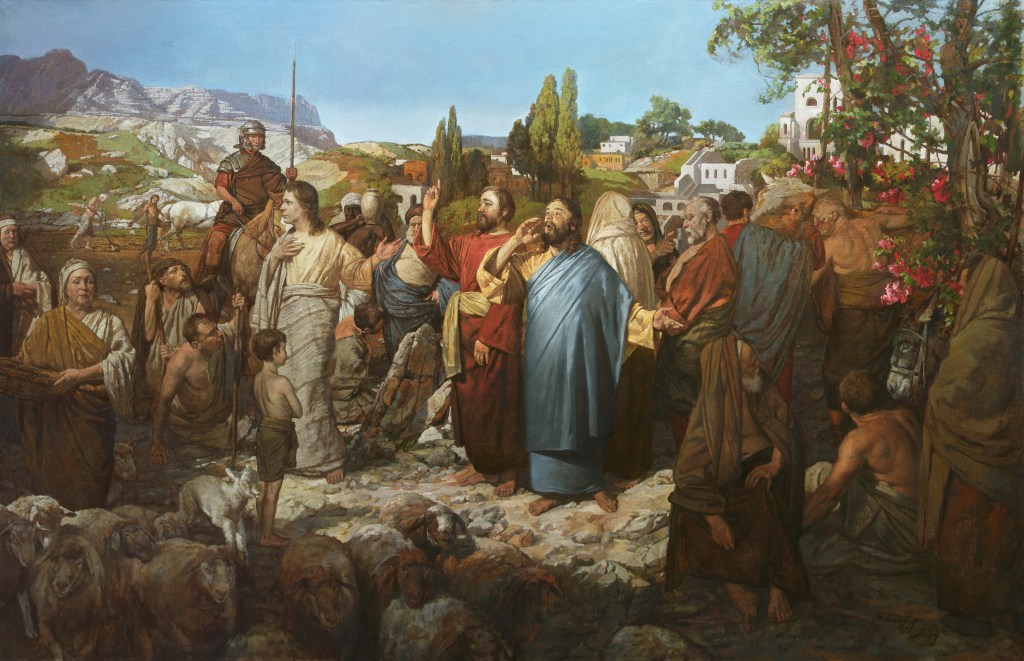
Today, we listen to Jesus’ iconic Parable of the Sower. Of course, this is not the only parable Jesus tells. He also teaches the Parables of the Hidden Treasure and the Costly Pearl (Mat 13:44-46), the Parable of the Ten Virgins (Mat 25:1-13), and the Parable of the Prodigal Son (Luk 15:11-32), to name just a few. From this frequency, we can conclude that Jesus favors teaching through parables. Yet, what exactly is a parable, and why does Jesus choose this specific method in the first place?

The English word “parable” comes from the Greek παραβολή (parabolē), which literally means “to throw alongside,” and signifies a comparison. In the Parable of the Sower, we see two distinct realities—daily human life and spiritual, divine truth—being placed side-by-side and compared. Jesus directly links the seeds scattered by the sower to the word of the Kingdom. Meanwhile, the four types of soil that receive the seed represent the four different dispositions of the human heart when encountering that word. But this raises another question: why does Jesus use a symbolic parable to teach rather than simply speaking in a straightforward, direct manner?

For many of us who regularly listen to Jesus’ parables during the Mass and hear priests explain them, the meaning of each story seems obvious and easy to comprehend. However, the experience was entirely different for Jesus’ disciples and the Jewish crowds who heard these parables for the very first time. In the Gospel, after Jesus delivers the Parable of the Sower, the disciples are confused and at a loss regarding its meaning. Consequently, they approach Jesus in private and ask, “Why do you speak to the people in parables?” (Mat 13:10).

Jesus then gives them the true reason behind this method: “Because the knowledge of the secrets of the kingdom of heaven has been given to you, but not to them” (Mat 13:11). This reveals that the purpose of a parable is dual: it is meant both to reveal and to hide. The ultimate key to unlocking a parable is faith in Jesus. For those who have faith, the secret behind the story is opened and properly understood; for those who lack faith, the meaning remains hidden. This is why the deeper explanation of the Parable of the Sower is given strictly to the disciples during a private moment with Jesus.

Understanding the truth behind Jesus’ parables is a beautiful sign that we possess faith in Him. Yet, true faith is never a static, passive acceptance of Jesus as our Lord; it is a life-transforming force. This is precisely the lesson embedded in the Parable of the Sower. The Lord has sown His word into our hearts, but we must do our part to allow that word to transform our lives. As Jesus clearly explains, unless the Word penetrates deeply and takes root in our hearts, we will fall away when difficult times arise. Likewise, unless we clear away the thorns of worldly anxieties and ambitions, the Word will be choked and fail to bear fruit. Ultimately, a parable is not just an invitation to understand Christ through faith, but a direct challenge to transform our daily lives and become truly fruitful in Him.

Bandung

Guide questions:
How deeply have we allowed the word of God to penetrate our hearts, and are we nurturing its roots so that our faith can withstand difficult times? What are the specific “thorns” of worldly anxieties and personal ambitions in our daily lives that are currently choking the word and preventing us from bearing fruit? Do we treat our faith as a passive, static acceptance of Jesus, or are we actively collaborating with Him to let His teaching transform our actions and choices?

Prophet Elisha, the Holy Man of God

13th Sunday in Ordinary Time [A]

June 28, 2026

2 Kings 4:8-11, 14-16a

In today’s first reading, the Church presents us with the story of the prophet Elisha and a woman from Shunem who recognized him as a “holy man of God.” This invites us to reflect on who Elisha was, and what it truly means to be called a holy man of God.

Elisha was the successor of another great prophet, Elijah. Coming from a farming family, Elisha was plowing a field with twelve yoke of oxen when Elijah called him—a detail that indicates his family’s wealth and affluence. Yet, he chose to leave everything behind to follow Elijah and become his disciple (1 Kings 19:19-21). Before Elijah ended his earthly mission and was taken into heaven by a chariot of fire, he asked Elisha what parting gift he desired. Elisha requested “a double portion of your spirit.” This wish was granted, and Elisha eventually performed even more miracles than his teacher (2 Kings 2:11-12).

Like Elijah, Elisha was a fearless prophet who spoke truth to power, criticizing kings for their evil deeds and idol worship. However, Elisha became especially famous for his numerous miracles. He purified the contaminated waters of Jericho (2 Kings 2:19-22), multiplied loaves of bread to feed hungry people (2 Kings 4:42-44), and healed Naaman, a commander of the army of Aram, from his leprosy (2 Kings 5:1-14). Even after Elisha’s death, his miraculous power continued; a dead man was restored to life the moment his body touched Elisha’s bones (2 Kings 13:20-21).

Elisha’s relationship with the Shunammite woman highlights not only his miraculous power, but also the beauty of warm hospitality and friendship. Whenever Elisha visited Shunem, this woman offered him a place to rest and eat. She recognized that he was a “holy man of God.” In return for her faith and outstanding generosity, her deepest prayers were answered: despite her husband’s old age, she conceived and bore a son just as Elisha promised.

To be a holy man of God means to be consecrated to the Lord and set apart for His unique mission. Elisha shared a profound friendship with God, and the Lord used him as an instrument of divine goodness, mercy, and judgment for Israel and the surrounding nations. The Shunammite woman recognized this spiritual reality. When she approached Elisha, she was seeking his powerful intercession before God. Crucially, she did not merely ask for a favor; she also did her part to love and please God by showing great kindness to His prophet.

This beautiful friendship between Elisha and the woman of Shunem mirrors our own relationship today with the saints—the holy men and women of God. In our daily lives, we look to the cloud of witnesses in heaven. We ask the Virgin Mary, the most blessed of all women, to pray for us and assist us in our many needs. We turn to St. Michael the Archangel for protection against evil, and we approach St. Joseph, the patron of a happy death, to comfort those who are dying. Like the Shunammite woman, we do not just beg for favors; we also offer the saints our love, our prayers of thanksgiving, and our sincere friendship.

I experienced this spiritual friendship firsthand when I was struggling to complete my doctoral dissertation. Every door seemed closed, and I felt completely stuck. In that moment of distress, I turned to Our Lady for help. At the same time, I made a personal promise to her that I would visit her shrines, preach about her intercession, and promote devotion to her. Without waiting long, the obstacles vanished, the way forward opened, and I was able to complete my studies on time. Our friendship with the holy men and women of God is a powerful gift, because it ultimately brings us closer to the heart of God Himself.

Rome

Valentinus Bayuhadi Ruseno, OP

Guide questions:

How willingly do we leave behind our own comforts and security, like Elisha did, when we feel God calling us to follow Him more closely? Do we show active hospitality and kindness to the people God sends into our lives, or do we only approach God and His saints when we need a favor? In what ways can we cultivate a deeper, more intentional friendship with the Virgin Mary and the saints so that our devotion brings us closer to the heart of Jesus?

How to Overcome Fear

12th Sunday in Ordinary Time [A]

June 21, 2026

Matthew 10:26-33

Fear is one of the most basic emotions we possess. It serves a vital purpose, hardwired into us to ensure our survival by alerting us to immediate dangers. Without this instinct, our ancestors would never have reacted to predators, and our species would have long been extinct. Yet, in today’s Gospel, Jesus explicitly commands His disciples, “Do not be afraid.” What does this mean? Is Christ asking us to throw caution to the wind and ignore the very real dangers of this world?

To understand His words, we must look at the context. Jesus has just called His disciples and is sending them out on a mission. He candidly warns them that the path ahead is perilous, filled with rejection and life-threatening hostility. Being human, their natural reaction is fear. But Jesus knows we are more than just creatures driven by basic instincts. Unlike the rest of the animal kingdom, we are blessed with reason, and it is precisely to our rationality that Jesus appeals.

Reason allows humans to look beyond immediate hardships toward a greater, unseen good. Whenever we believe an expected reward outweighs temporary suffering, we can make a deliberate choice to endure a trial. We see this every day: a student willingly sacrifices sleep to study for exams because he knows the education will benefit his future. A father endures grueling, exhausting labor because he recognizes that his hard work provides for and protects his family. In both cases, a future promise conquers present discomfort.

Jesus uses this same logic to reveal the ultimate reward of preaching the Gospel: the salvation of souls—not only the disciples’ own, but also the souls of those who will hear their message. He reminds them not to fear those who can harm the mortal body but have no power over eternity. Instead, our true concern should be the loss of our eternal salvation. The stakes of the Gospel are eternal, making the fleeting dangers of this world pale in comparison.

Yet, abstract promises are rarely enough to move our fragile human hearts; we need a living example. This is why Jesus does not just speak the truth—He embodies it. In preaching repentance, He faced bitter rejection and was condemned to death. But death could not hold Him. By His victorious Resurrection, Christ proved that the ultimate danger has already been defeated. He then poured out His Holy Spirit upon the Church, granting us the supernatural wisdom to see the value of salvation and the fortitude to withstand overwhelming fear.

Even with this grace, our natural instinct to preserve our own lives remains strong, and the struggle to witness to the Gospel is very real. We see this vividly in Saint Peter, who was the boldest of the apostles, yet crumbled and denied his Master when danger closed in. The other disciples likewise abandoned Jesus in His darkest hour. Yet, God’s grace did not abandon them. It continued to work quietly within their hearts, gradually transforming their fear into apostolic courage. In time, they followed in the footsteps of their Master, carrying His mission to the ends of the earth.

Rome

Valentinus Bayuhadi Ruseno, OP

Guide questions:
What immediate, earthly fears are currently holding us back from fully trusting in God’s plan for our lives? When we face hardships or sacrifices, do we fix our eyes on temporary comfort, or are we motivated by the eternal reward of our salvation? In moments when our faith wavers—much like Saint Peter’s did—how can we better open our hearts to the Holy Spirit to receive the courage and fortitude we need to stand firm?

The New Holy Nation

11th Sunday in Ordinary Time [A]

June 14, 2026

Matthew 9:36 – 10:8

Jesus called His twelve apostles and sent them out on a mission. The choice of the number twelve was not merely a coincidence or a practical consideration; rather, it holds a profound truth, representing the twelve tribes of Israel. By choosing twelve disciples, Jesus intended to establish the New Israel, with Himself as the center and His apostles as its pillars. However, to understand why the New Israel is necessary, we must look back at the identity and purpose of the original Israel.

In the Book of Exodus, shortly after the Israelites escaped slavery in Egypt and crossed the Red Sea, they arrived at Mount Sinai. There, God offered them a covenant, in which He would be their God and they would be His people. Under this covenant, they were called to be a holy nation and a kingdom of priests (Ex 19:6).

Being a holy nation meant belonging exclusively to God, setting aside all other gods. This holiness was also defined by closeness to God. While the Israelites journeyed through the wilderness, the Tabernacle—the dwelling place of God’s presence—was situated right in the center of their camp. Because they walked so closely with God, they were expected to obey the laws given at Sinai and to behave as God’s chosen people. Furthermore, they were called to be a kingdom of priests. They were not meant to be a kingdom of warriors focused on war and the conquest of nations, nor a society of merchants primarily concerned with accumulating wealth. Instead, as a kingdom of priests, their primary function was to offer sacrifices, bring blessings, and sanctify the people. This is how Israel was meant to live and grow.

Just like ancient Israel, the New Israel established by Jesus is called to be a holy nation and a kingdom of priests. While ancient Israel was formed through the covenant at Sinai, the New Israel was established through the New Covenant at the Last Supper (Matt 26:28) and confirmed by the blood of Jesus on the cross. And just as ancient Israel was led by Moses with the help of leaders from the twelve tribes, the leadership of the New Israel is entrusted to the apostles and their successors, the bishops.

However, the New Israel is no longer bound by blood ties, but by faith in Jesus. We are a holy nation because we belong to Jesus, the Holy One of God (Mark 1:24), and as His people, we live in obedience to His commandments. As a new kingdom of priests, we are called to conquer the world not through military might or economic power, but by blessing and sanctifying it. Every time we celebrate the Eucharist, we not only sanctify ourselves but also bring blessings to the world. Every time we proclaim the Gospel, we not only strengthen our own faith but also draw others closer to God. Every time we perform acts of charity, we not only fulfill Jesus’ commandments but also expand the Kingdom of God on earth.

Rome

Valentinus Bayuhadi Ruseno, OP

Guiding Questions:

How well do we keep Jesus at the center of our daily lives, and in what ways does our behavior reflect that we belong entirely to Him? Since we are called to be a royal priesthood, are we actively striving to bless and sanctify those around us, or are we too focused on pursuing worldly wealth and power? When we participate in the Eucharist, listen to the Gospel, or perform acts of charity, do we view these as routine rituals, or do we truly realize our mission to expand the Kingdom of God on earth?

Featured

The Eucharistic Miracles

The Solemnity of the Most Holy Body and Blood of Christ

John 6:51-58

June 7, 2026

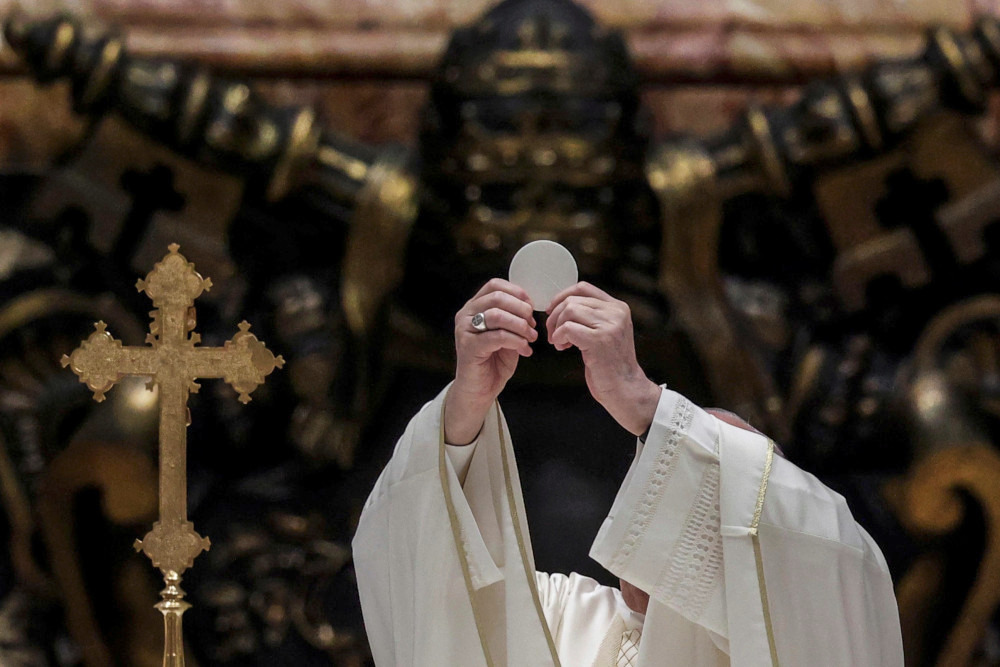
At the heart of the Catholic faith lies a profound mystery: during the Eucharist, the consecrated bread and wine become the true Body and Blood of Jesus Christ. Ordinarily, while the underlying substance changes, the physical appearances of bread and wine remain. Yet, throughout history, there have been extraordinary moments when even these physical appearances have transformed into actual flesh and blood. The Church recognizes these awe-inspiring events as Eucharistic miracles.

Among the most ancient and renowned of these is the miracle of Lanciano, Italy. According to a tradition formally documented in 1574, an eighth-century priest was celebrating Holy Mass while struggling with profound doubts about the real presence of Christ in the Eucharist. Right after the words of consecration, the unleavened bread visibly transformed into living flesh, and the wine into blood, which soon coagulated into five distinct globules of varying sizes. Remarkably, these miraculous relics are still preserved and can be venerated in the Shrine of Lanciano today.

This ancient miracle underwent rigorous scientific scrutiny between 1970 and 1971, led by Dr. Odoardo Linoli, a professor of anatomy and histology. His findings were astonishing. He concluded that the flesh is authentic human myocardial tissue (flesh from a heart) and the blood is genuine human blood containing normal proteins and minerals. Both the flesh and the blood belong to the AB blood group. Furthermore, Dr. Linoli found no traces of mummification chemicals, salts, or preservatives, making the uncorrupted preservation of this biological tissue over so many centuries scientifically inexplicable.

Lanciano, however, is not an isolated event. In his book, A Cardiologist Examines Jesus, Italian physician Dr. Franco Serafini gathered scientific data from four modern Eucharistic miracles—Buenos Aires in 1996, Tixtla in 2006, Sokółka in 2008, and Legnica in 2013—and compared them with the Lanciano findings. A striking pattern emerged: all the relics consist of human heart tissue of the AB blood type. Even more profoundly, the modern miracles all display active signs of severe physiological stress, trauma, and a lack of oxygen, indicative of a heart in its final agony. Interestingly, while scientists have been able to isolate human DNA from these samples, they have found it remarkably elusive to fully sequence. It is almost as if the DNA itself resists yielding its complete genetic code, though the fragments consistently indicate a male profile.

These miracles defy human explanation, offering extraordinary physical affirmations of the Eucharist. Yet, we must ultimately view them as gentle instruments of God meant to strengthen our faith, rather than something we should actively demand. I remember celebrating Holy Mass in Lanciano when a pilgrim confided in me, hoping to witness a Eucharistic miracle right there at the altar. I replied that I would not want that to happen, simply because I already believe. The truest and greatest miracle happens invisibly within our own hearts when we are granted the faith to recognize that what appears to be simple bread and wine is truly the Lord. That profound, quiet faith is the kind that can move mountains of doubt and fear.

Rome

Valentinus Bayuhadi Ruseno, OP

Guide questions:

When I encounter doubt in my own life, do I bring it to God, or do I allow it to silently distance me from Him? How does recognizing the profound depth of Christ’s sacrificial love in the Eucharist change the way I respond to my own personal trials and sufferings? Am I constantly seeking extraordinary signs to validate my beliefs, or am I cultivating the faith to recognize God’s presence in the ordinary, everyday moments of my life?

The Mystery

The Solemnity of the Most Holy Trinity

May 31, 2026

John 3:16-18

In his first encyclical, Magnifica Humanitas, Pope Leo XIV reminds us that we are created in the image of the Holy Trinity. But what does this truly mean?

Being created in the image of God has several profound implications; primarily, it means we share in His attributes, albeit to a finite degree. Because God possesses perfect intellect and will, we too are endowed with these faculties. Because God is eternal, our souls are immortal, destined to survive death and stand before our Creator. And because the Holy Trinity is a communion of infinite love, we are inherently social beings who find our truest happiness in loving others.

There is, however, another, deeper aspect we share with the Divine: just as the Holy Trinity is a mystery, we too are created as a mystery. But what do we mean by “mystery”? In our contemporary mindset, the word often conjures ideas of secrets, true crime, or thriller films. Yet, in Scripture and theology, a mystery (from the Greek mysterion) is a profound truth and reality about God. Because it belongs to God, it exceeds our natural human capacity to grasp—until the Lord chooses to reveal it. This is why we refer to the Holy Trinity as a mystery; it is a truth that can only be known because God has graciously made it known to us.

We, too, are mysteries, because the ultimate truth about who we are remains hidden in God. Without His revelation, our deepest selves remain partially unknown even to us. Certainly, advances in science and technology allow us to discover and study various aspects of our biology and psychology, helping us improve as a species. Yet, without divine revelation, our truest identity, our inherent dignity, our origin, and our ultimate destiny will always remain beyond the reach of a microscope.

Because we are a mystery, the truth of the human person cannot be reduced to a mere concept for the mind to dissect, nor can our reality be entirely mastered by human will. Just as our minds cannot fully comprehend God and our wills cannot conquer Him—yet we can embrace, experience, and love Him—the same applies to us. As living mysteries, we are not meant to be subjected to oppressive domination or mere analysis; we are meant to be embraced, experienced, and loved.

We are not mere statistics or data points in a computer. We are not just animals to be dissected, nor bodies to be manipulated for the sake of “progress.” We are not economic machines to be discarded when we are no longer productive, nor are we mindless consumers. Recognizing that the human person is a mystery to be reverenced rather than a problem to be solved, the Catholic philosopher Gabriel Marcel put it beautifully: “Getting to Mars is a problem. Falling in love is a mystery.”

Rome

Valentinus Bayuhadi Ruseno, OP

Guide questions:
In what areas of my life am I treating myself or someone else as a “problem to be solved” rather than a “mystery to be loved”? If the Holy Trinity is a communion of infinite love, how does that reality challenge or change the way I approach my daily relationships? When modern life tempts me to view people as mere statistics, workers, or consumers, what specific steps can I take to recognize their hidden, divine dignity?

Pentecost, Babel and Language

Pentecost Sunday [A]

Acts 2:1-11

May 24, 2026

Pentecost is often seen as the reverse of the Tower of Babel. Yet, why does the Church draw a connection between these two distinct stories? The answer is language.

In Genesis 11, we see the function of language in action. The text tells us that early humans shared one language and the same words. This unity allowed them to share ideas seamlessly and cooperate easily, driving their progress as a society. Language enabled them to develop technologies like brick-making, build a city that required complex political and economic systems, and construct a massive tower demanding advanced engineering.

Language sets us apart from all other creatures. While animals communicate, only humans share complex ideas. Animals can exchange basic information about food and predators, but humans convey ideals, future dreams, imagination, past wisdom, and learning. While animals communicate through sounds and scents, only humans can put their words into writing, passing their thoughts down to future generations. Through written language, we transform our words into art, poetry, music, and science.

Consider the fascinating development of human babies. Compared to other animals, human infants are incredibly vulnerable, relying entirely on their parents for survival for several years. Yet, despite this physical weakness, they possess something no other animal has: an innate capacity for language. In their first two to three months, babies begin making musical, vowel-like sounds like “ooh” and “ah.” They cry, smile, and laugh in response to their parents. By four to six months, they start combining consonants and vowels into repetitive sounds like “ba-ba” or “ma-ma,” practicing with their vocal cords. Between six and twelve months, they begin connecting sounds to meaning—saying “mama” to specifically call for their mother. They also start using gestures, pointing at what they want or waving goodbye, and begin to understand simple words like “no.” It is clear that babies are born to use language.

Unfortunately, the people of Genesis 11 forgot one fundamental truth: human language is essentially a gift from God. In Genesis 1, God created the world through His words, meaning that words and language belong properly to Him. When He created man and woman in His image, He empowered us with intellectual capacity, including the ability to form and use language. The builders of Babel, however, believed that their intellect, language, science, art, and other great gifts were entirely their own achievements. Armed with these tools, they pridefully sought to reach the heavens and make a name for themselves (Gen 11:4).

Pentecost reverses the incident at Babel by revealing that language is a gift of the Holy Spirit. The primary purpose of this gift is to proclaim the great works of the Lord, not the works of humans. Pentecost reminds us that our language not only unites us with one another, but also connects us to God. Before the disciples received the gifts of the Spirit, they spent their time praying—and prayer is simply communication with the Lord. Before they spoke about God, they first spoke to God. We do not need to build towers with our hands to reach the heavens; we only need to use our God-given language to reach Him in humility.

Rome

Valentinus Bayuhadi Ruseno, OP

guide questions:

In our daily lives, do we use our words to build a name for ourselves (like at Babel), or to unite and uplift those around me?The disciples spoke to God before they spoke about Him—how much of our daily language is dedicated to speaking with God in humility?Since our words are a gift meant to proclaim the Lord’s great works, what message is our speech broadcasting to the world right now?

The Holy Spirit and the Hour of Glory

7th Sunday of Easter [A]

May 17, 2026

John 17:1-11

In today’s Gospel, Jesus addresses His Father with the profound declaration that His “hour” has arrived—the hour of His glory. Yet, what does this hour of glory mean for Jesus?

To understand the weight of this statement, we must first examine what the world considers glorious. In antiquity, much as in the modern era, glory was synonymous with victory, achievement, and conquest. When Julius Caesar conquered Gaul (the modern-day of France), he marched into Rome to the roar of cheering crowds, parading captured leaders and spoils of war to secure his fame. We often seek glory in a similar fashion, displaying our trophies, diplomas, and credentials as symbols of our success.

However, when Jesus speaks of His glory, He refers to something diametrically opposed to worldly triumph: the hour of His Passion, crucifixion, and death. Jesus faced a false arrest, an unjust trial, and a brutal sentence. He was tortured and forced to carry the very instrument of His execution, ultimately hanging on a cross designed for maximum humiliation and agony. Yet, in this moment of profound suffering, Jesus sees glory. For Him, true glory is not found in fame, but in the total gift of Himself through sacrificial love. It is this radical love alone that possesses the power to transform death into life.

Throughout this Easter season, our first readings from the Acts of the Apostles highlight the expansion of the early Church. While the narrative often centers on the journeys of St. Peter and St. Paul, the true protagonist of the story is the Holy Spirit. Far from appearing only at Pentecost, the Spirit continuously directed the infant Church’s every move. It was the Spirit who guided Philip to the African official in Acts 8:26-40 and led Peter to the household of Cornelius in Acts 10, resulting in the baptism of the first Roman Christians. Furthermore, the Spirit initiated the formal mission to Gentile territories by selecting Paul and Barnabas in Acts 13:2.

This divine guidance remained the bedrock of the Church’s discernment. The Council of Jerusalem concluded that it was the Holy Spirit’s will not to burden Gentile converts with the Mosaic law (Acts 15:28), and later, the Spirit of Jesus redirected Paul’s mission from Asia toward Europe (Acts 16:6-10). Under this guidance, the young Church flourished as the Gentiles embraced the faith. Yet, these “glorious moments” were only half the story. While the Church grew, she also endured relentless persecution and hardship. Peter and Paul brought many to Christ, but their path also led to rejection, imprisonment, and eventually martyrdom.

Ultimately, the Holy Spirit does not lead the Church toward worldly success or comfort. Instead, the Spirit leads us to the specific places and “hours” where we are needed most. By following this divine advocate, we are empowered to imitate our Lord, finding our own glory in the moments where we give ourselves up totally for others.

Rome

Valentinus Bayuhadi Ruseno, OP

Guide questions:

In what areas of our life are we chasing “Caesar’s glory” (fame, credentials, or status), and how might we pivot toward “Jesus’ glory” by prioritizing sacrificial love and service to others? When we face “the hour” of our own personal trials or humiliations, do we see them only as obstacles, or can we identify ways that God might be using those moments to demonstrate radical love? The Holy Spirit led the early Church to places of need rather than places of comfort; where is the Spirit leading us to go right now that might require us to step out of our comfort zone?

The Holy Spirit and the Sacrament of Confirmation

The Sixth Sunday of Easter [A]

Acts 8:5-8, 14-17

May 10, 2026

The Sacrament of Confirmation is arguably the most underappreciated and misunderstood of the seven Sacraments. Yet, why do we fail to appreciate this sacrament? Does it even mention in the Bible? And, how does the sacrament reveal the secrets about the Holy Spirit?

We often struggle to value it because it lacks the immediate, visible impacts in our lives, yet its foundations are deeply biblical. In the Acts of the Apostles, specifically chapter 8, we see Philip the Deacon preaching and baptizing in Samaria. When the Apostles Peter and John arrived, they prayed for the converts to receive the Holy Spirit, as the Spirit had not yet fallen upon them. This ancient narrative confirms that since the time of the Apostles, a distinct sacrament existed specifically to impart the presence and gifts of the Holy Spirit, a ministry uniquely tied to the authority of the Apostles.

Continuing this tradition, the Church recognizes Bishops as the successors of the Apostles and the ordinary ministers of the sacrament. The name “Confirmation” is used because the Catholic Church teaches that the graces received here strengthen and solidify the initial grace of Baptism. While Baptism is viewed as a spiritual birth, Confirmation serves as a passage into spiritual adulthood. It is designed to equip the believer for their mission in the world and provide the necessary strength for spiritual warfare against the forces of darkness.

Despite its importance, Confirmation is often less popular than other sacraments because it doesn’t dramatically change a person’s external lifestyle or status, unlike Matrimony or Holy Orders. Furthermore, because it is only received once, it lacks the frequent reinforcement we find in the Eucharist or Penance. Many modern Christians also mistakenly equate spiritual growth with emotional sensations. When people do not feel “emotionally touched,” hear God’s voices, or experience spectacular gifts during the prayers, we are often tempted to perceive the sacrament as unexciting or stagnant.

However, St. Luke’s account in the Bible suggests that the Holy Spirit does not always work through spectacular displays. After Peter and John laid hands on the Samaritans, there was no mention of extraordinary fireworks, reminding us that the Spirit often works quietly and gradually. Through Confirmation, we receive an increase in the seven gifts: Wisdom, Understanding, Counsel, Fortitude, Knowledge, Piety, and Fear of the Lord. These gifts allow us to align our lives with God’s will even during trials. The true evidence of the Holy Spirit’s work is found in small, faithful acts—choosing to attend Mass when it feels boring, remaining loving during marital difficulties, or serving others without seeking praise. These are the quiet signs that the Holy Spirit through the sacrament is truly transforming the souls.

Rome

Valentinus Bayuhadi Ruseno, OP

Guide questions:

How often do I equate the strength of my faith with how “emotional” or “excited” I feel during prayer? How might I refocus on the quiet, steady growth the Holy Spirit provides? If Baptism is my spiritual birth and Confirmation is my entry into spiritual adulthood, in what specific areas of my life am I being called to move away from “infant” faith and take on the responsibilities of a mature Christian?

Our Place in Heaven

Fifth Sunday of Easter [A]

May 3, 2026

John 14:1-12

In today’s Gospel, Jesus tells His disciples not to be troubled. He urges them to have faith in God and in Him, explaining that He is going to the Father’s house to prepare a place for them. What does this mean?

To get a better context, we can look at the previous chapter, John 13. After washing His disciples’ feet, Jesus made two prophecies: first, that one of His disciples would betray Him, and second, that Simon Peter—the leader among the apostles—would deny Him not once, but three times. These were certainly not happy predictions. Knowing their beloved teacher would be betrayed and disowned shook the hearts of the disciples. These predictions also cast doubt on the continuation of Jesus’ movement and, even worse, threatened to put an end to their hope in Him as their expected Messiah.

Knowing their anxieties, Jesus assures them that the terrible things about to befall them are not the end. Indeed, these prophecies must take place, and He will endure His passion and crucifixion, but it is all part of God’s plan to show His love for us. Furthermore, Jesus sees His suffering and death as “going back to the Father’s house.” The end of His earthly life, however painful and humiliating, is never a defeat. It is like a king gloriously returning to his kingdom after a difficult journey. This is our first piece of good news: even though we experience difficulties and suffering in life, God is in control. In fact, God allows these things to happen for our ultimate good. As St. Paul says, “We know that in all things God works for the good of those who love him…” (Rom 8:28).

Moreover, Jesus assures the disciples that He does not simply return to His Father’s house, but also goes to prepare a place for them. The Father’s kingdom is no longer shut, but open to those who believe in Jesus. The Church teaches that before Jesus’ coming, no single soul was able to enter heaven because of the sin of Adam. Even the just souls, like Moses and Elijah, had to wait at the gates of heaven until Jesus came, opened them, and prepared a place for them.

However, there is something even more important than our place in heaven. Jesus says that He will return to His disciples and take them with Him, so that where Jesus is, His disciples may also be. Heaven is not just a place to stay; ultimately, it is living with Jesus. True heaven is not merely about a location, but a relationship with Jesus.

This is our second piece of good news. Heaven is not only an afterlife reality, but something we can experience in this earthly life. If we continue to grow in our friendship with Jesus—through prayer and the sacraments, following His commandments, and avoiding a sinful life—we are already living in heaven. What is even more amazing is that even if we are enduring a lot of problems in this world, we can continue growing in our friendship with Jesus. Even when we are sick and in pain, we can continue to pray and unite our suffering to His. Even when we are struggling with our relationships, and others leave us alone, we can be sure Jesus is with us. Our true place in heaven is at the heart of Jesus.

Rome

Guide questions:
What anxieties or worries do I need to hand over to Jesus today? How am I actively growing my friendship with Jesus in my everyday life? Can I trust that God is working for my good, even in a current struggle or difficulty I am facing?