
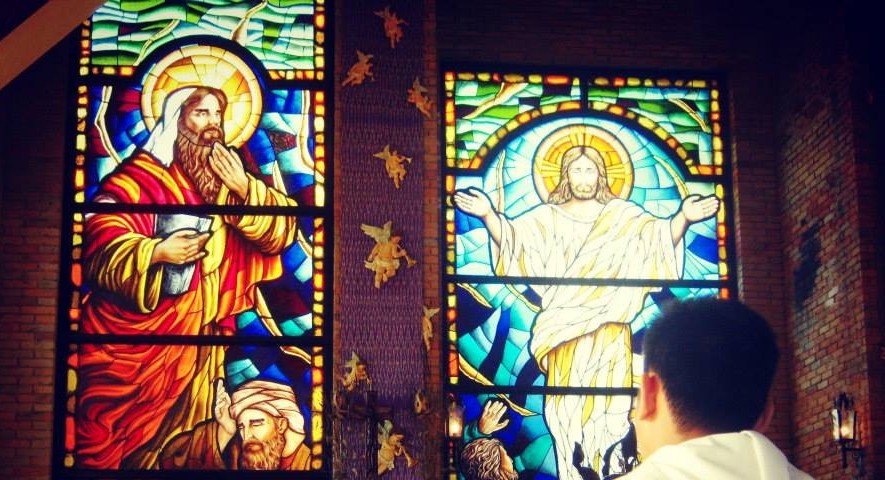
The Solemnity of the Most Holy Trinity
May 31, 2026
John 3:16-18
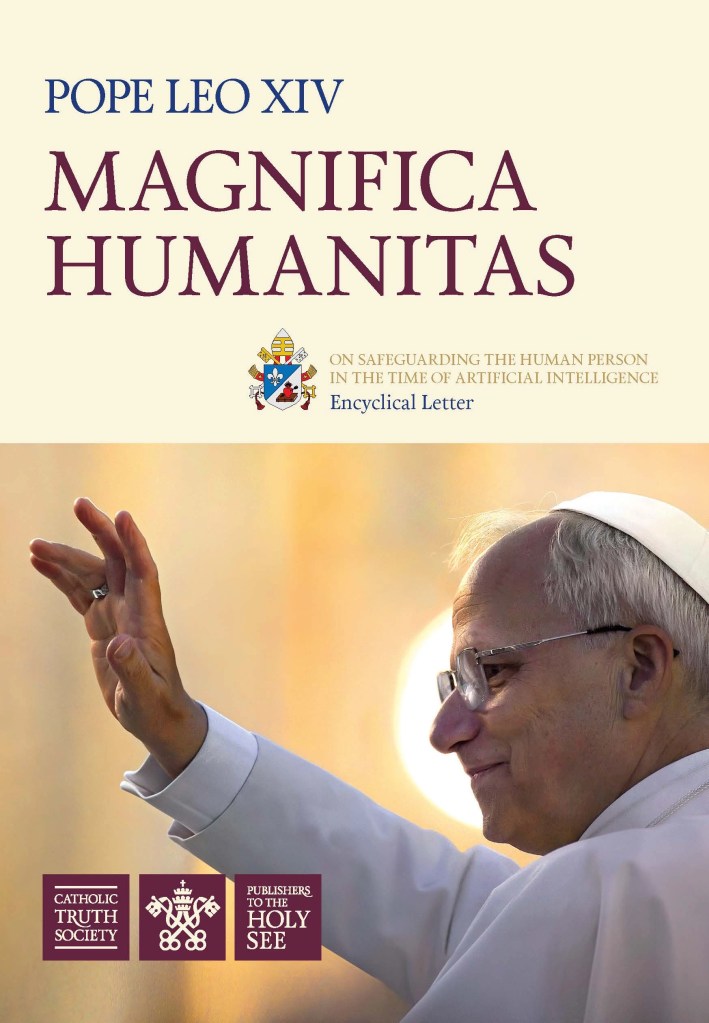
In his first encyclical, Magnifica Humanitas, Pope Leo XIV reminds us that we are created in the image of the Holy Trinity. But what does this truly mean?
Being created in the image of God has several profound implications; primarily, it means we share in His attributes, albeit to a finite degree. Because God possesses perfect intellect and will, we too are endowed with these faculties. Because God is eternal, our souls are immortal, destined to survive death and stand before our Creator. And because the Holy Trinity is a communion of infinite love, we are inherently social beings who find our truest happiness in loving others.
There is, however, another, deeper aspect we share with the Divine: just as the Holy Trinity is a mystery, we too are created as a mystery. But what do we mean by “mystery”? In our contemporary mindset, the word often conjures ideas of secrets, true crime, or thriller films. Yet, in Scripture and theology, a mystery (from the Greek mysterion) is a profound truth and reality about God. Because it belongs to God, it exceeds our natural human capacity to grasp—until the Lord chooses to reveal it. This is why we refer to the Holy Trinity as a mystery; it is a truth that can only be known because God has graciously made it known to us.
We, too, are mysteries, because the ultimate truth about who we are remains hidden in God. Without His revelation, our deepest selves remain partially unknown even to us. Certainly, advances in science and technology allow us to discover and study various aspects of our biology and psychology, helping us improve as a species. Yet, without divine revelation, our truest identity, our inherent dignity, our origin, and our ultimate destiny will always remain beyond the reach of a microscope.
Because we are a mystery, the truth of the human person cannot be reduced to a mere concept for the mind to dissect, nor can our reality be entirely mastered by human will. Just as our minds cannot fully comprehend God and our wills cannot conquer Him—yet we can embrace, experience, and love Him—the same applies to us. As living mysteries, we are not meant to be subjected to oppressive domination or mere analysis; we are meant to be embraced, experienced, and loved.
We are not mere statistics or data points in a computer. We are not just animals to be dissected, nor bodies to be manipulated for the sake of “progress.” We are not economic machines to be discarded when we are no longer productive, nor are we mindless consumers. Recognizing that the human person is a mystery to be reverenced rather than a problem to be solved, the Catholic philosopher Gabriel Marcel put it beautifully: “Getting to Mars is a problem. Falling in love is a mystery.”
Rome
Valentinus Bayuhadi Ruseno, OP
Guide questions:
In what areas of my life am I treating myself or someone else as a “problem to be solved” rather than a “mystery to be loved”? If the Holy Trinity is a communion of infinite love, how does that reality challenge or change the way I approach my daily relationships? When modern life tempts me to view people as mere statistics, workers, or consumers, what specific steps can I take to recognize their hidden, divine dignity?

