
32nd Sunday in Ordinary Time [A]
November 8, 2026
Matthew 25:1-13
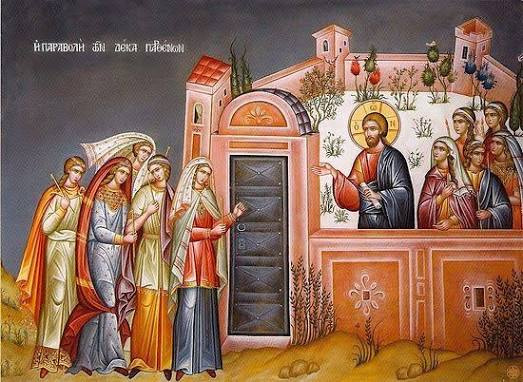
The parable of the ten virgins offers a timeless lesson: there are aspects of life that we cannot borrow from others. What are those?
The first of these is time. Not everyone possesses great wealth, talent, or intelligence, but everyone is given time. Everyone has 86,400 seconds each day. Time is both our common and absolute personal resource. Yet, it is finite, and we cannot borrow it from anyone else. While we often hear expressions like “living on borrowed time” or ask, “May I have a moment of your time?,” we cannot strictly borrow an extra hour from someone else’s lifespan to add to our own. Once our time is spent, it is lost forever.
The second thing we cannot borrow is personal responsibility—the consequences of how we choose to use our time. Although upbringing, education, and social environments influence our choices, the ultimate accountability for our actions rests on our own shoulders. Friends and loved ones may say, “I share your burden,” or “I celebrate your success,” but no one can carry the weight of our choices for us. When wasted time is paired with poor decisions, it leaves behind only regret and bitterness. Even when oppressive circumstances or bodily limitations constrain our choices, our response to those limitations remains ours to make. We can see this in the life of Saint Thérèse of Lisieux. When she contracted tuberculosis at the age of twenty-three, she endured debilitating pain and was bedridden. Thoughts of hopelessness and doubts about God tested her mind. Yet, despite her suffering, she refused to fall into despair. Instead, she brought her pain to prayer and offered it for the mission of the Church.
The third thing we cannot borrow is eternal life in heaven. All of us will eventually run out of time on this earth. Scripture teaches that our ultimate destination is either heaven or hell. While eternal life is an unearned gift of God’s grace, receiving it does not mean remaining entirely passive. Heaven is closely tied to our daily choices and how we steward our finite time—the very things no one else can supply for us. If we continually make sinful decisions and waste our lives failing to pursue what pleases God, we invite not only remorse in this life, but irreversible regret in the next. At the end of our journey, we cannot turn to those already in glory and ask to borrow their place in heaven.
Time, personal responsibility, and heaven are profound gifts from God. How we steward them today determines where we stand when our time runs out.
Valentinus Bayuhadi Ruseno, OP
Manila
Guide Questions:
How am I using the finite time God has given me today, and am I spending it on things that truly matter for eternity? When facing difficult situations or bodily limitations, do I take full personal ownership of my choices and respond with faith, or do I let circumstances lead me into bitterness and regret? Are my daily habits and choices actively drawing me closer to God and leading me toward heaven, or am I passively assuming my salvation without doing what pleases Him?

