
Solemnity of All Saints
November 1, 2026
Matthew 5:1-12a
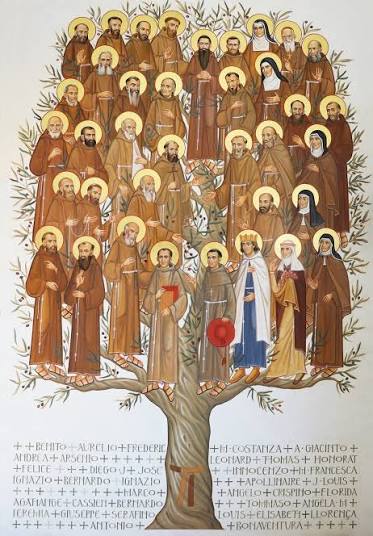
Today, we celebrate the Solemnity of All Saints. The saints are those who have gone before us and are now living with God in heaven. Some of them are well-known to us, such as St. Francis of Assisi, St. Padre Pio, and St. Catherine of Siena, yet there are millions of unknown saints who continue to pray for us. The word “saint” comes from the Latin sanctus, which means “holy.” Why are those in heaven called holy, and what does it truly mean to be holy?
Often, we associate holiness with moral goodness, aesthetic beauty, or religious piety. While these connections are valid, they do not fully capture the biblical understanding of the concept. In Hebrew, the word for holy is kadosh, which links primarily to divinity. Because God as Creator is fundamentally distinct from all creation, holiness speaks of His being set apart from everything else. His power, majesty, and glory are infinitely above and beyond any created being.
Among the attributes of God, holiness stands out prominently in Scripture. First, “holy” is the only attribute of God repeated three times consecutively in Scripture: “Holy, holy, holy is the LORD Almighty…” (Isa 6:3; Rev 4:8). In ancient Hebrew, repeating a word three times is the ultimate form of emphasis, serving as the absolute superlative. The Bible never says “God is love, love, love” or “God is power, power, power.” Second, since kadosh means “set apart” or “belonging uniquely to God,” holiness qualifies all of God’s other attributes. His love is a holy love, His justice is a holy justice, and His power is a holy power.
Although holiness reveals God’s utter distinction from us, the good news is that our God is not an aloof or isolated God. He desires to share His glory and goodness with His creation, and one fundamental way He achieves this purpose is by making His creatures holy. This process is called sanctification or consecration, through which we are set apart from the world to belong exclusively to God.
This understanding of holiness is extremely important. The saints are in heaven not because they were naturally better, more morally upright, or more pious than everyone else. The saints are in heaven because they are holy, and they are holy because God, who is Holy, called them to share in His life and joy, sanctifying them by His grace. At the same time, the saints did not merely receive this grace passively and remain idle. They actively embraced their calling and committed their lives to God.
We are likewise called to be holy. In fact, our final destiny presents only two possibilities: to become saints and live with God, or to reject holiness and remain separated from Him. Having been consecrated in our baptism, we must not remain idle, but actively live for God just as the saints in heaven have inspired us.
Valentinus Bayuhadi Ruseno, OP
Manila
Guide questions:
How actively are we allowing God’s grace to set us apart from the world and transform our daily lives? In what ways do we fall into the trap of measuring our spiritual life by mere moral effort rather than by resting in God’s holy call? What steps can we take today to stop sitting idle and more fully embrace our baptismal calling to become saints?

