Featured

Who Is Jesus to You?

21st Sunday in Ordinary Time [A]

August 23, 2026

Matthew 16:13-20

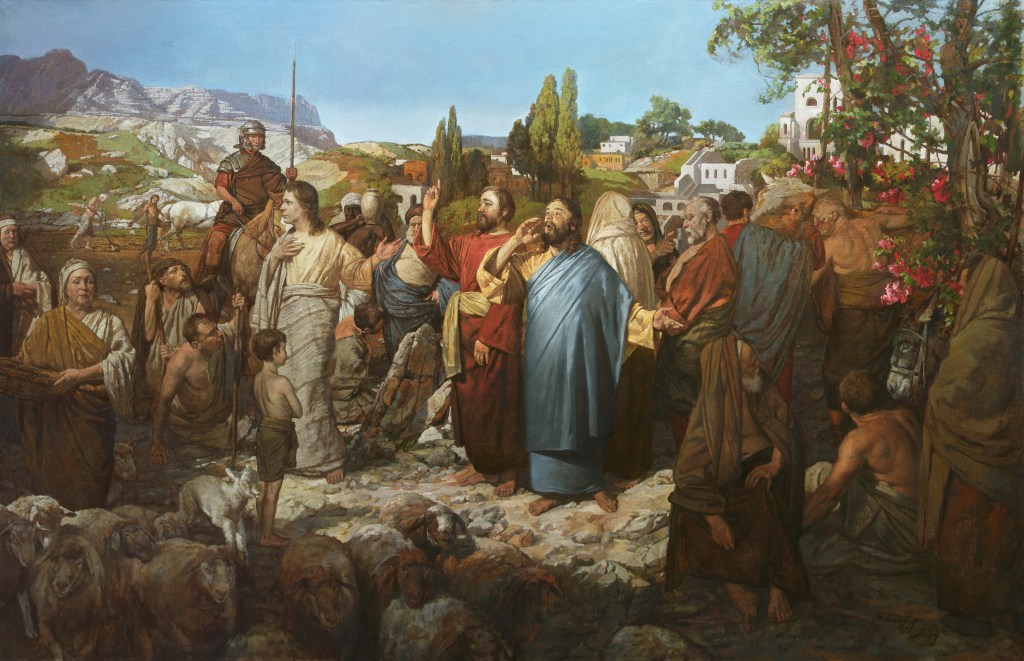
Today, Jesus asked His disciples, “Who do you say that I am?” (Matthew 16:15). Arguably, this is the most important question we will answer in our lives. We might answer in various ways—that Jesus is our beloved friend, the Good Shepherd, our leader, or our Savior and Redeemer. While all of these descriptions are true, the moment we confess Jesus as our Lord and God, everything changes.

If we truly accept Jesus as our God, our lives must be oriented around Him, making Him our first priority. Giving Him the highest honor is hardly enough; instead, we must offer Him the worship that only God deserves. Sharing some of our time, resources, and talents for His glory is far from enough; we are called to dedicate our whole lives to Him. Being baptized and attending church every Sunday are only the minimum requirements; Instead, we should strive to please Him in every aspect of our lives—in our words, actions, and daily choices at all times.

Many of us might object that this standard is impossible to maintain because we are not priests or nuns, or because we want to pursue other legitimate priorities such as our careers, hobbies, and personal ambitions. To many, this demand seems unrealistic. However, this expectation does not arise out of thin air; rather, it flows naturally from the virtue of justice.

Simply put, justice means giving someone what is due. When an employer pays a fair wage to an employee who has completed their work, it is not an act of charity, but an obligation demanded by justice. Similarly, as citizens, justice requires us to obey the law and contribute to the common good of society, such as by paying taxes. At the same time, the government has an obligation to serve its citizens honestly and with integrity by protecting them from harm, providing healthcare, and building infrastructure, because these services are obligations to citizens. All of these obligations naturally arise from the demands of justice.

If we are to practice justice in our families, workplaces, and communities, we must all the more render what is just and right to our God and Creator. We need to recognize that God was not obligated to create us, yet He brought us into existence, endowed us with reason and free will, and made us unique among all creatures on earth. Furthermore, God was not obligated to save us, yet when humanity fell into sin, He redeemed us through His Son so that we would not perish (John 3:16). Ultimately, God graciously offers us His friendship and adopts us as His children. Although we deserve nothing from God, He has given us everything. Therefore, the virtue of justice demands that we give God everything we have—our time, our talents, and even our lives. This does not mean that we are all called to be priests or monks/nuns. As laypeople and professionals, we can prioritize Jesus by ensuring that every decision we make aligns with His divine will and pleases Him.

Manila

Valentinus Bayuhadi Ruseno, OP

Guide questions:

How actively do we allow our belief in Jesus as our Lord and God to reshape our daily choices, priorities, and habits? Do we give God only the bare minimum of our time and talents, or do we strive to give Him the full devotion He justly deserves? In what practical ways can we honor God and seek His will in our daily lay vocations, families, and careers?

Featured

Siapakah Yesus Bagimu?

Minggu ke-21 Masa Biasa [A]

23 Agustus 2026

Matius 16:13-20

Hari ini, Yesus bertanya kepada murid-murid-Nya, “Menurutmu, siapakah Aku ini?” (Matius 16:15). Pertanyaan ini dapat dikatakan sebagai pertanyaan terpenting yang harus kita jawab dalam hidup ini. Kita mungkin memberikan berbagai jawaban—bahwa Yesus adalah sahabat terkasih, Gembala yang Baik, Sang pemimpin, atau Juruselamat dan Penebus kita. Walaupun semua sebutan itu benar, segalanya akan berubah ketika kita menjawab Yesus sebagai Tuhan dan Allah kita.

Jika kita sungguh-sungguh mengakui Yesus sebagai Allah, hidup kita harus terarah kepada-Nya dan menjadikan Dia prioritas utama. Sekadar memberikan penghormatan tertinggi kepada-Nya belumlah cukup; kita dipanggil untuk mempersembahkan penyembahan yang hanya layak bagi Allah. Memberikan sebagian waktu, sumber daya, dan talenta demi kemuliaan-Nya pun belum memadai; kita dituntut untuk mempersembahkan seluruh hidup kita kepada-Nya. Dibaptis dan menghadiri Misa setiap hari Minggu hanyalah batas minimum. Sebaliknya, kita perlu berusaha menyenangkan hati-Nya dalam setiap aspek kehidupan, baik melalui perkataan, tindakan, maupun pilihan sehari-hari setiap saat.

Banyak di antara kita mungkin merasa bahwa standar ini terlalu sulit untuk dicapai karena kita bukan imam atau biarawan-biarawati, atau karena kita memiliki berbagai prioritas lain seperti karier, hobi, dan ambisi pribadi. Bagi banyak orang, tuntutan ini tampak tidak realistis. Namun, tuntutan ini tidak muncul tanpa alasan, melainkan mengalir secara alami dari kebajikan keadilan.

Sederhananya, keadilan berarti memberikan kepada seseorang apa yang menjadi haknya. Ketika seorang pemberi kerja membayar upah yang layak kepada pekerja yang telah menyelesaikan tugasnya, hal itu bukanlah tindakan belas kasih, melainkan kewajiban yang dituntut oleh keadilan. Demikian pula sebagai warga negara, keadilan menuntut kita untuk mematuhi hukum dan berkontribusi bagi kebaikan bersama, misalnya dengan membayar pajak. Di sisi lain, pemerintah berkewajiban melayani masyarakat dengan jujur dan berintegritas—seperti melindungi warga dari kriminalitas, menyediakan layanan kesehatan, serta membangun infrastruktur—karena semua pelayanan tersebut merupakan hak warga negara. Semua kewajiban ini bersumber dari tuntutan keadilan.

Jika kita harus menegakkan keadilan dalam keluarga, tempat kerja, dan masyarakat, terlebih lagi kita wajib memberikan apa yang menjadi hak Allah sebagai Pencipta kita. Kita perlu menyadari bahwa Allah tidak wajib menciptakan kita, namun Dia menghadirkan kita ke dunia, menganugerahi kita akal budi dan kehendak bebas, serta menjadikan kita istimewa di antara seluruh ciptaan. Lebih dari itu, Allah tidak berkewajiban menyelamatkan kita, namun ketika manusia jatuh ke dalam dosa, Dia menebus kita melalui Putra-Nya agar kita tidak binasa (Yohanes 3:16). Akhirnya, dengan penuh kasih, Allah menawarkan persahabatan-Nya dan mengangkat kita menjadi anak-anak-Nya. Walaupun kita tidak layak menerima apa pun, Allah telah memberikan segalanya bagi kita. Oleh karena itu, keadilan menuntut kita untuk menyerahkan kembali seluruh keberadaan kita kepada-Nya—waktu, talenta, dan bahkan seluruh hidup kita. Hal ini tidak berarti bahwa semua orang dipanggil menjadi imam atau biarawan-biarawati. Sebagai kaum awam dan profesional, kita dapat memprioritaskan Yesus dengan memastikan bahwa setiap keputusan yang kita ambil selaras dengan kehendak ilahi-Nya dan menyenangkan hati-Nya.

Manila

Valentinus Bayuhadi Ruseno, OP

Pertanyaan panduan:

Seberapa jauh kita mengizinkan iman kepada Yesus sebagai Tuhan dan Allah membentuk kembali pilihan, prioritas, dan kebiasaan hidup sehari-hari? Apakah kita hanya memberikan waktu dan talenta seminimal mungkin kepada Allah, ataukah kita berusaha mempersembahkan pengabdian seutuhnya yang menjadi hak-Nya? Lewat langkah praktis apa kita dapat memuliakan Allah dan mencari kehendak-Nya dalam panggilan hidup sebagai awam, dalam keluarga, serta dalam pekerjaan sehari-hari?

Perempuan Kanaan

Minggu Biasa ke-20 [A]

16 Agustus 2026

Matius 15:21-28

Pertemuan antara Yesus dan perempuan Kanaan merupakan salah satu kisah yang paling kontroversial dalam Injil. Sekilas, Yesus tampak kurang berempati terhadap seorang ibu yang anaknya sedang menderita, bahkan seolah menghinanya dengan menyamakannya dengan binatang. Namun, apa yang sebenarnya terjadi di balik peristiwa ini?

Untuk memahami cerita ini secara utuh, kita perlu melihat peristiwa yang terjadi tepat sebelum Yesus dan murid-murid-Nya mengasingkan diri ke wilayah Tirus dan Sidon, dua kota kuno di sebelah utara perbatasan Israel. Sebelum perjalanan tersebut, Yesus berdebat dengan orang-orang Farisi dan ahli Taurat, lalu menegaskan, “Dengar dan pahamilah: bukan yang masuk ke dalam mulut yang menajiskan orang, melainkan yang keluar dari mulut, itulah yang menajiskan orang” (Mat. 15:10-11). Meskipun kalimat ini awalnya tampak tidak berkaitan dengan perjumpaan-Nya dengan perempuan Kanaan, ajaran ini sebenarnya menjadi kunci utama untuk memahami keseluruhan kisah tersebut.

Di bawah Hukum Musa, orang Yahudi hanya diperbolehkan mengonsumsi makanan yang tahir (kosher). Praktik ini memisahkan mereka secara tegas dari bangsa-bangsa non-Yahudi yang mengonsumsi berbagai jenis makanan (bdk. Im. 11). Hukum kemurnian akan makanan ini membuat orang Yahudi enggan duduk dan makan bersama orang non-Yahudi untuk menghindari kenajisan. Namun, ketika Yesus menyatakan bahwa apa yang masuk ke dalam mulut tidak menajiskan seseorang, Ia tidak sekadar memberi kebebasan memilih makanan. Lebih dari itu, Ia merobohkan tembok spiritual dan budaya yang selama ini memisahkan orang non-Yahudi dari persekutuan dengan umat Israel. Oleh karena itu, melintasi batas menuju wilayah non-Yahudi secara sengaja merupakan langkah awal Yesus untuk menjangkau bangsa-bangsa lain. Meski demikian, uluran tangan ini tetap membutuhkan tanggapan iman dari mereka, dan di sinilah peran penting perempuan Kanaan tersebut dimulai.

Injil Matius secara spesifik mengidentifikasinya sebagai orang Kanaan. Dalam Perjanjian Lama, istilah Kanaan merujuk pada penduduk asli tanah Kanaan yang secara historis berkonflik dengan bangsa Israel (bdk. Ul. 7:1-2). Matius menggunakan sebutan ini untuk menyoroti bahwa perempuan tersebut tidak hanya terhalang secara budaya untuk makan bersama Yesus dan para murid, tetapi juga terpisah oleh prasangka dan permusuhan antarbangsa yang telah berlangsung selama berabad-abad. Dengan demikian, ketika perempuan ini mendekati Yesus, perjumpaan tersebut bukan sekadar pertemuan dua individu beda kebangsaan, melainkan perjumpaan dua identitas yang membawa sejarah ketegangan bergenerasi-generasi. Walaupun perempuan itu menyadari potensi penolakan, kasih kepada anaknya jauh lebih besar daripada sekat-sekat sejarah, dan imannya kepada Yesus melebihi keraguan apa pun.

Dalam percakapan mereka, Yesus menggunakan kata Yunani “kynarion,” yang merujuk pada “anak anjing peliharaan di dalam rumah,” bukan kata “kyōn” yang biasa digunakan sebagai hinaan kasar untuk anjing liar di jalanan. Melalui pilihan kata ini, Yesus menyampaikan sebuah kebenaran tersirat: orang-orang non-Yahudi sesungguhnya berada di dalam ruang lingkup pemeliharaan Sang Tuan, namun keberadaan mereka belum diakui secara penuh sebagai anggota keluarga. Masih ada satu langkah penting yang harus dipenuhi. Perempuan itu menangkap kedalaman makna dari kata-kata Yesus. Dengan kerendahan hati dan iman yang teguh, ia tidak tersinggung, melainkan memohon belas kasih dengan mengambil posisi sebagai pihak yang bersyukur bahkan atas remah-remah yang jatuh dari meja tuannya.

Yesus memuji tanggapan perempuan tersebut karena ia memahami momen keselamatan yang sedang dinyatakan—bahwa pintu bagi bangsa-bangsa non-Yahudi telah dibuka, dan mereka diundang untuk masuk melalui jalan iman. Sebagai bentuk pengakuan atas kedalaman pemahaman spiritualnya, Yesus menyapanya dengan sebutan “Perempuan”, sebuah ungkapan penghormatan yang menandai penerimaan penuh atas dirinya ke dalam keluarga Allah.

Manila

Valentinus Bayuhadi Ruseno, OP

Pertanyaan panduan:

Apakah kita masih menyimpan prasangka budaya, sosial, atau pribadi yang menghalangi kita untuk membagikan kasih dan anugerah kepada sesama? Ketika Tuhan terasa diam atau sulit dipahami, apakah iman mendorong kita untuk tetap tekun berdoa seperti perempuan Kanaan tersebut? Maukah kita datang kepada Tuhan dengan kerendahan hati yang mendalam, percaya bahwa secercah saja dari anugerah-Nya sudah lebih dari cukup bagi hidup kita?

The Canaanite Woman

20th Sunday in Ordinary Time [A]

August 16, 2026

Matthew 15:21-28

The meeting between Jesus and the Canaanite woman is one of the most controversial accounts in the Gospels. Seemingly, Jesus not only shows a lack of empathy toward a mother whose daughter is suffering, but He also appears to insult her by associating her with an animal. Yet, what is truly happening beneath the surface of this story?

Unpacking this narrative requires looking back just before Jesus and His disciples withdrew to the region of Tyre and Sidon, ancient cities located north beyond Israel’s borders. Prior to this journey, Jesus had debated the Pharisees and the teachers of the law, declaring, “What goes into someone’s mouth does not defile them, but what comes out of their mouth, that is what defiles them” (Matt. 15:11). While this line might initially seem unrelated to the encounter with the Canaanite woman, it holds a crucial key to understanding the entire passage.

Under the Mosaic Law, the Jews ate only clean animals, a practice that distinctly separated them from the Gentiles, who consumed a wider variety of creatures. These purity laws often made the Jews hesitant to share tables with Gentiles to avoid the risk of consuming unclean food. However, when Jesus declared that what enters the mouth does not defile a person, He was not merely granting permission to eat freely; rather, He was dismantling the spiritual and cultural wall that barred Gentiles from communion with the Israelites. Therefore, by deliberately entering Gentile territory, Jesus initiated the outreach to non-Jewish people, though His invitation still required a response from the Gentiles themselves. This is precisely where the Canaanite woman enters the picture.

Significantly, the Gospel of Matthew explicitly identifies her as a Canaanite. In the Old Testament, this term referred to the native inhabitants of Palestine who were historically in conflict with the Israelites. Matthew likely used this designation to highlight not only that she was socially barred from sharing a table with Jesus and His followers, but also the centuries-old enmity rooted between their peoples. Thus, when this woman approached Jesus, the encounter was not merely a meeting between two individuals of different nationalities; it represented two identities that had harbored hatred and distance for generations. While the woman fully expected rejection and potential insult, her love for her daughter proved stronger than the historical divide, and her faith in Jesus was firmer than any doubt.

During their exchange, Jesus used the Greek word kynerion, which translates to a small household puppy rather than the harsh street-dog slur common at the time. Through this term, Jesus conveyed a profound truth: the Gentiles were already inside the household and cared for by the master of the house, yet they were not yet recognized as full family members. One vital step remained. Fortunately, the woman grasped the nuance of His words. Demonstrating great faith, she humbled herself and asked only for the “leftover” blessings falling from her master’s table.

Jesus was thoroughly satisfied because the woman recognized the true significance of the moment—that He had opened the gate for the nations, and the Gentiles needed to respond by entering through genuine faith. Affirming her profound spiritual insight, Jesus addressed her as “Woman,” a term of respect indicating her full acceptance into the family of God.

Manila

Valentinus Bayuhadi Ruseno, OP

Guide questions:
How might we be holding onto cultural, social, or personal prejudices that prevent us from extending love and grace to others? When God seems silent or difficult to understand, does our faith drive us to persevere in prayer like the Canaanite woman? Are we willing to approach God with deep humility, trusting that even the smallest portion of His grace is more than enough for us?

Jesus and the Death of John the Baptist

18th Sunday in Ordinary Time [A]

August 2, 2026

Matthew 14:13–21

The miracle of the multiplication of the loaves appears in all four Gospels, yet Matthew presents his account with a distinct contextual emphasis. He situates the miracle immediately after the execution of John the Baptist. Is this merely a coincidence, or is something deeper at play?

From the Gospel of Luke, we know that John the Baptist was a relative of Jesus. Yet beyond family ties, John was the great prophet who prepared the way for Israel’s Messiah by preaching repentance. John recognized Jesus as “the greater one” (Luke 3:16) and as “the Lamb of God” (John 1:29), while Jesus acknowledged John as the greatest born of women (Matthew 11:11). Their connection was not merely familial; it was a profound spiritual bond. When Jesus received the sad news of John’s unjust execution, He naturally felt deep grief—not only for His kinsman, but for a faithful prophet of God.

Upon hearing the news, Jesus withdrew to a desolate place to be alone and to mourn. In doing so, He revealed His genuine humanity and taught us the value of grieving. Grief is not something to be avoided or suppressed, but rather acknowledged and embraced. It is a natural human process for processing profound loss.

However, the Gospel story does not end in solitary grief. Hearing of Jesus’ presence, crowds of people followed Him. Looking upon them, Jesus saw their ailments and burdens. Moved with compassion, He began to heal their sick. As evening approached, the disciples asked Jesus to send the crowd away to buy food. Jesus had another plan: He instructed His disciples to feed the crowd themselves. Initially overwhelmed by the massive throng, the disciples thought the task impossible given their meager supply of five loaves and two fish. Yet their willingness to offer what little they had was enough for Jesus to perform a historic miracle.

Jesus’ choice to serve and feed the people was not an escape from His grief, but an expression of it. His compassion for the suffering stemmed directly from His own sorrow. Loving John deeply meant experiencing profound emotional pain at his death, and embracing that pain expanded His capacity for empathy. Etymologically, the word compassion derives from the Latin roots cum (“with”) and passio (“suffering”)—literally meaning “to suffer with.” Jesus was able to enter into the people’s suffering precisely because He had embraced His own. By directing His disciples to feed the crowd, Jesus revealed the true transformative potential of grief: suffering need not turn us inward, but can instead move us toward active love and service.

Every one of us experiences suffering in various ways. God permits us to go through hardship not because He delights in pain, but because suffering can expand our capacity to love—especially toward those whose burdens are heavier than our own. In Christ, even the painful chapters of life are not wasted; they are transformed into instruments of love, service, and holiness.

Manila

Valentinus Bayuhadi Ruseno, OP

Guide Questions:

How can we allow our own personal grief or suffering to open our hearts to the pain of others, rather than turning us inward? What small resources or “loaves and fish” do we currently possess that we can offer to God to help serve those around us? How can we transform the difficult or painful experiences in our lives into active expressions of love and compassion for others?

The Scribes of the Kingdom

17th Sunday in Ordinary Time [A]

July 26, 2026

Matthew 13:44-52

At the end of Chapter 13, Jesus speaks about “the scribe of the Kingdom.” But who were the scribes?

In the time of Jesus, scribes (translated from the Greek grammateis) were professional copyists of the Torah. Being able to read and write when most people were illiterate was a distinct privilege that placed scribes in positions of honor. Because they spent most of their lives reading and copying the manuscripts of the Torah, they were extremely well-versed in the Mosaic Law. Given these advantages, they were expected to impart their knowledge to those who lacked access to written texts. As teachers of the Law, they also interpreted the Scriptures and explained how to apply them to daily life. The Gospels depict scribes in a nuanced light. At times, they appear as opponents of Jesus (as seen in Matthew 9:1–8, Matthew 12:38–42, and Matthew 15:1–20). On other occasions, however, they are portrayed favorably (such as in Mark 12:28–34 and Matthew 8:19).

Returning to Chapter 13, Jesus speaks specifically about the scribes of the Kingdom. To understand who they are, we must look at the context of the chapter. Throughout Matthew 13, Jesus teaches His apostles through parables and explains how to interpret them. At the conclusion of this instruction, Jesus asks His disciples whether they have understood everything. When they reply affirmatively, He says, “Therefore every scribe who has been instructed in the kingdom of heaven is like a master of a house, who brings out of his treasure what is new and what is old” (Mat 13:52). In this context, the term “scribes of the Kingdom” primarily refers to Jesus’ apostles, who received direct formation from Him regarding His teachings and their proper interpretation. Many of the apostles were uneducated and did not possess the formal literacy typical of traditional scribes. Nevertheless, Jesus chose to call them “scribes” because they would ultimately carry out the essential functions of a scribe: teaching and interpreting the Scriptures—especially by illuminating the Old Testament through the lens of Jesus’ life and ministry. Even more profoundly, the apostles would “write” their faith through their lives, ultimately offering up their very existence as witnesses to Christ.

While the “scribes of the Kingdom” initially referred to the apostles, the concept extends beyond them. Because the overseers and bishops of the early Church succeeded the apostles, they inherited this scribal role. Today, bishops act as “heads of households” who hold the primary responsibility to teach God’s Word within their dioceses. Furthermore, every believer is called to be a scribe of the Kingdom within their own family and community. A husband is called to share God’s wisdom with his wife, and parents are tasked with passing the true faith on to their children. To continuously bring forth both the old and the new from our “storeroom,” we must all remain dedicated students of our True Master.

Valentinus Bayuhadi Ruseno, OP

Guide questions:

How well are we actively learning from our True Master so that we have rich insights, both old and new, to share with others? In what concrete ways can we act as “scribes of the Kingdom” within our own families, workplaces, and communities? Are we willing to “write” our faith through our daily choices and sacrifices, just as the early apostles did with their lives?

The Wheat and Tares in Our Hearts

16th Sunday in Ordinary Time [A]
July 19, 2026
Matthew 13:24-43

Today we hear the Parable of the Wheat and the Tares. An interesting point arises when the landowner realizes that the tares are growing alongside the good crops, yet he chooses to let them live together. Why does he make this decision?

When the servants suggest that the tares be removed immediately, the landowner refuses for purely practical reasons. In their early stages of growth, the tares look almost identical to healthy wheat. If the servants insist on pulling the tares prematurely, they will mistakenly uproot the good wheat. While this action makes perfect sense in an agricultural context, Jesus does not explicitly explain in His theological discourse why God does not immediately punish those who carry evil in their hearts. This fact raises an important question: what is the deeper spiritual reason that God allows the wicked and the righteous to coexist in this world for a time?

The answer is closely related to the Parable of the Sower, told earlier in Matthew 13:1-23 (the previous Sunday). In this parable, Jesus describes four types of soil that represent the disposition or condition of the human heart when hearing God’s Word: the path, the rocky ground, the thorny ground, and the fertile soil. Unlike the static nature of real-world soil, the spiritual disposition of the human heart is dynamic and can change over time. This dynamic nature is key to understanding why God delays the destruction of the spiritual “tares.” Within the human heart, both the Word of God and worldly influences constantly struggle to dominate the soil of our lives. When faced with the influence of evil forces, humans have varying responses; some ignore evil, some fight against it, and still others welcome it until it develops into sinful actions.

The human capacity for internal change explains why Jesus chose to allow the “tares” to continue growing among the wheat rather than passing instant judgment. God allows this spiritual struggle because He knows that even though a heart is currently being controlled by evil influences, that person’s life story is not over. Through His gracious free will, a person currently living as a “weed” has the opportunity to repent, change, and ultimately transform into “wheat.” This principle is tremendous good news for all of us. Even when the whispers of evil spirits try to conquer our hearts, God patiently continues to provide His help so that we have the opportunity to heal and bear good fruit.

God helps us fight the seeds of evil in our hearts in several practical ways. First, He works through His Word, planted within us through the Scriptures, which not only inspires us to do good but also trains us to recognize and resist evil. Second, He pours out His grace sacramentally, especially through the soul-nourishing Eucharist and the Sacrament of Reconciliation, which restores our relationship with Him. Third, God provides the Christian community as a vital refuge where we can find spiritual support and encouragement from fellow believers. Finally, He even uses life’s suffering and trials as a spiritual “pruning” process to remove harmful traits that cling to us, so that we can grow into stronger individuals.

Surabaya
Valentinus Bayuhadi Ruseno, OP

Guiding questions:
How deeply do we delve into Scripture so that we can clearly distinguish between the good seeds of God and the subtle weeds of the enemy in our daily lives? When we recognize bad tendencies or habits taking root in our hearts, do we actively seek help through the sacraments and community, or do we try to face the struggle alone? Finally, how can we shift our perspective on life so that we see current suffering and trials not as God’s abandonment, but as His patient and loving way of pruning us to become more fruitful?

Gandum dan Lalang di Hati Kita

Minggu ke-16 dalam Masa Biasa [A]

19 Juli 2026

Matius 13:24-43

Hari ini kita mendengarkan Perumpamaan tentang Gandum dan Lalang. Sebuah hal yang menarik muncul ketika pemilik tanah menyadari bahwa lalang tumbuh berdampingan dengan tanaman yang baik, namun ia justru memilih untuk membiarkan keduanya hidup bersama. Mengapa ia mengambil keputusan demikian?

Ketika para pelayan menyarankan agar lalang segera disingkirkan, pemilik tanah menolaknya karena alasan yang sepenuhnya praktis. Pada tahap awal pertumbuhan, lalang memiliki rupa yang hampir identik dengan gandum yang sehat. Jika para pelayan memaksa untuk mencabuti lalang sebelum waktunya, mereka justru akan keliru mencabut gandum yang baik. Meskipun tindakan ini sangat masuk akal dalam konteks pertanian, Yesus tidak secara eksplisit menjelaskan dalam uraian teologis-Nya mengapa Tuhan tidak langsung menghukum orang-orang yang membawa kejahatan di dalam hati mereka. Kenyataan ini memicu sebuah pertanyaan yang penting: apa alasan spiritual yang lebih dalam sehingga Tuhan mengizinkan orang jahat dan orang benar untuk hidup berdampingan di dunia ini untuk sementara waktu?

Jawabannya berkaitan erat dengan Perumpamaan Penabur yang dikisahkan sebelumnya dalam Matius 13:1-23 (Minggu sebelumnya). Dalam perumpamaan tersebut, Yesus menguraikan empat jenis tanah yang mewakili disposisi atau kondisi hati manusia saat mendengar Firman Tuhan, yaitu jalan setapak, tanah berbatu, tanah berduri, dan tanah subur. Berbeda dengan tanah di dunia nyata yang sifatnya statis, disposisi spiritual hati manusia bersifat dinamis dan dapat berubah seiring berjalannya waktu. Sifat dinamis inilah yang menjadi kunci untuk memahami mengapa Tuhan menunda kehancuran “lalang” rohani. Di dalam hati manusia, baik Sabda Allah dan pengaruh dunia terus-menerus berjuang untuk menguasai tanah kehidupan kita. Ketika menghadapi pengaruh kuasa jahat, manusia memiliki respons yang beragam; sebagian orang mengabaikan kejahatan, sebagian berjuang melawannya, dan sebagian lagi justru menyambutnya hingga berkembang menjadi tindakan berdosa.

Kemampuan manusia untuk berubah secara internal menjelaskan mengapa Yesus memilih untuk membiarkan “lalang” tetap tumbuh di antara gandum daripada menjatuhkan penghakiman instan. Tuhan mengizinkan perjuangan spiritual ini terjadi karena Dia tahu bahwa meskipun sebuah hati sedang dikuasai oleh pengaruh jahat saat ini, kisah hidup manusia tersebut belum berakhir. Melalui kehendak bebas yang rahmat-Nya, seseorang yang saat ini hidup bagaikan “lalang” memiliki kesempatan untuk bertobat, berubah, dan akhirnya bertransformasi menjadi “gandum.” Prinsip ini menjadi kabar baik yang luar biasa bagi kita semua. Sekalipun bisikan roh jahat mencoba menaklukkan hati kita, Allah dengan penuh kesabaran terus memberikan pertolongan-Nya agar kita memiliki kesempatan untuk sembuh dan menghasilkan buah yang baik.

Allah membantu kita melawan benih-benih jahat di dalam hati melalui beberapa cara praktis. Pertama, Dia bekerja melalui Firman-Nya yang telah ditanam di dalam diri kita melalui Kitab Suci, yang tidak hanya menginspirasi kita untuk berbuat baik tetapi juga melatih kita untuk mengenali dan melawan kejahatan. Kedua, Ia mencurahkan rahmat-Nya secara sakramental, terutama melalui Ekaristi yang menyehatkan jiwa dan Sakramen Tobat yang memulihkan hubungan kita dengan-Nya. Ketiga, Allah menyediakan komunitas Kristiani sebagai tempat perlindungan yang vital agar kita dapat menemukan dukungan dan dorongan rohani dari sesama orang percaya. Terakhir, Ia bahkan menggunakan penderitaan dan cobaan hidup sebagai proses “pemangkasan” spiritual untuk membuang hal-hal berbahaya yang melekat pada diri kita, sehingga kita dapat tumbuh menjadi pribadi yang lebih kuat.

Surabaya

Valentinus Bayuhadi Ruseno, OP

Pertanyaan panduan:

Seberapa dalam kita menyelami Kitab Suci sehingga kita dapat dengan jelas membedakan antara benih baik dari Allah dan lalang halus dari musuh dalam kehidupan sehari-hari? Ketika kita mengenali adanya kecenderungan atau kebiasaan buruk yang mulai berakar di dalam hati, apakah kita secara aktif mencari pertolongan melalui sakramen dan komunitas, ataukah kita justru mencoba menghadapi perjuangan tersebut sendirian? Terakhir, bagaimana kita dapat mengubah perspektif hidup agar mampu melihat penderitaan dan cobaan yang terjadi saat ini bukan sebagai bentuk pengabaian dari Allah, melainkan sebagai cara-Nya yang sabar dan penuh kasih untuk memangkas kita agar menjadi pribadi yang lebih berbuah?

Why Parables

5th Sunday in Ordinary Time [A]

July 12, 2026

Matthew 13:1-23

Today, we listen to Jesus’ iconic Parable of the Sower. Of course, this is not the only parable Jesus tells. He also teaches the Parables of the Hidden Treasure and the Costly Pearl (Mat 13:44-46), the Parable of the Ten Virgins (Mat 25:1-13), and the Parable of the Prodigal Son (Luk 15:11-32), to name just a few. From this frequency, we can conclude that Jesus favors teaching through parables. Yet, what exactly is a parable, and why does Jesus choose this specific method in the first place?

The English word “parable” comes from the Greek παραβολή (parabolē), which literally means “to throw alongside,” and signifies a comparison. In the Parable of the Sower, we see two distinct realities—daily human life and spiritual, divine truth—being placed side-by-side and compared. Jesus directly links the seeds scattered by the sower to the word of the Kingdom. Meanwhile, the four types of soil that receive the seed represent the four different dispositions of the human heart when encountering that word. But this raises another question: why does Jesus use a symbolic parable to teach rather than simply speaking in a straightforward, direct manner?

For many of us who regularly listen to Jesus’ parables during the Mass and hear priests explain them, the meaning of each story seems obvious and easy to comprehend. However, the experience was entirely different for Jesus’ disciples and the Jewish crowds who heard these parables for the very first time. In the Gospel, after Jesus delivers the Parable of the Sower, the disciples are confused and at a loss regarding its meaning. Consequently, they approach Jesus in private and ask, “Why do you speak to the people in parables?” (Mat 13:10).

Jesus then gives them the true reason behind this method: “Because the knowledge of the secrets of the kingdom of heaven has been given to you, but not to them” (Mat 13:11). This reveals that the purpose of a parable is dual: it is meant both to reveal and to hide. The ultimate key to unlocking a parable is faith in Jesus. For those who have faith, the secret behind the story is opened and properly understood; for those who lack faith, the meaning remains hidden. This is why the deeper explanation of the Parable of the Sower is given strictly to the disciples during a private moment with Jesus.

Understanding the truth behind Jesus’ parables is a beautiful sign that we possess faith in Him. Yet, true faith is never a static, passive acceptance of Jesus as our Lord; it is a life-transforming force. This is precisely the lesson embedded in the Parable of the Sower. The Lord has sown His word into our hearts, but we must do our part to allow that word to transform our lives. As Jesus clearly explains, unless the Word penetrates deeply and takes root in our hearts, we will fall away when difficult times arise. Likewise, unless we clear away the thorns of worldly anxieties and ambitions, the Word will be choked and fail to bear fruit. Ultimately, a parable is not just an invitation to understand Christ through faith, but a direct challenge to transform our daily lives and become truly fruitful in Him.

Bandung

Guide questions:
How deeply have we allowed the word of God to penetrate our hearts, and are we nurturing its roots so that our faith can withstand difficult times? What are the specific “thorns” of worldly anxieties and personal ambitions in our daily lives that are currently choking the word and preventing us from bearing fruit? Do we treat our faith as a passive, static acceptance of Jesus, or are we actively collaborating with Him to let His teaching transform our actions and choices?

Mengapa Perumpamaan?

Minggu Biasa XV [Tahun A]

12 Juli 2026

Matius 13:1-23

Hari ini, kita mendengarkan Perumpamaan tentang Penabur dari Yesus. Tentu saja, ini bukan satu-satunya perumpamaan yang Ia sampaikan. Yesus juga mengajarkan Perumpamaan Harta Tersembunyi dan Mutiara yang Berharga (Mat 13:44-46), Perumpamaan Sepuluh Perawan (Mat 25:1-13), serta Perumpamaan Anak yang Hilang (Luk 15:11-32), dan masih banyak yang lainnya. Dari sini, kita dapat menyimpulkan bahwa Yesus suka mengajar melalui perumpamaan. Namun, apa sebenarnya perumpamaan itu, dan mengapa Yesus memilih metode khusus ini dalam mengajar?

Dalam bahasa teks asli Yunani, kata yang digunakan adalah παραβολή (parabolē), yang secara harfiah berarti “melempar ke samping” atau menandakan suatu perbandingan. Dalam Perumpamaan Penabur, kita melihat dua realitas yang berbeda—kehidupan manusia sehari-hari dan kebenaran ilahi yang rohani—ditempatkan berdampingan untuk dibandingkan. Yesus secara langsung menghubungkan benih yang ditaburkan oleh penabur dengan firman Kerajaan Allah. Sementara itu, empat jenis tanah yang menerima benih tersebut mewakili empat disposisi (sikap) hati manusia yang berbeda saat menerima firman itu. Namun, hal ini menimbulkan pertanyaan lain: mengapa Yesus menggunakan perumpamaan simbolis untuk mengajar, alih-alih berbicara secara langsung dan lugas?

Bagi banyak dari kita yang rutin mendengarkan perumpamaan Yesus dalam Misa dan mendengar khotbah romo, makna setiap cerita tampak jelas dan mudah dipahami. Namun, pengalamannya sama sekali berbeda bagi para murid dan orang banyak yang mendengar perumpamaan ini untuk pertama kalinya. Dalam Injil, setelah Yesus menyampaikan Perumpamaan Penabur, para murid justru bingung dan tidak mengerti maknanya. Akibatnya, mereka mendekati Yesus secara pribadi dan bertanya, “Mengapa Engkau berbicara kepada mereka dalam perumpamaan?” (Mat 13:10).

Yesus kemudian memberikan alasan yang sebenarnya di balik metode ini: “Kepadamu diberi karunia untuk mengetahui rahasia Kerajaan Sorga, tetapi kepada mereka tidak” (Mat 13:11). Hal ini mengungkapkan bahwa tujuan sebuah perumpamaan bersifat ganda: untuk mengungkapkan sekaligus menyembunyikan. Kunci utama untuk memahami sebuah perumpamaan adalah iman kepada Yesus. Bagi mereka yang memiliki iman, rahasia di balik cerita itu akan terungkap dan dipahami dengan benar; namun bagi mereka yang kurang iman, maknanya tetap tersembunyi. Inilah mengapa penjelasan yang lebih mendalam tentang Perumpamaan Penabur diberikan secara khusus kepada para murid saat mereka sedang bersama dengan Yesus saja.

Memahami kebenaran di balik perumpamaan Yesus adalah tanda indah bahwa kita memiliki iman kepada-Nya. Namun, iman sejati bukanlah sekadar pengakuan yang statis dan pasif bahwa Yesus adalah Tuhan; iman adalah kekuatan yang mengubah hidup. Inilah pelajaran inti dari Perumpamaan Penabur. Tuhan telah menaburkan firman-Nya ke dalam hati kita, tetapi kita harus mengambil bagian untuk membiarkan firman itu mengubah hidup kita. Seperti yang Yesus jelaskan, jika firman itu tidak meresap dalam-dalam dan berakar di hati, kita akan mudah lari saat masa-masa sulit datang. Demikian pula, jika kita tidak menyingkirkan semak duri berupa kecemasan dan ambisi duniawi, firman itu akan tercekik dan gagal berbuah. Pada akhirnya, sebuah perumpamaan bukan hanya undangan untuk memahami Kristus lewat iman, melainkan tantangan nyata untuk mengubah hidup sehari-hari agar kita benar-benar menghasilkan buah di dalam Dia.

Bandung

Valentinus Bayuhadi Ruseno, OP


Pertanyaan Refleksi:

  1. Seberapa dalam kita telah membiarkan firman Allah meresap ke dalam hati? Apakah kita merawat akarnya agar iman kita mampu bertahan di masa-masa sulit?
  2. Apa saja “semak duri” spesifik berupa kecemasan duniawi dan ambisi pribadi dalam hidup sehari-hari yang saat ini mencekik firman Tuhan dan menghalangi kita untuk berbuah?
  3. Apakah kita memperlakukan iman hanya sebagai penerimaan yang pasif dan statis terhadap Yesus, ataukah kita secara aktif bekerja sama dengan-Nya agar ajaran-Nya mampu mengubah tindakan serta pilihan hidup kita?