

The Solemnity of Jesus the King
November 22, 2026
Psalm 23
As we come to the end of our liturgical year, the Church invites us to celebrate and reflect on the truth of Jesus as our King.
Though many of us live in secular societies, the word “king” is not totally foreign to us. Yet, based on our own experiences and understanding, we hold different conceptions of what a king is. Some imagine a king as a ruler with absolute power over his subjects, holding the life and death of his people in the palm of his hand. Others think of a king as a constitutional monarch whose powers are strictly limited by law, while still others see a king merely as a symbol of the past with no real authority in modern society.
However, the Bible offers us a striking image of royalty: the shepherd king. Interestingly, viewing a king as a supreme shepherd was relatively common among ancient civilizations. Pharaoh, the ancient ruler of Egypt, was often depicted holding a shepherd’s crook, while Hammurabi, the king of Babylon, wrote that his goal was to lead his subjects to happiness, just like a shepherd. This concept also permeates the Bible, where many great Israelite leaders and rulers were shepherds, including Abraham (Gen 12:16), Moses (Exo 3:1), and David (1 Sam 16:11, 19).
The connection between a king and a shepherd was natural because shepherding was a common profession in ancient times. Shepherds were known for heroically protecting their flocks from wild animals and thieves, tirelessly leading them to green pastures. Being a shepherd also meant spending day and night with the sheep, fostering a deep emotional attachment to the flock and even knowing each animal by name. By connecting kingship to the identity of a shepherd, ancient peoples sought to temper the aggressive and violent tendencies of rulers who measured glory and achievement through war and conquest. The image of the shepherd balanced a king’s absolute authority with compassion and care.
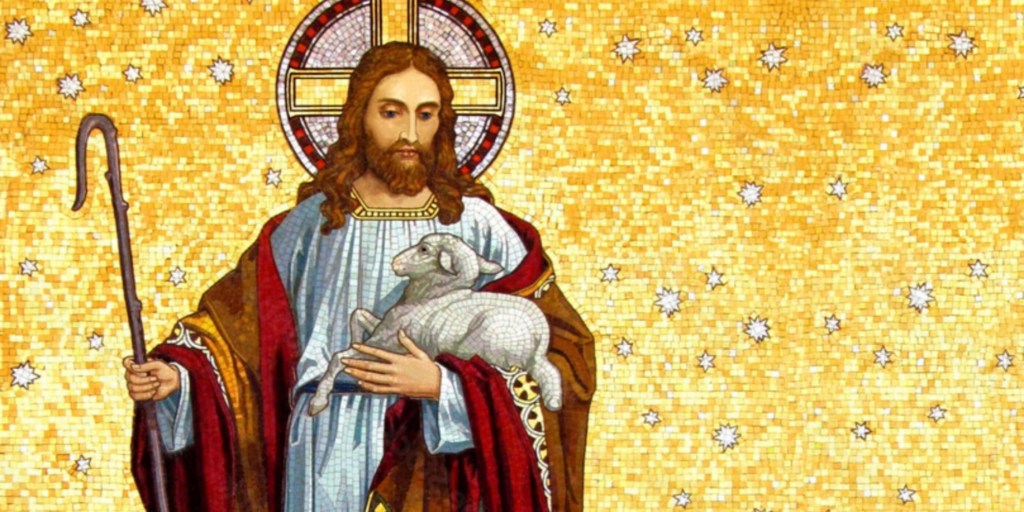
Jesus is our perfect Shepherd King. Today’s Gospel reminds us that Jesus will come as the heavenly King of the universe to judge us with perfect justice, and His decision will be final and eternally binding. Yet, at the same time, in the Gospel of John, He calls Himself the Good Shepherd (John 10:11). This means Jesus is neither an absentee ruler who only appears at an unexpected time, nor a warmonger who indulges in violence and destruction. Instead, He is a King who takes good care of His subjects, actively protects us from ultimate harm, and remains with us day and night. Like a Good Shepherd, He knows each of us by name.
Recognizing Jesus as the divine Shepherd King serves as both good news and a constant reminder for us all. We are assured of His love, care, and protection; He never abandons us and genuinely seeks what is best for us, even to the point of laying down His own life. At the same time, Jesus is a just King who judges us based on how we respond to His love and care. Therefore, in our relationship with Him, we must maintain a healthy balance between spiritual trust in His mercy and constant vigilance against a life of sin.
Manila
Valentinus Bayuhadi Ruseno, OP
Guide questions:
In the busyness and uncertainties of our daily lives, how can we deepen our trust in Jesus as the Good Shepherd who knows us by name and protects us? Looking at how we treat others, do we reflect the compassion and care of our Shepherd King, or do we sometimes seek control and power like worldly rulers? Knowing that Jesus will one day return as a just King, what areas of our lives do we need to turn away from sin so that our actions genuinely respond to His love?

