

7th Sunday of Easter [A]
May 17, 2026
John 17:1-11
In today’s Gospel, Jesus addresses His Father with the profound declaration that His “hour” has arrived—the hour of His glory. Yet, what does this hour of glory mean for Jesus?
To understand the weight of this statement, we must first examine what the world considers glorious. In antiquity, much as in the modern era, glory was synonymous with victory, achievement, and conquest. When Julius Caesar conquered Gaul (the modern-day of France), he marched into Rome to the roar of cheering crowds, parading captured leaders and spoils of war to secure his fame. We often seek glory in a similar fashion, displaying our trophies, diplomas, and credentials as symbols of our success.
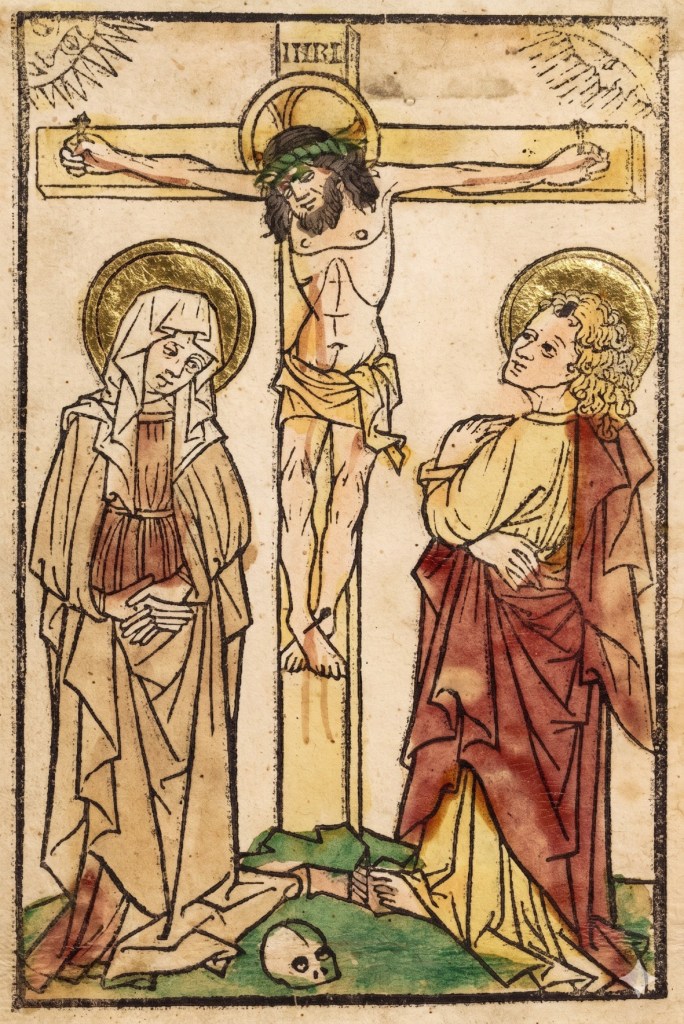
However, when Jesus speaks of His glory, He refers to something diametrically opposed to worldly triumph: the hour of His Passion, crucifixion, and death. Jesus faced a false arrest, an unjust trial, and a brutal sentence. He was tortured and forced to carry the very instrument of His execution, ultimately hanging on a cross designed for maximum humiliation and agony. Yet, in this moment of profound suffering, Jesus sees glory. For Him, true glory is not found in fame, but in the total gift of Himself through sacrificial love. It is this radical love alone that possesses the power to transform death into life.
Throughout this Easter season, our first readings from the Acts of the Apostles highlight the expansion of the early Church. While the narrative often centers on the journeys of St. Peter and St. Paul, the true protagonist of the story is the Holy Spirit. Far from appearing only at Pentecost, the Spirit continuously directed the infant Church’s every move. It was the Spirit who guided Philip to the African official in Acts 8:26-40 and led Peter to the household of Cornelius in Acts 10, resulting in the baptism of the first Roman Christians. Furthermore, the Spirit initiated the formal mission to Gentile territories by selecting Paul and Barnabas in Acts 13:2.
This divine guidance remained the bedrock of the Church’s discernment. The Council of Jerusalem concluded that it was the Holy Spirit’s will not to burden Gentile converts with the Mosaic law (Acts 15:28), and later, the Spirit of Jesus redirected Paul’s mission from Asia toward Europe (Acts 16:6-10). Under this guidance, the young Church flourished as the Gentiles embraced the faith. Yet, these “glorious moments” were only half the story. While the Church grew, she also endured relentless persecution and hardship. Peter and Paul brought many to Christ, but their path also led to rejection, imprisonment, and eventually martyrdom.
Ultimately, the Holy Spirit does not lead the Church toward worldly success or comfort. Instead, the Spirit leads us to the specific places and “hours” where we are needed most. By following this divine advocate, we are empowered to imitate our Lord, finding our own glory in the moments where we give ourselves up totally for others.
Rome
Valentinus Bayuhadi Ruseno, OP
Guide questions:
In what areas of our life are we chasing “Caesar’s glory” (fame, credentials, or status), and how might we pivot toward “Jesus’ glory” by prioritizing sacrificial love and service to others? When we face “the hour” of our own personal trials or humiliations, do we see them only as obstacles, or can we identify ways that God might be using those moments to demonstrate radical love? The Holy Spirit led the early Church to places of need rather than places of comfort; where is the Spirit leading us to go right now that might require us to step out of our comfort zone?

