Featured

God’s “Illogical” Love

27th Sunday in Ordinary Time [A]

October 4, 2026

Matthew 21:33-43

Our Gospel tells us the story of a vineyard owner who entrusted his vineyard to workers so that they might take care of it and produce a good harvest. At first, this seems like a normal occurrence in the agrarian industry. Yet, as the story unfolds, we see strange, unexpected events begin to happen. What are those unexpected events?
First, the owner prepared almost everything before leaving: he planted the vines, built a hedge to protect the vineyard from wild animals such as boars and foxes, dug a wine press where the grapes could be crushed to produce juice for fermentation, and built a watchtower where a guard could be stationed to watch for incoming animals or thieves. The tower could also serve as a shelter for the workers to rest. It is important to note that the vineyard owner was under no legal obligation to provide all these facilities.

Second, and even more remarkable, is what happened after his first servant was beaten by the rebellious tenants. The expected response would have been for the owner to immediately send an army to take back his land and punish the ungrateful laborers. Instead, he chose to do something unthinkable: he sent more servants, knowing they might meet the same cruel fate. Finally, he chose to send his own beloved son, believing the workers would respect him. However, the wicked men did not hesitate to kill the owner’s son (Matthew 21:33–39, Mark 12:1–8, Luke 20:9–15).

Looking at the landowner’’ actions, we recognize that they appear completely irrational, even foolish. No logical person would act this way. Yet, what the landowner did is precisely what the Lord does for us. As Sacred Scripture reminds us, “For God so loved the world that he gave his only Son” (John 3:16), fully knowing that humanity would repeatedly reject Him. This divine love defies human logic and comprehension, yet it is through this very love that we hold the hope of ultimate salvation rather than condemnation.

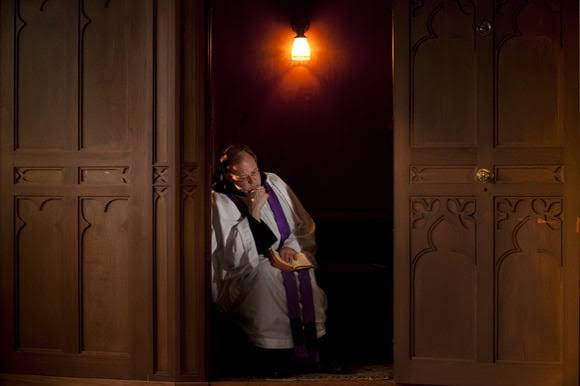
On one occasion, a student asked a priest, “Father, why do we need to confess our sins when we know we are going to sin again anyway?” It was a logical and challenging question. The priest answered, “Yes, you are right. We will fall into temptation again.” After a thoughtful pause, he continued, “When we get sick, we take medicine to get well. Even though we know we might get sick again in the future, we do not stop taking medicine.”

The Sacrament of Reconciliation is the greatest proof of God’s unimaginable love and mercy toward us. No matter how sinful we are, how flawed we feel, or how far we have fallen, God is always ready to receive us when we approach Him with true contrition. He knows our weaknesses and foresees our future falls, yet He never withdraws His love. However, while God’s grace is freely given, it is never cheap. If we continue to take His love for granted and abuse His mercy, then at the final judgment, the Lord will return not as our Savior, but as our Just Judge.

Manila

Valentinus Bayuhadi Ruseno, OP

Guide Questions:
How often do I recognize and appreciate the gifts, blessings, and grace that God has already prepared and entrusted to me in my life? When I repeatedly fail or fall into the same sins, do I humbly seek God’s mercy in confession, or do I make excuses and stay away from Him? Am I truly striving to grow in holiness, or am I taking God’s love for granted and abusing His infinite mercy in my daily choices?

Kenosis and Love

26th Sunday in Ordinary Time [A]

September 27, 2026

Philippians 2:1-11

Philippians 2:5–11 is one of the most beautiful and profound passages in Scripture. Many scholars and theologians have recognized it as an ancient Hymn of Christ, either composed by St. Paul himself or inherited from the earliest Christian communities. What can we learn from this profound hymn?

The first lesson lies in the act of self-emptying, known in Greek as kenosis (v. 7). This act of self-emptying was possible precisely because Jesus possesses the full nature of God. As God, He had every right and power to remain in heavenly glory with the Father and the Holy Spirit. From heaven, Jesus could have dealt with sinful humanity in any way He pleased, whether by punishing us severely or eradicating us completely. Even if He had wished to pardon us, He could have done so simply by speaking a single word of forgiveness from the comfort of His heavenly throne. Instead, He chose something far beyond human imagination: He descended from heaven and became man. This decision was driven by His radical humility. Jesus was not obsessed with holding onto His divine glory, majesty, and splendor, nor was He hungry for worship or adoration. Instead, He loved us so immensely that He chose to become like us in our human weakness.

Furthermore, His act of self-emptying did not end with the Incarnation; it went even deeper to embrace the lowest state of human suffering: death as a crucified man. In the time of Jesus, crucifixion was a penalty so brutal that it was reserved only for the worst criminals, such as murderers and rebels. Jesus did not merely set aside His divine majesty; He was willing to be counted among the most degraded of human beings. Jesus walked this path to demonstrate one ultimate truth: He loves us to the very end. His unimaginable self-emptying, motivated by radical humility, reveals the depth of God’s infinite love.

St. Paul further amplifies this truth by linking Christ’s self-emptying to its spiritual effect when he writes, “For you know the grace of our Lord Jesus Christ, that though he was rich, yet for your sake he became poor, so that you by his poverty might become rich” (2 Cor 8:9). Through this hymn, St. Paul teaches us the precious lesson that true love is realized through humility and self-emptying. It is through this very self-emptying that love transforms and enriches the ones we love.

St. Paul recognized Christ’s self-emptying and strove to follow in the footsteps of his divine Master. He left everything behind to proclaim Jesus Christ and establish churches in many lands. Living a very simple life, he worked by day as a tentmaker to support himself and his mission, while spending his nights teaching the Gospel to the faith communities. Though he surrendered everything for Christ, the early Christians gained Christ and an abundance of spiritual gifts. Paul gained nothing in the eyes of the world except hardship and trials, yet he rejoiced in his sufferings because he was able to participate in the afflictions and self-emptying of Christ (Col 1:24).

Ultimately, we love truly when we are willing to empty ourselves so that those we love may be made rich.

Manila

Valentinus Bayuhadi Ruseno, OP

Guide Questions:
In what areas of my life am I holding on to my rights, status, or desire for recognition, and how can I practice radical humility like Christ in those situations? Am I willing to lower myself or set aside my own comfort so that the people I love can be built up, enriched, and supported? When I face hardships, trials, or sacrifices for the sake of others, do I see them as empty burdens, or can I embrace them as a way to participate in Christ’s self-emptying love?

The Reason Behind Fraterna Correctio

23rd Sunday in Ordinary Time [A]

September 6, 2026

Matthew 18:15-20

Our Gospel passage addresses the act of offering correction to our brothers and sisters when they commit a sin against us. This pericope is traditionally known in Latin as Fraterna Correctio. Why is this teaching on fraternal correction considered so important that our Lord Himself laid out a clear procedure for it?

First, we must clarify that we are not dealing with mere human lapses or simple mistakes, such as choosing the wrong outfit or forgetting to comb our hair, but with sin. Sin is a direct violation of God’s law. Although the Gospel states, “when a brother sins against you,” sin is ultimately committed against the Lord. When we steal from a brother, we do not merely harm him; we offend the Lord by committing an act that displeases Him. While harming our neighbor can strain or destroy earthly relationships, violating God’s law brings far graver consequences, as it imperils our eternal life with Him.

Second, the Gospel emphasizes that the person who sins against us is our brother. Throughout this pericope, the word “brother” refers not only to biological siblings or relatives, but Jesus’ disciples, meaning the fellow members of the Church—our Christian brothers and sisters united by baptism and faith in Jesus Christ. While we certainly ought to correct family members and relatives when they sin, the Lord also requires us to care for our broader spiritual family. The Lord places this responsibility upon us for a reason revealed in the first reading, Ezekiel 33:7–9. Speaking through the prophet Ezekiel, the Lord warns that if we fail to call our brothers to repentance, we share in their guilt. Our silence signals either approval of their actions or indifference toward their souls, both of which displease the Lord.

Third, correcting our brothers is fundamentally a saving act of love. When we love people, we desire the highest good for them, which is ultimately eternal life in heaven. Loving them means helping them reach that goal while urging them to avoid anything that threatens their salvation. By reminding them to repent from their sins, we fulfill the greatest commandments: to love the Lord and to love our neighbor. We love the Lord by fulfilling His desire to guide our brothers away from a sinful life, and we love our brothers by drawing them closer to God.

However, we must also remember that the choice to repent ultimately belongs to them. After doing our best to correct them, if they persist in their sin, we should not grow overly frustrated or consumed by sorrow. Instead, we entrust them to the Lord in prayer, recognizing that only He can transform a human heart. Furthermore, as those who offer correction, we must maintain a humble spirit, acting as servants of the Lord rather than assuming a position of superiority over our brothers. As we care for others through fraterna correctio, we must continually guard our own hearts against pride and hypocrisy.

Manila

Valentinus bayuhadi ruseno, OP

Guide questions:
How often do we remain silent when a brother or sister in Christ strays, and are we holding back out of indifference or a genuine lack of love? Do we approach fraterna correctio with true humility as fellow servants, or do we secretly feel superior to those we are trying to correct? When someone refuses to listen to our gentle corrections, can we peacefully entrust them to God in prayer without giving in to anger, frustration, or pride?

Living Sacrifice

22nd Sunday in Ordinary Time [A]

August 29, 2026

Rome 12:1-2

In his Letter to the Romans, St. Paul urges the faithful to offer their bodies as a “living sacrifice” (Romans 12:1). For ancient readers, St. Paul’s statement was a striking oxymoron—a figure of speech that combines two words of opposing meaning, such as “bittersweet” or “controlled chaos.” But why was Paul’s concept of a “living sacrifice” an oxymoron in the first place?

In ancient times, people worshiped their gods by offering sacrifices. This was especially true for the Israelites in Paul’s era. Worshippers would travel to the Temple in Jerusalem bringing animals—most commonly lambs—for sacrifice. First, the priests would inspect each animal to ensure it was free of defects. After certification, the worshipper would lay his hands on the animal’s head to symbolically identify himself with it. The animal’s throat was then cut with a swift, continuous motion of a razor-sharp knife to ensure a rapid death. A priest would catch the fresh blood in a sacred basin, stirring it continuously to prevent coagulation, before carrying it to the Altar to splash or sprinkle against its base. Finally, the priests flayed the animal, cut it into portions, and placed either parts of it or the whole victim onto the Altar to be burned (see Leviticus 1–4).

Because sacrifice in both the pagan world and ancient Israel was inextricably linked with the death of the victim, St. Paul’s phrase “living sacrifice” sounded like a direct contradiction. However, Paul was drawing upon a rich Old Testament tradition. The prophets frequently emphasized that animal sacrifices were meaningless without true, heart-felt repentance. King David proclaimed, “The sacrifices of God are a broken spirit; a broken and contrite heart, O God, you will not despise” (Psalm 51:17). Similarly, the prophet Hosea declared God’s message: “For I desire mercy, not sacrifice, and acknowledgment of God rather than burnt offerings” (Hosea 6:6).

To become a “living sacrifice” still involves death, but not a physical one. St. Paul explained this personal transformation when he wrote, “I have been crucified with Christ; it is no longer I who live, but Christ lives in me” (Galatians 2:20). Paul was not literally executed on a wooden cross; rather, he put to death his ego, selfish interests, and worldly desires to live entirely for Jesus Christ. From that point on, everything he said and did was oriented toward pleasing the Lord and advancing the Gospel.

Just as Jesus offered Himself as a complete sacrifice on the cross, St. Paul surrendered his own body and life to God by living in total conformity with the divine will. In the same way, St. Paul invites us to offer our bodies, work, studies, relationships, rest, and even our sufferings as a living sacrifice. In everything we do, we strive to please God and live according to His will. For Catholics, every daily activity can be united with the self-offering of Jesus in the Holy Sacrifice of the Mass, becoming part of that perfect offering that constitutes true, spiritual worship (Romans 12:1).

Guide questions:
How can we put to death our own egos, selfish desires, and worldly ambitions so that Christ can truly live through us each day? In what ways can we offer our daily routines—our work, studies, relationships, and even our struggles—as a living sacrifice to God? Are we offering God meaningful inner devotion and mercy in our daily actions, or are we simply going through the motions of outward religious habits?

Who Is Jesus to You?

21st Sunday in Ordinary Time [A]

August 23, 2026

Matthew 16:13-20

Today, Jesus asked His disciples, “Who do you say that I am?” (Matthew 16:15). Arguably, this is the most important question we will answer in our lives. We might answer in various ways—that Jesus is our beloved friend, the Good Shepherd, our leader, or our Savior and Redeemer. While all of these descriptions are true, the moment we confess Jesus as our Lord and God, everything changes.

If we truly accept Jesus as our God, our lives must be oriented around Him, making Him our first priority. Giving Him the highest honor is hardly enough; instead, we must offer Him the worship that only God deserves. Sharing some of our time, resources, and talents for His glory is far from enough; we are called to dedicate our whole lives to Him. Being baptized and attending church every Sunday are only the minimum requirements; Instead, we should strive to please Him in every aspect of our lives—in our words, actions, and daily choices at all times.

Many of us might object that this standard is impossible to maintain because we are not priests or nuns, or because we want to pursue other legitimate priorities such as our careers, hobbies, and personal ambitions. To many, this demand seems unrealistic. However, this expectation does not arise out of thin air; rather, it flows naturally from the virtue of justice.

Simply put, justice means giving someone what is due. When an employer pays a fair wage to an employee who has completed their work, it is not an act of charity, but an obligation demanded by justice. Similarly, as citizens, justice requires us to obey the law and contribute to the common good of society, such as by paying taxes. At the same time, the government has an obligation to serve its citizens honestly and with integrity by protecting them from harm, providing healthcare, and building infrastructure, because these services are obligations to citizens. All of these obligations naturally arise from the demands of justice.

If we are to practice justice in our families, workplaces, and communities, we must all the more render what is just and right to our God and Creator. We need to recognize that God was not obligated to create us, yet He brought us into existence, endowed us with reason and free will, and made us unique among all creatures on earth. Furthermore, God was not obligated to save us, yet when humanity fell into sin, He redeemed us through His Son so that we would not perish (John 3:16). Ultimately, God graciously offers us His friendship and adopts us as His children. Although we deserve nothing from God, He has given us everything. Therefore, the virtue of justice demands that we give God everything we have—our time, our talents, and even our lives. This does not mean that we are all called to be priests or monks/nuns. As laypeople and professionals, we can prioritize Jesus by ensuring that every decision we make aligns with His divine will and pleases Him.

Manila

Valentinus Bayuhadi Ruseno, OP

Guide questions:

How actively do we allow our belief in Jesus as our Lord and God to reshape our daily choices, priorities, and habits? Do we give God only the bare minimum of our time and talents, or do we strive to give Him the full devotion He justly deserves? In what practical ways can we honor God and seek His will in our daily lay vocations, families, and careers?

The Wheat and Tares in Our Hearts

16th Sunday in Ordinary Time [A]
July 19, 2026
Matthew 13:24-43

Today we hear the Parable of the Wheat and the Tares. An interesting point arises when the landowner realizes that the tares are growing alongside the good crops, yet he chooses to let them live together. Why does he make this decision?

When the servants suggest that the tares be removed immediately, the landowner refuses for purely practical reasons. In their early stages of growth, the tares look almost identical to healthy wheat. If the servants insist on pulling the tares prematurely, they will mistakenly uproot the good wheat. While this action makes perfect sense in an agricultural context, Jesus does not explicitly explain in His theological discourse why God does not immediately punish those who carry evil in their hearts. This fact raises an important question: what is the deeper spiritual reason that God allows the wicked and the righteous to coexist in this world for a time?

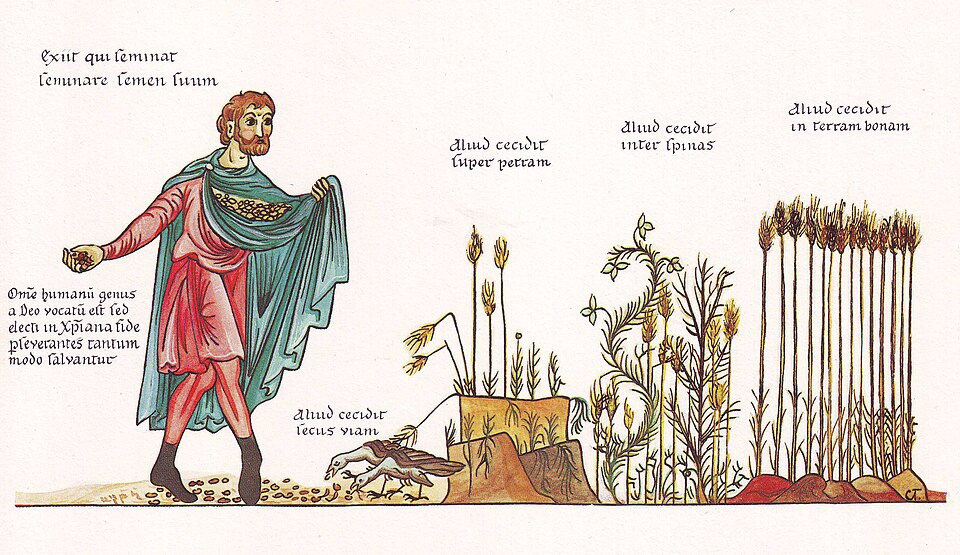
The answer is closely related to the Parable of the Sower, told earlier in Matthew 13:1-23 (the previous Sunday). In this parable, Jesus describes four types of soil that represent the disposition or condition of the human heart when hearing God’s Word: the path, the rocky ground, the thorny ground, and the fertile soil. Unlike the static nature of real-world soil, the spiritual disposition of the human heart is dynamic and can change over time. This dynamic nature is key to understanding why God delays the destruction of the spiritual “tares.” Within the human heart, both the Word of God and worldly influences constantly struggle to dominate the soil of our lives. When faced with the influence of evil forces, humans have varying responses; some ignore evil, some fight against it, and still others welcome it until it develops into sinful actions.

The human capacity for internal change explains why Jesus chose to allow the “tares” to continue growing among the wheat rather than passing instant judgment. God allows this spiritual struggle because He knows that even though a heart is currently being controlled by evil influences, that person’s life story is not over. Through His gracious free will, a person currently living as a “weed” has the opportunity to repent, change, and ultimately transform into “wheat.” This principle is tremendous good news for all of us. Even when the whispers of evil spirits try to conquer our hearts, God patiently continues to provide His help so that we have the opportunity to heal and bear good fruit.

God helps us fight the seeds of evil in our hearts in several practical ways. First, He works through His Word, planted within us through the Scriptures, which not only inspires us to do good but also trains us to recognize and resist evil. Second, He pours out His grace sacramentally, especially through the soul-nourishing Eucharist and the Sacrament of Reconciliation, which restores our relationship with Him. Third, God provides the Christian community as a vital refuge where we can find spiritual support and encouragement from fellow believers. Finally, He even uses life’s suffering and trials as a spiritual “pruning” process to remove harmful traits that cling to us, so that we can grow into stronger individuals.

Surabaya
Valentinus Bayuhadi Ruseno, OP

Guiding questions:
How deeply do we delve into Scripture so that we can clearly distinguish between the good seeds of God and the subtle weeds of the enemy in our daily lives? When we recognize bad tendencies or habits taking root in our hearts, do we actively seek help through the sacraments and community, or do we try to face the struggle alone? Finally, how can we shift our perspective on life so that we see current suffering and trials not as God’s abandonment, but as His patient and loving way of pruning us to become more fruitful?

Why Parables

5th Sunday in Ordinary Time [A]

July 12, 2026

Matthew 13:1-23

Today, we listen to Jesus’ iconic Parable of the Sower. Of course, this is not the only parable Jesus tells. He also teaches the Parables of the Hidden Treasure and the Costly Pearl (Mat 13:44-46), the Parable of the Ten Virgins (Mat 25:1-13), and the Parable of the Prodigal Son (Luk 15:11-32), to name just a few. From this frequency, we can conclude that Jesus favors teaching through parables. Yet, what exactly is a parable, and why does Jesus choose this specific method in the first place?

The English word “parable” comes from the Greek παραβολή (parabolē), which literally means “to throw alongside,” and signifies a comparison. In the Parable of the Sower, we see two distinct realities—daily human life and spiritual, divine truth—being placed side-by-side and compared. Jesus directly links the seeds scattered by the sower to the word of the Kingdom. Meanwhile, the four types of soil that receive the seed represent the four different dispositions of the human heart when encountering that word. But this raises another question: why does Jesus use a symbolic parable to teach rather than simply speaking in a straightforward, direct manner?

For many of us who regularly listen to Jesus’ parables during the Mass and hear priests explain them, the meaning of each story seems obvious and easy to comprehend. However, the experience was entirely different for Jesus’ disciples and the Jewish crowds who heard these parables for the very first time. In the Gospel, after Jesus delivers the Parable of the Sower, the disciples are confused and at a loss regarding its meaning. Consequently, they approach Jesus in private and ask, “Why do you speak to the people in parables?” (Mat 13:10).

Jesus then gives them the true reason behind this method: “Because the knowledge of the secrets of the kingdom of heaven has been given to you, but not to them” (Mat 13:11). This reveals that the purpose of a parable is dual: it is meant both to reveal and to hide. The ultimate key to unlocking a parable is faith in Jesus. For those who have faith, the secret behind the story is opened and properly understood; for those who lack faith, the meaning remains hidden. This is why the deeper explanation of the Parable of the Sower is given strictly to the disciples during a private moment with Jesus.

Understanding the truth behind Jesus’ parables is a beautiful sign that we possess faith in Him. Yet, true faith is never a static, passive acceptance of Jesus as our Lord; it is a life-transforming force. This is precisely the lesson embedded in the Parable of the Sower. The Lord has sown His word into our hearts, but we must do our part to allow that word to transform our lives. As Jesus clearly explains, unless the Word penetrates deeply and takes root in our hearts, we will fall away when difficult times arise. Likewise, unless we clear away the thorns of worldly anxieties and ambitions, the Word will be choked and fail to bear fruit. Ultimately, a parable is not just an invitation to understand Christ through faith, but a direct challenge to transform our daily lives and become truly fruitful in Him.

Bandung

Guide questions:
How deeply have we allowed the word of God to penetrate our hearts, and are we nurturing its roots so that our faith can withstand difficult times? What are the specific “thorns” of worldly anxieties and personal ambitions in our daily lives that are currently choking the word and preventing us from bearing fruit? Do we treat our faith as a passive, static acceptance of Jesus, or are we actively collaborating with Him to let His teaching transform our actions and choices?

The Holy Spirit and the Hour of Glory

7th Sunday of Easter [A]

May 17, 2026

John 17:1-11

In today’s Gospel, Jesus addresses His Father with the profound declaration that His “hour” has arrived—the hour of His glory. Yet, what does this hour of glory mean for Jesus?

To understand the weight of this statement, we must first examine what the world considers glorious. In antiquity, much as in the modern era, glory was synonymous with victory, achievement, and conquest. When Julius Caesar conquered Gaul (the modern-day of France), he marched into Rome to the roar of cheering crowds, parading captured leaders and spoils of war to secure his fame. We often seek glory in a similar fashion, displaying our trophies, diplomas, and credentials as symbols of our success.

However, when Jesus speaks of His glory, He refers to something diametrically opposed to worldly triumph: the hour of His Passion, crucifixion, and death. Jesus faced a false arrest, an unjust trial, and a brutal sentence. He was tortured and forced to carry the very instrument of His execution, ultimately hanging on a cross designed for maximum humiliation and agony. Yet, in this moment of profound suffering, Jesus sees glory. For Him, true glory is not found in fame, but in the total gift of Himself through sacrificial love. It is this radical love alone that possesses the power to transform death into life.

Throughout this Easter season, our first readings from the Acts of the Apostles highlight the expansion of the early Church. While the narrative often centers on the journeys of St. Peter and St. Paul, the true protagonist of the story is the Holy Spirit. Far from appearing only at Pentecost, the Spirit continuously directed the infant Church’s every move. It was the Spirit who guided Philip to the African official in Acts 8:26-40 and led Peter to the household of Cornelius in Acts 10, resulting in the baptism of the first Roman Christians. Furthermore, the Spirit initiated the formal mission to Gentile territories by selecting Paul and Barnabas in Acts 13:2.

This divine guidance remained the bedrock of the Church’s discernment. The Council of Jerusalem concluded that it was the Holy Spirit’s will not to burden Gentile converts with the Mosaic law (Acts 15:28), and later, the Spirit of Jesus redirected Paul’s mission from Asia toward Europe (Acts 16:6-10). Under this guidance, the young Church flourished as the Gentiles embraced the faith. Yet, these “glorious moments” were only half the story. While the Church grew, she also endured relentless persecution and hardship. Peter and Paul brought many to Christ, but their path also led to rejection, imprisonment, and eventually martyrdom.

Ultimately, the Holy Spirit does not lead the Church toward worldly success or comfort. Instead, the Spirit leads us to the specific places and “hours” where we are needed most. By following this divine advocate, we are empowered to imitate our Lord, finding our own glory in the moments where we give ourselves up totally for others.

Rome

Valentinus Bayuhadi Ruseno, OP

Guide questions:

In what areas of our life are we chasing “Caesar’s glory” (fame, credentials, or status), and how might we pivot toward “Jesus’ glory” by prioritizing sacrificial love and service to others? When we face “the hour” of our own personal trials or humiliations, do we see them only as obstacles, or can we identify ways that God might be using those moments to demonstrate radical love? The Holy Spirit led the early Church to places of need rather than places of comfort; where is the Spirit leading us to go right now that might require us to step out of our comfort zone?

The Holy Spirit and the Sacrament of Confirmation

The Sixth Sunday of Easter [A]

Acts 8:5-8, 14-17

May 10, 2026

The Sacrament of Confirmation is arguably the most underappreciated and misunderstood of the seven Sacraments. Yet, why do we fail to appreciate this sacrament? Does it even mention in the Bible? And, how does the sacrament reveal the secrets about the Holy Spirit?

We often struggle to value it because it lacks the immediate, visible impacts in our lives, yet its foundations are deeply biblical. In the Acts of the Apostles, specifically chapter 8, we see Philip the Deacon preaching and baptizing in Samaria. When the Apostles Peter and John arrived, they prayed for the converts to receive the Holy Spirit, as the Spirit had not yet fallen upon them. This ancient narrative confirms that since the time of the Apostles, a distinct sacrament existed specifically to impart the presence and gifts of the Holy Spirit, a ministry uniquely tied to the authority of the Apostles.

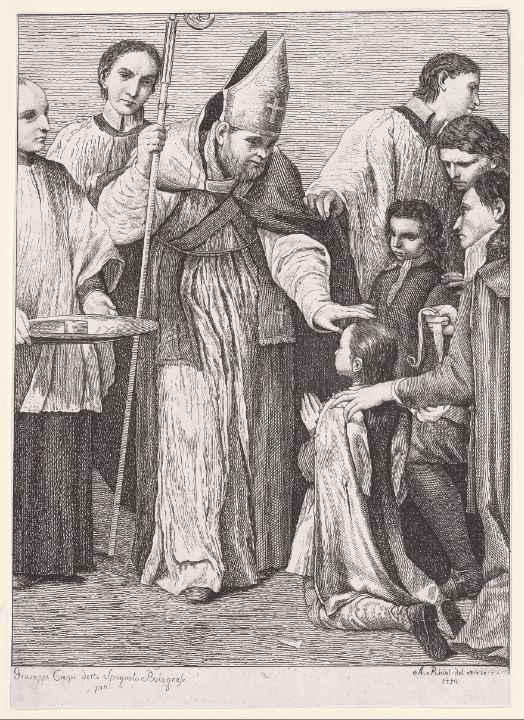
Continuing this tradition, the Church recognizes Bishops as the successors of the Apostles and the ordinary ministers of the sacrament. The name “Confirmation” is used because the Catholic Church teaches that the graces received here strengthen and solidify the initial grace of Baptism. While Baptism is viewed as a spiritual birth, Confirmation serves as a passage into spiritual adulthood. It is designed to equip the believer for their mission in the world and provide the necessary strength for spiritual warfare against the forces of darkness.

Despite its importance, Confirmation is often less popular than other sacraments because it doesn’t dramatically change a person’s external lifestyle or status, unlike Matrimony or Holy Orders. Furthermore, because it is only received once, it lacks the frequent reinforcement we find in the Eucharist or Penance. Many modern Christians also mistakenly equate spiritual growth with emotional sensations. When people do not feel “emotionally touched,” hear God’s voices, or experience spectacular gifts during the prayers, we are often tempted to perceive the sacrament as unexciting or stagnant.

However, St. Luke’s account in the Bible suggests that the Holy Spirit does not always work through spectacular displays. After Peter and John laid hands on the Samaritans, there was no mention of extraordinary fireworks, reminding us that the Spirit often works quietly and gradually. Through Confirmation, we receive an increase in the seven gifts: Wisdom, Understanding, Counsel, Fortitude, Knowledge, Piety, and Fear of the Lord. These gifts allow us to align our lives with God’s will even during trials. The true evidence of the Holy Spirit’s work is found in small, faithful acts—choosing to attend Mass when it feels boring, remaining loving during marital difficulties, or serving others without seeking praise. These are the quiet signs that the Holy Spirit through the sacrament is truly transforming the souls.

Rome

Valentinus Bayuhadi Ruseno, OP

Guide questions:

How often do I equate the strength of my faith with how “emotional” or “excited” I feel during prayer? How might I refocus on the quiet, steady growth the Holy Spirit provides? If Baptism is my spiritual birth and Confirmation is my entry into spiritual adulthood, in what specific areas of my life am I being called to move away from “infant” faith and take on the responsibilities of a mature Christian?

Sheep Shepherding another Sheep

Fourth Sunday of Easter [A]

April 26, 2026

John 10:1-10

Living in a modern and secular world, we are often confronted with the reality that those closest to us—our children, relatives, and friends—no longer believe that religion and religious activities are important. How do we respond to this with love, and how does Jesus, our Good Shepherd, provide an answer to this difficult situation?

First, we must recognize the source of our suffering. We want the best for those we love, and nothing is better for them than eternal life. Knowing that they live far from Jesus endangers their souls, and this is deeply painful for us. This awareness is crucial; it shows that our concern stems from genuine love, not a desire to control.

Since love inspires us, we must approach them with love. The first step is to understand that their rejection of religious life stems from unique reasons, which are often hidden. Some people reject religion because they believe that faith contradicts common sense, making it irrelevant in the modern world. Others no longer go to church because of painful past experiences with church leaders. Some simply want to maintain a “free” lifestyle that does not align with biblical teachings, while others are influenced by their environment or friends who have led them into misunderstandings about faith.

Furthermore, we can learn from the way the Good Shepherd cares for His sheep. The Good Shepherd guides with a firm voice, but never through coercion or violence. He walks ahead of His flock, leading by example. He cares for each of His sheep, knowing them by name and recognizing their unique characteristics. When danger approaches, He proves His love not by sacrificing the sheep, but by sacrificing His own life.

Like the Good Shepherd, we need to show care by listening to their stories and struggles. We must not come to judge, but to be respectful and trusted partners in dialogue. At the same time, we need to remain firm in our convictions, confident in the truth of our faith, and aware of the dangers of worldly desires. Most importantly, we must lead by example. We become living witnesses of our faith when we practice what we preach. Ultimately, we demonstrate that our faith is meaningful because it inspires us to stand by them when life becomes difficult, ready to sacrifice our time, energy, and even our lives for them.

Some may need logical answers about our faith, which means we must continue to learn more about it ourselves. Others need healing from past wounds, and we must be true companions on their journey home. All of this requires us to sacrifice our time, energy, and even our lives. Yet, we do so willingly because we truly love them and desire their eternal salvation.

Finally, we must remember that we are not the Good Shepherd; we are His sheep trying to shepherd other sheep. In the end, we may face failure, and it may feel as though our sacrifices are in vain. However, this must not cause us to lose hope. Instead, we must surrender everything to the true Good Shepherd. We have heard His voice, and by faithfully following Him, we will find our rest.

Rome

Valentinus Bayuhadi Ruseno, OP

Guiding Questions:

Am I truly listening to understand their unique struggles, or am I quick to judge and want to control? Do my daily actions reflect the compassion of the Good Shepherd? Do my patience, empathy, and willingness to sacrifice show those I love the positive and life-giving impact of my faith? When my efforts to help someone seem to fail and I feel discouraged, do I allow myself to fall into despair, or do I actively choose to entrust them to the true Good Shepherd?