The Holy Spirit and the Sacrament of Confirmation

The Sixth Sunday of Easter [A]

Acts 8:5-8, 14-17

May 10, 2026

The Sacrament of Confirmation is arguably the most underappreciated and misunderstood of the seven Sacraments. Yet, why do we fail to appreciate this sacrament? Does it even mention in the Bible? And, how does the sacrament reveal the secrets about the Holy Spirit?

We often struggle to value it because it lacks the immediate, visible impacts in our lives, yet its foundations are deeply biblical. In the Acts of the Apostles, specifically chapter 8, we see Philip the Deacon preaching and baptizing in Samaria. When the Apostles Peter and John arrived, they prayed for the converts to receive the Holy Spirit, as the Spirit had not yet fallen upon them. This ancient narrative confirms that since the time of the Apostles, a distinct sacrament existed specifically to impart the presence and gifts of the Holy Spirit, a ministry uniquely tied to the authority of the Apostles.

Continuing this tradition, the Church recognizes Bishops as the successors of the Apostles and the ordinary ministers of the sacrament. The name “Confirmation” is used because the Catholic Church teaches that the graces received here strengthen and solidify the initial grace of Baptism. While Baptism is viewed as a spiritual birth, Confirmation serves as a passage into spiritual adulthood. It is designed to equip the believer for their mission in the world and provide the necessary strength for spiritual warfare against the forces of darkness.

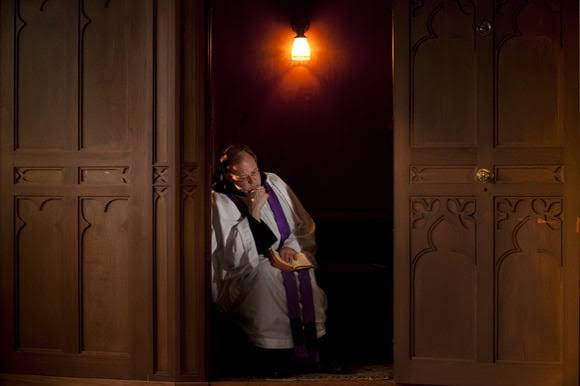
Despite its importance, Confirmation is often less popular than other sacraments because it doesn’t dramatically change a person’s external lifestyle or status, unlike Matrimony or Holy Orders. Furthermore, because it is only received once, it lacks the frequent reinforcement we find in the Eucharist or Penance. Many modern Christians also mistakenly equate spiritual growth with emotional sensations. When people do not feel “emotionally touched,” hear God’s voices, or experience spectacular gifts during the prayers, we are often tempted to perceive the sacrament as unexciting or stagnant.

However, St. Luke’s account in the Bible suggests that the Holy Spirit does not always work through spectacular displays. After Peter and John laid hands on the Samaritans, there was no mention of extraordinary fireworks, reminding us that the Spirit often works quietly and gradually. Through Confirmation, we receive an increase in the seven gifts: Wisdom, Understanding, Counsel, Fortitude, Knowledge, Piety, and Fear of the Lord. These gifts allow us to align our lives with God’s will even during trials. The true evidence of the Holy Spirit’s work is found in small, faithful acts—choosing to attend Mass when it feels boring, remaining loving during marital difficulties, or serving others without seeking praise. These are the quiet signs that the Holy Spirit through the sacrament is truly transforming the souls.

Rome

Valentinus Bayuhadi Ruseno, OP

Guide questions:

How often do I equate the strength of my faith with how “emotional” or “excited” I feel during prayer? How might I refocus on the quiet, steady growth the Holy Spirit provides? If Baptism is my spiritual birth and Confirmation is my entry into spiritual adulthood, in what specific areas of my life am I being called to move away from “infant” faith and take on the responsibilities of a mature Christian?

Sheep Shepherding another Sheep

Fourth Sunday of Easter [A]

April 26, 2026

John 10:1-10

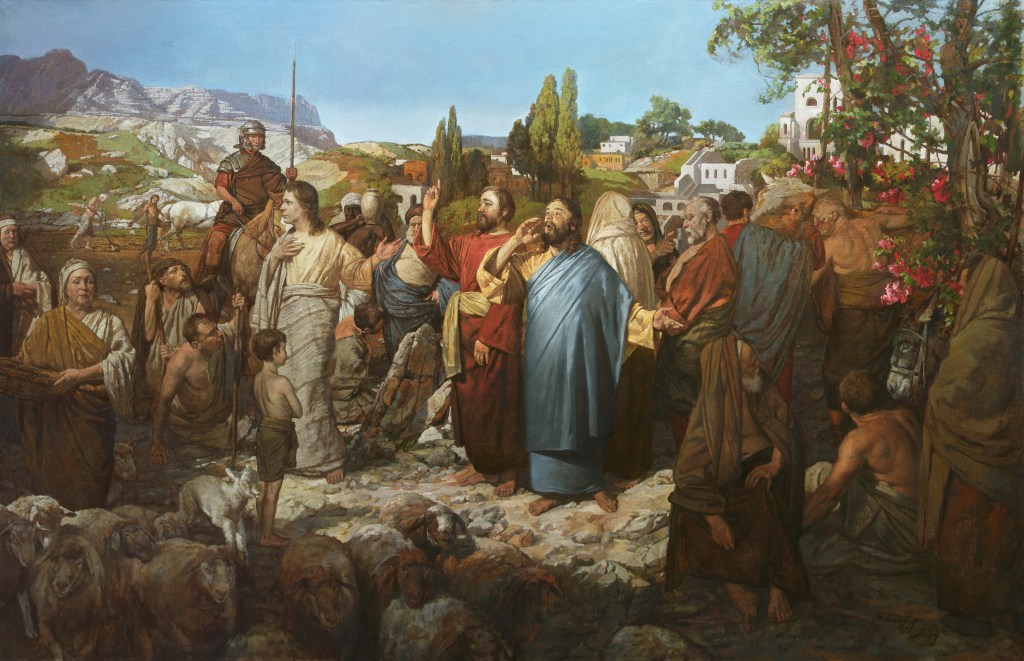
Living in a modern and secular world, we are often confronted with the reality that those closest to us—our children, relatives, and friends—no longer believe that religion and religious activities are important. How do we respond to this with love, and how does Jesus, our Good Shepherd, provide an answer to this difficult situation?

First, we must recognize the source of our suffering. We want the best for those we love, and nothing is better for them than eternal life. Knowing that they live far from Jesus endangers their souls, and this is deeply painful for us. This awareness is crucial; it shows that our concern stems from genuine love, not a desire to control.

Since love inspires us, we must approach them with love. The first step is to understand that their rejection of religious life stems from unique reasons, which are often hidden. Some people reject religion because they believe that faith contradicts common sense, making it irrelevant in the modern world. Others no longer go to church because of painful past experiences with church leaders. Some simply want to maintain a “free” lifestyle that does not align with biblical teachings, while others are influenced by their environment or friends who have led them into misunderstandings about faith.

Furthermore, we can learn from the way the Good Shepherd cares for His sheep. The Good Shepherd guides with a firm voice, but never through coercion or violence. He walks ahead of His flock, leading by example. He cares for each of His sheep, knowing them by name and recognizing their unique characteristics. When danger approaches, He proves His love not by sacrificing the sheep, but by sacrificing His own life.

Like the Good Shepherd, we need to show care by listening to their stories and struggles. We must not come to judge, but to be respectful and trusted partners in dialogue. At the same time, we need to remain firm in our convictions, confident in the truth of our faith, and aware of the dangers of worldly desires. Most importantly, we must lead by example. We become living witnesses of our faith when we practice what we preach. Ultimately, we demonstrate that our faith is meaningful because it inspires us to stand by them when life becomes difficult, ready to sacrifice our time, energy, and even our lives for them.

Some may need logical answers about our faith, which means we must continue to learn more about it ourselves. Others need healing from past wounds, and we must be true companions on their journey home. All of this requires us to sacrifice our time, energy, and even our lives. Yet, we do so willingly because we truly love them and desire their eternal salvation.

Finally, we must remember that we are not the Good Shepherd; we are His sheep trying to shepherd other sheep. In the end, we may face failure, and it may feel as though our sacrifices are in vain. However, this must not cause us to lose hope. Instead, we must surrender everything to the true Good Shepherd. We have heard His voice, and by faithfully following Him, we will find our rest.

Rome

Valentinus Bayuhadi Ruseno, OP

Guiding Questions:

Am I truly listening to understand their unique struggles, or am I quick to judge and want to control? Do my daily actions reflect the compassion of the Good Shepherd? Do my patience, empathy, and willingness to sacrifice show those I love the positive and life-giving impact of my faith? When my efforts to help someone seem to fail and I feel discouraged, do I allow myself to fall into despair, or do I actively choose to entrust them to the true Good Shepherd?

The Story of Jesus

Easter Sunday [A]

April 5, 2026

Matthew 28:1-10

We naturally like stories, especially those filled with drama and unpredictable plot twists. Knowing this, God sent His only begotten Son to become man and enter into our human history. Then, under the influence of the Holy Spirit, His disciples narrated and wrote Jesus’ life into a story. It has become the greatest story ever told. Yet, why do we like to hear stories, and why the story of Jesus is best of all?

We are creatures of language. Through words, we not only communicate with each other, but also find meanings in our lives. In ancient time, people narrated mythical stories to make sense of various natural phenomena like rain, thunder, and stars. In modern time, we have science to explain these, but unless these scientific theories are elaborated like a story, they will not be easily understood, let alone attractive.

We are not only using stories to make sense our surroundings, but also to understand who we are. This is why we are naturally attracted to a good story in well-written novels, well-executed theatrical performances or films, because we can easily participate in them. Good stories make us laugh, cry and even angry, despite knowing that we are not really part of the story. Yet, the greatest stories are those who answer the meanings of our lives. We learn from the values each character holds, words they say and actions they do or fail to do.

One time, I decided to read a classic novel “The Brothers Karamasov” by Fyodor Dostoyevsky. Initially, I was discouraged by its size, more than 800 pages. Yet, when I began to read, I was drawn into it, not only because unexpected plot, but also each character seems to be truly alive. I was particularly attracted to Alyosha Karamazov, young man who struggles to find God when his beloved mentor, father Zosima passed away.

Going back to the story of Jesus, the reason His story is the most powerful story of all time is that Jesus’ life is filled with the most amazing plot twists: He was crucified, yet rose from the death, was betrayed, yet came back ever stronger, and was pushed to the lowest place, yet returned in glory. Furthermore, his life and words teach us the deepest meanings and ultimate destiny of our lives. His teachings like the parables, the sermons on the Mount, the Law of Love remain the eternal principles that guide us into the true happiness.

Finally, the story of Jesus is the greatest story of all because for those who have faith, the story of Jesus becomes a reality in our lives. Living in this world, we cannot but endure pains and sufferings, and ultimately, we are going to die. However, when we are faithful to Jesus, even the worst things that befall us will never have the final say in our lives. Even the darkest hours in our lives, we will make sense as we participate in His cross. As St. Paul said, “Now if we died with Christ, we believe that we will be also live with Him (Rom 6:8).”

Blessed Easter!

Leuven

Valentinus Bayu, OP

King David

Fourth Sunday of Lent [A]

March 15, 2026

1 Samuel 16:1b, 6-7, 10-13a

Continuing our journey through the great figures of the Old Testament, the Fourth Sunday of Lent brings us to King David.

David is undoubtedly one of the most pivotal characters in the biblical canon. He was a shrewd warrior who defeated the bigger, stronger and more experienced Goliath with a single sling stone (1 Sam 17:45-47). As a brilliant military strategist, he was victorious in nearly every campaign (2 Sam 8:6), and as a charismatic statesman, he successfully unified the twelve tribes of Israel (2 Sam 5). Furthermore, David demonstrated profound mercy, famously refusing to harm King Saul despite having the opportunity to do so (1 Sam 24:6). Finally, we remember him as the “sweet singer of Israel,” the inspired poet whose Psalms (such as 23 and 51) we continue to recite today.

However, despite these unrivaled achievements, David’s story starts with a humble beginning. As the youngest son of Jesse from the small village of Bethlehem, David was initially overlooked by Samuel, the prophet. Samuel’s human eyes were fixed on David’s elder brothers, who possessed more impressive physical statures and military experience. Yet, God sees what man does not; He chose the inexperienced shepherd boy. Upon his anointing, the Spirit of the Lord rushed upon David (1 Sam 16:13), and from that moment forward, his success was a testament to God’s favor.

Unfortunately, David’s string of successes eventually birthed a sense of pride. He began to believe he was invincible, acting as though he were above everyone. This hubris led to his fall into lust with Bathsheba and the subsequent calculated murder of her husband, Uriah (2 Sam 11). This grave sin necessitated a stern rebuke from the prophet Nathan. Later, David erred again by conducting a census—likely to measure his own military might rather than trusting in divine protection. This act of pride forgotten that victory comes from the Lord alone, leading to divine judgment (2 Sam 24). In both instances, however, David’s deep love for God was revealed through his sincere repentance, recognizing his humble beginning. Sadly, as king, his personal failings inevitably brought consequences upon his family and the nation.

The life of David offers us a vital spiritual lesson. Like him, we all begin from a place of humility and weakness. Any “success” we achieve—be it professional advancement, physical health, or flourishing relationships—is fundamentally a gift from God. This is equally true of our spiritual lives. Our ministries and the fruits of our prayer are movements of the Spirit, not personal trophies.

Yet, pride often poisons the heart. We begin to credit our own “genius” or effort for our successes, clinging to our achievements and demanding recognition. This is the threshold of our downfall. When we focus solely on maintaining our status, we become paralyzed by the fear of failure. We lose our spirit of gratitude and replace it with complaint and resentment. We may even find ourselves manipulating others to preserve our image of success, leading to a state of spiritual misery.

Like David, we are reminded that only true repentance can restore our orientation toward the Lord, who is the sole author of our salvation. Only when we remember our humble beginning and recognize God’s role in our lives, we find true happiness.

Rome

Valentinus Bayuhadi Ruseno, OP

Guide Questions:

How does God bring us high fro our humble beginning? When we experience a “win” in our career, family, or ministry, do we instinctively offer a prayer of gratitude, or do we begin to rely on your own “genius”? When we face failure or realize we have manipulated a situation to look better than we are, do we hide in your misery, or do we have the courage to let God rebuke and restore us?

Abraham the Father of Faith

2nd Sunday of Lent [A]

March 1, 2026

Gen 12:1-4

The first readings of the Sundays of Lent offer us a glimpse into the history of salvation, particularly within the Old Testament. Last Sunday, we encountered Adam and Eve, reflecting on their creation and their eventual fall from grace. Today, we meet Abraham, the first patriarch. But why Abraham?

Abraham’s original name was Abram, which literally means “the exalted father.” For much of his life, this name served as a source of irony, perhaps even mockery, since he was elderly and childless. How could he be an “exalted father” with no children to exalt him? It was then that the Lord appeared to Abram. At seventy-five years old, he received a staggering command: leave his homeland for a faraway territory. With this command came a promise: he would become the father of many nations, and through him, blessings

At first glance, this calling might have seemed like another cruel joke in Abram’s life. Though childless, he lived comfortably among his kinsmen and was set to die in his homeland under the protection of familiar “gods.” Yet, the Lord called him out of his comfort zone and into unknown territories where danger and misery often lurked. We cannot know exactly what was in Abram’s mind, but we know his actions: he chose to trust a God he barely knew and put his life on the line. His kinsmen might have thought him delusional or senile. Little did he know that his decision would not only change his life but transform the future of humanity.

Following the Lord is rarely a breeze. While Abram was blessed with great wealth, vast livestock, and hundreds of retainers, even defeating four kings with his 318 trained men (Gen 14). he still lacked a promised heir. When he reached the age of ninety-nine, God changed his name to Abraham, meaning “father of many nations.” Yet, he continued to wait for the one thing that would make that title a reality. Finally, when Abraham was 100 years old, Sarah gave birth to Isaac (Gen 21:5).

However, the story did not end with a simple “happily ever after.” God eventually asked for something unthinkable: that Abraham sacrifice his only son, Isaac (Gen 22). Just as he had obeyed in the beginning, Abraham obeyed again. Fortunately, an angel prevented him from harming Isaac, and the Lord blessed Abraham even more for his faithfulness.

Abraham passed away at the age of 175. While he had other sons, one through Hagar and six through Keturah, their numbers still fell short of the literal “many nations” promised to him. Abraham closed his eyes without seeing the full extent of those nations, yet he did not complain or grow bitter. Abraham was not perfect. At one point, he was dishonest with Pharaoh and acted cowardly by giving up his wife, Sarah, to the King of Egypt (Gen 12:10-20). Yet, despite his imperfections, he fundamentally believed that God would fulfill His word. From Abraham came the Israelites, and from the Israelites, we received Jesus.

Rome

Valentinus Bayuhadi Ruseno, OP

Guide Questions:
In your life right now, what is the “homeland” or comfort zone God might be asking you to leave behind to follow Him more fully? Have you ever felt that God’s promises for your life contradict your current reality? How do you maintain hope when your circumstances seem to “joke” at your faith? How does knowing that God uses imperfect, flawed people to transform the future of humanity change the way you view your own mistakes and shortcomings?

Clay of the Ground

1st Sunday of Lent [A]

February 22, 2026

Genesis 2:7-9, 3:1-7

Traditionally, the Gospel reading for the first Sunday of Lent is the story of Jesus in the wilderness for forty days, where He fasted and was tempted by Satan. However, in this reflection, we will look deeper into the first reading from the Book of Genesis.

The Church combines two stories in this first reading: the creation of Adam (Gen 2:7-9) and the fall of our first parents (Gen 3:1-7). In order to do this, the lectionary skips around 16 verses (Gen 2:10-25), omitting Adam’s activities in the Garden of Eden and the creation of Eve. I believe the reason is not purely practical (simply avoiding overly long reading), but rather that the Church wishes to show us a hidden truth that connects the two stories.

First, we must recognize that the story of the creation of Adam is not merely a biological lesson, but a profound theological truth. Adam was created from the dust of the ground (עפר מן־האדמהapar min ha-adama). We, as humans, are nothing but mere soil—fragile, dirty, and essentially worthless. In fact, there is a clear play on words in Hebrew to remind us of our lowly origin: the word Adam (the first man) is almost identical to the word for ground (Adama).

However, the Book of Genesis pushes further by pointing out that while we are nothing, God is everything; while we are powerless, God is omnipotent. Yet, despite the infinite gap between God and us, the author of Genesis reveals God’s immense love for humanity. Depicted as a divine artisan with His skillful hands and life-giving breath, God formed this worthless dust into one of His most refined creatures. Furthermore, God made us His co-workers in His Garden, entrusting us to care for the other creatures. We are who we are solely because of God’s love.

Moving to chapter 3, the serpent tempts Adam and Eve. His strategy is simple yet extremely effective. He claimed that God was not telling the truth and that God did not want Adam and Eve to be like Him, thus forbidding them to eat the fruit. The idea of being like God was extremely attractive, and pride began to corrupt their hearts. They desired to be like God without God, acting as His rivals rather than living as His servants. They forgot the most fundamental truth about themselves: they are nothing but dust, and everything good they have comes from God. Consequently, they fell.

By joining the stories of Adam’s creation and his fall, the Church teaches us that when pride poisons our hearts, we begin to ignore our humble origins and are doomed to fall. As St. John Chrysostom stated in a 4th-century homily: “[the story of Adam’s creation] is to teach us a lesson in humility, to suppress all pride, and to convince us of our own lowliness. For when we consider the origin of our nature, even if we should soar to the heavens in our achievements, we have a sufficient cause for humility in remembering that our first origin was from the earth.”

Rome

Valentinus Bayuhadi Ruseno, OP

Guide questions:

In what areas of my life do I forget my humble origins (“dust”) and fail to recognize that all my gifts, talents, and successes ultimately come from God? How does pride manifest in my daily choices? Do I sometimes try to be “like God without God” by seeking total control over my life, rather than trusting Him as His servant and co-worker? When I “soar to the heavens” in my earthly achievements, what practical practices can I adopt to stay grounded and remember my fundamental reliance on God’s love?

Purifying One’s Heart

5th Sunday in Ordinary Time [A]

February 8, 2026

Matthew 5:13-16

Continuing His Sermon on the Mount, Jesus reveals our identity as the “light of the world.” As such, our light must shine and be seen by others. Interestingly, only one chapter after this teaching, Jesus instructs His listeners: “Be careful not to practice your righteousness in front of others to be seen by them” (Mt 6:1). At first glance, it may seem that Jesus is contradicting Himself. How are we to understand this?

While these instructions appear opposing, they are, in essence, complementary. The bridge between these two statements is intention: is the action meant to glorify the Lord or simply to seek personal glory? As Matthew 5:16 suggests, the motivation behind our good works is decisive. If we perform noble deeds to receive personal recognition, they lose their merit before the Lord. However, if we sincerely desire to lead people to God, our efforts truly please Him rather than men.

The Art of Discernment

Recognizing our true intentions is never a child’s play. It requires us to dwell in silence and reflect deeply on our actions and the motivations behind them. In the Catholic tradition, we call this spiritual process discernment; in our Dominican tradition, it is a vital part of contemplation. In modern scientific terms, this is meta-cognition—the act of “thinking about thinking.”

To practice this discernment, we can follow three simple steps:

  1. Seek the Virtue of Humility The ability to recognize our deepest intentions begins with God’s grace softening our hearts. Without humility, we may never consider that something might be “off” with our actions. Humility empowers us to face the unpolished parts of our humanity with contrition, leading to repentance. It acts as a sensor, detecting hidden motives driven by pride or self-interest.
  2. Ask Difficult Questions We must be attentive to our emotional reactions. Ask yourself: “When others ignore or fail to appreciate my good deeds, do I feel sad, angry, or disappointed? Do I lose the motivation to continue?” If the answer is yes, the motivation may be self-centered. Another vital question is: “If these good works were taken away from me, would I feel deeply pained or resentful?” Such a reaction often indicates an unhealthy attachment, suggesting we view the work as “ours” rather than “the Lord’s.”
  3. Request the Purification of Intentions Once we become aware of our interior motivations, we should not be discouraged or stop doing good. Even if our intentions are mingled with selfish desires, God’s grace is constantly working to sanctify us. To purify your heart:
    • Be grateful for every opportunity to do good, whether the task is big or small, a success or a failure.
    • Redirect praise: When people appreciate your deeds, invite them to thank the Lord with you.
    • Embrace criticism: Be thankful for those who criticize you, as they can be instruments of your spiritual purification.

Rome

Valentinus Bayuhadi Ruseno, OP

Guide Questions:
What are our good works we do for our families, our community and the Church? When others ignore or fail to appreciate my good deeds, do I feel sad, angry, or disappointed? Do I lose the motivation to continue? If these good works were taken away from me, would I feel deeply pained or resentful? Do I prioritize our ministries more than my family?

Jesus the Lamb of God

Second Sunday in Ordinary Time [C]

January 18, 2026

John 1:29-34

Today, John the Baptist identifies Jesus as “the Lamb of God who takes away the sin of the world.” For us as Catholics, this title is one of the most familiar, for we proclaim it at every Mass moment before receiving Holy Communion. But do we understand what it means? Why must we make this specific acclaim before approaching the altar?

To grasp the weight of this title, we must look back to the Old Testament. The lamb was the quintessential sacrificial animal of Israel. It was a lamb that served as the sacrifice of the Passover, the instrument through which God saved Israel from death and liberated them from the slavery of Egypt. The lamb was also central to the worship of the Sanctuary: in the “Tamid,” the daily offering (Ex 29:39); the “Olah,” the burnt offering (Lev 1:10); the “Shelamim,” the peace offering (Lev 3:7); and the “Hattat,” the sin offering (Lev 4:32).

We might ask, “Why the lamb?” The reason is partly practical. Sheep were abundant in the ancient world, but unlike other livestock, the lamb offers the least resistance when faced with death. It does not fight; it does not scream. This silence inspired the prophet Isaiah to describe the Suffering Servant: “Like a lamb that is led to the slaughter, and like a sheep that before its shearers is silent, so he opened not his mouth.”

Yet, Jesus is no ordinary lamb. He is the Lamb of God. The Greek phrase ho amnos tou Theou implies not only a lamb belonging to God but a lamb provided by God. Jesus is the perfect victim, prepared not by human hands, but by the Father. He is the fulfillment of Abraham’s prophecy to Isaac: “God himself will provide the lamb.” Because He is of God, He is the only offering truly acceptable to God.

Jesus, therefore, is the Lamb of God because He is the total fulfilment of every ancient sacrifice.

  • Like the Passover Lamb, He is slain and consumed so that we might be spared from eternal death.
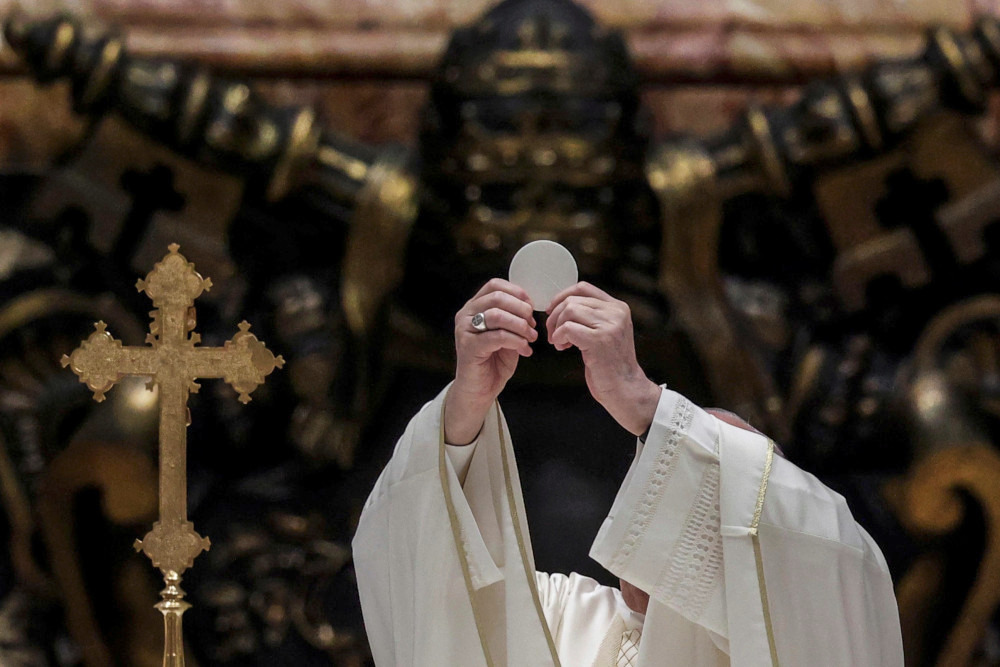
  • Like the Tamid, He is offered daily in the Eucharist.
  • Like the Olah, He is given totally in obedience to the Father.
  • Like the Shelamim, He is our peace (Eph 2:14).
  • Like the Hattat, He becomes the offering that cleanses us of sin (2 Cor 5:21).

This is why we cry out, “Lamb of God… have mercy on us.” We are acknowledging that without His perfect sacrifice, we could not be saved from our sins. And finally, when we pray, “Grant us peace,” we confess that without Jesus—our true Peace Offering—there can be no reconciliation between us and the Father.

Rome

Valentinus Bayuhadi Ruseno, OP

Questions for reflection:

“How do we prepare ourselves to worthily receive the sacrifice of Jesus in the Eucharist? How do we participate in the Mass? Do our actions during the liturgy bring us closer to Jesus, or do they distract us? Finally, how do we offer our lives to God through our daily activities?”

Joseph the Just Man

4th Sunday of Advent [C]

December 21, 2025

Matthew 1:18-24

As we approach Christmas, the Gospel introduces us to the key figures surrounding the Messiah’s birth. Among them is Joseph, the foster father of Jesus. Matthew the Evangelist gives him a profound title: a “just man.” What does it mean to be like Joseph? What does it mean to be just?

Matthew uses the Greek word “δίκαιος” (dikaios), typically translated as “just” or “righteous.” In the Biblical context, being just means living in faithful obedience to God’s Law, particularly the Torah given through Moses at Sinai. This adjective is highly significant for an Israelite. Scripture consistently links the “just” person—one who lives by God’s Law—with true happiness and blessing. Psalm 1 declares, “Happy are those who… delight in the law of the Lord, and meditate on his law day and night.” Proverbs similarly praise, “The memory of the just is blessed” (10:7). Why is this life of justice so praiseworthy and fulfilling?

The answer lies in how the Israelites understood God’s Law. They did not view it primarily as a restriction on freedom, but as a gift of love and identity. God gave the Law at Sinai after choosing Israel as His holy nation. Therefore, living the Law was not merely an obligation; it was a sign of their covenant fidelity and their very identity as God’s people. Fundamentally, they saw the Law as God’s gracious guidance—the pathway to avoid the pitfalls of misery and to draw closer to Him, the source of all blessing.

Consequently, Joseph is called “just” because he is the true Israelite who meditates on, loves, and lives by God’s Law. During His formative years, Jesus would have received from Joseph not only a knowledge of the Law’s letters but also Joseph’s own love for God and His commandments. In Joseph, Jesus and Mary saw a happy and righteous man.

From St. Joseph, we learn to love God through faithful obedience. However, we must also avoid the trap of rigidity and legalism, which absolutizes the letter of the law over its spirit. Had Joseph chosen a rigid legalism, he might have applied the strictest penalty to Mary upon discovering her pregnancy, that is stoning. Yet, his justice was perfected by mercy. He recognized that the Law’s ultimate purpose is to love God and neighbor, leading him to protect Mary’s life. Joseph was a happy man because, through the Law, he loved God profoundly.

Finally, Jesus Himself holds the “just” in high esteem. He teaches, “Blessed are those who hunger and thirst for righteousness” (Matthew 5:6), and promises, “Then the just will shine like the sun in the kingdom of their Father” (13:43). While Joseph is not named explicitly in these verses, it is fitting to see in these verses a reflection of his own virtue—virtue that shaped the Holy Family.

Rome

Valentinus Bayuhadi Ruseno, OP

Questions for Meditation:

Do I strive to know God’s Law as revealed in Scripture and taught by the Church?

Do I meditate on God’s commandments, seeking the wisest way to live them out in love for God and my neighbor?

Do I follow rules blindly, or do I seek to understand the spirit and purpose behind them? How do I treat those who struggle to live by them?

Integrity

Second Sunday of Advent [A]

December 7, 2025

Matthew 3:1-12

John the Baptist’s denunciation of the Pharisees and Sadducees as a “brood of vipers” stands as one of the most startling and confrontational moments in the Gospels. To modern ears, it sounds like a severe insult. Why would John use such harsh language?

To understand his words, we must first look at John himself. He was widely recognized as a prophet of God, a man of unwavering integrity whose life embodied his message. Calling for repentance and a return to God, he himself lived in radical austerity—clothed in camel’s hair, sustained by locusts and wild honey—embodying the penitence he preached. This consistency between word and deed established his credibility, drawing multitudes to the Jordan to be baptized as a sign of their repentance.

Among those who came were Pharisees and Sadducees. While these two groups held significant theological differences—such as the Pharisees’ belief in resurrection and a broader canon of Scripture, unlike the Sadducees—they shared a common belief: both claimed a superior piety based on their expert knowledge of the Law. This knowledge became a platform for privilege, placing them in positions of honor and authority (see Luke 14:7-11).

The core issue, however, was hypocrisy. Many among them sought honor without practicing the integrity that earns true respect. They prayed, fasted, and gave alms conspicuously, performing religiosity as a public spectacle rather than an inward transformation. A faith devoid of integrity is, in essence, hypocrisy.

John identified them as a “brood of vipers” because, like the ancient serpent that deceived Eve, their deception led people away from God. They came to the Jordan not in genuine repentance, but to co-opt John’s popularity and perpetuate a façade of piety. Seeing through their intentions, John rebuked them sharply: “Bear fruit worthy of repentance” (Mat 3:8).

The danger of hypocrisy did not end with the religious leaders of the first century. It remains a temptation for anyone deeply invested in religious life—ourselves included. Attending church, participating in ministries, and performing devotional acts can, without integrity and repentance, become a deceptive routine. Hypocrisy harms not only the hypocrite but also the community. It can disillusion the faithful, wound the sincere, and provide those hostiles to faith with ammunition to ridicule believers. It is not rare that because of them, some people leave the Church all together.

Advent serves as a prophetic wake-up call, echoing John the Baptist’s cry across the centuries. Our religious practices—whether the Eucharist, confession, devotions, or service—must be intimately linked to authentic repentance and a sincere pursuit of holiness.

Rome

Valentinus Bayuhadi Ruseno, OP

Questions for Reflection:

  • What motivates my religious activities—a desire to be seen and praised, or a genuine love for God?
  • Do my daily choices reflect the faith I proclaim? Do I persist in habits contrary to the Gospel while maintaining external observance?
  • Do I judge others while failing to live up to the standards I demand of myself?