

The Solemnity of the Most Holy Body and Blood of Christ
John 6:51-58
June 7, 2026
At the heart of the Catholic faith lies a profound mystery: during the Eucharist, the consecrated bread and wine become the true Body and Blood of Jesus Christ. Ordinarily, while the underlying substance changes, the physical appearances of bread and wine remain. Yet, throughout history, there have been extraordinary moments when even these physical appearances have transformed into actual flesh and blood. The Church recognizes these awe-inspiring events as Eucharistic miracles.
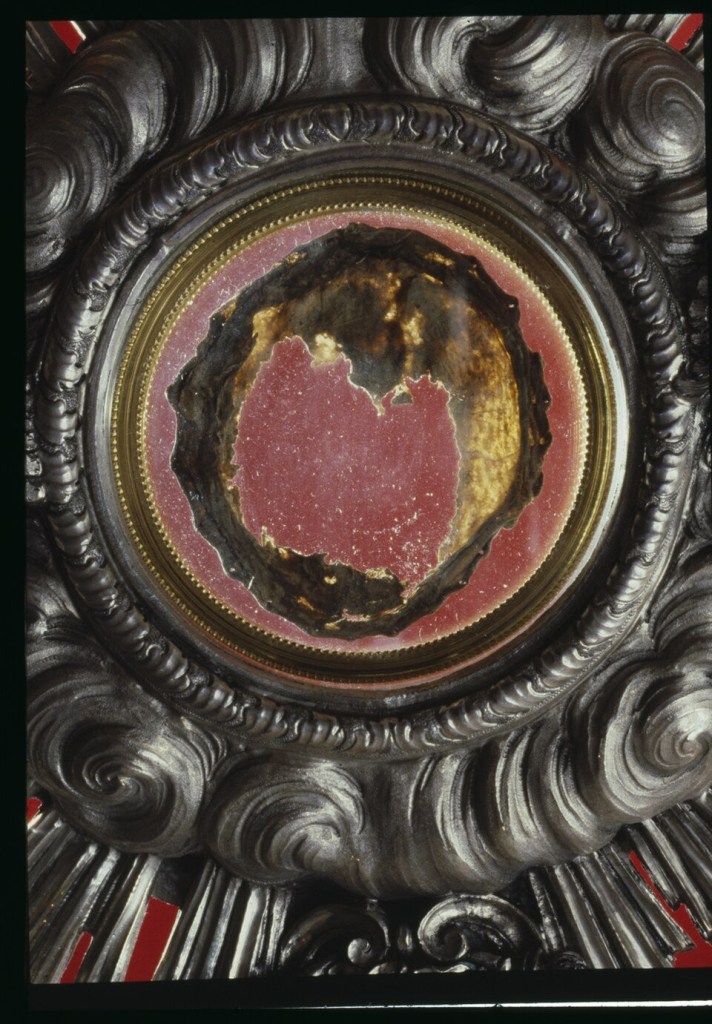
Among the most ancient and renowned of these is the miracle of Lanciano, Italy. According to a tradition formally documented in 1574, an eighth-century priest was celebrating Holy Mass while struggling with profound doubts about the real presence of Christ in the Eucharist. Right after the words of consecration, the unleavened bread visibly transformed into living flesh, and the wine into blood, which soon coagulated into five distinct globules of varying sizes. Remarkably, these miraculous relics are still preserved and can be venerated in the Shrine of Lanciano today.
This ancient miracle underwent rigorous scientific scrutiny between 1970 and 1971, led by Dr. Odoardo Linoli, a professor of anatomy and histology. His findings were astonishing. He concluded that the flesh is authentic human myocardial tissue (flesh from a heart) and the blood is genuine human blood containing normal proteins and minerals. Both the flesh and the blood belong to the AB blood group. Furthermore, Dr. Linoli found no traces of mummification chemicals, salts, or preservatives, making the uncorrupted preservation of this biological tissue over so many centuries scientifically inexplicable.
Lanciano, however, is not an isolated event. In his book, A Cardiologist Examines Jesus, Italian physician Dr. Franco Serafini gathered scientific data from four modern Eucharistic miracles—Buenos Aires in 1996, Tixtla in 2006, Sokółka in 2008, and Legnica in 2013—and compared them with the Lanciano findings. A striking pattern emerged: all the relics consist of human heart tissue of the AB blood type. Even more profoundly, the modern miracles all display active signs of severe physiological stress, trauma, and a lack of oxygen, indicative of a heart in its final agony. Interestingly, while scientists have been able to isolate human DNA from these samples, they have found it remarkably elusive to fully sequence. It is almost as if the DNA itself resists yielding its complete genetic code, though the fragments consistently indicate a male profile.
These miracles defy human explanation, offering extraordinary physical affirmations of the Eucharist. Yet, we must ultimately view them as gentle instruments of God meant to strengthen our faith, rather than something we should actively demand. I remember celebrating Holy Mass in Lanciano when a pilgrim confided in me, hoping to witness a Eucharistic miracle right there at the altar. I replied that I would not want that to happen, simply because I already believe. The truest and greatest miracle happens invisibly within our own hearts when we are granted the faith to recognize that what appears to be simple bread and wine is truly the Lord. That profound, quiet faith is the kind that can move mountains of doubt and fear.
Rome
Valentinus Bayuhadi Ruseno, OP
Guide questions:
When I encounter doubt in my own life, do I bring it to God, or do I allow it to silently distance me from Him? How does recognizing the profound depth of Christ’s sacrificial love in the Eucharist change the way I respond to my own personal trials and sufferings? Am I constantly seeking extraordinary signs to validate my beliefs, or am I cultivating the faith to recognize God’s presence in the ordinary, everyday moments of my life?

