


Sixth Sunday of Easter. May 1, 2016 [John 14:23-29]
“Whoever loves me will keep my word, and my Father will love him, and we will come to him and make our dwelling with him (Jn 14:23).”
 One day, I had an opportunity to converse with one of our security personnel at our convent of Santo Domingo. I asked him if he sees God, what question would he ask of God? His answer went beyond my expectation. In Filipino, he would say, ‘Panginoon, Mahal mo ba ako?’ [Lord, do you love?] Surprised by his question, I inquired further, ‘Why that question?’ He replied in Filipino, ‘Brother, I am poor person with a lot of problems. Sometimes, I don’t really feel His presence and love.’ I realized that his question is not only single isolated case, but question of many people.
At times, we are asking the good Lord, why is life full of suffering and problems despite our faithfulness to God. We attend mass every Sunday, we pray the rosary everyday, and we never fail to be good Catholics, yet our lives seems never getting better. We continue to face many problems, from financial problems, health issues to relationship brokenness. We then ask God, ‘Lord, do you love me?’
The Gospel constantly tells us that God loves us. But, often we do not see how God loves us. Why? Because we expect a different kind of love. We expect that if we are good, we are obeying His rules, then everything will be fine. But, God is not like a spiritual ATM that grants instantly our wishes as we insert correct spiritual card of prayers and place the right spiritual code of living. But rather, God’s love works deep inside us and transforms us into His own love. God is not created in our image, then we need to stop forcing Him to be like us. Our prayers, our good works, and our faithfulness to God does not mean to give us an instant solution to our problems, but they are God’s ways to gradually form us to be like Him.
Jesus’ love did not liberate Israelites from the oppressions of the Roman Empire, nor He give them prosperity that the Jews longed for. His love rather transformed those people around Him to love like God. The disciples, despite their weakness and sufferings, gradually became more and more loving, and finally made a final sacrifice for the love of Jesus and others. Peter, the leader as well the most problematic apostle, denied and ran away from Jesus, but he progressively learned to love like Jesus. When the final moment came, he gave also his life for Christ and the Christians in Rome.
As I bide a goodbye to Manong guard and went back to seminary, I handed him a food I brought from the mall. Upon receiving the food, he said to me, “Can I share this food with some of the poor kids outside the Church?” His gesture astounded me and yet was heartwarming. Being a security guard in Metro Manila, was a dangerous job with little earning, plus so many problems I had to carry, yet his poverty did not prevent him to share a little blessing he had, a little love he received. He questioned the love of God, but he himself never stopped loving others. This simple man has become the embodiment of God’s love for others. The love of God transforms us more and more into His image, and without realizing it, we also have become the embodiment of His love to others.
Br. Valentinus Bayuhadi Ruseno, OP

 Suatu hari, saya memiliki kesempatan untuk berbicara dengan salah satu personel keamanan di biara kami Santo Domingo. Saya bertanya jika dia melihat Tuhan saat ini, pertanyaan apa yang akan ia berikan kepada Allah? Pertanyaan di luar dugaan saya. Dalam bahasa Tagalog, ia akan mengatakan, ‘Panginoon, Mahal mo ba ako?’ [Tuhan, apakah Engkau mengasihi aku?] Terkejut dengan pertanyaannya, saya bertanya lebih lanjut, ‘Mengapa pertanyaan itu?’ Dia menjawab, ‘Frater, saya orang miskin dan hidup dengan banyak permasalahan. Kadang-kadang, saya tidak merasakan kehadiran dan cinta-Nya.’ Saya menyadari bahwa pertanyaannya adalah valid dan juga pertanyaan dari banyak orang.
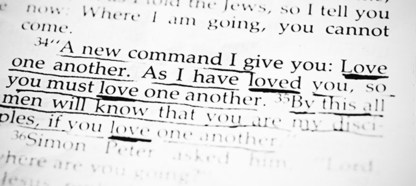 The first time God gave His commandment was on the Mount Sinai. To Moses and the Israelites, He made His covenant that He will be their God and they will be His People. And to live as a Holy People, God gave them the Law, famously called the Ten Commandment (Exo 19-20). Then, centuries after Moses, at the Upper Room, in old city Jerusalem, God gave His new commandment. This time, His Law is simpler and yet, more radical than the old one. Jesus handed to them the greatest command: Love one another as He has loved them.
 Allah memberikan Hukum-Nya yang pertama di Gunung Sinai. Dengan Musa dan bangsa Israel, Dia membuat perjanjian bahwa Dia akan menjadi Allah mereka dan mereka akan menjadi umat-Nya. Dan agar bisa hidup sebagai Jemaat yang kudus, Allah memberi mereka hukum dan perintah. Hukum ini terkenal sebagai Sepuluh Perintah Allah (Kel 19-20). Kemudian, beberapa abad setelah Musa, di kota tua Yerusalem, Allah memberikan perintah baru-Nya. Kali ini, Hukum-Nya lebih sederhana namun jauh lebih radikal. Yesus memberikan kepada para murid-Nya perintah teragung: saling mengasihi, seperti Dia telah mengasihi mereka.
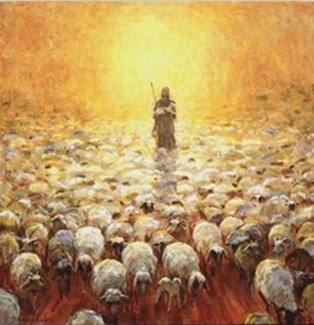 One of the loveliest images of Jesus is the Good Shepherd. It is even more beautiful when we try to bring ourselves to Palestine in the time of Jesus. Life as a shepherd is tough and tiresome. Grass was scarce and the sheep constantly wondered. Since there was not protective fence, the shepherd was bound to watch his sheep for all time, otherwise the sheep would go astray. The terrain in Judea was rough and rocky, and these forced the shepherd to exert extra energy. Not only constant, shepherd’s duty was also dangerous. Wild animals, especially wolfs, were ready to attack and devour the meek sheep. Not only wild predators, robbers and thieves were eager to pirate the sheep.
 Salah satu citra terindah Yesus adalah Gembala yang Baik. Citra ini bahkan lebih indah ketika kita mencoba untuk melihat situasi Palestina pada zaman Yesus. Hidup sebagai seorang gembala adalah sulit dan melelahkan. Rumput terbatas dan domba akan terus berkelana. Karena tidak ada pagar pembantas, gembala akan memantau domba-dombanya sepanjang waktu, jika tidak, domba akan hilang. Medan di Yudea kasar dan berbatu, dan ini memaksa gembala mengerahkan energi ekstra. Selain itu, tugas gembala juga berbahaya. Hewan liar, terutama serigala, siap untuk menyerang dan melahap domba. Tidak hanya predator liar, perampok dan pencuri juga ingin membajak domba-dombanya.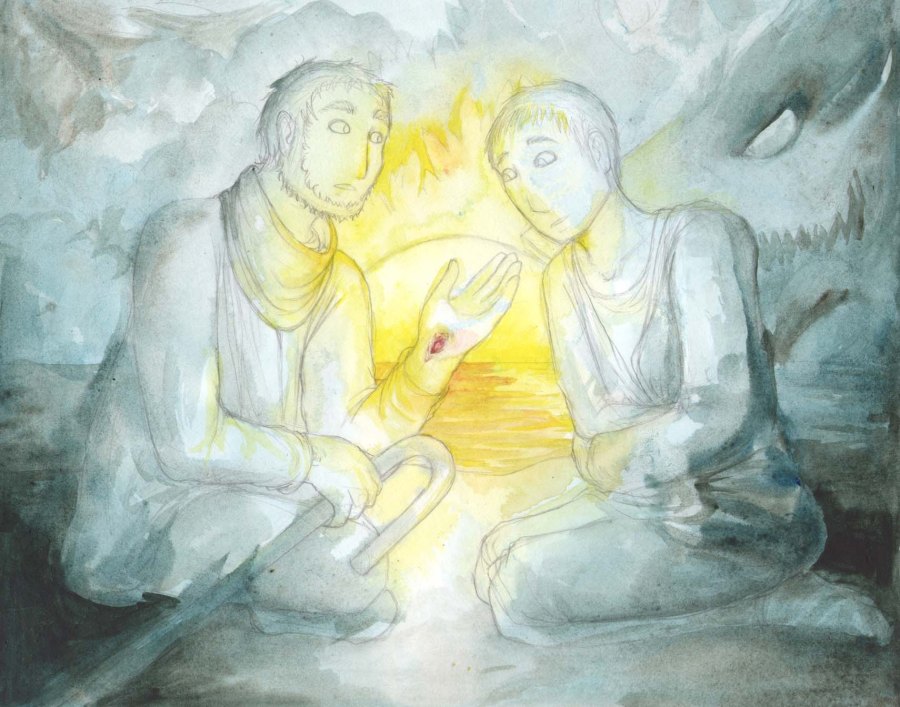
 Reading today’s Gospel in original Greek, we get to appreciate more the dialogue between Jesus and Peter. In English translation, both Jesus and Peter expressed themselves in the same word ‘love’, but in Greek, the word Jesus employed is ‘agapao’ while Peter’s is ‘phileo’. ‘Agapao’ or ‘agape’ refers to unconditional and radical love that every Christian should exemplify. This love is based on freewill and discipline, not just affections. This love empowers to love, to forgive and to have mercy even to our enemies. While ‘phileo’ or ‘philia’ is the reciprocal love of friendship. It is coming from both natural liking as well as firm decision. We make friends with whom we feel close, yet we exert also efforts to get close and understand them. As an old adage say, ‘friend in indeed is friends indeed.’
 Membaca Injil hari ini dalam bahasa Yunani, kita bisa lebih menghargai dialog antara Yesus dan Petrus. Dalam terjemahan bahasa Indonesia, baik Yesus maupun Petrus mengungkapkan diri dalam kata yang sama ‘mengasihi’, tapi dalam bahasa Yunani, kata yang Yesus gunakan adalah ‘agapao’ sementara Petrus adalah ‘phileo’. ‘Agapao’ atau ‘agape’ mengacu pada kasih tak bersyarat dan radikal. Kasih ini didasarkan pada kehendak bebas dan disiplin, bukan hanya afeksi dan emosi. ‘Agape’ memberdayakan kita untuk mengasihi, mengampuni dan berbelas kasih bahkan kepada musuh-musuh kita. Sementara ‘phileo’ atau ‘philia’ adalah kasih persahabatan yang resiprokal. Kasih ini datang dari naluri alamiah dan juga kehendak bebas. Kita bersahabat dengan siapa kita merasa dekat, namun kita juga mengerahkan upaya untuk mendekati dan memahami mereka. Sebagai pepatah tua mengatakan, ‘Friend in need is friend indeed.’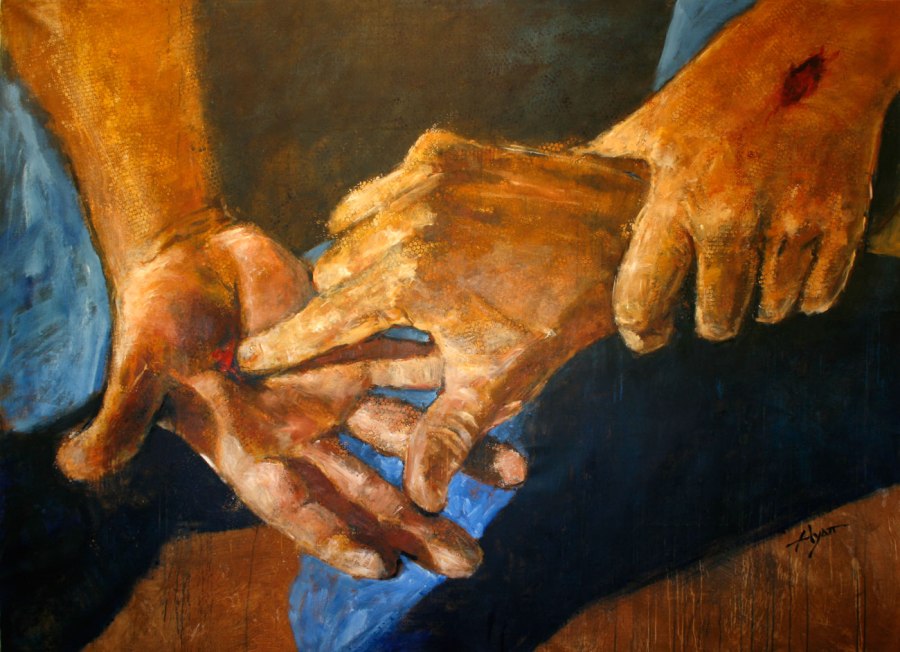
 The request of Thomas was a bit strange. To recognize the risen Lord, Thomas demanded that he would be able to touch the wounds of Christ. But, why did Thomas look for the wounds of Jesus? He could have asked to see Jesus’ face, or to touch Jesus’ nose. He had been Jesus’ disciple for some years, and surely, Thomas would not have any difficulty to recognize Jesus. Why wounds?
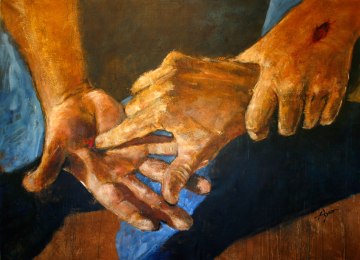 Di dalam Injil hari ini, permintaan Thomas agak aneh. Untuk mengenali Tuhan yang bangkit, Thomas menuntut bahwa dia harus menyentuh bekas paku di tubuh Kristus. Tapi, mengapa Thomas mencari luka-luka Yesus? Dia bisa saja meminta untuk melihat wajah-Nya atau menyentuh hidung-Nya. Dia adalah murid Yesus yang hidup bersama Dia selama beberapa tahun, dan tentunya, Thomas tidak akan memiliki kesulitan untuk mengenali Yesus. Lalu, mengapa luka-luka Yesus?
 In Medio Ecclesiae