


26th Sunday in Ordinary Time. September 25, 2016 [Luke 16:19-31]
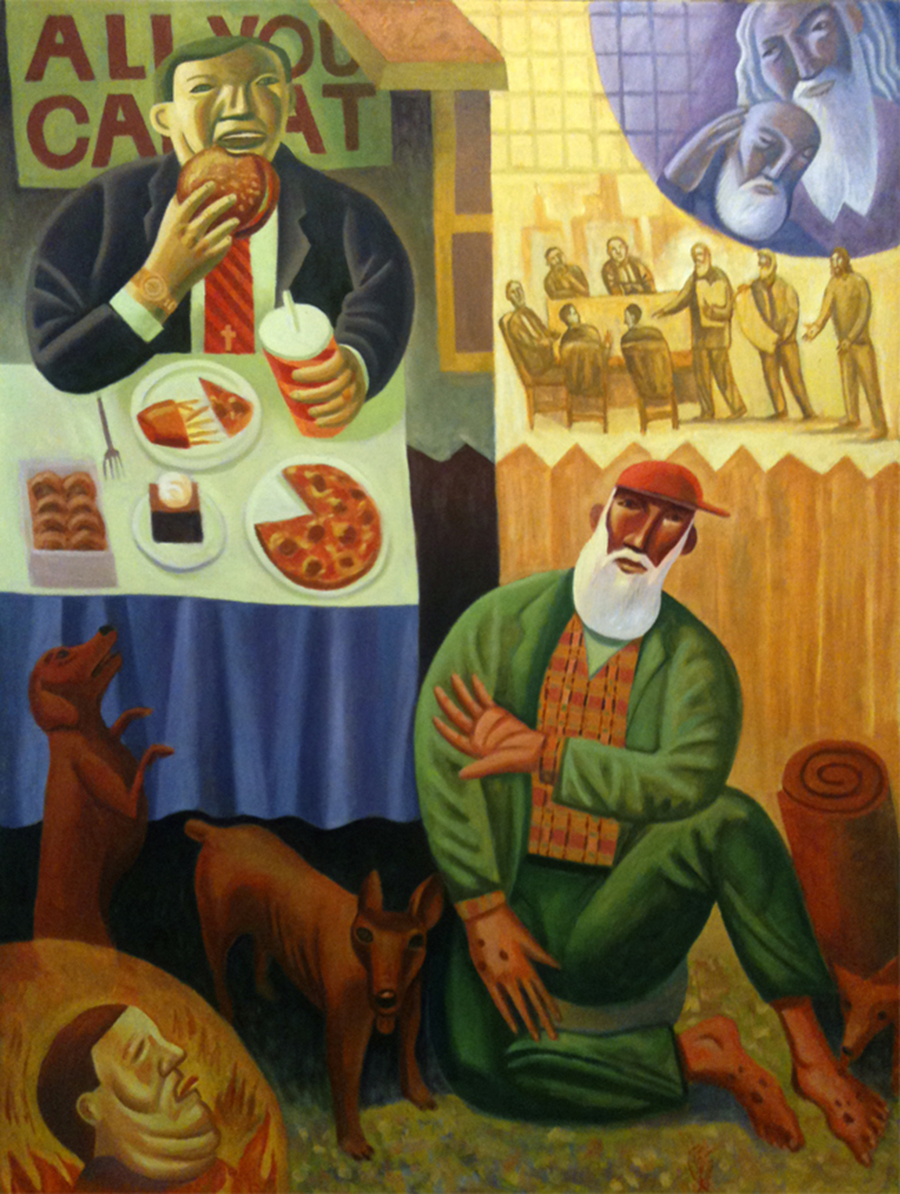
“Lazarus, covered with sores, who would gladly have eaten his fill of the scraps that fell from the rich man’s table (Luk 16:20-21).”
 When Abraham said to the tormented rich man, “My child, you have received what was good during your life,” does it mean I will be thrown to the netherworld as well? I admit I have received so many good things in my life. I enjoy three good meals a day. I am studying in one of the best schools in the country. I do not have to worry about the security and future of my life. Many of us are enjoying the good things in this world, and we may ask ourselves, “are we going to have the same fate with this rich man in the parable?”
Reading closely on the Gospel, the rich man was sent to the netherworld not because of the good things he received in life. In fact, it would be unfair for him and for us. Many of us are working diligently and we deserve to enjoy our lives after all the backbreaking jobs. He was there because he did not care for Lazarus, his poor brother. If we pay attention to the proximity between the rich man and Lazarus, there is something unusual. Initially, Lazarus was outside the door, but then when he ate the food scraps that fell from the rich man’s table, he was actually inside the house. In fact, Lazarus was under the table of the rich guy. With this extreme closeness the rich man acted as if Lazarus did not exist. What sent him to the netherworld is not because of the good things he received, but his gross neglect and grave ignorance of his own poor brother.
We may have the same fate as the rich man if we do not care for our poor brothers and sisters around us. In fact, our ignorance may be the cause of their poverty and misery. Sometimes, we just feel good after donating some coins to the beggars, but is that enough? Indeed, we cannot do much to help the thousands of refugees in war-torn Syria, but do we do something for those who are close to us? Are we too busy working and earning, so much so that we forget to share? Do we close our eyes to our relatives who are struggling with their children’s education? Do we shield ourselves from the social issues in our society, like the increasing number of poor people being killed simply because they are thought to be small-time drug addicts?
We give thanks to God for the blessings and good things we receive in this life. Yet, we should remember also our brothers and sisters who are just outside our doors, those who are just under our table, waiting for our food scraps.
Br. Valentinus Bayuhadi Ruseno, OP
 Ketika Abraham berkata kepada orang kaya yang tersiksa di alam maut, “Anak, ingatlah, bahwa engkau telah menerima segala yang baik sewaktu hidupmu.” Apakah saya juga akan berakhir di alam maut? Saya mengakui bahwa saya telah menerima begitu banyak hal baik dalam hidup. Saya makan tiga kali sehari. Saya belajar di salah satu sekolah terbaik di Filipina. Saya tidak perlu khawatir tentang keamanan dan masa depan hidup saya. Banyak dari kita yang menikmati hal-hal baik di dunia ini, dan kita bisa bertanya pada diri kita sendiri, “Apakah kita akan memiliki nasib yang sama dengan pria kaya dalam perumpamaan ini?”
 We were created in the image of God. Thus, our true happiness is only in God. As St. Augustine would say, “You have created us for Yourself, O God, and our hearts are restless until they rest in You.” St. Teresa of the Avilla would echo the same truth when she simply said, “God alone suffices.” But, we were also born into the real human body within a complex and concrete world. As we journey toward God, we cannot totally separate our soul from the various mundane concerns. Even the monks and nuns living in monasteries will still work hard to fulfill their daily and basic needs.
 Kita diciptakan menurut citra Allah, dan dengan demikian, kebahagiaan sejati kita hanya pada Allah. Seperti yang St. Agustinus katakan, “Engkau menciptakan kami untuk untuk diri-Mu, ya Allah, dan hati kami gelisah sampai mereka menemukan-Mu.” St. Teresa dari Avilla mengemakan kebenaran yang sama ketika ia mengatakan, “Allah mencukupi.” Tapi, kita juga lahir sebagai manusia yang memiliki tubuh dan ke dalam dunia yang kompleks. Saat kita berziarah menuju Allah, kita tidak bisa benar-benar memisahkan jiwa kita dari berbagai urusan duniawi. Bahkan para Rahim yang tinggal di pertapaan tetap bekerja keras untuk memenuhi kebutuhan sehari-hari dan dasar mereka.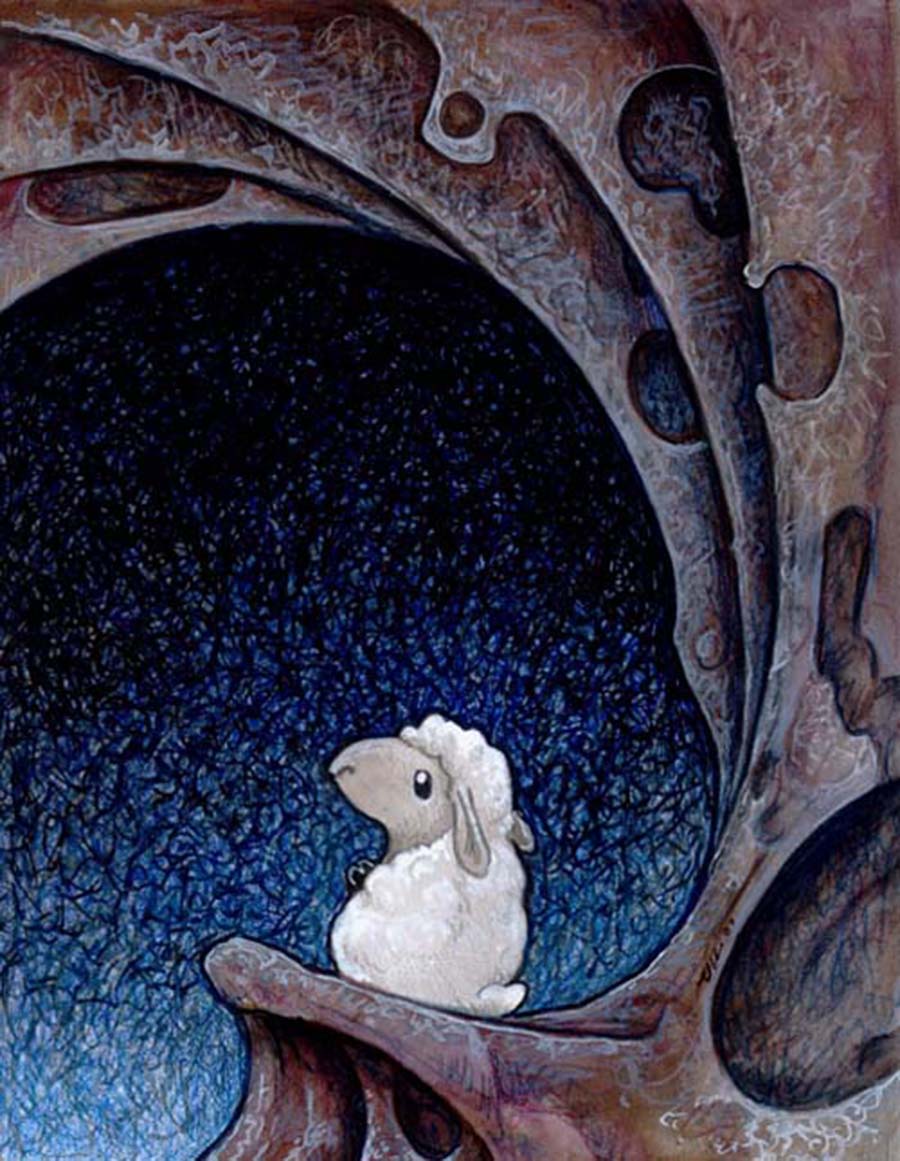
 The parable of the lost sheep subtly speaks of who we are fundamentally to Jesus. We are all His sheep and He is our shepherd. Whether we faithfully remain inside the sheepfold or go astray, we are still His sheep.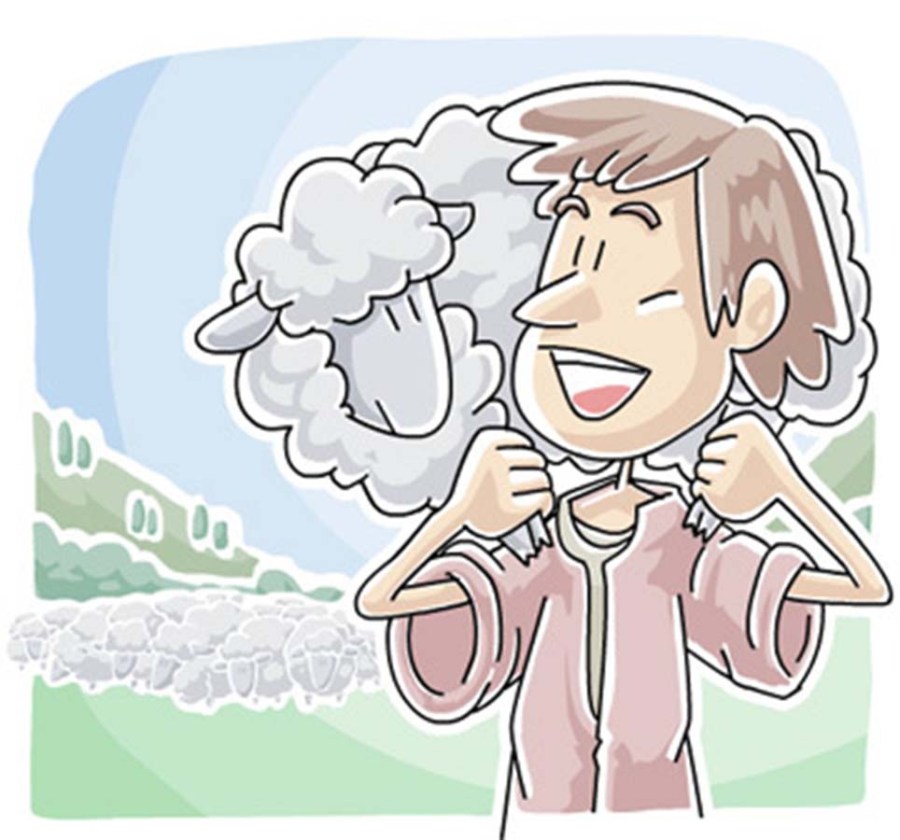
 Perumpamaan tentang domba yang hilang sebenarnya berbicara tentang siapa diri kita dan relasi mendasar kita dengan Yesus dan sesama. Kita semua domba-Nya dan Dia adalah gembala kita. Apakah kita domba yang setia berada di dalam gembalaan, atau domba yang tersesat, kita tetap domba-domba-Nya.
 Being a disciple is an essential character of Jesus’ followers. In our time, a disciple may mean a student of particular teachers or schools. Like Br. Bayu is a student of the University of Santo Tomas, Manila. In ancient time, especially in Eastern and Jewish tradition, being a disciple has a different understanding. A disciple would not only accept his master’s teachings, but literally follow his Master wherever he would go and stay. Disciples would not only learn on various insight, but also witness and imitate how their master lived his life. They shared their master’s meal, and they were part of their teachers’ joy and sadness. Thus, being a disciple is not only about an intellectual education, but also a holistic formation. It is fundamentally sharing the very life of the master himself.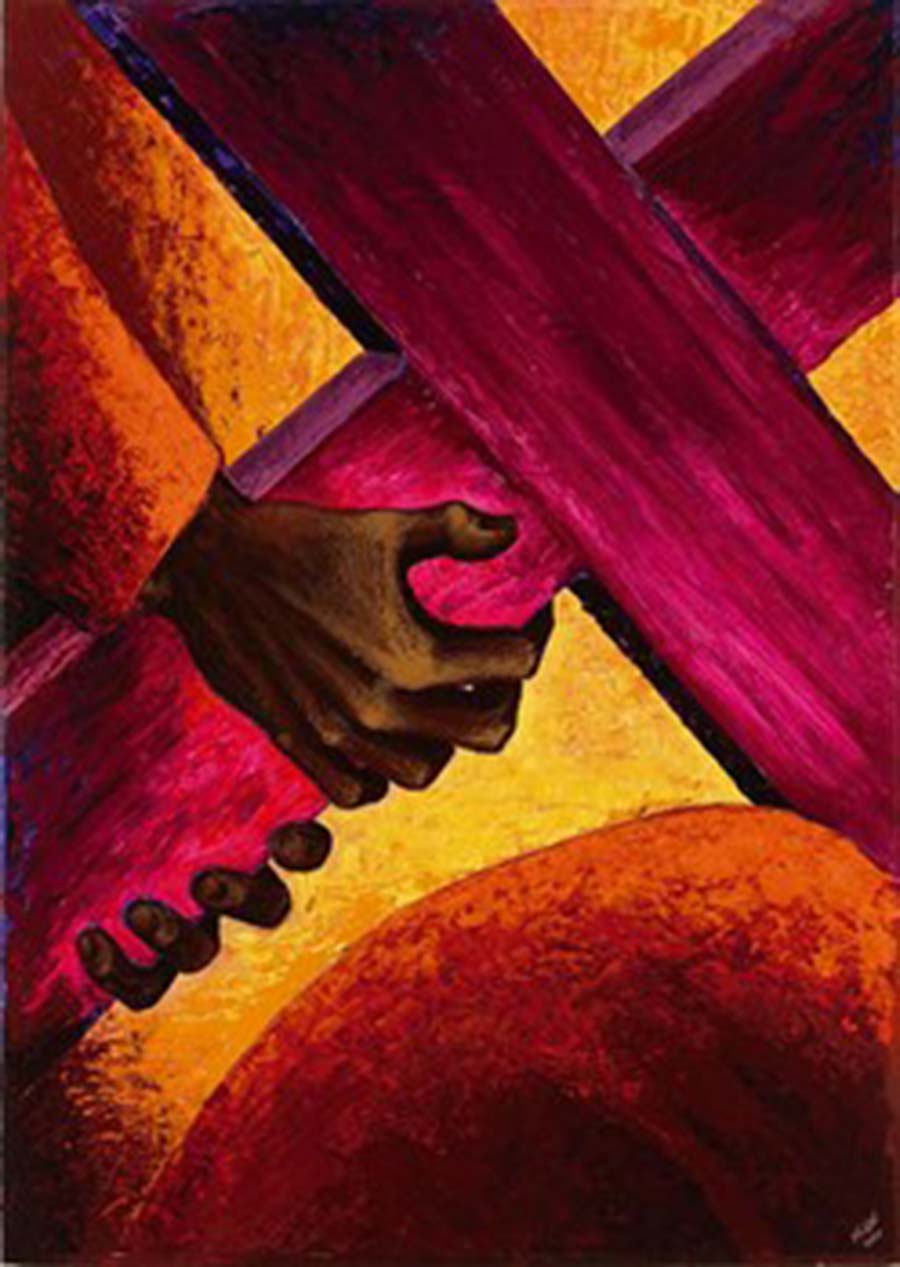

 In Medio Ecclesiae