
4th Sunday of Advent. December 18, 2016. Matthew 1:18-24
“Joseph her husband, since he was a righteous man, yet unwilling to expose her to shame, decided to divorce her quietly. (Mat 1:19)”
 If there is one important person in the life of Jesus, but gets very little attention, this person is no other than Joseph, Jesus’ foster father. He was absent in the Gospel of Mark. In John, he was mentioned only by name. In Luke, his presence was felt, but he was overshadowed by Mary and her unique mission. Only in Matthew, Joseph had a more active role in the beginning of Jesus’ life. Yet, again, he remained a voiceless character, and simply disappeared as Jesus began his mission. Still, Joseph had significantly influenced the life of Jesus.
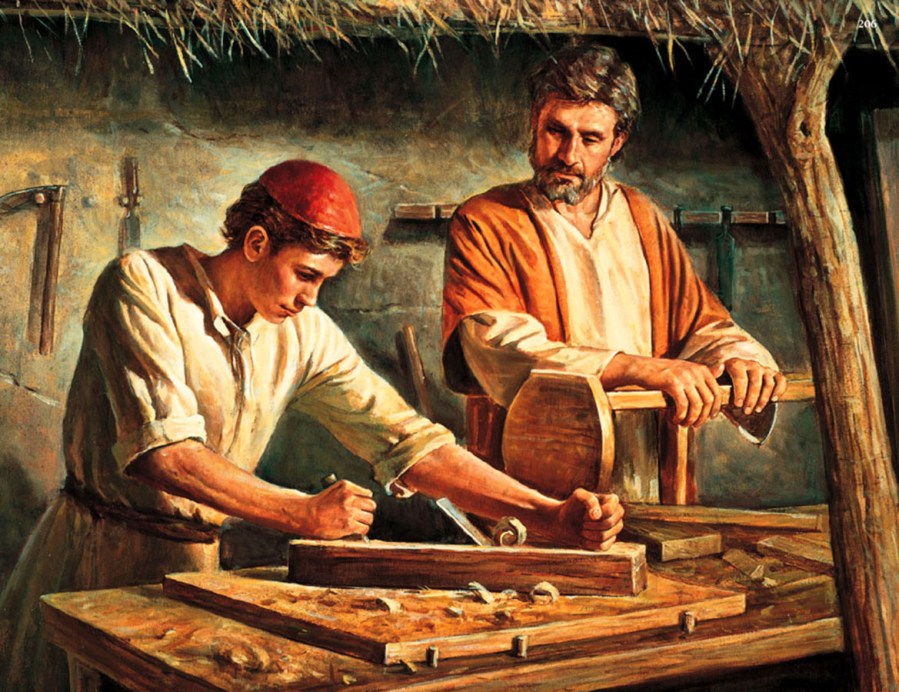
One of the recognizable influences was that Jesus inherited the profession of Joseph. His father was a carpenter, then Jesus was also called as the carpenter (see Mark 6:3). However, the influence of Joseph is not limited in terms of profession. There was something more. In today’s Gospel, Joseph was called as the ‘righteous man’. In Jewish society, the title ‘righteous man’ means a respectable man who faithfully follows the Law of God or Torah. He was not only well educated in the Law, but Joseph also cherished the Law dearly. Now, if we put ourselves in the shoes of Joseph when he received the news of Mary’s pregnancy, what was probably Joseph’s feeling? As an ordinary man, he must be deeply hurt, felt betrayed, by his soon-to-be wife. As a respectable person in town, he had to endure shame.
As a person who was well versed in the Law, he knew Mary had committed adultery and this sin deserved death (see Lev 20:10). Consumed by his pain and anger, Joseph could have made a public accusation and thrown the first stone on Mary. He had all the right to stone Mary and satisfy his vengeance. But, Joseph chose a different path. Instead using the Law for retaliation, Joseph decided to use the Law to save the life of Mary, and consequently, the life of Jesus. His decision is even more significant because he opted to save Mary even before the Angel Gabriel appeared to him and explained the cause of pregnancy. Despite pain of betrayal and shame, he chose to apply the Law in merciful and loving manner. And this was what Joseph taught Jesus to do.
Jesus argued a lot with the Pharisees and the Scribes on the interpretation of the Law, and for Jesus, mercy and love need to take primacy over vengeance and hatred. Thus, Jesus healed people on Sabbath (see Mat 12:10), allowed His hungry disciples to pick the grain during Sabbath (see Mat 12:1) and spared the life of woman caught in adultery (see John 8:1-11). Finally, Jesus declared that the most important Law of all is the Law of love. Now, we can trace the hands of Joseph and his merciful way in dealing with the Law.
As we prepare ourselves for Christmas, it is good to reflect on Joseph and learn from him. Do we use and create laws and regulations in our society to simply to punish and even kill people, or to heal them? When we are wronged, what is our first reaction? Seeking vengeance or working for reconciliation? What is our understanding of justice? Retaliation or restoration of goodness? We pray that St. Joseph will lead us into just society based on mercy and love.
Br. Valentinus Bayuhadi Ruseno, OP
 In Medio Ecclesiae