

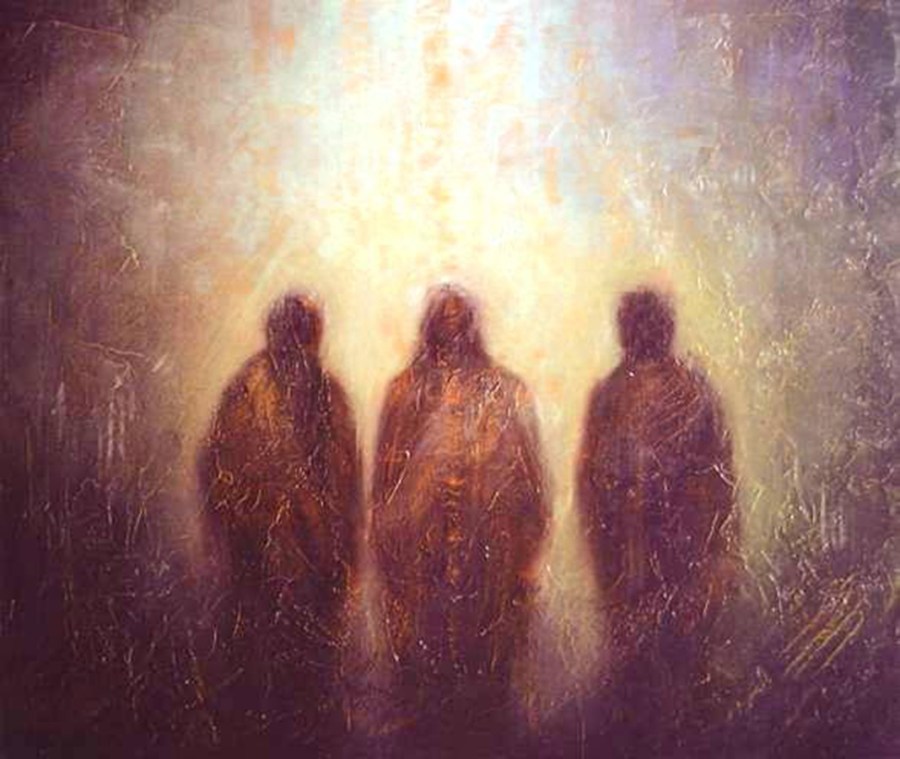
Third Sunday of Easter. April 30, 2017 [Luke 24:13-35]
“…while he was with them at table, he took bread, said the blessing, broke it, and gave it to them. 31 With that their eyes were opened and they recognized him… (Luk 24:30-31)”
 Luke wonderfully narrated the Journey to Emmaus in such a way that it became a catechetical instruction on the Eucharist. The two disciples were actually running away from Jerusalem. After the death of their master, the situation turned to be dangerous for their lives. They were afraid of the Jewish authorities and their hope and dream of having a Messiah were shattered. Better for them to go away and return to their former lives. Yet, Jesus surprisingly came, healed their wounds, and reappointed them as His apostles. However, let us see some details of today’s Gospel and how this narrative speaks of the Eucharist.
It begins with Jesus coming to the two disciples in their struggles, and inviting them to be with Him. He gathers and listens to all His disciples’ worries, failures and anxieties. The initiative is coming from Jesus. After listening to their stories, He starts to explain the Scriptures. He sheds light on how His life, death and resurrection have become the fulfillment of the scripture. This part is traditionally called ‘kerygma’ or proclamation. Then He connects the meanings of these events to His disciples’ lives. What is happening here is the first part of the Mass, the Liturgy of the Word: God gathers us His people with all our joys and sorrows and then, He nourishes us with His Word.
What follows is the breaking of the bread. Yet, before this takes place, the disciples have to do their part in inviting Jesus to stay with them. The initiative is from God, but we need to do our effort to participate in His work and make it fruitful. Then, Jesus takes the bread, blesses it, breaks it and shares it with the disciples. These very acts remind the disciples of Jesus in the Last Supper. In fact, the breaking of the bread is an ancient and biblical name for the Eucharist. The basic purpose of the Eucharist is to present the real Christ, and indeed, the disciples are able to recognize Him here. This is the first Eucharist after the Resurrection, and this brings healing and forgiveness. It gives meaning to the troubled lives and shattered hopes of the disciples. Then, after being nourished by His Word and His Body, the disciples’ hearts are burning and they go back to Jerusalem to proclaim the risen Jesus. The encounter with the risen Lord always leads to mission and preaching. These depict the second half of the Mass, the liturgy of the Eucharist.
Luke wrote his Gospel more than 1900 years ago, and it is amazing that the basic structure of the Eucharist remains even to this very day. Certainly, there are also many changes along the way, like for example the transformation from the old Latin Mass to the post-Vatican II mass, the ordinary form we have now. Yet, we are still faithful to what are truly essential and foundational: the reading and preaching of the Word and the breaking of the Bread. We are blessed and humbled that we are members of the Church who faithfully encounter Jesus, the Word and the Eucharist, just like the two disciples in the Gospel and like the first Christians in ancient time. It is now our challenge to continue living as the Eucharistic people in our daily lives, the men and women nourished by His Word and Body in the Eucharist.
Br. Valentinus Bayuhadi Ruseno, OP
 Lukas menceritakan kisah Perjalanan ke Emaus dengan sedemikian rupa sehingga menjadi sebuah instruksi kateketis tentang Ekaristi. Kedua murid tersebut sebenarnya melarikan diri dari Yerusalem. Setelah kematian guru mereka, situasi berubah menjadi berbahaya bagi kehidupan mereka. Mereka takut pada penguasa Yahudi, dan harapan dan impian mereka untuk memiliki seorang Mesias hancur berantakan. Lebih baik mereka pergi dan kembali ke kehidupan yang dulu. Namun, Yesus dengan mengejutkan datang, menyembuhkan luka-luka mereka, dan menunjuk mereka kembali sebagai rasul-rasul-Nya. Mari kita lihat beberapa rincian Injil hari ini dan bagaimana narasi ini berbicara tentang Ekaristi.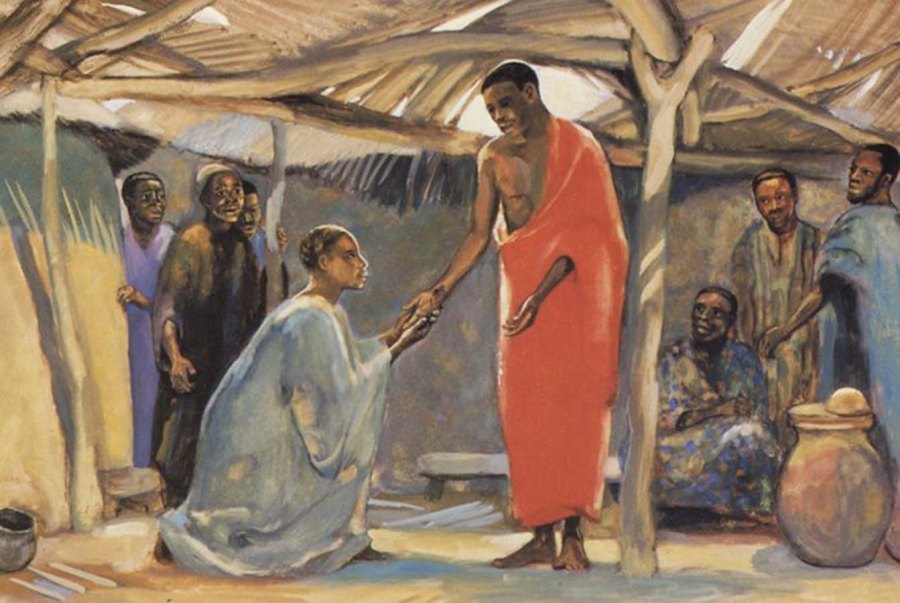
 Thomas was looking for a proof that Jesus truly rose from the dead. Not only seeing Him in person, he required another sign: touching the crucifixion marks that Jesus bore. He was one of the Twelve, the inner cycle of Jesus’ disciples, and being one, he had the privilege to walk with Jesus, dine with Him, and witness His mighty deeds. At a first glance, he would easily recognize Jesus, his Master, but still, he demanded the marks of the nails. Why did Thomas insist on searching the wounds?


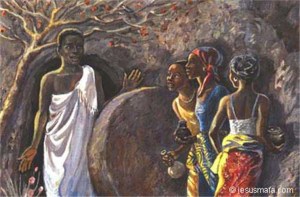 If we read the Resurrection narrative in the four Gospels, we will discover that each Evangelist has his own distinct story. Yet, there are some common features in the Resurrection episode: the empty tomb, the presence of women, the appearance of angel followed by the risen Christ, and the women announcing the Good News to the other disciples. Let us focus on one particular feature that we usually miss. The first witnesses of the resurrection were not men, but women. Where were the male disciples? Where were those men who promised to sacrifice their lives for Jesus? They were in hiding. They were afraid. They were scattered.
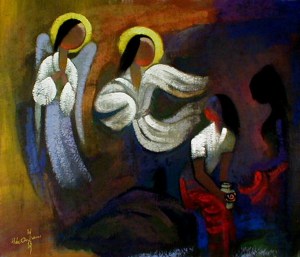 Jika kita membaca narasi Kebangkitan di keempat Injil, kita akan menemukan bahwa setiap Penginjil memiliki cerita unik tersendiri. Namun, walaupun berbeda, ada beberapa hal-hal serupa di dalam narasi Kebangkitan, seperti kubur yang kosong, kehadiran para wanita, hadirnya malaikat diikuti oleh Yesus yang bangkit, dan para wanita mewartakan Kabar Baik bagi murid-murid lainnya. Mari kita fokus pada satu fitur yang biasanya luput dari perhatian kita. Saksi pertama dari kebangkitan bukanlah seorang laki-laki, tapi para perempuan. Pertanyaanya sekarang: Di mana para murid laki-laki? Di mana para pria yang berjanji untuk mengorbankan nyawa mereka demi Yesus? Jawabannya: Mereka bersembunyi, lari dan ketakutan.
 Many theologians and ordinary Christians alike are baffled by these words of Jesus on the cross. If Jesus is God, how is it possible for Him to be separated from God? Why does the most compassionate God abandon His beloved Son? It simply does not make any sense. The Catechism of the Catholic Church tries to explain that it is a consequence of sin. Not that Jesus had committed any sin, but He endured the sin of the world on the cross. The greatest effect of sin is separation from God. Thus, carrying the heaviest burden of sin, Jesus could not but feel the chilling effect of alienation from His own Father.
 Banyak teolog maupun umat awam kesulitan untuk memahami kata-kata Yesus di kayu salib ini. Jika Yesus adalah Tuhan, bagaimana mungkin Dia bisa terpisahkan dari Allah? Lalu, mengapa Allah yang penuh kasih bisa-bisanya meninggalkan Putra-Nya? Ini tidak masuk akal. Katekismus Gereja Katolik mencoba menjelaskan bahwa ini adalah konsekuensi dari dosa. Bukan karena Yesus telah melakukan dosa, tetapi Dia menanggung dosa dunia di kayu salib. Efek terbesar dari dosa adalah terpisahnya kita dari Allah. Dengan demikian, membawa beban terberat dari dosa, Yesus tidak bisa tidak merasakan efek mengerikan keterasingan dari Bapa-Nya sendiri.
 Today’s Gospel contains my personal favorite verse: Then, Jesus wept. It is the shortest verse in the Bible, yet it is also one of the most powerful. However, its strength does not rest on any superhuman power that can multiply bread or calm the storm, but on the humanity of Jesus.
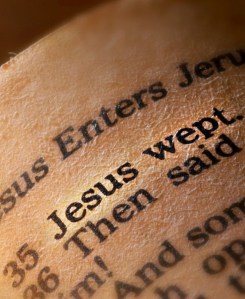 Pada Injil hari ini ada ayat favorit pribadi saya: Maka Menangislah Yesus. Ini adalah ayat terpendek dalam Alkitab, namun juga salah satu yang paling kuat. Namun, dayanya tidak terletak pada kekuatan super Yesus yang dapat memperbanyak roti atau menenangkan badai, tetapi justru pada kemanusiaan Yesus.
 In Medio Ecclesiae