


17th Sunday in Ordinary Time. July 30, 2017 [Matthew 13:44-52]
“…out of joy he goes and sells all that he has and buys that field (Mat 13:44).”
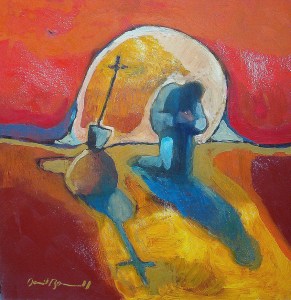 From today’s parables, we learn that Jesus appreciates human labor, the use of technology, and economic activities. The parables speak of men buying and selling land, merchants making transactions, and fisher folk catching and selecting the fish. Yet, the appreciation comes with a particular condition: the activities have to be honest and just.
I used to question why the man in the parable has to buy the land first before he takes the hidden treasure. He could have taken the treasure away even without buying the land. I realize that the buried treasure might be in a massive quantity that to unearth it requires a lot of effort, but it is also something to do with a right ownership. In ancient times, burying or hiding one’s wealth is not uncommon, especially in time of war and chaos. The treasure must have been hidden for a long period of time and the original owners are no longer alive to claim it. It also does not belong to the current landowner because he is oblivious to its presence in his land. Thus, by selling everything he has, and buying the field, he wants to make sure that he becomes the rightful owner of the land and all that is in it.
The second parable speaks of a merchant, and being a merchant is a profession that many people hate in ancient Israel. They do not like merchants because this work is susceptible to deceit and dishonesty. Yet, today’s parable gives us a merchant who is willing to sell everything he has, just to buy the fine pearl. It is a risky and even dangerous move since he is left with nothing and a serious possibility that he will not profit from the rare pearl, but instead employing some illegal tricks, he makes sure that he will become a true owner of that precious gem.
To be involved in various kinds of economic activities and works is not only necessary for human survival but also part of God’s plan for our flourishing. Our intellectual capacity that God gives empowers us to create professions that do not only sustain our lives, but also build up human society and even the Kingdom of God. With the advances of science and technology, new occupations that did not exist ten years ago now are part of our daily lives. IT experts, software developers and men and women working in robotic industries are few examples of these. Yet, traditional works remain essential. Teachers, farmers, fishermen, business men and women, and many others are still the backbone of healthy society. Jesus appreciates all of this.
One thing, however, that corrupts this human capacity to work is greed, an inordinate passion to gain more profit at the expense of others. One of the basic economic laws is the principle of efficiency, that is to get the maximum benefit with minimum amount of resources. This law is balanced by the principle of equity, that is to distribute the economic prosperity fairly among the members of the society. Unfortunately, greed destroys this balance and corrupts people to sacrifice other people and nature just to gain more profit. Jesus calls us not only to be involved in the economic activities, but also to uphold honesty and justice. Only with these two virtues, do we find true satisfaction in labor and contribute to the greater good of society, and in fact, give glory God.
Br. Valentinus Bayuhadi Ruseno, OP

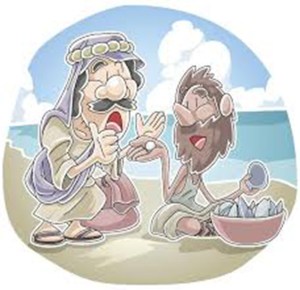 Dari perumpamaan-perumpamaan hari ini, kita menyadari bahwa Yesus sejatinya menghargai kerja, kemampuan mengunakan teknologi dan kegiatan ekonomi manusia. Perumpamaan-perumpamaan tersebut berbicara tentang seseorang yang membeli dan menjual tanah, pedagang melakukan transaksi, dan nelayan menangkap dan memilih ikan mengunakan jaring. Namun, apresiasi Yesus hadir dengan sebuah kondisi: aktivitas manusia ini harus jujur dan juga adil.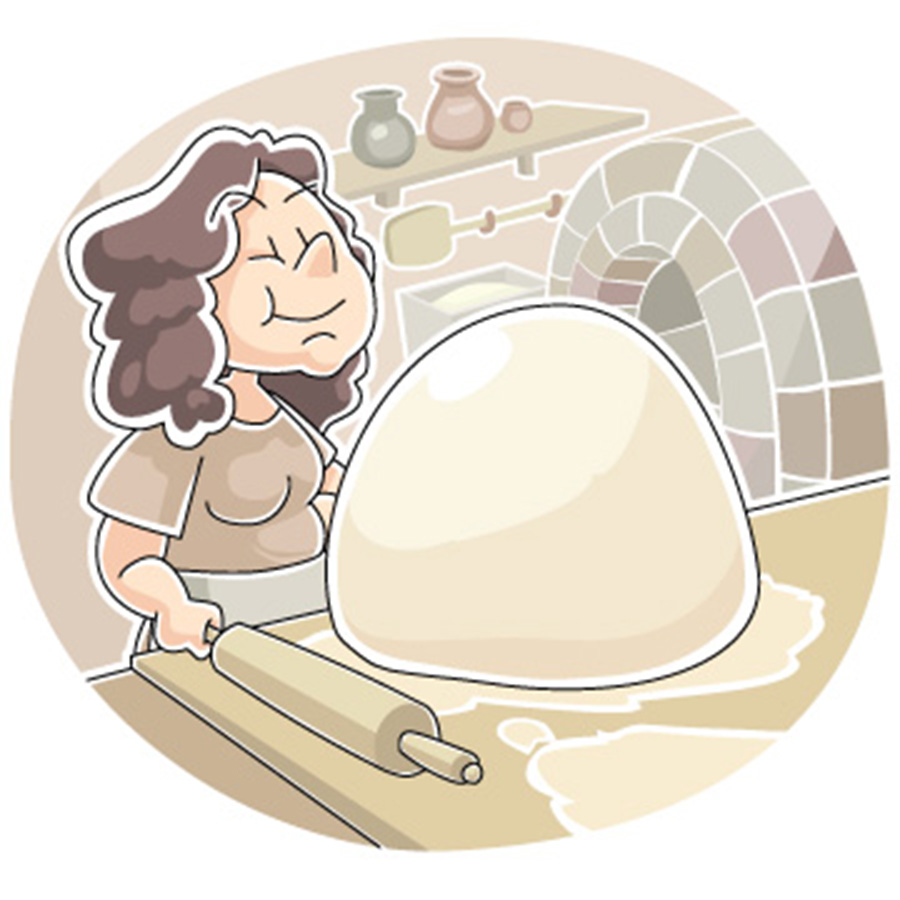
 From the several parables that Jesus tells us in today’s Gospel, we learn that Jesus is keen on how nature works. He observes how seeds of wheat and weed grow, and how the yeast would affect the dough in the process of baking. Jesus also is observant of human ingenuity in working with nature for the benefit of the human community. Men and women till the land, are observant to the cycle of nature, sow the well-prepared seeds, take care of the growth and then harvest the result for the good of community. The use of yeast for baking is a very ancient method of cooking. Women would place yeast in dough, and the microorganism would interact with the carbohydrate in the flour, creating carbon dioxide, and as an effect, the leaven dough would expand. Though unleavened bread will last longer, this yeast would make the bread softer and tastier, making it more enjoyable for human consumption.
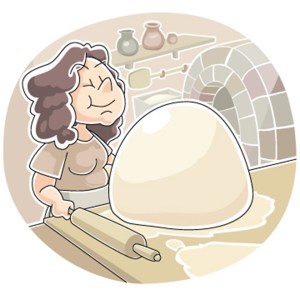 Dari beberapa perumpamaan yang Yesus katakan kepada kita di dalam Injil hari ini, kita belajar bahwa Yesus sangat peka dengan bagaimana alam bekerja. Dia mengamati bagaimana biji gandum, lalang dan sesawi tumbuh, dan bagaimana ragi akan mempengaruhi adonan roti. Yesus juga memperhatikan kecerdasan manusia dalam bekerja dengan alam bagi kepentingan dan kebaikan komunitas manusia. Pria dan wanita mengolah tanah, mematuhi siklus alam, menabur benih yang disiapkan dengan baik, menjaga pertumbuhan dan kemudian memanen hasilnya untuk kebaikan komunitas. Penggunaan ragi adalah metode masak yang sangat kuno. Wanita akan menempatkan ragi dalam adonan, dan mikroorganisme ini akan berinteraksi dengan karbohidrat dalam tepung, menciptakan karbon dioksida, dan sebagai akibatnya, adonan ragi akan berkembang. Meski roti tidak beragi akan bertahan lebih lama, ragi ini akan membuat roti lebih lembut dan lebih nikmat untuk dikonsumsi.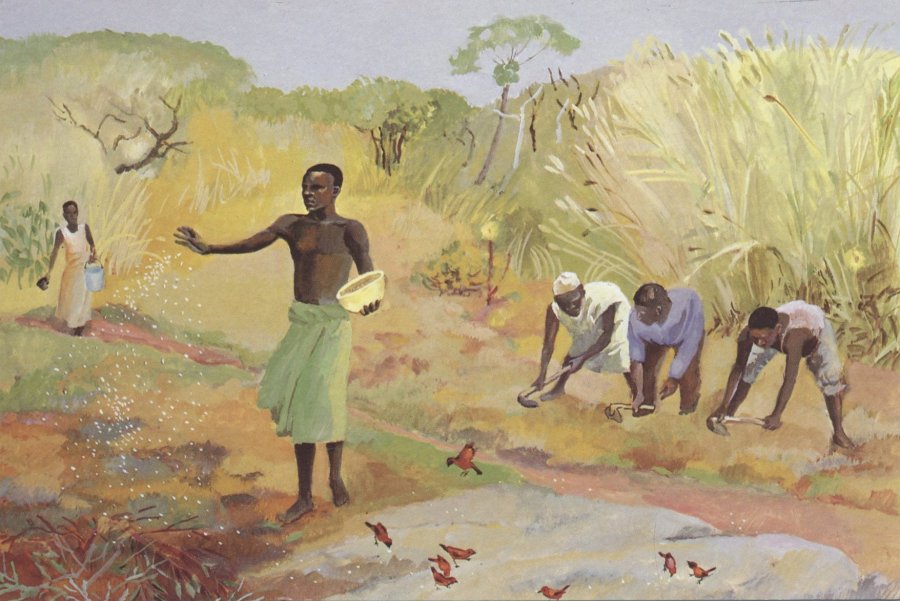
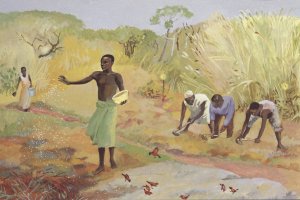
 Looking carefully into the parable, we find something strange. The agrarian land in Palestine was not as fertile and arable like many other countries like Indonesia and Philippines. It was expected that some seeds would fall into stony grounds, or be outgrown by the thorny plans. Yet, the Israelite farmers knew very well that seeds were their lifeline and wasting three-quarter of their seeds was just unthinkable. To add to this oddity, Jesus assured that this waste of seeds would be compensated with super abundant result of thirty to hundredfold harvest. A seasoned farmer recognized that an ordinary wheat seed planted in the Palestinian soil would yield just enough for the family. Thus, many of Jesus’ listeners would wonder, “What is he talking about? He is just a carpenter, and now he is talking to us from a boat about agriculture?” Even His disciples were puzzled and approached Him for clarification.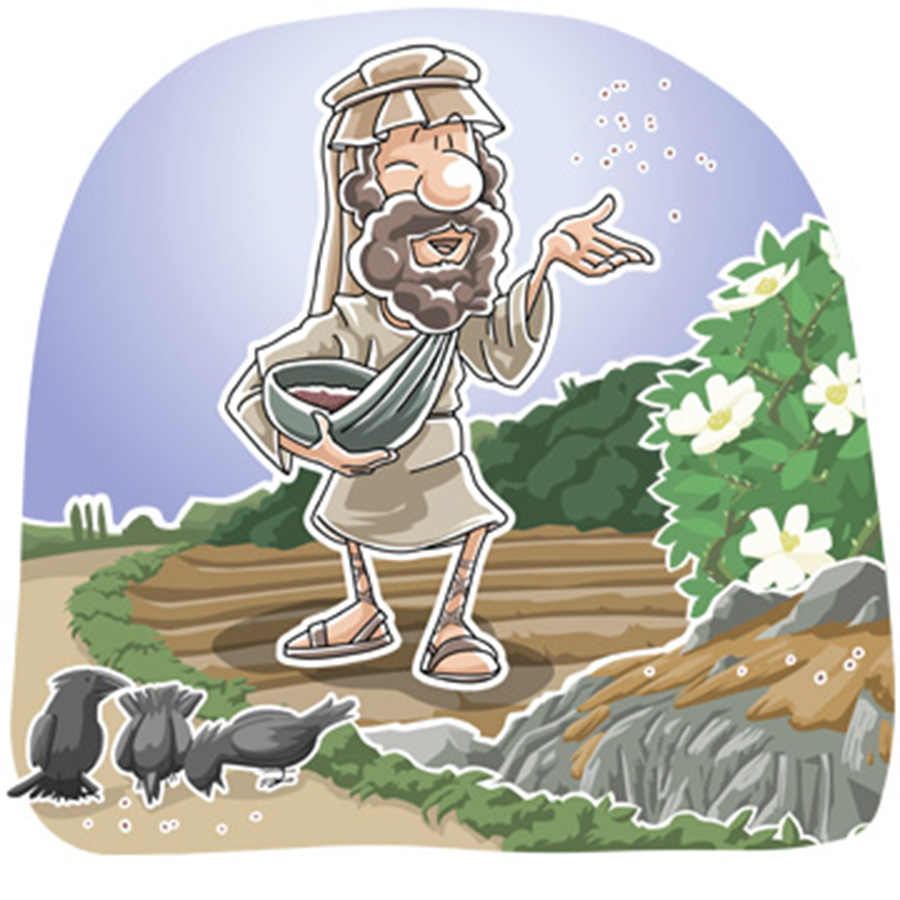

 Yoke is a device, usually of wood, placed on the shoulder of animals or persons to carry a burden. In agricultural settings, a yoke is used to pull a plow to make a furrow on the ground so that the soil will be ready for the seed planting. But, a yoke can be used also to drag a cart and transport various goods. Because its primary function is to carry a load or burden, a yoke turns to be a symbol of responsibility, hard work, and obligation. In our seminary in Manila, a leader among the brothers is called a decano. In the beginning of the formation year, we elect our decano, and as he assumes his responsibility, he ceremonially receives a wooden yoke from the outgoing decano. The yoke reminds him of responsibility and great task that he has to endure through the year.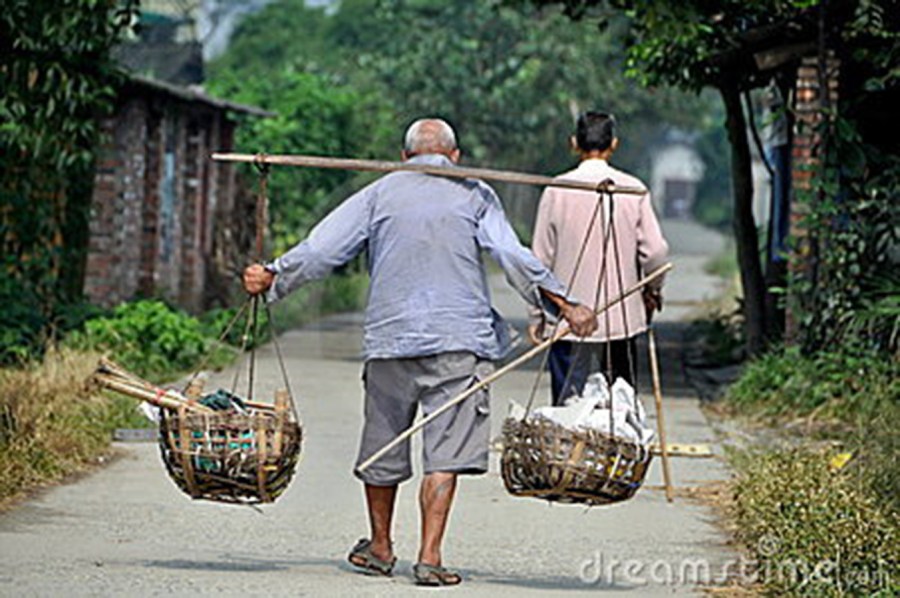
 Kuk adalah sebuah alat, biasanya terbuat dari kayu, yang diletakkan di bahu hewan atau orang untuk membawa beban. Di lingkungan pertanian, kuk digunakan untuk menarik bajak untuk membuat alur di tanah sehingga tanah siap untuk penanaman benih. Tapi, kuk bisa digunakan juga untuk menarik gerobak dan mengangkut berbagai barang. Karena fungsi utamanya adalah untuk membawa beban, kuk pun menjadi simbol tanggung jawab, kerja keras, dan kewajiban. Di seminari kami di Manila, pemimpin di antara para frater disebut sebagai “dekano”. Pada awal tahun formasi, kami memilih dekano, dan saat dia memulai mengembang tanggung jawabnya, dia secara seremonial menerima kuk kayu dari dekano yang lama. Kuk itu mengingatkannya akan tanggung jawab dan tugas besar yang harus dia tanggung sepanjang tahun dalam memimpin komunitas para frater.
 When God calls us, God does not only call us privately and individually. In the Bible, God also calls us with our family, our community. God created the first man and woman not only to complete each other, but also to “multiply” or to build a human family. Noah entered the ark together with his wife and children. They were saved as a family from the flood. Abraham and Sarah were called from the land of Ur, and establish their own family and clan in the land of Canaan. When God called Moses to deliver the Israelites from slavery, God also called Aaron and Miriam, Moses’ brother and sister, to assist him in his mission. Finally, the life of Jesus of Nazareth would not be complete without the family of Mary and Joseph of Nazareth.
 Ketika Tuhan memanggil kita, Tuhan tidak hanya memanggil kita secara individual. Dalam Alkitab, Tuhan juga memanggil kita dengan keluarga kita dan komunitas kita. Tuhan menciptakan pria dan wanita pertama yang tidak hanya untuk saling melengkapi, tapi juga “berkembang biak” atau membangun keluarga manusia. Nuh masuk ke dalam bahtera bersama istri dan anak-anaknya. Mereka diselamatkan sebagai keluarga dari banjir besar. Abraham dan Sarah dipanggil dari tanah Ur untuk membangun keluarga dan klan mereka sendiri di tanah Kanaan. Ketika Tuhan memanggil Musa untuk membebaskan orang Israel dari perbudakan, Tuhan juga memanggil Harun dan Miriam, saudara laki-laki dan perempuan Musa, untuk membantu dia dalam misinya. Akhirnya, kehidupan Yesus dari Nazaret tidak akan lengkap tanpa keluarga Maria dan Yusuf dari Nazaret.
 In Medio Ecclesiae