

26th Sunday in Ordinary Time. October 1, 2017 [Matthew 21:28-32]
“Which of the two did his father’s will?” (Mat 21:31)
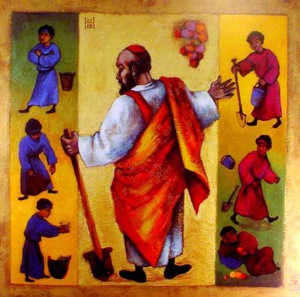 The road to hell is paved with good intentions. This old proverb attributed to St. Bernard of Clairvaux may sound rather morbid and threatening, but the truth remains. If we have only good intentions, marvelous plans, or great designs, but we never lift a finger to begin the first step, nothing will happen. We want to focus on our study, yet we are distracted by Facebook’s status and newsfeeds, our online chatting, or endless videos in YouTube, we will not make any progress. We wish to accomplish a lot of works, but our attentions and energy are consumed by so many other concerns. Then, our wish stays a wish.
The parable Jesus shares this Sunday speaks of a good intention or ‘yes’ that can be completely useless if it does not materialize in concrete actions. Yet, more than achieving the highest productivity, the parable teaches us some more primordial truth. At the end of the parable, Jesus asks the Jewish elders, “Which of the two did his father’s will?” The parable teaches us about doing the Father’s will.
From the two sons, we learn that doing God’s will can be tough and demanding. Once I had an exposure with poor farmers in Indonesia. I was staying with a family who tilled their own small and almost barren land, and every morning, they went to the field and make sure that their plants were still alive. Part of my exposure was that I had to help them. Used to the comfort of seminary life, I barely lasted for an hour working under the scorching summer heat, and then rested the entire day while looking at the family working so hard. I imagine that the two sons in the parable are aware of the challenges that they will endure working at the vineyard, and it is expected that the resistance will build up. The first son immediately declines his father’s wish, while the second son says yes.
We might wonder why the second son changes his mind. Perhaps, he has no plan to work there, and what he says is utter lie and deception. Yet, I tend to believe that he has actually a good intention to fulfill his duty, but he is discouraged by the looming hardship he will face in vineyard, and ends up doing nothing at all. Perhaps many of us are like this second son. We intend to help more our Church, yet we are always late going to the Mass, complaining about the priest’s homily, and not participating in the various activities or organizations in the parish. We wish to give glory to God, yet our lives do not manifest a good Christian life as we indulge in gossiping, are envious with other members of the Church, and become choosy in our services. No wonder for some, the Church feels like hell!
We remember that these two men are the sons of the vineyard’s owner and thus, the vineyard essentially belongs to them. If they refuse to work, they will lose their vineyard. The poor family where I stayed for exposure, were working extremely hard despite many difficulties. I realize that all this they did because their small land was what gave them life. Doing God’s will is often challenging, yet in the end, it is for our good. I believe it is not too late to act on our good intentions, and from the second son, we transform into the first son. We are working in the Lord’s vineyard because the vineyard is also ours.
Br. Valentinus Bayuhadi Ruseno, OP
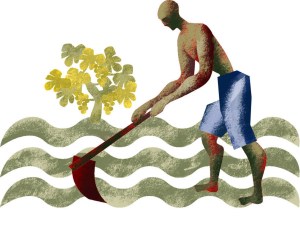 St. Bernardus dari Clarivaux pernah berpendapat bahwa Jalan menuju neraka dibuat dengan niat baik. Ucapannya mungkin terdengar agak mengerikan, tapi dia berbicara sebuah kebenaran. Jika kita hanya memiliki niat baik atau rencana yang luar, tapi kita tidak pernah bergerak untuk memulai langkah pertama, tidak akan terjadi apa-apa. Kita ingin fokus pada pendidikan kita, namun kita terus terganggu oleh status di Facebook, Online chat, atau menonton ribuan video di YouTube, maka kita tidak akan membuat kemajuan. Kita ingin menyelesaikan banyak pekerjaan di tempat kerja, tapi perhatian dan energi kita terkonsumsi oleh begitu banyak hal-hal lain. Maka, niat baik kita tetaplah sebuah niat.
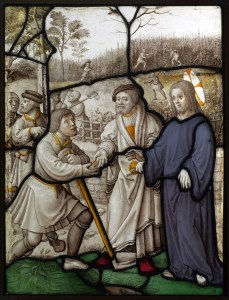 Jesus is the storyteller genius. The parable he shares to us today does not only surprise us with its unexpected ending, but it also creates a sense of puzzlement and wonder. We expect that the workers who labored the whole day would get the better wage compared to those who came late. Yet, it did not happen. All got the same wage regardless of their working hours. The vineyard owner was right to explain that he did not violate the agreement with his laborers, but deep inside us, there is something quite off. If we were militant enough, we would stage a rally to protest the vineyard owner’s decision.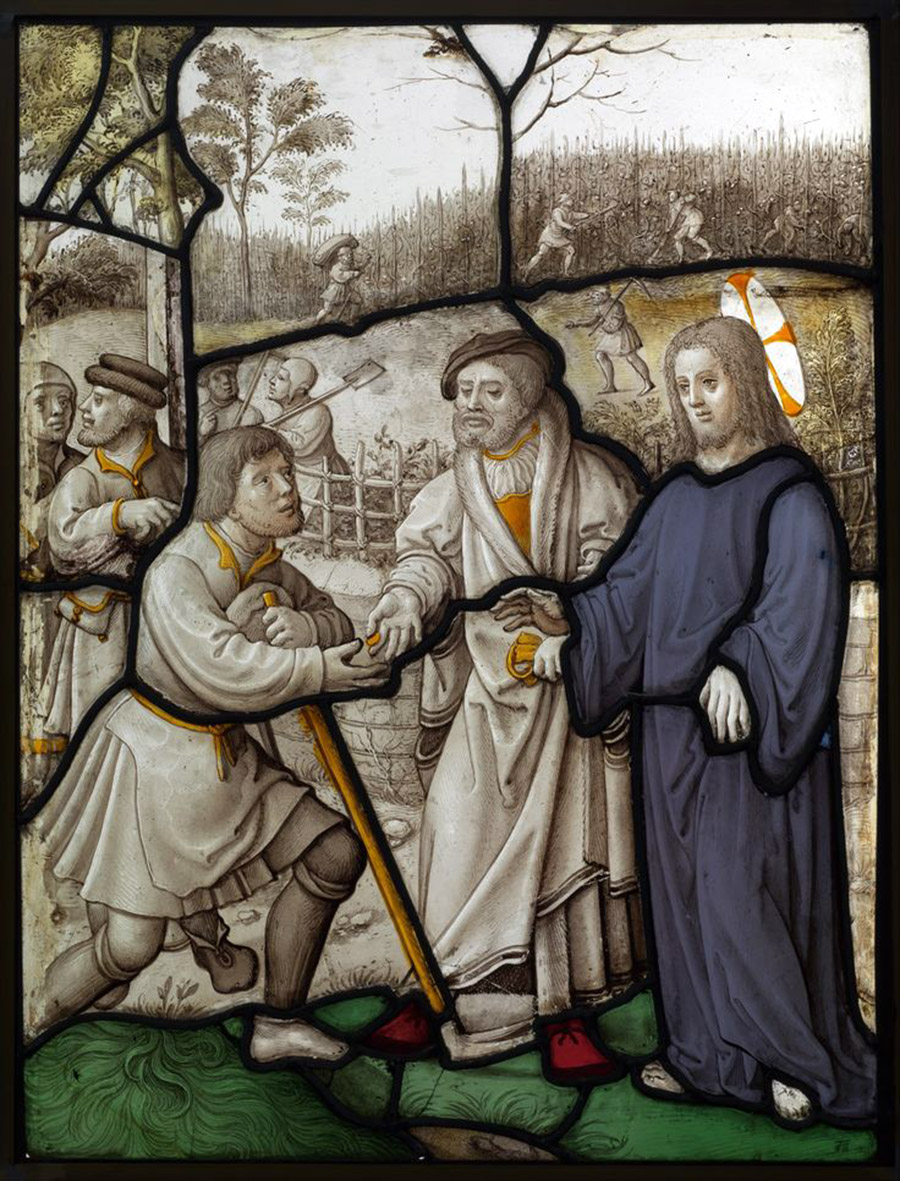
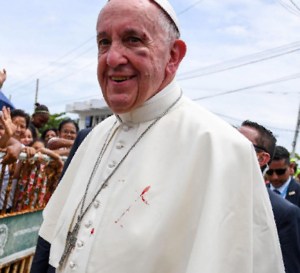 Yesus adalah seorang pencerita yang luar biasa. Perumpamaan Yesus hari ini tidak hanya mengejutkan kita dengan akhir yang tak terduga, tapi juga membuat kita bertanya-tanya. Kita berharap para pekerja yang bekerja sepanjang hari akan mendapatkan upah yang lebih baik dibandingkan dengan mereka yang terlambat datang. Namun, itu tidak terjadi. Semua mendapat upah yang sama. Pemilik kebun anggur menjelaskan bahwa dia tidak melanggar kesepakatan dengan para pekerja, tapi di dalam lubuk hati kita, kita merasa ada sesuatu yang salah.
 Why is it difficult to forgive? One of the reasons is that after we are wronged, the immediate reaction is to seek justice or even revenge. We want that the pain and the loss we experienced are also felt by those who inflicted them on us. We want “a tooth for a tooth, an eye for an eye”. Unfortunately, consumed by anger and hatred, our cry for justice can easily turn into an intense desire of revenge. If justice seeks to balance scale, revenge seeks to inflict a greater punishment, or even to destroy those who have harmed us. Unless we get what is due, unless they receive what they deserve, there is no forgiveness.
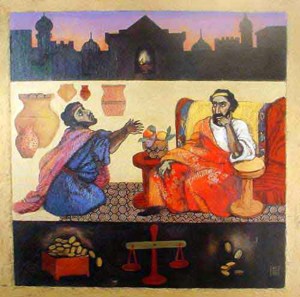 Mengapa sulit untuk memaafkan? Salah satu alasannya adalah bahwa setelah kita disakiti, reaksi kita adalah untuk mencari keadilan. Kita ingin apa rasa sakit yang kita alami juga dirasakan oleh orang-orang yang melakukannya pada kita. Kita ingin “gigi ganti gigi, mata ganti mata”. Terkadang, termakan oleh kemarahan dan kebencian, usaha kita untuk mencari keadilan dapat dengan mudah berubah menjadi keinginan membalas dendam. Jika rasa keadilan berusaha untuk menyeimbangkan skala, balas dendam berusaha untuk memberi hukuman yang lebih besar, atau bahkan untuk menghancurkan orang-orang yang telah merugikan kita. Jika kita tidak mendapatkan apa yang semestinya, jika mereka tidak menerima apa yang layak mereka dapatkan, tidak ada pengampunan.
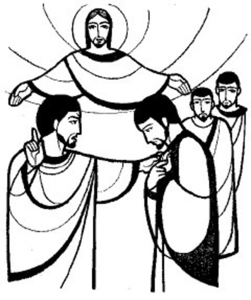 Jesus understands that in any human community, including His own community of disciples, or the Church, there are always members affected by human weakness and sinfulness. Even in the Christ-oriented communities like the religious convents, the parishes, and various ministries and groups in the Church, inevitably we are hurting each other. Thus, Jesus, the Just God and merciful man, outlines a procedure or ‘fraternal correction’ to deal with misunderstanding, quarrels, and conflicts. It begins with the individual and personal encounter, then when it does not work, we ask the help of a witness or mediator, and lastly it goes up to the community level.
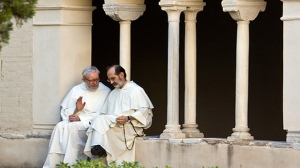 Yesus mengerti bahwa komunitas manusia, termasuk komunitas murid-murid-Nya sendiri, atau Gereja, akan selalu dipengaruhi oleh kelemahan manusia dan dosa. Bahkan di dalam komunitas yang berorientasi pada Kristus, seperti biara, paroki, dan berbagai pelayanan dan kelompok di Gereja, tak dapat dihindari bahwa kita saling menyakiti. Dengan demikian, Yesus menguraikan sebuah prosedur rekonsiliasi untuk mengatasi kesalahpahaman, pertengkaran, dan konflik. Ini dimulai dengan dialog pribadi atau empat mata, kemudian ketika hal itu tidak berhasil, kita meminta bantuan seorang saksi atau mediator, dan masih belum berhasil, kita naik ke tingkat komunitas.
 We come to one of the most heated exchange of words in the Gospel, and this occurs no less than between Jesus and Simon Peter. The apostle rebukes Jesus for revealing to the disciples that he has to go Jerusalem, suffer and die, but be raised on third day. In return, Jesus reproofs him and calls him Satan. Why does this harsh quarrel take place between Jesus, the most merciful Lord, and his trusted disciple, Simon whom he has just declared as the Rock?
 Kita mendengar sebuah pertukaran kata-kata yang paling panas dalam Injil, dan ini tidak tanggung-tanggung karena melibatkan Yesus dan Simon Petrus. Sang Rasul menegur Yesus karena telah menyatakan kepada murid-murid bahwa Ia harus pergi ke Yerusalem, menderita dan dibunuh, tetapi bangkit pada hari ketiga. Sebaliknya, Yesus menegur Petrus dan memanggilnya “Setan”. Mengapa pertengkaran yang hebat ini terjadi antara Yesus, yang adalah Tuhan yang maha pengasih, dan muridnya yang terpuji, Simon yang baru saja dinyatakan sebagai batu karang Gereja?
 In Medio Ecclesiae