

30th Sunday in Ordinary Time. October 29, 2017 [Matthew 22:34-40]
“You shall love the Lord, your God, with all your heart, with all your soul, and with all your mind. (Mat 22:34)”
 What is love? If we ask young couple who are in love, love means more time together and be connected online even up to late hours of the night. For young priests, love may mean patiently listening to confessions for hours, and attending to sick calls. For a couple who have their newly-born baby, love is changing the baby’s diapers even at middle of the night. Love is passion, dedication and sacrifice.
However, love is also one of the most abused and misused words in human history. In the name of love, a young man lures his girlfriend into premarital sex. For the love of their country and race, some men persecute another ethic group and burn their villages. For the love of God and religion, some men blow themselves up and kill the innocent people, including children whom they consider the enemies of their God.
Surprisingly, the situation is not much different from the time of Jesus. For the love of the Law, the Pharisees keep and observe the Law even to its meticulous details in their daily lives. For the love of God and their country, the Zealots fight and kill the Romans and those who work for them. For the love of God, the Essenes separate themselves from the rest of the corrupted world and build their own exclusive communities. For the love of the Temple, the priestly clan work hard to offer sacrifices daily and is ready to die for the Temple.
When the Pharisees ask Jesus what is the greatest law, the law of laws, it is not simply about theological exercise, but it is to reveal Jesus’ fundamental attitude towards God and the Jewish Law. Is He a Pharisee who loves the Law more than anything else, a Zealot who loves the country zealously, or something else? Jesus answers, “You shall love the Lord, your God, with all your heart, with all your soul, and with all your mind.” Jesus quotes part of the Shema or the basic Jewish Creed that every devout Jews would recite every day (see Deu 6:4-5). Yet, Jesus does not stop there. He completes the first and the greatest law with another one, “You shall love your neighbor as yourself.” It also comes from the Old Testament (see Lev 19:18). To the delight of the Jews, Jesus’ answer is basically an orthodox one, but there is something novel as well.
The connection between first and second turns to be a watershed. For Jesus, true love for God has to be manifested in the love for others, and genuine love for others has to be oriented toward God. Thus, it is unthinkable for Jesus to order His disciples to kill for the love of God. Or, Jesus will not be pleased if His followers are busy with performing rituals, but blind to the injustices that plague their communities.
Once I asked my brother who is studying Canon or Church Law, what is the highest law in the Canon Law? He immediately answered, the suprema lex, all laws are governed and ordained for the salvation of souls. The Code of Canon Law contains more than 2 thousand provisions governing various aspects of Church’s life, and all these will be absurd if not for the love of God and neighbors. In the same manner, do our love for God, our prayers and celebration of sacraments bring us closer to our neighbors, to be more committed in doing justice, to be dedicated in our responsibilities as members of a family and a society? Does our love for others, our affection for our children and friends, our passion for ministry bring them closer to God?
Br. Valentinus Bayuhadi Ruseno, OP

 “In this world nothing can be said to be certain, except death and taxes.” Benjamin Franklin once said. Indeed, tax is an unpleasant and unavoidable fact in our lives as ordinary citizen. A portion of our hard-earned wage is suddenly taken away from us, and only God knows where it goes. In modern society, almost all we have, we gain, and we use are taxed. The practice of taxing people goes back to first known organized human societies. The basic idea is that tax will provide a common resource for the improvement of the community, like building roads, free education and quality health care. Yet, the ideal is often met with abuses. In olden time, the kings and chieftains taxed people so they could build their grand palaces and feed their wives. Unfortunately, the situation does not change much in our time.
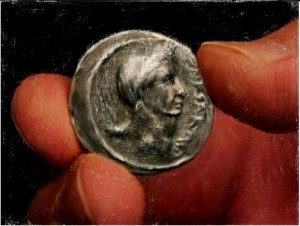 Benjamin Franklin pernah berkata, “Di dunia ini tidak ada yang pasti, kecuali kematian dan pajak.” Sungguh, pajak adalah fakta yang tidak menyenangkan dan juga tidak dapat dihindari dalam hidup kita sebagai warga negara. Sebagian dari penghasilan yang diperoleh dari jerih payah kita tiba-tiba diambil, dan hanya Tuhan yang tahu ke mana itu pergi. Praktek perpajakan sebenarnya sudah terjadi sejak komunitas manusia pertama di bumi. Ide dasarnya adalah bahwa pajak akan menyediakan sumber daya yang untuk kemajuan bersama, seperti membangun jalan, pendidikan dan perawatan kesehatan berkualitas. Namun, hal ini sering disalahgunakan. Di zaman dulu, para raja dan kepala suku menarik pajak agar mereka bisa membangun istana megah mereka dari pada membangun rakyatnya. Sayangnya, situasi tersebut tidak banyak berubah di zaman sekarang. Para pejabat korup menarik pajak hanya untuk membangun “istana” mereka yang megah, dan bukannya membangun rakyat.
 Jesus is already in Jerusalem. The confrontations between Jesus and the Jewish authorities have turned bitter, and Jesus is approaching His final days on earth. With this context, the parable may be understood easily. The invited guests stand for some elite Israelites who refuse Jesus, and thus, reject God Himself. The burning of their towns and cities may point to the invasion of the Roman Empire and the destruction of Jerusalem in 70 AD. The commoners who are later invited represent the people from all nations who accept Christ. Yet, some people who are already at the Wedding banquet do not wear the expected wedding garment. This proper dress decorum is a basic sign that the guests are honoring the host, and also becomes the symbol of our faith, our good works and our holy lives. For those who fail to honor the King through their garment are thrown out from the banquet.
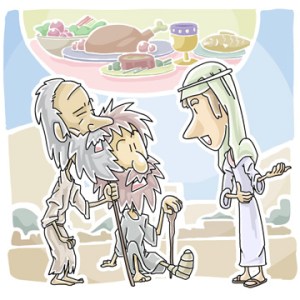 Yesus sudah berada di Yerusalem. Konfrontasi antara Yesus dan pemimpin bangsa Yahudi semakin memanas. Yesus pun mendekati hari-hari terakhir-Nya. Dengan konteks ini, perumpamaan hari ini tidak terlalu sulit untuk kita pahami. Tamu yang diundang mewakili elit Israel yang menolak Yesus, dan dengan demikian, menolak Allah sendiri. Pembakaran kota mungkin mengarah pada invasi Kekaisaran Romawi dan penghancuran Yerusalem pada tahun 70 Masehi. Orang-orang biasa yang kemudian diundang dan datang, mewakili orang-orang dari semua bangsa yang menerima Kristus. Namun, beberapa orang yang sudah ada di pesta pernikahan tidak memakai baju pernikahan yang diharapkan. Pakaian yang tepat menjadi pertanda bahwa para tamu menghormati sang tuan rumah, dan juga ini menjadi simbol iman, perbuatan baik dan kehidupan kudus kita. Bagi mereka yang gagal menghormati Raja melalui pakaian mereka akan diusir dari perjamuan.
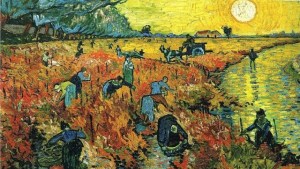 The image of a vineyard is close to Israelites’ hearts because this springs from their prophetic tradition. Isaiah uses this metaphor to describe Israel and God (see Isa 5:1-8). Consistent with this great prophet, Jesus crafts His parable of the vineyard to describe the relation between God and His people. God is the just and generous vineyard owner, and we are His workers. Now, it is up to us to work hard for the Lord in His vineyard and receive abundant harvest, or be lazy, and expelled from the vineyard.
 Kebun anggur merupakan citra yang dekat dengan hati orang Israel. Nabi Yesaya menggunakan metafora ini untuk menggambarkan relasi Israel dan Allah mereka (lihat Yesaya 5: 1-8). Konsisten dengan nabi agung ini, Yesus menceritakan perumpamaan tentang kebun anggur versi-Nya sendiri untuk menggambarkan hubungan antara Allah dan umat-Nya. Tuhan adalah pemilik kebun anggur yang adil dan juga murah hati, dan kita adalah para pekerja-Nya. Sekarang, terserah kepada kita untuk bekerja keras untuk Tuhan di kebun anggur-Nya dan menerima panen berlimpah, atau bermalas-malasan, dan akhirnya diusir dari kebun anggur.
 In Medio Ecclesiae