

Solemnity of Christ the King. November 26, 2017 [Matthew 25:31-45]
“Amen, I say to you, what you did not do for one of these least ones, you did not do for me (Mat 25:45)”

Today we are celebrating the solemnity of Christ the King of Universe. This feast also marks the end of the liturgical year and signals the fast-approaching Advent Session.
Living in the 21st century AD, many of us are no longer subject to a king or a powerful monarch. With very few exceptions, our present-day kings and queens, like the Japanese Emperor and Queen of England, are constitutional monarchs. Their powers are no longer absolute but based and governed by the Constitutions of the country. Some countries even vote to abolish altogether their monarchy, and the king just becomes a cultural symbol of the past. Perhaps, one of the best images of an almighty king may come from the TV-series Game of Thrones. A person sitting on the Iron Throne is a king with almost absolute power. Thousands of soldiers obey him and a myriad of citizens pay him homage. He is the law itself and he is not answerable to anyone. No wonder the TV-series revolves around the Iron Throne and how characters outsmart one another to claim the throne.
Matthew gives as an image of the glorious coming of Son of Man at the end of time. Jesus will sit on his throne and dispense His judgment upon us. Listening to this portion of the Gospel, we may imagine Jesus is like a king on the Iron Throne with His royal robe and golden crown, surrounded by blazing angels. Everyone will be terrified and kiss the ground begging for mercy. Yet, reading further the Gospel, this potent image is immediately counterbalanced by another image. Jesus introduces himself as someone who is imprisoned, a hungry and thirsty homeless guy. In short, he turns to be a man who all societies abhor.
In history, we may know some kings that fell into disgrace. King Louis XVI of France was an absolute monarch before he was executed by the guillotine. Pu Yi, the last emperor of China, used to be served by many servants even to brush his teeth, but he eventually ended up as a street sweeper in Beijing. However, Jesus is not this kind of disgraced kings, but rather He chooses to be one with the poor of the poorest. Doubtless, in heaven, He is almighty King of the universe, but on earth, He decides to walk with all of us, even with those that we detest. His Kingdom is not what we used to imagine. It is not a Kingdom of power, but of the poor, the weak, and the marginalized.
Now, are we willing to enter into this Kingdom of the destitute? Like the characters in the Game of Throne, we want to sit at our own version of the Iron Throne. Yet, this is not the Kingdom of Jesus. It is not enough just to give money to the beggars from time to time, but if we wish to serve our King, we need to serve these unfortunate brothers and sisters in more significant ways. It is the kingdom defined by justice and truth, rather than power and success. Last Sunday, Pope Francis established the first World Day of the Poor, and to end this reflection, may I quote his message, “We may think of the poor simply as the beneficiaries of our occasional volunteer work, or of impromptu acts of generosity that appease our conscience. However good and useful such acts may be for making us sensitive to people’s needs and the injustices that are often their cause, they ought to lead to a true encounter with the poor and a sharing that becomes a way of life… If we truly wish to encounter Christ, we have to touch his body in the suffering bodies of the poor, as a response to the sacramental communion bestowed in the Eucharist.”
Br. Valentinus Bayuhadi Ruseno , OP
 Talent is one of the few biblical words that has become part of our modern language. Talent connotes a God-given ability or a natural unique skill, and yet it has not fully developed. Thus, we are called to use and harness our talents in order to achieve our full potentials and contribute to the progress of society. In fact, talents have become well-sought commodity in our society. Companies only hire the talented employees. Schools are marketed as venues of talents development. Our TV channels and social media outlets are filled by shows where we perform, compete and prove that we possess the best talent in singing, dancing, and the like. How our world is now obsessed with talents!
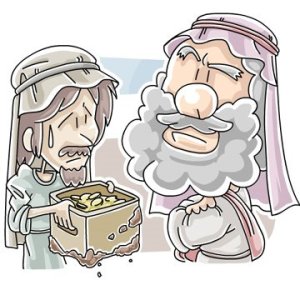 Talenta adalah satu dari sedikit kata-kata dari Kitab Suci yang telah menjadi bagian dari bahasa kita sehari-hari. Talenta sering diartikan sebagai bakat yang diberikan Tuhan atau keterampilan yang unik seperti memiliki suara yang indah, kemampuan memecahkan persoalan matematika yang rumit, atau kemampuan berolahraga, namun belum sepenuhnya dikembangkan. Dengan demikian, kita dipanggil untuk menggunakan dan memanfaatkan talenta kita untuk mencapai potensi maksimal kita dan memberikan kontribusi pada kemajuan masyarakat.
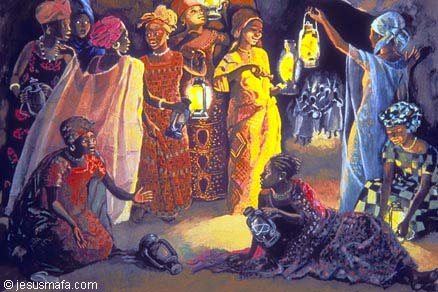 Pada zaman Yesus, seorang perempuan yang belum menikah harus tinggal dengan ayah dan keluarganya. Hanya saat dia menikah, dia akan pindah ke rumah suaminya. Peralihan dari keluarga asalnya ke keluarga barunya ini dilambangkan oleh perarakan pernikahan yang melibatkan hampir semua orang di desa. Pengantin laki-laki akan menjemput sang istri dari rumah ayahnya, dan bersama-sama mereka diarak kembali ke rumah pengantin laki-laki di mana biasanya perayaan pernikahan diadakan. Untuk alasan praktis, perarakan berlangsung setelah matahari terbenam, dan dengan demikian, pria dan wanita yang terlibat dalam perarakan harus membawa obor atau pelita mereka.
 Reading this Sunday’s Gospel, I feel that Jesus is reprimanding His priests and ministers for “preaching and yet not practicing.” Unfortunately, many of us are failing in this matter. We preach forgiveness, but some priests are having prolonged quarrels with other co-priests and some of their parishioners. We teach kindness and friendship of God, yet some of us appear to be aloof and snobbish. We proclaim justice, but sometimes we fail to be just to the simple people working in the parish or convent.
 Membaca Injil Minggu ini, saya merasa bahwa Yesus menegur para imam dan pewarta sabda-Nya karena “mengajarkannya tetapi tidak melakukannya.” Sayangnya, banyak dari kita gagal dalam hal ini. Kita memberitakan pengampunan, namun beberapa imam hidup dalam pertengkaran berkepanjangan dengan rekan imam lainnya atau dengan beberapa umat mereka. Kita mengajarkan kebaikan dan persahabatan dengan Tuhan, namun beberapa dari kita tidak pernah tersenyum dan tampak sombong. Kita memberitakan keadilan, tapi terkadang kita gagal memberi keadilan kepada mereka yang bekerja di paroki atau biara.
 In Medio Ecclesiae