To Teach, to Exorcise, to Heal

4th Sunday in Ordinary Time [January 28, 2018] Mark 1:21-28

 “Then they came to Capernaum, and on the sabbath he entered the synagogue and taught. (Mk. 1:21)”

healing ministry
photo by Harry Setianto Sunaryo, SJ

After calling the disciples, Jesus begins his ministry proper in Capernaum. There, Jesus performs a threefold task: teaching, exorcism (driving away the evil spirits) and healing. On the Sabbath, He immediately enters the synagogue and teaches with authority. He faces the unclean spirits who possess a man and rebukes them to leave. And in the next Sunday’s reading, he heals Peter’s mother-in-law (Mk. 1:29-39). All these he does with authority.


This threefold task is fundamental to the ministry of Jesus, and in the succeeding Sundays, we will listen to many of these actions. Why are these fundamental to Jesus? The answer is because these three aspects make Jesus’ ministry a holistic one. Teaching is to form a sound mind, to drive away evil spirits is to build a holy spiritual life, and healing is to empower our bodies. It is precisely the Good News because the salvation Jesus brings covers all aspects of our humanity. As His disciples, we are all called to preach, drive evil spirits, and to heal.

Healing deals with the health of our bodies. It is true that we do not have the gift of healing, but all are called to respect our bodies and thus, to live a healthy lifestyle and avoid those things that will make us sick, like unnecessary stress and unhealthy food. To respect our bodies flows from the recognition that our bodies are the gift of God and as St. Paul says, “the Temple of the Holy Spirit.” Thus, abuse of our bodies means disrespecting the God who created us, and the Holy Spirit who gives us life. Yet, healing is not limited to our bodies but also includes healing our neighbors. It is to make sure that our brothers and sister have something to eat, something to clothe their bodies and a place to rest their bodies. It is not only to heal our own bodies but our society as well.

Exorcism is truly a special ministry in the Church, and only delegated to few people under the authority of the bishops, but every Christian is called to drive away evil spirits in their lives and hearts. It is our sacred duty to live holy lives, to receive the sacraments frequently, and to pray fervently. These are the ways to get closer to God, and thus, enable us to have healthy spiritual lives. To drive away evils also means to free ourselves from the bondage of sins and vices. It is a kind of spiritual healing. The devil sometimes possesses our bodies, but most of the time, he possesses our hearts. Our excessive attachment to things, like money, sexual pleasure, prestige, is a manifestation of evil spirits working in our hearts.

It is true that not all are teachers by profession, but we are called to form our minds and other peoples’ mind as well. It is fundamental for the parents to teach the basic Christian values, like honesty, fidelity, and compassion, to their young children. It is also important to habitually reflect on our characters, to correct bad habits, and to improve ourselves. After all, education is not only transfer of information, but the formation of characters. Thus, a right understanding of self will affect the way we act. I have been faithfully attending the Eucharist since my childhood, but when I learn more about its theology, history and its rootedness in the Scriptures and Christ Himself, the more I fall in love with the Eucharist.

We are the disciples of Christ, and it is our sacred mission and honor to participate in His threefold ministry in our sown ways and lives: to teach, to drive evil spirits and to heal.

Br. Valentinus Bayuhadi Ruseno, OP

Mengajar, Mengusir Roh Jahat, dan Menyembuhkan

Minggu di Biasa ke-4 [28 Januari 2018] Markus 1: 21-28

“Mereka tiba di Kapernaum. Setelah hari Sabat mulai, Yesus segera masuk ke dalam rumah ibadat dan mengajar. (Mk. 1:21)”

communion
photo by Harry Setianto Sunaryo, SJ

Setelah memanggil murid-murid-Nya, Yesus memulai misi-Nya di Kapernaum. Di sana, Yesus melakukan tiga tugas dasar: pengajaran, eksorsisme (mengusir roh jahat) dan penyembuhan. Pada hari Sabat, Dia mengajar dengan penuh otoritas di rumah ibadat. Dia menghadapi roh-roh jahat yang merasuki seorang pria dan mengusir mereka. Dan dalam bacaan hari Minggu berikutnya, dia menyembuhkan ibu mertua Petrus (Mrk 1: 29-39).


Tiga tugas pokok ini sangat penting bagi pelayanan Yesus, dan di hari-hari Minggu yang akan datang, kita akan mendengarkan banyak penggenapan dari tiga tugas ini. Mengapa tiga tugas ini mendasar bagi Yesus? Jawabannya adalah karena ketiga aspek ini menjadikan pelayanan Yesus sebagai pelayanan yang holistik atau menyeluruh. Pengajaran adalah untuk membentuk pikiran yang sehat, mengusir roh jahat adalah untuk membangun kehidupan rohani yang kudus, dan penyembuhan adalah untuk memberdayakan tubuh kita. Ini adalah Kabar Baik karena keselamatan yang Yesus bawa mencakup semua aspek kemanusiaan kita. Sebagai murid-murid-Nya, kita semua dipanggil untuk mengajar, mengusir roh jahat, dan menyembuhkan.

Yang pertama adalah penyembuhan. Ini berhubungan dengan kesehatan tubuh kita. Memang benar bahwa kita tidak memiliki karunia penyembuhan, tapi semua dipanggil untuk menghormati tubuh kita dan dengan demikian, menjalani gaya hidup sehat dan menghindari hal-hal yang membuat kita sakit, seperti stres yang berlebihan dan makanan yang tidak sehat. Ini bersumber pada sebuah pengakuan bahwa tubuh kita adalah anugerah Allah dan seperti yang dikatakan oleh St. Paulus, “Tubuh adalah Bait Roh Kudus.” Dengan demikian, pelecehan terhadap tubuh kita berarti tidak menghargai Tuhan yang menciptakan kita, dan Roh Kudus yang memberi kita hidup. Namun, penyembuhan tidak terbatas pada tubuh kita saja, tapi juga penyembuhan orang-orang di sekitar kita. Ini adalah tugas kita juga bahwa saudara-saudari kita memiliki sesuatu untuk dimakan, pakaian untuk membalut tubuh mereka dan tempat tinggal. Bukan hanya untuk menyembuhkan tubuh kita sendiri tapi juga masyarakat kita.

Eksorsisme benar-benar merupakan pelayanan khusus di Gereja, dan hanya didelegasikan kepada beberapa orang di bawah wewenang para uskup, namun kita semua dipanggil untuk mengusir roh jahat dalam kehidupan dan hati kita. Ini adalah tugas kita untuk menjalani kehidupan yang kudus dengan menerima sakramen-sakramen secara rutin, dan berdoa dengan sungguh-sungguh. Inilah beberapa cara untuk mendekatkan diri kepada Tuhan, dan dengan demikian, memungkinkan kita memiliki kehidupan rohani yang sehat. Mengusir roh jahat juga berarti membebaskan diri kita dari belenggu dosa dan kebiasaan jahat. Ini adalah semacam penyembuhan spiritual. Iblis terkadang merasuki tubuh manusia, namun seringkali, dia merasuki hati kita. Keterikatan kita yang berlebihan terhadap berbagai hal, seperti uang, kesenangan seksual, kehormatan, adalah manifestasi dari roh-roh jahat yang bekerja di dalam hati kita.

Memang benar bahwa tidak semua berprofesi sebagai guru, tapi kita semua dipanggil untuk membentuk pikiran kita dan sesama. Sangat mendasar bagi orang tua untuk mengajarkan nilai-nilai dasar Kristiani, seperti kejujuran, kesetiaan, dan kasih sayang kepada anak-anak kita. Penting juga untuk biasa merefleksikan karakter kita, memperbaiki kebiasaan buruk, dan mengembangkan diri. Toh, pendidikan tidak hanya sekedar transfer informasi, tapi juga pembentukan karakter. Dengan demikian, pemahaman diri yang benar akan mempengaruhi cara kita bertindak. Saya telah menghadiri Ekaristi sejak masa kecil saya, namun ketika saya belajar lebih banyak tentang teologi, sejarah dan fondasinya dalam Kitab Suci dan Kristus sendiri, semakin saya jatuh cinta dengan Ekaristi.

Kita adalah murid Kristus, dan inilah misi dan kehormatan kita untuk berpartisipasi dalam pelayanan Kristus: mengajar, mengusir roh-roh jahat dan untuk menyembuhkan.

Frater Valentinus Bayuhadi Ruseno, OP

Come after Me!

3rd Sunday in Ordinary Time (Feast of Sto. Niño in the Philippines) January 21, 2018 [Mark 1:16-20*]

“Come after me, and I will make you fishers of men (Mar 1:17)”

gazing cross
photo by Harry Setianto Sunaryo, SJ

Jesus begins His public ministry by calling His first disciples to follow Him. In ancient Palestine, to become a student of a particular teacher means to follow him wherever he goes and stays. In fact, the Greek words used is “deute hopiso”, that means “come after me” because the disciples are expected to literally walk few steps behind Jesus. No wonder, that when the four first disciples, Peter, Andrew, James and John, are called, they have to leave practically everything behind, their works, their family and their hometowns. Thus, to become Jesus’ disciples are a radical commitment that entails great sacrifices.

However, if we bring back the life of radical discipleship to our time, who among us will be able to follow that call? How many among us will be willing to leave behind our work, family, and hometown for the sake of Christ? Not many. Only a few people are entering the monasteries or the convents. Even, those who are already members of religious congregations, we are allowed to keep in touch with their family. I myself am able to have a vacation every year and visit my family. It seems that the total discipleship remains a far-reached ideal for many of us.

While it is true that this kind of life is genuinely difficult and rare, yet we believe that the life of a true disciple is also available for all of us. The Gospel tells us that the first disciples leave many things behind, but actually, the disciples do also bring something with them when they decide to walk after Jesus. They carry “themselves”, the totality of their own persons. Within this person are their characters, knowledge, skills, ideals, and dreams. In short, they also carry with them their profession, their family, and homeland. This is why Jesus does not only call Simon, Andrew, James, and John to follow Him, but He also is going to make them “the fishers of men.” Jesus knows that these guys are one of the best fishermen in the Galilee, and now Jesus invites them to offer the best they have for God’s purposes. To follow Jesus is not leaving everything behind as much as offering ourselves to the Lord.

When St. Dominic de Guzman preached against the heresy in the Southern French, he left the comfort of his church in Osma, Spain. Yet, when he preached, he brought along all the skills and knowledge he learned as a canon in Osma, and as a student at the University of Valencia. He left everything and yet, paradoxically, he brought everything when he founded the first religious Order that was dedicated for preaching in the Church.

We may not be able to leave our family, our profession, and hometown because we are responsible for the lives of our family and relatives, but with the same spirit, we can radically follow Jesus, by offering ourselves for God’s purposes. As parents in the family, what do we give to God, which may build a solid Christian family? As part of the Church, what do we surrender to Jesus, which may help her growth in the world? As members of society, what do we offer to the Lord, which may contribute to a just and growing society?

Today, the Church in the Philippines is celebrating the feast of Sto. Niño, or the Child Jesus. The image of Sto. Niño is the first to be introduced to the Filipino people, and His intercession has been very instrumental to the evangelization of this country. We pray to Sto. Niño that our self-offering may bear fruits wherever we are sent and live.

Br. Valentinus Bayuhadi Ruseno, OP
*the reading is taken from the 3rd Sunday of Ordinary Time

Ikutlah Aku!

Minggu di Biasa ke-3 [21 Januari 2018] Markus 1:14-20

“Mari, ikutlah Aku dan kamu akan Kujadikan penjala manusia.(Mar 1:17)”

ordination
foto oleh Harry Setianto Sunaryo, SJ

Yesus memulai pelayanan publik-Nya dengan memanggil empat murid yang pertama untuk mengikuti Dia. Di Palestina zaman Yesus, untuk menjadi murid berarti mengikutinya ke mana pun sang guru pergi. Bahkan, kata-kata Yunani yang digunakan adalah “deute hopiso”, itu berarti “Ikutilah di belakangku” karena para murid benar-benar berjalan beberapa langkah di belakang Yesus, sang Guru. Tidak mengherankan, bahwa ketika empat murid pertama, Petrus, Andreas, Yakobus dan Yohanes, dipanggil, mereka harus meninggalkan segala sesuatu, pekerjaan, keluarga dan kampung halaman. Jadi, untuk menjadi murid Yesus adalah sebuah komitmen radikal yang memerlukan pengorbanan besar.

Namun, jika kita mengaplikasikan kehidupan para murid pertama Yesus ke zaman kita, siapa di antara kita yang bisa mengikuti panggilan ini? Siapa di antara kita bersedia meninggalkan pekerjaan, keluarga dan tempat tinggal kita demi Kristus? Jawabannya tidak banyak. Hanya sedikit orang yang memasuki pertapaan atau biara. Bahkan, mereka yang sudah menjadi anggota kongregasi religius pun, diijinkan untuk tetap berhubungan dengan keluarga mereka. Saya sendiri sebagai seorang biarawan bisa berlibur setiap tahun dan mengunjungi keluarga saya di Bandung. Tampaknya kehidupan sebagai murid yang total tetap menjadi ideal yang jauh bagi kita.

Meskipun memang benar bahwa kehidupan seperti ini benar-benar sulit dan langka, namun kita percaya bahwa kehidupan murid sejati juga mungkin bagi kita semua. Injil mengatakan kepada kita bahwa murid pertama meninggalkan banyak hal, namun sebenarnya para murid juga membawa sesuatu bersama mereka ketika mereka memutuskan untuk berjalan dengan Yesus. Mereka sebenarnya membawa “diri mereka sendiri.” Di dalam totalitas pribadi ini ada karakter, pengetahuan, keterampilan, cita-cita, dan impian mereka. Singkatnya, mereka juga membawa serta profesi mereka, keluarga dan tanah air mereka. Inilah sebabnya mengapa Yesus tidak hanya memanggil Simon, Andreas, Yakobus dan Yohanes untuk mengikut Dia, tetapi Dia juga akan menjadikan mereka “penjala manusia.” Yesus tahu bahwa orang-orang ini adalah salah satu nelayan terbaik di Galilea, dan sekarang Yesus mengundang mereka untuk mempersembahkan yang terbaik yang mereka miliki bagi Allah. Mengikuti Yesus tidak berarti meninggalkan segalanya, tetapi  mempersembahkan diri kita kepada Tuhan.

Ketika St. Dominikus de Guzman berkhotbah menentang ajaran sesat di Prancis Selatan, dia meninggalkan kenyamanan hidupnya di gereja di Osma, Spanyol. Namun, ketika dia berkhotbah, dia membawa semua keterampilan dan pengetahuan yang dia dapat sebagai kanon di Osma, dan sebagai mahasiswa di universitas Valencia. Dia meninggalkan segalanya, tetapi dia membawa semuanya saat dia mendirikan Ordo religius pertama yang didedikasikan untuk berkhotbah di Gereja. Sungguh sebuah paradoks!

Kita mungkin tidak dapat meninggalkan keluarga, profesi dan tempat tinggal kita karena kita bertanggung jawab atas kehidupan keluarga dan saudara-saudari kita, namun dengan semangat yang sama, kita dapat secara radikal mengikuti Yesus. Bagaimana? dengan mempersembahkan diri kita bagi Allah dan rencana-Nya. Sebagai orang tua, apa yang kita berikan kepada Tuhan, yang bisa mendidik anak-anak kita dan membangun keluarga Kristiani yang baik? Sebagai bagian dari Gereja, apa yang kita serahkan kepada Yesus, yang dapat membantu pertumbuhan Gereja di dunia ini? Sebagai anggota masyarakat, apa yang kita persembahkan kepada Tuhan, yang dapat memberikan kontribusi pada masyarakat yang adil dan makmur?

Frater. Valentinus Bayuhadi Ruseno, OP


Come and Experience!

Second Sunday in the Ordinary Time [January 14, 2018] John 1:35-42

They said to him, “Rabbi, where are you staying?” He said to them, “Come and see.”  (Jn 1:38-39)

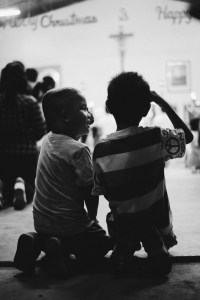
children praying
photo by Harry Setianto Sunaryo, SJ

In the Gospel of John, we will not discover the word “apostle” or one who is sent to preach the Gospel. John the Evangelist consistently calls those who faithfully gather around Jesus as the disciples. Why so? Perhaps, John the Evangelist wants to show us that the most important and fundamental aspect of being a follower of Jesus is truly to be a disciple.

What is a disciple in the time of Jesus? We usually understand a student as one who studies at a particular school with its buildings, facilities and system of learning. Like Br. Bayu is a student of the University of Santo Tomas, and every Monday to Friday, he has to attend classes at the Manila campus. I am expected to learn particular knowledge, like the theology of St. Paul or master certain skills like preaching. At the end of the semester, I need to pass the exams in order to prove that I have learned those set of knowledge or skills. If I fail, I have to take a remedial or retake the subject all over again. Surely, this is a simplistic way of imagining learning in our time, but if we want to be a disciple in the time of Jesus, we have to enter a different world.

When Andrew and Peter become the disciples of Jesus, it does not mean that they will attend lectures of Jesus. They literally follow Jesus wherever Jesus goes. That is why the first question Andrew asks is not how much the tuition fee is or what lesson Jesus will impart, but rather “Rabbi, where are you staying?” because it is clear in the mind of Andrew that if he wants to become a disciple, he has to follow Jesus literally for 24 hours a day, seven days a week. He is going to walk where Jesus goes, eat what Jesus eats, to sleep where Jesus lays His head, to experience what Jesus experiences, the joy, sadness, the suffering, and resurrection! Learning then is not simply about gaining knowledge or skills, but it is about sharing life, giving and receiving life.

It is interesting also to note that Jesus’ response to Andrew is oft-quoted “come and see”, yet in some ancient Greek manuscripts the words used are “erkesthe kai opheste ”. If they are translated literally, it sounds like “come and experience!” To become a disciple is to experience the life of Jesus, to experience Jesus Himself. Surely, it is a total experience of Jesus. Thus, the end of learning is not the grades, but a new life in the likeness of Jesus, the Master. It is the imitation of Christ in the real sense.

However, to become this kind of disciple, the price is also extremely high. To follow and experience Jesus’ life, we need to give up our lives. A life for life. We cannot be the disciples of Jesus only 8 AM to 3 PM, but the rest of the day, we are free.  We cannot say that we are disciples of Jesus when we are at the Church only, but not in the workplaces and homes. We become like Jesus both in good times and bad times. The questions now are: Are we willing to sacrifice our old lives? Are we ready to follow Jesus day and night? Are we making our full effort to become like Christ?

Br. Valentinus Bayuhadi Ruseno , OP

Datanglah dan Alamilah!

Minggu di Biasa ke-2 [14 Januari 2018] Yohanes 1:35-43

“Kata mereka kepada-Nya: ‘Rabi, di manakah Engkau tinggal?’ Ia berkata kepada mereka, ‘Datang dan lihatlah.”  (Yoh 1: 38-39)

children praying - bnw
photo by Harry Setianto Sunaryo, SJ

Dalam Injil Yohanes, kita tidak akan menemukan kata “rasul” atau seseorang yang diutus untuk memberitakan Injil. Yohanes Penginjil secara konsisten memanggil orang-orang yang dengan setia mengikuti Yesus sebagai seorang murid. Kenapa demikian? Mungkin, Yohanes penginjil ingin menunjukkan kepada kita bahwa aspek terpenting dan mendasar dari menjadi pengikut Yesus adalah benar-benar menjadi seorang murid.

Apa artinya menjadi murid di zaman Yesus? Kita biasanya memahami bahwa seorang murid sebagai orang yang belajar di sekolah tertentu yang dilengkapi dengan bangunan, fasilitas dan sistem pembelajarannya. Seperti Frater Bayu adalah murid di Universitas Santo Tomas, dan setiap hari Senin sampai Jumat, dia harus menghadiri kelas di kampus Manila. Saya diharapkan untuk memahami ilmu teologi, seperti teologi St. Paulus atau menguasai keterampilan khusus seperti berkhotbah. Pada akhir semester, saya diharuskan lulus ujian untuk membuktikan bahwa saya telah menguasai ilmu atau keterampilan yang diharapkan. Jika saya gagal, saya harus mengambil ujian ulang atau mengulang kembali mata kuliah yang gagal. Tentunya, ini adalah cara sederhana untuk membayangkan sistem pembelajaran di zaman kita, tetapi jika kita ingin menjadi murid pada masa Yesus, kita harus memasuki dunia yang berbeda.

Ketika Andreas atau Petrus menjadi murid Yesus, ini tidak berarti bahwa mereka akan menghadiri kelas-kelas yang diadakan Yesus. Mereka benar-benar mengikuti Yesus ke manapun Yesus pergi. Itulah sebabnya pertanyaan pertama yang diajukan Andreas bukan berapa biaya kuliah atau pelajaran apa yang akan diberikan Yesus, melainkan “Rabi, di manakah Engkau tinggal?” Karena jelas di dalam benak Andreas bahwa jika dia ingin menjadi seorang murid, dia harus mengikuti Yesus secara penuh, 24 jam sehari, tujuh hari seminggu. Mereka akan berjalan ke tempat Yesus pergi, makan apa makanan yang Yesus makan, tidur di mana Yesus meletakkan kepala-Nya, mengalami semua yang Yesus rasakan, sukacita, kesedihan, penderitaan dan kebangkitan! Belajar kemudian bukan hanya tentang mendapatkan pengetahuan atau keterampilan, tapi juga tentang berbagi hidup, memberi dan menerima kehidupan.

Menarik juga untuk dicatat bahwa tanggapan Yesus terhadap Andreas adalah “come and see” atau “datang dan lihatlah”, namun jika kita kembali ke teks Yunani kuno, kata yang digunakan adalah “erkesthe kai opheste”. Jika diterjemahkan secara harfiah, ini adalah “datang dan alamilah!” Untuk menjadi murid adalah mengalami kehidupan Yesus, untuk mengalami Yesus sendiri. Tentunya, ini adalah pengalaman total tentang Yesus. Dengan demikian, akhir pembelajaran bukanlah nilai, melainkan kehidupan baru dan sungguh menjadi citra Yesus, sang Guru. Ini adalah mengikuti Kristus dalam arti sebenarnya.

Namun, untuk menjadi murid semacam ini, tidaklah mudah. Untuk mengikuti dan mengalami kehidupan Yesus, kita harus menyerahkan hidup kita. Hidup untuk hidup. Kita tidak bisa menjadi murid Yesus hanya dari jam 8 pagi sampai 5 sore, tetapi setelah itu, kita bebas. Kita tidak bisa mengatakan bahwa kita adalah murid Yesus ketika kita berada di Gereja saja, tapi bukan murid-Nya di tempat kerja dan rumah. Kita menjadi murid Yesus pada saat-saat indah maupun masa-masa sulit. Pertanyaannya sekarang adalah: Apakah kita bersedia mengorbankan kehidupan lama kita? Apakah kita siap untuk mengikuti Yesus siang dan malam? Apakah kita berusaha semaksimal mungkin untuk menjadi seperti Kristus?

Frater Valentinus Bayuhadi Ruseno, OP

The Magi

The Epiphany of the Lord [January 7, 2018] Matthew 2:1-12

“Then they opened their treasures and offered him gifts of gold, frankincense, and myrrh. (Mat 2:11)”

magi shadowBalthazar, Melchior, and Gaspar, as the tradition called them, were neither Jews nor baptized Christians. In Greek ancient manuscripts of the Gospel, the word used to describe them is ‘magos’, meaning ‘someone with magical power’ or ‘magicians’, and practicing magic is detestable in the eyes of the Jews (2 Chro 33:6).  Even the Catholic Church herself prohibits our engagement with any kind of magic (CCC 2116). Yet, we cannot be sure what kind of magic they craft, but one thing is certain that these Magi read the sign of times and follow the star. Because of this, they are called as one of those ancient astrologers, star-readers who predict the human behaviors and the future.

Surprisingly, today’s Gospel presents these three Magi as our protagonists. Why should these practitioners of magic turn to be the good guys here? If we examine closely the story of the Gospel, we discover that these Magi stand in contrast with Herod together with his chief priests and scribes. Unlike the Magi who are reading the star to find the new-born king, Herod and his religious associates are examining the Scriptures to locate the Messiah. Indeed, the Scriptures, as the Word of God, is the lawful means to seek Jesus. Unfortunately, despite its valid method, Herod’s intention is to annihilate Jesus, his threat to his throne. Herod embodies those people who use the Scriptures to achieve his own agenda, to confuse the people and to destroy God. Meanwhile the Magi, despite their illegitimate method, sincerely seek Jesus, the true King, and indeed, God leads them to Jesus.

The encounter with Jesus brings real transformation. The Magi offer Jesus gold, frankincense, and myrrh. Traditionally, the three gifts are symbols of kingship, priesthood and suffering of Jesus, but further studies suggest that the three gifts are the usual items used for practicing magic in the ancient time. Thus, when the Magi offer the three gifts, this symbolizes their giving-up of their old profession. When they see the true King, they have found the true meaning of life, the fullness of happiness. They realize that their former profession, powerful it might be, is not true. Their journey has come to a conclusion, and it is the time for them to decide whether to stay in their old way or to embrace Christ fully. And, they made the right choice.

The story of the Magi reminds me of the story of Bartolo Longo. Growing up in the troubled time of Italy and the Church, young Bartolo loses faith in Papacy, and entered a satanic group. He goes all the way and he becomes the satanic priest. Yet, despite the power and wealth he gains from the devil, he continues to be restless. Deep inside, he longs for the true peace. Driven by his desire for truth, and helped by his friend and a Dominican priest, he returns to the faith that he has abandoned. He becomes an ardent devotee of our Lady and zealous promoter of the rosary. He initiates the restoration of a dilapidated church in Pompey, and places the image of Our Lady of the Rosary. Through his effort, now the church has become a revered pilgrim site in Italy. His holiness is acknowledged by the Church, and he is beatified in 1980 by John Paul II.

Like the Magi and Bartolo Longo, are we ready to recognize Christ as our true happiness? Are we willing to look for Jesus in our lives’ journey? And, when the moment comes, are we willing to give up our former lives and to embrace Jesus fully?

Br. Valentinus Bayuhadi Ruseno , OP


Majus

Hari Raya Penampakan Tuhan [7 Januari 2018] Matius 2:1-12

“Merekapun membuka tempat harta bendanya dan mempersembahkan persembahan kepada-Nya, yaitu emas, kemenyan dan mur (Mat 2:11)”

three magiMenurut tradisi, nama tiga orang Majus adalah Balthazar, Melchior, dan Gaspar. Dalam bahasa Yunani, kata yang digunakan untuk Majus adalah ‘magos’, yang berarti ‘seseorang dengan kekuatan magis atau sihir’, dan mempraktekkan ilmu magis adalah sebuah kesalahan besar di mata orang-orang Yahudi (2 Taw 33: 6). Bahkan Gereja Katolik sendiri melarang kita memiliki kontak dengan praktek magis atau sihir apa pun (Katekismus 2116). Namun, kita tidak bisa memastikan bentuk magis apa yang digunakan oleh orang Majus ini, tapi satu hal yang pasti bahwa mereka membaca tanda zaman dan mengikuti bintang. Karena itu, mereka bias disebut sebagai astrolog kuno, pembaca bintang yang memprediksi perilaku manusia dan masa depan.

Anehnya, Injil hari ini mempersembahkan ketiga orang Majus ini sebagai protagonis. Mengapa para praktisi magis ini bisa menjadi orang baik di sini? Jika kita memeriksa dengan seksama kisah Injil, kita menemukan bahwa orang-orang Majus ini dikontraskan dengan Herodes bersama dengan imam-imam kepala dan ahli-ahli Tauratnya. Berbeda dengan orang Majus yang membaca bintang untuk menemukan raja yang baru lahir, Herodes dan para pembantunya meneliti Kitab Suci untuk menemukan Mesias. Memang, Kitab Suci, sebagai Firman Allah, adalah cara yang benar untuk mencari Yesus. Sayangnya, meski memiliki metode yang benar, maksud Herodes adalah untuk memusnahkan Yesus, yang merupakan ancaman terhadap takhtanya. Herodes menjadi lambang bagi orang-orang yang menggunakan Kitab Suci untuk mencapai agendanya sendiri, untuk membingungkan orang-orang dan untuk menghancurkan Tuhan. Sementara orang Majus, terlepas dari metode yang tidak benar, dengan tulus mencari Yesus dan sungguh, Tuhan membawa mereka kepada Yesus.

Pertemuan dengan Yesus membawa transformasi yang nyata. Orang Majus menawarkan Yesus emas, kemenyan, dan mur. Secara tradisional, ketiga hadiah itu adalah simbol kerajaan, imamat dan penderitaan Yesus, namun penelitian lebih lanjut menunjukkan bahwa ketiga hadiah itu adalah barang yang biasanya digunakan untuk mempraktekkan sihir di zaman kuno. Jadi, ketika orang Majus menawarkan tiga hadiah, ini melambangkan penyerahan profesi lama mereka. Ketika mereka melihat Raja sejati, mereka telah menemukan arti sebenarnya dari kehidupan dan kebahagiaan. Mereka menyadari bahwa profesi lama mereka walaupun memberi mereka kekuatan, tidaklah benar. Perjalanan mereka telah sampai pada puncaknya, dan inilah saatnya bagi mereka untuk memutuskan apakah akan bertahan dengan cara lama atau untuk menerima Kristus sepenuhnya. Dan, mereka membuat pilihan yang tepat.

Kisah orang Majus mengingatkan saya akan kisah Bartolo Longo. Tumbuh dalam masa sulit di Italia dan Gereja, Bartolo muda kehilangan kepercayaan pada Paus, dan memasuki sebuah kelompok pemuja setan, sampai pada akhirnya, dia menjadi imam dari kelompok tersebut. Namun, terlepas dari kekuatan dan kekayaan yang ia dapatkan dari setan, ia terus resah. Jauh di lubuk hatinya, ia merindukan kedamaian sejati. Didorong oleh keinginannya untuk mendapatkan kebenaran, dan dibantu oleh seorang imam Dominikan, dia kembali ke iman yang telah ditinggalkannya. Dia menjadi seorang yang mencintai Bunda Maria dan promotor rosario yang penuh semangat. Dia memulai pemulihan gereja yang rusak di kota Pompey, dan menempatkan lukisan Maria Ratu Rosario di sana. Melalui usahanya, kini gereja tersebut telah menjadi situs peziarahan yang dihormati di Italia. Kekudusannya diakui oleh Gereja, dan dia dibeatifikasi pada tahun 1980 oleh Yohanes Paulus II.

Seperti orang Majus dan Bartolo Longo, apakah kita siap untuk mengenali Kristus sebagai kebahagiaan sejati kita? Apakah kita bersedia untuk mencari Yesus dalam perjalanan hidup kita? Dan, ketika saatnya tiba, apakah kita rela melepaskan hidup kita yang lama dan untuk merangkul Yesus sepenuhnya?

Frater Valentinus Bayuhadi Ruseno, OP

Why still Going to the Church on January 1?

Solemnity of Mary, Mother of God [January 1, 2018] Luke 2:16-21

mother of godSome of us may wonder why the Church places the celebration of the solemnity of Mary, the Mother of God on January 1, or on the New Year. One may guess that the Church wants us to attend mass on the first day of the year, so as to start the year right. For those who wish to have a long holidays, it might be pretty a kill joy, but for some of us who wish to be blessed for the entire year, it is a nice thought. Yet, surely there is something deeper than that.

Mary as the Mother of God is the most ancient and foundational among the other Marian dogmas (there are four Marian dogmas). As early as second century AD, Christians in Egypt have prayed to Mary, and called her as the holy mother of God. The prayer is known as “Sub Tuum Praesidium” or “We fly to your patronage”, a prayer that is still being prayed daily by us, the Dominicans. At the council of Ephesus in 431, in effort to defend the humanity of Jesus, the Church proclaimed Mary as the Mother of God as definitive and bonding for all Christians of all time.

For non-Catholics, to call Mary as the mother of God is pretty idolatrous. If God has a mother, Mary must be the highest goddess of all! The Catholics must fall back to polytheism as they worship Mary like the ancient Greeks offered incense to Hera, the supreme goddess of Olympus. But, for the well-informed Catholics, the title ‘Mother of God’ does not point to the divinity of Mary, and in fact, we never consider Mary as another supreme being. She is human just every one of us, but she is so blessed because the Word was made flesh through her (Luk 1:31). Thus, in simple logic, we may say that Mary is the mother of Jesus and Jesus is God, therefore, Mary is the Mother of God.

Now, any true Marian teaching always sheds us more light on Jesus and brings us closer to God. If a woman becomes a mother because the child she bears, then it is fitting to place this solemnity of the Mother of God in close proximity to the Birth of Jesus or Christmas. No wonder, the Church honors her motherhood exactly at the Octave (8th day) of Christmas, which happens to fall on January 1. This connection between Mary the mother and baby Jesus is reflected also on today’s Gospel who speaks of the birth of Jesus.

Perhaps we are just lazy to attend the Mass today, especially we have many other plans. We rather choose to be caught in the festive atmosphere of New Year. Yet, it is also the day that we reconnect with brilliant Church Fathers who defend this teaching, with many Christian martyrs who choose to die for this truth, and with countless devout Christians who honor the Mother of God. If we begin New Year with a lot of resolutions, why don’t we make honoring Mary, as Jesus honors His mother, as our resolution?

Br. Valentinus Bayuhadi Ruseno, OP