

Thirteenth Sunday in Ordinary Time [July 1, 2018] Mark 5:21-43
“Daughter, your faith has saved you. Go in peace and be cured of your affliction.” (Mk. 5:34)
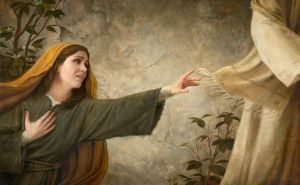 Today’s Gospel seems to be just another healing miracles of Jesus, but if we read it closely, the story of the healing of the woman with hemorrhage is extraordinary tale of faith. We are not sure what kind of hemorrhage she suffers, but the fact that she bears the sickness for 12 years, spends a lot for the medication, and does not get any better, means it is pretty serious, if not terminal. During this time, the physicians are extremely rare, and expectedly, the patients need to spend a lot of money. The woman may come from a wealthy family, but she is impoverished because her prolong sickness. The woman is losing her life and facing despair. I am currently assigned as an associate chaplain in one of the hospitals in Metro Manila, and my duty is to make pastoral visit to these patients. I encounter some patients who are suffering from certain health conditions that drain all their resources, and it seems the situation does not get any better. I realize the story of the woman with hemorrhage is not only her story happened in the far past, but it is also our stories here and now.
We must not forget that our protagonist is also a woman. Being a woman in the time of Jesus means being a second-class citizen in a patriarchal society and often, they are considered as mere properties of the husbands or the fathers. Generally, while the men work outside and socialize, women are expected to stay at home, and function as the housekeepers and babysitters. Normally, they are not allowed to communicate with the outsiders, especially men, except under the supervision of their husbands or fathers. Our protagonist is also having chronic hemorrhage, and this means she is ritually unclean, and those who are in contact with her shall be made unclean as well (Lv. 15:19).
The woman with hemorrhage has faith in Jesus and wants to be healed, yet to do that, she has to challenge the cultural norms that bind her. She traverses into greater danger. What if she is not healed? What if she makes Jesus and His disciples unclean? What if she will be branded as a shameless woman by the society? Shame restrains her, but faith propels her. Thus, she takes a ‘win-win’ approach. She tries to reach Jesus’ cloth, and she makes sure that she will not establish any contact with Jesus. Miracle happens, and she is healed. Yet, unfortunately, Jesus finds her. In tremble and fear, she fells down before Jesus and confesses. She is afraid not only because she “snatches” the power from Jesus, but because she has broken the standing cultural norms and the Law of Moses. However, Jesus’ response surprises his disciples and all who witness the event. Instead of castigating her for culturally improper behavior, Jesus praises her faith, “Daughter your faith has saved you.”
Indeed it is her faith that makes her a proactive protagonist of this particular story. She refuses to succumb to despair and makes her way all the way to Jesus. We notice most of the actions in this story is performed by the woman, and Jesus is there to affirm her. Rightly, Jesus calls her “daughter” acknowledging her also as the descendants of Abraham, the father of great faith. The story of a woman of hemorrhage is a journey of a woman of faith. It is a faith that grows even in the midst of hopeless situations of sickness, financial crisis, and uncertain future. It is a faith that thrives in the middle of human limitations, and transcend cultural boundaries. It is a faith that moves a mountain.
Br. Valentinus Bayuhadi Ruseno, OP
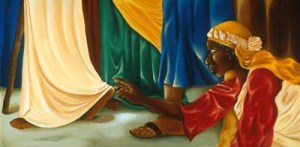 Injil hari ini tampaknya tidak berbeda dengan kisah-kisah mukjizat penyembuhan Yesus, tetapi jika kita membaca dengan seksama, kisah penyembuhan perempuan dengan pendarahan ini sebenarnya luar biasa. Kita tidak tahu dengan pasti pendarahan apa yang dideritanya, tetapi fakta bahwa ia menderita kondisi ini selama 12 tahun, menghabiskan banyak untuk pengobatan dan kondisinya semakin memburuk, ini berarti sangat serius. Pada zaman itu, tabib sangat jarang, dan berobat perlu mengeluarkan banyak uang. Perempuan ini mungkin berasal dari keluarga kaya, tetapi dia jatuh miskin karena kondisinya tersebut. Perempuan ini mulai kehilangan hidupnya dan menghadapi keputusasaan. Saya saat ini ditugaskan sebagai asisten imam di salah satu rumah sakit di Metro Manila, dan tugas saya adalah melakukan kunjungan pastoral ke pasien-pasien yang dirawat di rumah sakit tersebut. Tidak jarang saya menjumpai pasien yang menderita kondisi kesehatan yang menguras semua sumber daya mereka, dan tampaknya situasi mereka tidak menjadi lebih baik. Saya menyadari kisah perempuan dengan pendarahan ini bukan hanya kisahnya yang terjadi di masa lalu, tetapi juga kisah umat manusia di zaman ini.
 Today we are celebrating the birth of John the Baptist. Two figures emerge as the protagonists of our today’s Gospel, Elizabeth, and Zachariah. Luke describes the couple as “righteous in the eyes of God, observing all the commandments and ordinances of the Lord blamelessly. (Luk 1:6)”. But, they have no child. The possibility to have a child is close to zero as Elizabeth is perceived to be barren and Zachariah is already old. In ancient Jewish society, children are considered to be a blessing of the Lord and a source of honor, and barrenness is a curse and shame.
 Hari ini kita merayakan kelahiran Yohanes Pembaptis. Ada dua tokoh protagonis pada Injil kita hari ini, Elizabeth, dan Zakharia. Santo Lukas mendeskripsikan pasangan itu sebagai “orang benar di hadapan Allah dan hidup menurut segala perintah dan ketetapan Tuhan dengan tidak bercacat.” (Luk 1: 6) ”. Tapi, mereka tidak memiliki anak. Kemungkinan memiliki anak juga mendekati nol karena Elizabeth adalah mandul dan Zakharia sudah tua. Dalam masyarakat Yahudi kuno, anak dianggap sebagai berkat Tuhan dan sumber kehormatan, dan kemandulan adalah kutukan dan rasa malu.
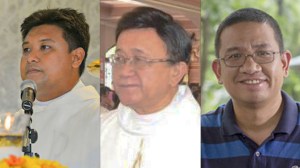 The Catholic Church in the Philippines is once again in profound grief after one of her priests was mercilessly murdered. Fr. Richmond Nilo, from the diocese of Cabanatuan was shot several times just before he celebrated the mass at a chapel in Zaragoza, Nueva Ecija. His body was laying on the floor at the foot of the image of Blessed Virgin, soaked with blood. Another disturbing and painful image. He becomes the third priest losing his life in a bloody attack in the past six months. On December 4, 2017, Fr. Marcelito Paez was ambushed in Jean, Nueva Ecija. Just a few weeks ago on April 29, Fr. Mark Ventura was also gunned down moment after celebrating the mass. We may also include Fr. Rey Urmeneta who was attacked by a hit man in Calamba, Laguna. He sustained a bullet in his body, yet he survived death.
 We often take for granted that we are created as a bodily creature. Our body is integral to our humanity and created by God as something good; we receive our body as a gift. We freely receive our body from our parents, and our parents from their parents and this goes on till we discover God as the source of this gift. Because our body is a gift from God, we are called to honor our body as we honor the Giver of the gift Himself.
 Tubuh kita adalah bagian integral dari kemanusiaan kita dan diciptakan oleh Tuhan sebagai sesuatu yang baik. Tubuh kita adalah sebuah karunia. Dengan cuma-cuma, kita menerima tubuh kita dari orang tua kita, dan orang tua kita dari orang tua mereka dan ini berlangsung terus sampai kita menemukan Tuhan sebagai sumber dari karunia ini. Karena tubuh kita adalah karunia dari Tuhan, kita dipanggil untuk menghormati tubuh kita sebagaimana kita menghormati Sang pemberi karunia.
 In Medio Ecclesiae