

The solemnity of Christ the King [November 25, 2018] John 18:33-37
“You say I am a king. For this I was born and for this I came into the world, to testify to the truth. Everyone who belongs to the truth listens to my voice (John 18:37).”

Our Liturgical Year ends with a drama of two kings: Pilate and Jesus. Pilate was representing the superpower nation in those times, the Roman Empire. So massive in its military domination and so ruthless in its conquests are Rome with her mighty legions. Kingdoms bent their knees in homage to Cesar, the king of kings. Pilate embodied this culture of intimidation and violence. He was a notoriously brutal leader, who stole from his subjects and executed people even without a trial. Surely, he thought of himself as the powerful ‘king’ of Jerusalem and anyone who stoodon his way, would be destroyed.
We are constantly tempted to belong to this kingdom. A husband refuses to listen to his wife and forces his wills in the family through his physical superiority. Insecure with themselves, bigger and tougher guys bully the smaller and weaker kids in a school. Sadly, it takes place not only in school but almost everywhere: family, workplace, society and even cyberspace. The boss intimidates his employees. The government leaders violently suppress any critical voices no matter correct they may be. In the height of his dictatorship, Joseph Stalin bullied the Church saying, “How many division of tank does the Pope have?” Machiavelli, an Italian philosopher, evenonce concluded that the orderly society is built upon fear and violence
However, we have Jesus, the King. But, what kind of king he is? If He is a king, why does he never put on any royal crown, exceptthe crown of thorns forcefully embeddedon his head (Mat 27:29)? If He is a king, why does he have no imperial throneexcept the germ-plagued manger of Bethlehem and the ghastly wood of the cross(Luk 2:7 and Mark 15:30)? If He is a king, why does he control no formidablearmy, except the disbanded group of naïve followers: one of them sold him for30 pieces of silver, a price of a slave,another denied Him for three times and the rest ran for their lives? Is Jesus really a king?
Reading our today’s Gospel closely, Jesus says that His kingdom is not of this world. This means that His kingdom does not conform to the standards of this world. It is not built upon military power, forceful domination, or bloody war. Thus, He is king with no golden crown, and his kingdom has no single army. Jesus further reveals that He comes to testify to the truth (John 18:37), and indeed, He is the TruthHimself (John 14:6). He is the king that rules the kingdom of truth, and his subjects are those listen and witness to the truth. His is the Kingdom that turns upside down the values of the earthly kingdom. It is not built upon deceit, coercion, or clever political maneuvers,but upon mercy, justice and honesty. It embodies the genuine love for others even the enemies, service to everyone especially to the poor, and true worshipof God.
At the end of the liturgical year, it is providential that the Church chooses this reading for us to contemplate. From the entire liturgical year, we come to the Churchand listen to the scriptural readings especially the Gospel. We listen to JesusHimself, and we are confronted with various aspects of this one Truth. Now, itis time for us to decide whether we become part of the kingdom of Pilate, or welisten to the Truth and follow Jesus.
Br. Valentinus Bayuhadi Ruseno, OP



 In Jesus’ time, the scribes are the well-educated Jewish men who are expert in the Law of Moses. Some of them come from the wealthy families, and others hail from the priestly clan. Being able to teach and interpret the Law, they receive the respect and honor from the ancient Jewish society. Thus, ordinary Jews will greet them and prepare them the seats of honor in the synagogues and the banquets. Surely, there is no problem with receiving greetings and sitting as honor guests. Jesus Himself is often greeted as “Teacher” or “Rabbi”, and He attends the banquets as guest of honor (see Mar 14:3). The problem comes when some of the scribes possesses “narcissistic desire” and intentionally look for these privileges.
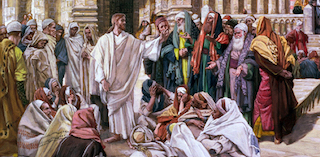 Pada masa Yesus hidup, para ahli Taurat adalah orang Yahudi terdidik dan menjadi ahli dalam Hukum Musa. Beberapa dari mereka berasal dari keluarga kaya, dan yang lain dibesarkan dari klan imam. Mampu mengajar dan menafsirkan Hukum, mereka menerima respek dan kehormatan dari masyarakat Yahudi. Dengan demikian, orang-orang Yahudi kebanyakan akan menyapa dengan hormat para ahli Taurat ini dan mempersiapkan bagi mereka kursi kehormatan di sinagoga dan perjamuan. Tentunya, tidak ada masalah dengan menerima salam dan duduk sebagai tamu kehormatan. Yesus sendiri sering disambut sebagai “Guru” atau “Rabi”, dan Dia menghadiri perjamuan sebagai tamu kehormatan (lihat Mar 14:3). Masalah muncul ketika beberapa ahli Taurat memiliki “hasrat narsistik”, menjadi gila hormat dan dengan sengaja mencari yang kehormatan dan semua hak-hak istimewa.
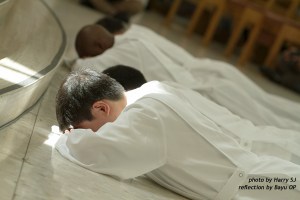
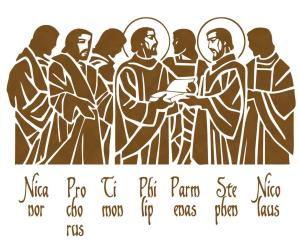 I am currently preparing for my ordination to the diaconate. It is a transitional stage before I become a priest of Jesus Christ. Despite the fact of being transitional, a deacon in itself is an important state in the life of the Church. Bishop Virgilio David, DD of Kalookan reminded the 15 newly-ordained Jesuit deacons in his homily last October that we shall not see a deacon as a mere stepping step toward higher states, like priests and bishops. It is the very core in the layers of concentric circles that make up the ordained ministries of the Church. The diaconate is not a lower rank but the core, without which both the offices of presbyters and bishops collapse. It is the foundation on which we build leadership in the Church. Yet, why do the deacons have to be placed at the core, and become the foundation?
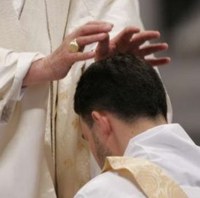 Hari-hari ini, saya sedang mempersiapkan tahbisan diakonat saya. Diakon sendiri adalah tahap transisi sebelum saya menjadi seorang imam. Terlepas dari kenyataan bahwa diakonat adalah masa transisi, seorang Diakon itu sendiri adalah masa hidup yang penting dalam kehidupan Gereja. Uskup Virgilio David, DD dari Kalookan, Metro Manila, mengingatkan 15 diakon Yesuit yang baru saja ditahbiskan Oktober lalu bahwa kita jangan melihat Diakon hanya sebagai langkah pertama menuju tingkat yang lebih tinggi, seperti imam dan uskup. Diakon adalah inti dalam lapisan lingkaran konsentris yang membentuk pelayanan tertahbis di Gereja. Diakon menjadi inti dari lingkaran pelayanan ini dan tanpa inti ini, para imam dan uskup akan runtuh. Ini adalah fondasi tempat kita membangun kepemimpinan di Gereja. Namun, mengapa Diakon harus ditempatkan sebagai inti dan menjadi fondasi?
 In Medio Ecclesiae