
Gifts of Mercy

laying of handsOne of the greatest as well as most humbling realization is that my life and existence is a gift from God. All that exist, from the sub-atomic particle to the purest seraphim owe their being from the Lord. If St. Thomas Aquinas defines justice as to give what is due, then existence is neither due to me nor to all of us. I cannot demand the Lord that He should create me to be the handsomest of all, the richest of all, and the brightest of all. Not even I can ask from Him to possess a face like a Korean actor! Then why did God create me?

The answer lies beyond the justice of God, and what is beyond his justice? It is His Mercy. If His justice asks for “tooth for a tooth” and “eye for an eye”, His Mercy enables one to “give to the one who asks of you, and do not turn your back on one who wants to borrow. (Matt. 5:42)”. If justice is to “love your neighbor and hate your enemy,” (Matt. 5:43), mercy is to “love your enemies, and pray for those who persecute you (Matt. 5:44 NAB).” If God simply exercises His justice, I would not have had my being, but a God is “gracious and merciful, slow to anger and abounding in love and fidelity (Exo 34:6).” And I am here now, alive and kicking, because of God’s mercy. It is a gift precisely because it does not come from my merit and achievement, but freely given.

However, the first gift of life is not the only gift He grants me. The precious gifts keep coming: the gift of family, the gift of faith, the gift of (Dominican) vocation.

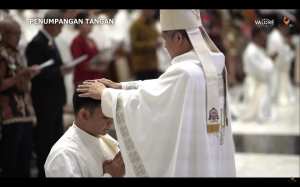
This series of precious gifts are leading me to another even more precious gift: the gift of priesthood. Looking into myself, I am aware that I am far from worthy. I have been sinful man, a broken in many possible ways, and I have hurt a numberless people. Often, I am ungrateful for tremendous gifts and blessing God has showered me. And yet, here I am, quoting the motto of Pope Francis, “miserando atque eligendo” – by God’s merciful choice, in front of the great mystery of faith. As I am ordained by the laying hands of Most. Rev. Antonius Subianto, OSC, DD, I will be, as Bishop Robert Barron would point out, “the bearer of the divine mystery”. This gift does not simply add some sacramental works in my sleeves, but it transforms my very being and identity into the image and likeness of Christ the Head [in persona Christi Capitis]. I participate in the identity and mission of the bishops and fellow priests as bridge-maker [pontifex] between God and humanity, to allow the people of God to embrace the divine mystery.

Every time I celebrate Eucharist [thanksgiving], I shall give thanks to the Lord for the gifts of Mercy. As I have received the gifs, it is now my turn to share these gifts to others so that people of God may feel His Mercy. At the heart of the Eucharist is the thanksgiving over the most precious gift of all, the body and blood of Jesus Christ, being blessed, broken and shared. As I receive this precious gift, my lips proclaim the Word of God, and my hands lift the bread of life and the chalice of salvation, I shall offer my life, like the life of Jesus, to be broken and shared to nourish the people of God.

However, despite tremendous power and privilege the ordination brings, I keep confessing that I am weak, sinful, and not worthy. Thus, as I begin this new chapter of my life, I implore for God’s Mercy and yours.


Martha, Martha

16th Sunday in Ordinary Time [C] – July 21, 2019 – Luke 10:38-42

To perform works to serve the Lord is certainly good and praiseworthy. And these works are numerous and varied. These acts may directly serve Him in the Church, especially during the liturgy. We may participate in the worship as the choir members, lectors, altar servers, ministers of the Holy Communion, or even as the presiders of the Eucharist itself, the priest. Yet, we may also serve Him through others as we involve in charitable initiatives to help the poor, to fight for justice and peace and integrity of creation. We have many ways, but the goal is one: to honor and glorify Him.

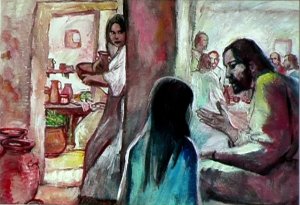
In today’s Gospel, we encounter Martha and Mary of Bethania. They both are serving Jesus, and they perform it according to their unique characters. Mary, more reserved and perhaps an introvert, chooses to stay close to the Master and listen to Him. While Marta, predominantly active and perhaps extrovert, prefers to provide Jesus with the best accommodation. Both want to make Jesus feel welcome in their way. However, there is a little problem. It seems that Jesus is playing little favoritism. He favors Mary over Martha and tells Martha that Mary has chosen a better part.

Surely Jesus does not play favoritism, and surely it is not because Mary is more beautiful than Martha!  Yet, we still have to explain Jesus’ choice. First, we need to see that both are good, but one is just happened to be better than the other. Is it the act of listening better than the act of giving hospitality? In an ancient Jewish context, to provide the hospitality to a guest is one of the prime values. We remember how Lot was offering even his daughters to protect his guests [see Gen 19]! By this standard, Martha is doing a better thing, but Jesus insists that it is not hers. Why?

Again, we need to understand better our Scriptures. The act of listening is fundamental in both Old and New Testament. Every devout Jew in the time of Jesus as well as in our time, daily prays a creedal prayer they call as “Shema Israel” – it was taken straight from Deu 6:4-5 “Hear, O Israel! The LORD is our God, the LORD alone! Therefore, you shall love the LORD, your God, with your whole heart, and with your whole being, and with your whole strength.” Acts of listening do not only mean to hear voices and receive information, but it is also to obey what one has heard. Jesus Himself says, “Everyone who listens to these words of mine and acts on them will be like a wise man who built his house on the rock. (Mat 7:24)” Mary is taking a better part because she has listened to Jesus, who is the LORD, and she listens because she loves her LORD.

Martha has a little problem with her service because she imposes her ways to Mary, perhaps thinking her way of service is the best one. But more than that, Martha becomes overburdened in her serving, and Jesus points out that Martha is anxious and worried with many things. Martha is losing the purpose of her service; she is losing Jesus in the process of serving. What a loss!

Learning from Mary and Martha, we may ask ourselves, “What is the point of our services? Where are we going with many activities we have in the Church? Do we hear the voice of Christ in our ministries? Do we love Jesus in our serving or we discover ourselves in the end?”

Deacon Valentinus Bayuhadi Ruseno, OP

Marta, Marta

Minggu Biasa ke-16 [C] – 21 Juli 2019 – Lukas 10:38-42

martha-and-mary-1Melakukan sesuatu untuk melayani Tuhan tentu baik dan terpuji. Dan karya-karya ini sangat banyak dan beragam. Tindakan-tindakan ini dapat secara langsung melayani Dia di Gereja, terutama dalam liturgi. Kita dapat berpartisipasi dalam ibadat sebagai anggota paduan suara, lektor, putra altar, asisten imam, atau bahkan sebagai imam yang mempersembahkan Ekaristi itu sendiri. Namun, kita juga dapat melayani Dia melalui sesama ketika kita terlibat dalam inisiatif amal untuk membantu orang miskin, untuk memperjuangkan keadilan dan perdamaian dan integritas ciptaan. Kita memiliki banyak cara, tetapi tujuannya adalah satu dan itu adalah untuk memuliakan Dia.

Dalam Injil hari ini, kita bertemu Marta dan Maria dari Bethania. Mereka berdua melayani Yesus dan mereka melakukannya sesuai dengan karakter unik mereka sendiri. Maria lebih pendiam dan mungkin seorang introvert, memilih untuk tetap dekat dengan Tuan dan mendengarkan-Nya. Sementara Marta, yang sebagian besar aktif dan mungkin ekstrovert, lebih suka memberi Yesus akomodasi terbaik. Keduanya ingin membuat Yesus merasa disambut dengan cara mereka sendiri. Namun, ada sedikit masalah. Tampaknya Yesus pilih kasih. Dia lebih menyukai Maria daripada Marta dan memberi tahu Marta bahwa Maria telah memilih bagian yang lebih baik.

Tentunya Yesus tidak pilih kasih, dan tentu saja itu bukan karena Maria lebih cantik dari Marta! Namun, kita masih harus menjelaskan pilihan Yesus. Pertama, kita perlu melihat bahwa keduanya baik, tetapi yang satu lebih baik dari yang lain karena sebuah alasan. Apakah tindakan mendengarkan lebih baik daripada memberi keramahan? Dalam konteks Yahudi kuno, memberikan keramahan pada seorang tamu adalah salah satu nilai utama. Kita ingat bagaimana Lot menawarkan bahkan putrinya sendiri untuk melindungi tamunya [lihat Kejadian 19]! Dengan standar ini, Marta melakukan hal yang lebih baik, tetapi Yesus berpendapat lain. Mengapa?

Sekali lagi, kita perlu lebih memahami Kitab Suci kita. Tindakan mendengarkan adalah tindakan mendasar baik dalam Perjanjian Lama maupun Baru. Setiap orang Yahudi yang saleh di zaman Yesus maupun di zaman sekarang, setiap hari mendaraskan doa syahadat yang mereka sebut sebagai “Shema Israel” – itu diambil langsung dari Ul 6: 4-5 “Dengarlah, hai orang Israel: TUHAN itu Allah kita, TUHAN itu esa! Kasihilah TUHAN, Allahmu, dengan segenap hatimu dan dengan segenap jiwamu dan dengan segenap kekuatanmu.” Tindakan mendengarkan tidak hanya berarti mendengar suara dan menerima informasi, tetapi juga untuk mematuhi apa telah didengarkan. Yesus sendiri berkata, “Setiap orang yang mendengar perkataan-Ku ini dan melakukannya, ia sama dengan orang yang bijaksana, yang mendirikan rumahnya di atas batu. (Mat 7:24)” Maria mengambil bagian yang lebih baik karena dia telah mendengarkan Yesus yang adalah TUHAN, dan dia mendengarkan karena dia mengasihi TUHAN.

Marta memiliki sedikit masalah dengan pelayanannya karena dia memaksakan jalannya kepada Maria, mungkin dia berpikir cara pelayanannya adalah yang terbaik. Tetapi lebih dari itu, Marta menjadi terlalu terbebani dalam pelayanannya, dan Yesus menunjukkan bahwa Marta sendiri penuh kecemasan dan khawatir dengan banyak hal. Marta kehilangan tujuan pelayanannya; dia kehilangan Yesus dalam proses melayani. Betapa malang ya!

Belajar dari Maria dan Marta, kita dapat bertanya pada diri sendiri, “Apa gunanya pelayanan kita? Kemana kita akan pergi dengan banyak kegiatan yang kita miliki di Gereja? Apakah kita mendengar suara Kristus dalam pelayanan kita? Apakah kita benar-benar mencintai Yesus dalam pelayanan kita atau pada akhirnya kita melayani diri kita sendiri?”

Diakon Valentinus Bayuhadi Ruseno, OP

Merciful Samaritan

Fifteenth Sunday of the Ordinary Time [C] – July 14, 2019 – Luke 10:25-27

do it anyway 2The journey from Jericho to Jerusalem was notoriously dangerous. The path was narrow, steep, filled by sudden turnings. The road became the favorite spot for the robbers to ambush any unguarded traveler. Some criminals were often violent, not only they took everything from the victims, but they would beat them mercilessly. Up to early twentieth century, some tourists and pilgrims were caught off guard when they passed this path, as their cars were ambushed and robbed. The brigands would swiftly escape before the police came.

When the teacher of the Law asks Jesus, “who is our neighbor whom we shall love?” Jesus offers him three models to imitate. They are a priest, a Levite and a Samaritan. The priest and the Levite are a privileged social class in ancient Jewish society. They are consecrated to serve in the Temple of Jerusalem. The priests who are the descendants of Aaron, are to accept sacrifice from the people and offer the sacrifice to the Lord at the altar. Meanwhile the Levites are assigned to take care of the temple, to do other liturgical services and assist the priests. Both the priest and the Levite represent a group of people who are dedicating themselves to the Lord, the Law and the Temple, who love their religion dearly. Meanwhile the Samaritan represents what the Jews hate. The pure Jews look down the Samaritans because they are products of intermarriage between unorthodox Jews and other pagan nations as well as idolaters who worship God plus other smaller gods.

By religious standard, the priest and the Levite outrank the Samaritan, but Jesus drops the nuclear bomb as He makes the Samaritan as the hero of the story. We may ask why the priest and Levite refuse to help? One reason is that the priest needs to be away from any blood or dead body, otherwise he would be impure for seven days and he will not be able to serve the Temple [see Num 19:11]. The Levi seems to do little better as he goes nearer to the victim, but he decided not to help perhaps because he is afraid that the guy just serves a decoy to ambush him. Here comes the Samaritan who helps without hesitation. Not only coming to his rescue, the Samaritan makes sure that the victim will be healed and recover, though he must spend his own resources.

Placing ourselves in the shoes of the Samaritan man, we know that his decision to help the victim is daring and even reckless. What if it was just a set-up for ambush? What if he runs out of money? What if the victim would never thank him and even hate him even more? Yet, this is what to love our neighbor means. To love someone is to show mercy and to show mercy means to give beyond what is due.

One of the memorable works Mother Teresa did in Calcutta was to establish a home for the dying. One day, she walked pass a hospital and saw a woman who terribly sick. The mother rushed her to the hospital. Yet, the person in the hospital refused her, saying, “there is no room for her in the hospital!” Mother Teresa stayed outside of the hospital, embracing the dying lady till she breathed her last. Since then, the saint promised that she would make sure that the dying would die with dignity. In the early days of this hospice, Mother Teresa was ridiculed and criticized, yet she and her sisters persevered because they knew that for those who were dying, this may be the last act of mercy they received before they passed away.

If we expect something big in return, it is not love, it is investment. If we just want to be appreciated after doing good, it is not love, it is a showoff. If we do not want to get hurt, it is not love, it is comfort zone. Love is tough, mercy is heroic.

Deacon Valentinus Bayuhadi Ruseno, OP

Orang Samaria yang berbelas kasih

Minggu Biasa Kelima belas [C] – 14 Juli 2019 – Lukas 10: 25-27

do it anywayPerjalanan dari Yerikho ke Yerusalem terkenal berbahaya. Jalan itu sempit, terjal, dipenuhi belokan mendadak sehingga jalan itu menjadi tempat favorit para perampok untuk menyergap setiap pejalan yang tidak siap. Beberapa penjahat sering melakukan kekerasan, bahwa mereka tidak hanya mengambil semua barang dari para korban, tetapi mereka juga akan memukuli mereka tanpa ampun. Hingga awal abad kedua puluh, beberapa turis dan peziarah menjadi korban ketika mereka melewati jalan ini. Setelah mobil para turis dirampok, para perampok akan dengan cepat melarikan diri sebelum polisi datang.

Ketika ahli Hukum Taurat bertanya kepada Yesus, “siapakah sesama kita yang akan kita kasihi?” Yesus menyodorkan tiga model. Mereka adalah seorang imam, seorang Lewi dan seorang Samaria. Imam dan orang Lewi adalah kelompok istimewa dalam masyarakat Yahudi kuno. Mereka ditahbiskan untuk melayani di Bait Suci Yerusalem. Para imam yang merupakan keturunan Harun, akan menerima pengorbanan dari orang-orang Yahudi dan mempersembahkannya kepada Tuhan di altar. Sementara itu orang-orang Lewi mendapat tugas untuk mengurus Bait Allah, untuk melakukan pelayanan liturgi lainnya dan membantu para imam. Baik imam dan orang Lewi mewakili sekelompok orang terpilih yang mendedikasikan diri mereka kepada Tuhan, Hukum Taurat dan Bait Allah. Tanpa keraguan, mereka sangat mencintai agama mereka. Sementara itu, orang Samaria mewakili apa yang dibenci orang Yahudi. Orang-orang Yahudi memandang rendah orang-orang Samaria karena mereka dianggap sebagai produk perkawinan antara orang-orang Yahudi yang sesat dan bangsa-bangsa kafir lainnya. Orang Samaria juga dianggap sebagai para penyembah berhala karena menyembah Tuhan Yahwe tapi dengan tambahan dewa-dewa kecil lainnya.

Menurut standar agama Yahudi, imam dan orang Lewi jauh mengungguli orang Samaria, tetapi Yesus menjatuhkan bom nuklir ketika Ia menjadikan orang Samaria sebagai pahlawan dalam cerita. Kita mungkin bertanya mengapa imam dan orang Lewi menolak untuk membantu? Salah satu alasannya adalah bahwa imam harus menjauh dari darah atau mayat apa pun, jika tidak ia akan najis selama tujuh hari dan ia ingin melayani Bait Suci [lihat Bil 19:11]. Lewi tampaknya sedikit lebih baik ketika dia mendekati korban, tetapi dia mengurungkan niatnya mungkin karena dia takut orang itu hanya menjadi umpan untuk menyergapnya. Tetapi, orang Samaria datang dan membantu tanpa ragu-ragu. Tidak hanya datang menyelamatkannya, orang Samaria memastikan bahwa sang korban akan disembuhkan dan pulih, meskipun ia harus menghabiskan uangnya sendiri.

Menempatkan diri pada posisi orang Samaria, kita tahu bahwa keputusannya untuk membantu korban yang adalah orang Yahudi adalah sangat berani dan bahkan gegabah. Bagaimana jika itu hanya sebuah jebakan? Bagaimana jika dia kehabisan uang? Bagaimana jika korban tidak pernah mengucapkan terima kasih dan bahkan lebih membencinya? Namun, inilah arti mengasihi sesama kita. Mencintai seseorang berarti menunjukkan belas kasihan dan menunjukkan belas kasihan berarti memberi melampaui apa yang sudah seharusnya.

Salah satu karya yang tak terlupakan yang dilakukan Bunda Teresa di Kalkuta adalah membangun rumah bagi orang yang kritis. Suatu hari, dia berjalan melewati rumah sakit dan melihat seorang wanita sangat sakit. Sang suster bergegas membawanya ke rumah sakit. Namun, orang di rumah sakit menolaknya, mengatakan, “tidak ada ruang untuknya di rumah sakit!” Bunda Teresa tetap berada di luar rumah sakit, memeluk wanita yang sekarat itu sampai dia menghembuskan nafas terakhir. Sejak itu, suster Teresa berjanji bahwa dia akan memastikan bahwa orang dapat meninggal dengan martabat. Pada hari-hari awal karyanya ini, Bunda Teresa diejek dan dikritik, namun ia dan saudara-saudaranya bertahan karena mereka tahu bagi mereka yang kritis, ini mungkin merupakan belas kasih terakhir yang mereka terima sebelum mereka meninggal.

 Jika kita mengharapkan imbalan besar, itu bukan kasih, tapi investasi. Jika kita hanya ingin dihargai setelah berbuat baik, itu bukan kasih, itu hanya pamer. Jika kita tidak ingin terluka, itu bukan kasih, itu tidak lebih dari omong kosong. Kasih sesungguhnya itu tangguh, belas kasihan itu sesuatu yang heroik.

Diakon Valentinus Bayuhadi Ruseno, OP

Seventy

14th Sunday in Ordinary Time [C] – July 7, 2019 – Luke 10:1-12, 17-20

by twoIn today’s Gospel, Jesus is sending His seventy disciples for a mission. Yes, we are reading it correctly; it is not just twelve disciples, but seventy. While we are used to the celebrated mission of the Twelve, Luke informs us about the less famous mission of the seventy. We are not sure who are these people, but for sure, these are people who have the same commitment, dedication, and passion like the big names like Peter, John, Andrew, and Matthew. They follow Jesus, leave everything and are willing to be dispatched into a difficult mission to preach the Kingdom, to heal the sick, and to drive out the demons. The story of the seventy disciples gives us a hint about those dedicated and more numerous disciples of Jesus and yet somehow forgotten. While the Twelve represents the well-known figures of the Church like the pope and the bishops, the seventy bring to mind the nameless yet countless priests, religious men and women, and laity who are tirelessly building up the Body of Christs.

We might also ask why seventy? If Twelve apostles represent the twelve tribes of Israel, what will the seventy signify? Surprisingly, when we go back to the Old Testament, seventy is also a significant figure. It is the sum number of the descendants of Jacob who migrated to Egypt [Gen. 46:27]. It was the number of the elders who were elected to help Moses in his task in leading Israel and to offer sacrifice in the wilderness [Exo 24:1]. Thus, seventy become the symbol of both Israel itself and the leaders of Israel. According to Jewish tradition, seventy is also the number of nations that came down from Noah [see Gen 11]. By choosing and commissioning His seventy disciples, Jesus sends His message to the world that He is establishing His New Israel with its leaders, and this Israel will include all people from all nations.

One powerful lesson we can learn from these seventy is humility. When the disciples return in joy for the successful tasks, Jesus tells about enigmatic words, “I saw Satan fall like lightning from the sky!” One possible interpretation is that the disciples have rendered demons powerless in the name of Jesus. The disciples’ success is the failure of Satan. Another explanation is the temptation of pride. According to Christian tradition, Satan was formerly the highest angel who fell from heaven because he is too proud to serve God who became a man. Thus, Jesus reminds the disciples that their mission is essentially Jesus’ mission, and they are nothing without Christ. It is much important that their names are written in heaven instead of being boastful about their success.

Humility is a principal virtue of all disciples’ identity, while ambition and pride kill our identity as disciples. Lucifer used to be one of the seraphim, the highest ranks of angels, and the name Lucifer means “the bearer of Light.” Surely, there is no problem with serving God, but when Lucifer knew about the plan of God the Son to become man, and be born of a woman, and die for the salvation of humanity, he could not accept it. How can be God as well as spiritual beings like angel serve lowly and sinful creatures like humans? In his pride, he declined God’s plan; he refused to serve God. “Non Serviam.” I will not serve. He and his cohorts were then banished from heaven, and Lucifer turns to be Satan, the chief of demons.

When we serve God in humility, we do not get the medals, we do not receive the glory, and we are forgotten, but we are sure that our names are written in heaven.

Deacon Valentinus Bayuhadi Ruseno, OP

Tujuh Puluh

Minggu ke-14 dalam Waktu Biasa [C] – 7 Juli 2019 – Lukas 10: 1-12, 17-20

two disciplesDalam Injil hari ini, Yesus mengirim tujuh puluh murid-Nya untuk bermisi. Bukan hanya dua belas murid, tetapi tujuh puluh. Sementara kita terbiasa dengan misi Dua Belas Rasul yang lebih terkenal, Lukas memberi tahu kita tentang misi tujuh puluh murid yang kurang terkenal. Kita tidak yakin siapa orang-orang ini, tetapi yang pasti, mereka adalah orang-orang yang memiliki komitmen, dedikasi, dan semangat yang sama seperti Petrus, Yohanes, Andreas dan Matius. Mereka mengikuti Yesus, meninggalkan segalanya dan bersedia dikirim ke misi yang sulit untuk memberitakan Kerajaan Allah, menyembuhkan orang sakit, dan mengusir setan. Kisah tujuh puluh murid memberi kita petunjuk tentang murid Yesus yang berdedikasi dan lebih banyak secara jumlah, namun terlupakan. Sementara Dua Belas Rasul mewakili tokoh-tokoh terkenal dari Gereja seperti paus dan para uskup, tujuh puluh murid mengingatkan kita akan para imam, biarawan-biarawati, kaum awam yang tak terkenal namun tak terhitung jumlahnya, dan yang tanpa lelah membangun Tubuh Kristus.

Kita mungkin juga bertanya mengapa tujuh puluh? Jika Dua Belas rasul mewakili dua belas suku Israel, apa yang akan dilambangkan dengan tujuh puluh? Ketika kita kembali ke Perjanjian Lama, tujuh puluh juga merupakan angka penting. Ini adalah jumlah total keturunan Yakub atau Israel yang bermigrasi ke Mesir [Kej. 46:27]. Tujuh puluh adalah jumlah para penatua yang dipilih untuk membantu Musa dalam memimpin Israel dan untuk mempersembahkan korban saat mereka masih di padang gurun [Kel 24: 1]. Menurut tradisi Yahudi, tujuh puluh juga merupakan jumlah bangsa yang turun dari nabi Nuh [lihat Kej 11]. Dengan memilih dan menugaskan tujuh puluh murid-Nya, Yesus mengirimkan pesan-Nya kepada dunia bahwa Ia sedang membangun Israel yang Baru, lengkap dengan para pemimpinnya, dan Israel ini akan mencakup semua orang dari segala bangsa.

Satu pelajaran penting yang dapat kita dapat dari tujuh puluh murid ini adalah kerendahan hati. Ketika para murid kembali dengan sukacita karena misi mereka berhasil, Yesus memberi mereka kata-kata yang cukup aneh, “Saya melihat Setan jatuh seperti kilat dari langit!” Salah satu interpretasi adalah bahwa para murid telah menjadikan Setan dan kerajaannya tidak berdaya dalam nama Yesus. Keberhasilan murid adalah kegagalan Setan. Penjelasan kedua adalah godaan kesombongan. Menurut tradisi Bapa Gereja, Setan dulunya adalah malaikat tertinggi yang jatuh dari surga karena dia terlalu sombong untuk melayani Tuhan yang menjadi manusia. Dengan demikian, Yesus mengingatkan para murid bahwa misi mereka pada dasarnya adalah misi Yesus, dan mereka bukan apa-apa tanpa Kristus. Yang jauh lebih penting adalah nama-nama mereka dituliskan di surga daripada sekedar menyombongkan keberhasilan mereka.

Kerendahan hati adalah kebajikan utama dari identitas semua murid Yesus, sementara ambisi dan keangkuhan membunuh identitas kita sebagai murid. Lucifer dulunya adalah salah satu dari seraphim, malaikat tertinggi di surga, dan nama Lucifer sendiri berarti “pembawa Cahaya.” Tentunya, tidak ada masalah dengan melayani Tuhan, tetapi ketika Lucifer tahu tentang rencana Allah untuk menjadi manusia, dan dilahirkan dari seorang wanita, dan mati untuk keselamatan umat manusia, dia tidak bisa menerimanya. Bagaimana bisa Tuhan dan makhluk spiritual seperti malaikat melayani makhluk rendahan dan berdosa seperti manusia? Dalam kesombongannya, dia menolak rencana Tuhan; dia menolak untuk melayani Tuhan. “Non Serviam.” Dia dan para pengikutnya kemudian diusir dari surga, dan Lucifer berubah menjadi Setan, kepala para roh jahat.

Ketika kita melayani Tuhan dalam kerendahan hati, seringkali kita tidak mendapatkan penghargaan, kita tidak menerima kemuliaan, dan kita dilupakan, tetapi kita yakin bahwa nama kita tertulis di surga.

Diakon Valentinus Bayuhadi Ruseno, OP