

20th Sunday in Ordinary Time [C] – August 25, 2019 – Luke 13:22-30
 Salvation is one of the burning topics of discussion in Christian circles. In several discussions I facilitated, I often encountered some participants asked: Who will be saved? By what means are we going to be saved? When will be saved? Do we need to believe in Jesus to be saved? The answers can be as simple as yes or no, but often, the audience with critical minds demand more comprehensive and sensible answers. Yet, I always bring the listeners to see salvation from a different and deeper angle.
I ask them: what is salvation? Most of the people will immediately reply: We are saved from sins. The answer is correct, yet it is not complete and in fact, rather shallow. The good analogy will be the Israelites in Egypt. They were liberated from slavery, yet their freedom is not merely for freedom’s sake. They were freed so that they may worship their God without fear. Like the Israelites, we are also saved from sin, but this freedom from the slavery of sins is for something greater. We are called to share His divine life, to be with Him and enjoy His being. This is what we mean as being holy and being a saint. We are holy when we are united and participating in that Person who is the source of all holiness.
However, Jesus reminds us today that the way to salvation and holiness is not an easy and instant way. While faith is the beginning of our salvation, surely it does not end there. Jesus himself says, “Strive to enter through the narrow door… (Lk. 13:24)” The word “strive” in original Greek is “agonizomai” which means to participate in a contest or gymnastic game. The image is of an athlete who subjects himself to rigorous training and discipline and competes against the best competitors in the field. That is why to achieve a crown is an agonizing process. St. Paul picks up this idea of Jesus when he exhorts the Church in Corinth to “…Run to win. Every athlete exercises discipline in every way. They do it to win a perishable crown, but we an imperishable one. (1 Cor. 9:25)”
One of the most decorative Olympians is American swimmer Michael Phelps. In peak training phases, Phelps swims around 80,000 meters a week. He practices twice a day, at least. Phelps trains for around five to six hours a day at six days a week. Not only in the swimming pool, but he also builds his winning form through weightlifting and crazy diet regiment. But what many of us probably do not know is that Michael was suffering from Attention deficit hyperactivity disorder (ADHD). People with ADHD have trouble with focus, restlessness, and impulsiveness, yet Phelps was able to overcome this disorder and transform it into power. From one who had difficulty to focus, he is able to remain hyperfocused on his goal. Thus, he won 15 Olympic gold medals.
Salvation is essentially a gift. Nobody can claim that he has the right to this salvation. Yet, this gift, though free, is not cheap. We are striving and struggling every day, like an athlete who competes for the medals. We are doing our best so that we are worthy to receive this gift. We are fighting a battle every day against sins and adversaries that pull us away from God. We are putting our best effort that the gift in our hands will become truly a blessing for us and not a curse. So at the end of our lives, together with St. Paul, we may say, “I have competed well; I have finished the race; I have kept the faith. (2 Tim. 4:7)”
Valentinus Bayuhadi Ruseno, OP
 Keselamatan adalah salah satu topik diskusi yang membakar. Dalam beberapa diskusi yang saya fasilitasi, saya sering menemui beberapa peserta yang bertanya: Siapa yang akan diselamatkan? Dengan cara apa kita akan diselamatkan? Kapan akan diselamatkan? Apakah kita perlu percaya kepada Yesus untuk diselamatkan? Jawabannya bisa sesederhana ya atau tidak, tetapi seringkali, peserta dengan pikiran kritis menuntut jawaban yang lebih komprehensif dan masuk akal. Namun, saya selalu membawa pendengar untuk melihat keselamatan dari sudut yang berbeda dan lebih dalam.
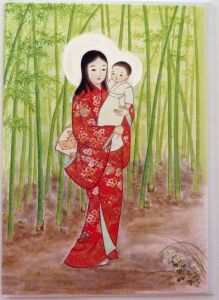 Today the Church is celebrating the solemnity of the Assumption of Mary. Rooted in the Scriptures and Tradition, the Church firmly believes that Mary was assumed into heaven body and soul after she completed her life here on earth. This belief is crystallized in the form of Dogma or the highest teaching of the Church. As a dogma, the Assumption requires the assent of faith from the faithful. The assumption itself is not the sole Marian Dogma. There are four dogmas related to her: Mary is the Mother of God, ever-virgin, immaculately conceived, and assumed into heaven. No other human, except Jesus, has accumulated that much honor in the Church and no other men or women have blessed conditions like hers.
 Hari ini Gereja sedang merayakan hari raya Maria Diangkat ke Surga. Berakar dalam Kitab Suci dan Tradisi, Gereja dengan kuat percaya bahwa Maria diasumsikan ke dalam tubuh dan jiwa surga setelah dia menyelesaikan hidupnya di bumi ini. Keyakinan ini terkristalisasi dalam bentuk Dogma atau ajaran tertinggi Gereja. Sebagai dogma, Asumsi membutuhkan persetujuan iman dari umat beriman. Asumsi itu sendiri bukan satu-satunya Dogma Marian. Ada empat dogma yang berkaitan dengannya: Maria adalah Bunda Allah, selalu perawan, dikandung dengan sempurna, dan diasumsikan ke surga. Tidak ada manusia lain, kecuali Yesus, yang mengumpulkan begitu banyak kehormatan di Gereja dan tidak ada pria atau wanita lain yang memberkati kondisi seperti miliknya.
 In ancient Israel, the masters of the house were often leaving their homes for business trips or attending social gatherings like weddings. They would entrust their houses and their possessions to chief servants. And this was the world without a cellular phone, internet, and GPS. Thus, the servants have no idea of the ETA (estimated time of arrival) of their masters. It could be 8 PM, midnight or even early in the morning. The best attitude of a servant in this scenario is to be always vigilant and prepared for the arrival of his master.
 Di Israel kuno, tuan rumah sering meninggalkan rumah mereka untuk perjalanan bisnis atau menghadiri pertemuan sosial seperti pernikahan. Mereka akan mempercayakan rumah dan harta benda mereka kepada seorang hamba yang adalah hamba utama. Dan kita perlu ingat bahwa ini adalah dunia tanpa telepon seluler, internet dan GPS. Dengan demikian, para pelayan tidak tahu dengan pasti waktu kedatangan dari tuan mereka. Bisa jadi jam 8 malam, tengah malam atau bahkan dini hari. Sikap terbaik seorang pelayan dalam skenario ini adalah untuk selalu waspada dan siap menghadapi kedatangan tuannya.
 Today, we are celebrating the feast of St. Dominic de Guzman. St. Dominic was born around 1170 in Caleruega, Old Castile, Spain. As a saint, he was not that famous as his counterpart, St. Francis of Assisi, perhaps because he did not write any book or writings that would echo his spirituality. Maybe this is the reason why we do not have a solid and systematic understanding of Dominican Spirituality.
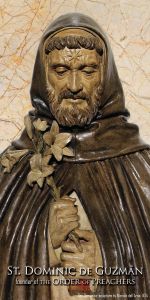 Hari ini, kita merayakan pesta St. Dominikus de Guzman. St. Dominikus dilahirkan sekitar tahun 1170 di Caleruega, Kastilia, Spanyol. Sebagai seorang kudus, ia tidak setenar rekannya, Santo Fransiskus dari Assisi, mungkin karena ia tidak menulis buku atau meninggalkan tulisan apa pun yang akan menggemakan spiritualitasnya. Mungkin inilah alasan mengapa kita tidak memiliki pemahaman yang solid dan sistematis tentang Spiritualitas Dominikan.
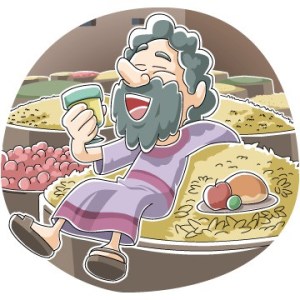 We were all born without bringing anything with us, and for sure, when we die, we will bring nothing with us. Job once said, “Naked I came forth from my mother’s womb, and naked shall I go back there. The LORD gave, and the LORD has taken away; blessed be the name of the LORD!” (Job 1:21). However, as we grow up and old, we begin to acquire things and possessions. Some are given, but some we earn it. As we are accumulating, we start attaching ourselves to these material belongings. Some of us are obsessed with collecting bags, shoes, and clothes, some others with more expensive things like electronic devices and cars. We believe these are ours, and we can own them until the Kingdom comes.
 Kita semua dilahirkan tanpa membawa apa-apa, dan sama ketika kita mati, kita tidak akan membawa apa pun. Ayub pernah berkata, “Dengan telanjang aku keluar dari kandungan ibuku, dengan telanjang juga aku akan kembali ke dalamnya. TUHAN yang memberi, TUHAN yang mengambil, terpujilah nama TUHAN!” (Ayub 1:21). Namun, seiring bertambahnya usia, kita mulai memperoleh banyak hal dan harta benda. Ketika kita mulai mengakumulasi, kita mulai terikat pada barang-barang materi ini. Beberapa dari kita terobsesi dalam mengumpulkan tas, sepatu, dan baju, beberapa lainnya dengan barang-barang yang lebih mahal seperti perangkat elektronik, mobil dan bahkan mobil. Kita mulai percaya ini adalah milik kita, dan kita dapat memilikinya bahkan sampai kita masuk surga.
 In Medio Ecclesiae