

Third Sunday of Ordinary Time [A]
January 26, 2020
Matthew 4:12-17
 After the arrest of John the Baptist, Jesus begins His public ministry. Jesus left Nazareth, His hometown, and moved to a more crowded and bigger town, Capernaum. Crudely speaking, Jesus did urbanization. This strategic move of Jesus was to support His mission. With a dense population and with better access to neighboring towns, Jesus could minister to more people in a more efficient way.
However, Jesus’ movement from Nazareth to Capernaum is not just about practicality and preaching strategy. Jesus was fulfilling the prophecy of Isaiah. “Land of Zebulun and land of Naphtali…the people who sit in darkness have seen a great light…” For many of us, Zebulun and Naphtali do not make any sense, and we tend to skip these verses. Yet, for the first-century Jews, this prophecy is a game-changer because God will gather the lost twelve tribes of Israel, and re-establish the Kingdom of Israel.
Let us go back to the Old Testament a little bit. In 2 Samuel 7, God promised that the throne of David will last forever, however after the reign of Salomon, David’s son, the kingdom of David was divided into two. After some hundred years, these two kingdoms, one by one, were destroyed by the enemies, and the twelve tribes were scattered among the Gentiles. Among the tribes of Israel, only Judah, and Benjamin were able to return to the land of Israel, while the rest, including Zebulun and Naftali, were lost. Jewish people in the time of Jesus knew well that one of the missions of the expected Messiah is to restore the Kingdom and to gather the lost tribes of Judah.
Jesus, the Messiah, came indeed to fulfill this expectation, and no wonder if the first thing He did was to preach that the Kingdom of God is at hand. It is called the Kingdom of God because it is the Kingdom promised by God, built by God, and governed by God. It is the restored kingdom of David, and much bigger than the first David’s kingdom.
However, there is a fundamental difference between David’s kingdom and Jesus’. David’s kingdom was established to fight Israel’s enemies. His kingdom was filled with nobilities, generals, and armies. It was characterized by political rivalry, a struggle for power, and treachery. Finally, it is no different from other kingdoms in the world. All is about “game of thrones”. And like other earthly kingdoms, the kingdom of David was bound to crush as well.
The Kingdom of God basically goes in the opposite direction. It is the Kingdom built upon faith in God, service, and love for others, even to the point of sacrifice. When we were baptized, we become the members of this Kingdom, and in fact, we are transformed into the children of God, calling Him as our Father. However, despite being heirs to the Kingdom, we are not princes, lords or generals. We are servants and lovers. The higher our positions in the Kingdom, the more love and service we shall render. That is why the priests do not have wives, because they are busy serving the people! No wonder St. John of the Cross would say, “in the twilight of life, God will not judge us on our earthly possessions and human success, but rather on how much we have loved.”
Valentinus Bayuhadi Ruseno
 Setelah penangkapan Yohanes Pembaptis, Yesus memulai pelayanan publik-Nya. Yesus meninggalkan Nazaret, kampung halamannya, dan pindah ke kota yang lebih ramai dan lebih besar, Kapernaum. Sebenarnya, Yesus melakukan urbanisasi. Langkah strategis Yesus ini tentu saja untuk mendukung misi-Nya. Dengan populasi yang padat dan dengan akses yang lebih baik ke kota-kota lain, Yesus dapat melayani lebih banyak orang dengan cara yang lebih efisien.
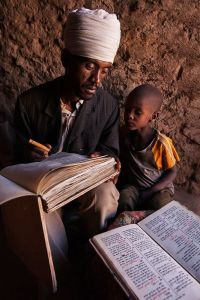 We begin the ordinary time of the liturgical year. In the Church, we have three cycles of the liturgical year: A, B, and C. every year, we have a different set of readings. In year A, the Gospel readings are mainly from the Gospel of Matthew, meanwhile, year B is from Mark and year C is from Luke. The Gospel of John does not have its separate year, but the readings from John are scattered through the years, especially in the Easter season.
 Kita memulai masa biasa pada tahun liturgi ini. Di Gereja Katolik, kita memiliki tiga siklus tahun liturgi: A, B, dan C. Di setiap tahun, kita memiliki serangkaian bacaan yang berbeda. Pada tahun A, bacaan Injil terutama dari Injil Matius, sementara tahun B dari Markus dan tahun C dari Lukas. Injil Yohanes tidak memiliki tahun yang khusus, tetapi bacaan dari Yohanes tersebar di sepanjang tahun, terutama di masa Paskah.
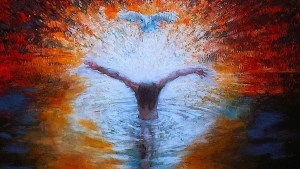 One question that always baffles attentive readers of the Scriptures is that why should Jesus be baptized by John the Baptist? John himself proclaimed that his baptism is a sign of repentance. Those who are baptized by John must first acknowledge their sinfulness and unworthiness, and baptism of water becomes the visible token of turning away from sins and promise of a new and better life. Yet, we all know that Jesus is sinless [Heb 4:15; 1 Pet 2:22]. Does it mean Jesus is sinful? Is John the Baptist greater than Jesus?
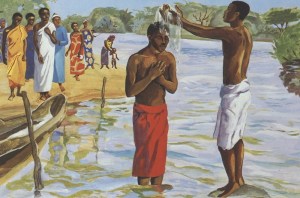 Satu pertanyaan yang selalu membingungkan para pembaca Kitab Suci adalah mengapa Yesus harus dibaptiskan oleh Yohanes Pembaptis? Yohanes sendiri menyatakan bahwa baptisannya adalah tanda pertobatan. Mereka yang dibaptiskan oleh Yohanes harus terlebih dahulu mengakui keberdosaan dan ketidaklayakan mereka, dan baptisan air menjadi tanda nyata berpaling dari dosa dan memulai kehidupan yang baru dan lebih baik. Namun, kita semua tahu bahwa Yesus tidak berdosa [lih. Ibr 4:15; 1 Pet 2:22]. Apakah ini berarti Yesus berdosa? Apakah Yohanes Pembaptis lebih besar dari Yesus?
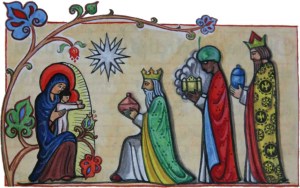 The journey of the three wise men from the East embodies the deepest human longing for a meaningful life and true happiness. Balthazar, Melchior and Gaspar, as the tradition called them, were neither Jews nor baptized Christians. In Greek ancient manuscripts of the Gospel, the word used to describe them is ‘magos’, meaning ‘someone with magical power’ or ‘magicians’, and practicing magic is detestable in the eyes of the Jews (2 Cro 33:6). Though we cannot be sure what kind of magic they crafted, but one thing is sure that they read the sign of times and followed the star. Because of this, they were instantaneously accused as one of those astrologers, star-readers who predict the human behaviors and the future, but I would argue that they were actually early astronomers instead astrologers. Like ordinary seamen who gazed the stars and hoped that they would guide them home, the magi did look at the star and believed that they would navigate their way to the true end.
 Perjalanan tiga orang bijak dari Timur menjadi symbol dari kerinduan terdalam manusia untuk kehidupan yang bermakna dan kebahagiaan sejati. Balthazar, Melchior dan Gaspar, sebagaimana tradisi menyebut mereka, bukanlah orang Yahudi ataupun Kristiani. Dalam naskah kuno Yunani dari Injil, kata yang digunakan untuk mendeskripsikan mereka adalah ‘magos’, yang berarti ‘seseorang dengan kekuatan magis’ atau ‘penyihir’, dan melakukan magis/sihir adalah kejahatan di mata orang-orang Yahudi (2 Taw 33:6). Meskipun kita tidak bisa memastikan apakah mereka sungguh penyihir apa bukan, satu hal yang pasti bahwa mereka membaca tanda-tanda zaman dan mengikuti sang bintang. Karena itu, mereka sering dituduh sebagai astrolog, pembaca bintang untuk memprediksi perilaku manusia dan masa depan, hal yang dilarang banyak agama, tapi saya berpendapat bahwa mereka sebenarnya adalah astronom. Seperti pelaut yang menatap bintang-bintang dan berharap bahwa bintang-bintang ini akan membimbing mereka pulang, orang majus ini juga melihat bintang dan percaya bahwa mereka akan berjalan di jalan yang benar.
 In Medio Ecclesiae