

Seventh Sunday in Ordinary Time [A]
February 23, 2020
Matthew 5:38-48
 At the heart of Jesus’ teaching in the Mount is the formation of the heart. However, the heart in the Bible is not limited to our affective side or emotions. It also stands for the center of intellectual capacity and freedom. The heart is the seat of life itself, and thus, represents who the man or woman is.
Last week, Jesus told us to purify our hearts from evil thoughts and wicked desires [Mat 5:17-37]. It is not enough not to do violence to others, but it is necessary to cleanse our hearts from anger and vengeance. It is not sufficient not to commit adultery, but we are required to remove from our hearts the lustful desires. Forming the hearts is more fundamental rather than simply and blindly following the written laws and regulations. The formation of the heart is about building up good habits, and virtuous character. A virtuous person is avoiding evil, not because of fear of the external laws, but strong motivation from within.
However, in today’s Gospel, Jesus demands even something higher. The purifying of the heart is just the first step, and we need to go to another and more difficult step: to love. It is precisely tougher because love is not merely about removing impure desires in our hearts or preventing us from doing evil, but it is about actively doing good. Moreover, this love [agape] is only real and meaningful if we are doing good, not in the conditions that are favorable to us, but rather in the face of evil and sufferings.
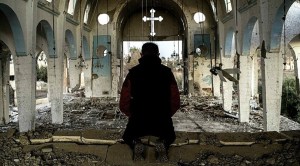
Since its foundation around two millennia ago, Christians remain the most persecuted people. Opendoorusa.org reported that numbers of persecutions and violence against Christians are on the rise. In 2019, more than 260 million Christians [one out of nine Christians in the world] are living in the places where they experience a high level of persecution. Almost 3 thousand Christians were killed because of their faith. More than 9 thousand churches and Christian buildings like schools were attacked. In Nigeria, priests and seminarians were abducted and tortured. Some were lucky to return alive, but many were found lifeless. In China, the government made national crackdown against Christians and shut down the churches. In Indonesia, things are better for the Christians because our rights are enshrined in the constitutions. Yet, in the grassroots, we continue to feel discriminated against and fear of being targeted by the extremists and terrorists.
Our destiny as Christians are not better than our brothers and sisters who belonged to the early Church. However, as our brothers and sisters in the past, our mission remains the same: to love our enemies, to respond evil with utter generosity, and be ready to fight for justice with gentleness. Christians are accused as weak people, but this is plain wrong. The world that is built by violence and bitterness is self-destruct, and unless we dare to be true followers of Christ, we cannot stop the downward mobility towards total ruin. We thank our predecessors who refused to be controlled by violent anger despite so much evil they had to endure. The world is a much better place with whose hearts are pure. St. Tertullian believed that the blood of martyrs is the seed of Christianity, and we believe also that the love of Christians are the seed of a better world.
Valentinus Bayuhadi Ruseno, OP
 Di hati pengajaran Yesus di atas gunung adalah pembentukan hati. Namun, hati dalam Alkitab tidak terbatas pada sisi afektif atau emosi kita. Ini juga berarti pusat kapasitas intelektual dan kebebasan. Hati adalah pusat kehidupan itu sendiri, dan dengan demikian, mewakili totalitas seorang manusia.
 Jesus is accused of unfaithful to the Law of Moses and the traditions of the elders. He no longer requires His disciples to performs ceremonial washings and many traditions of the elders [Mat 15:2]. Jesus heals people even during the Sabbath [Mark 3:1-6]. Jesus declares that all food is clean [Mark 7:19]. The worst part is when Jesus commands His disciples to drink His blood [see Lev 17:14; Mat 26:27-28]. Is Jesus breaking and changing the Law of Moses?
 Yesus dituduh tidak setia dengan Hukum Musa dan tradisi. Dia tidak lagi meminta murid-murid-Nya untuk melakukan ritual pembasuhan, dan banyak tradisi lain [Mat 15: 2]. Yesus menyembuhkan orang bahkan pada hari Sabat [Markus 3: 1-6]. Yesus menyatakan bahwa semua makanan halal [Markus 7:19]. Dan yang paling parah adalah ketika Yesus memerintahkan para murid-Nya untuk minum darah-Nya [lihat Im 17:14; Mat 26: 27-28]. Apakah Yesus melanggar dan mengubah Hukum Musa?
 Reading carefully, we may wonder, “Is it possible if the salt loses it, saltiness?” In everyday experience, we never experience tasteless salt. However, when we go back to the time of Jesus, we will be surprised that a salt losing its taste is a daily reality. In ancient Israel, the people would go to the Dead Sea, the saltiest body of water on earth, and gathered the “pillar of salt” formed surrounding the lake. Then, they would put inside a small bag, like a teabag”, and when it was needed for seasoning, the bag would be dipped into the water or soup. After some repeated use, the salt would lose its saltiness due to the chemical impurities. It turned to be nothing but an ordinary pebble, and shall be thrown away and trampled underfoot.
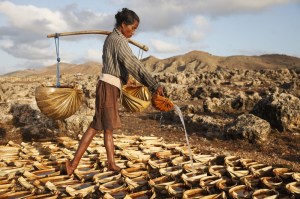 Membaca dengan teliti, kita mungkin bertanya-tanya, “Apakah mungkin jika garam kehilangan rasa asinnya?” Dalam pengalaman sehari-hari, kita tidak pernah menemukan garam yang hambar. Namun, ketika kita kembali ke zaman Yesus, kita akan terkejut bahwa garam yang kehilangan rasanya adalah kenyataan sehari-hari. Di Israel kuno, orang-orang akan pergi ke Laut Mati, laut yang memiliki kadar garam paling tinggi di bumi, dan mengambil bongkahan-bongkahan garam yang terbentuk di sekitar danau. Kemudian, mereka akan dimasukkan ke dalam kantong kecil, seperti kantong teh, dan ketika dibutuhkan untuk bumbu, kantong itu akan dicelupkan ke dalam air atau sup. Setelah digunakan berulang-ulang, garam akan kehilangan rasa asinnya karena kandungan kimia yang tidak sempurna. Bongkahan garam pun berubah menjadi batu biasa, dan akan dibuang dan diinjak-injak.
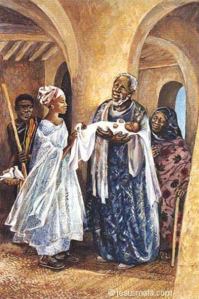 If we are given a chance to choose our parents, what kind of parents will be our choice? Perhaps, some will prefer billionaire parents so that we can sing like Bruno Mars, “I wanna be a billionaire… Buy all of the things I never had… I wanna be on the cover of Forbes magazine, and Smiling next to Oprah and the Queen.” Perhaps some of us want to become the children of a king. So, royal blood is flowing through our vein, and people call us as a prince, princess, or royal highness. Perhaps, we want to be born from Korean megastars, because we want to become the prettiest or the most handsome.
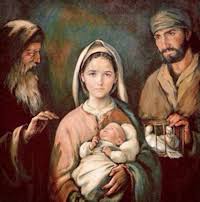 Jika kita diberi kesempatan untuk memilih orang tua kita sendiri, orang tua ideal seperti apa yang akan menjadi pilihan kita? Mungkin, beberapa akan lebih suka orang tua miliarder, supaya hidup terjamin, mendapatkan Pendidikan terbaik, dan masa depan cerah. Mungkin sebagian dari kita ingin menjadi anak-anak raja. Jadi, memiliki darah ningrat, dan orang-orang memanggil kita sebagai pangeran, puteri atau bangsawan. Mungkin kita ingin dilahirkan dari megabintang Korea, karena kita ingin menjadi yang tercantik atau paling tampan.
 In Medio Ecclesiae