
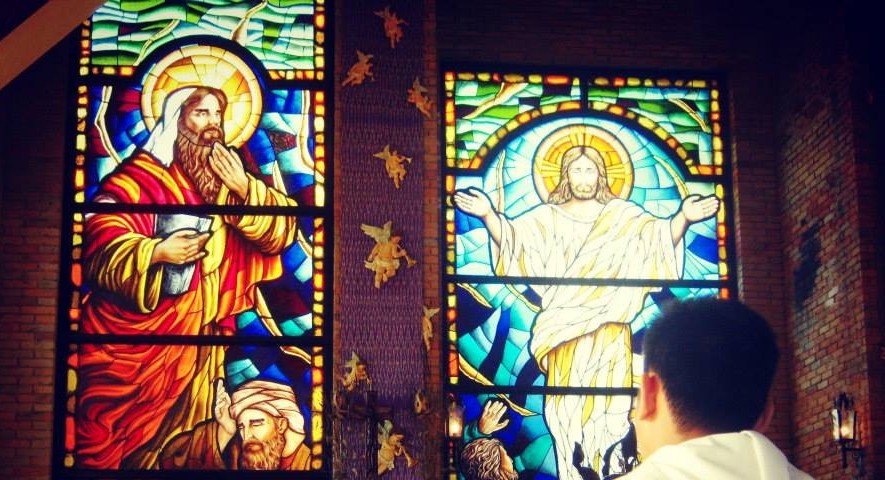
Fifth Sunday of Lent [A]
March 29, 2020
John 11:1-45
 Among the five human senses, the sense of touch is the most basic and foundation to other senses. The sense of sight needs to be in touch with the light spectrum. The sense of taste requires to be in contact with the chemical in the food. The sense of hearing must receive air vibration or sound waves. This sense makes us a human being, a bodily being. No wonder that many traumatic experiences [even mental problems] are rooted in the lack (or excess) of touch.
God, our creator, understands our fundamental need of touch. Thus, to fulfill our deepest desire, He made a radical choice and became a man like all of us. Because Jesus is true God and true man, the disciples were able to see, hear, touch and feel Him. Yet, He gave a more radical gesture as He offered Himself as food to eat and drink to eat, “for my flesh is true food and my blood is true drink [Jn 6:55].” While the pagan deities were feasting on the human blood and sacrifice, our God does the opposite. He gave up His life so that we may live and feel His love.
Following the example of our Savior, the Church is filled with tangible means and bodily gestures as a sign and symbols of the divine presence. No wonder our churches are equipped with beautiful crucifixes, adorned with flowers, and mystified by the burning candle and incense. A sacrament is no other than the visible sign of the invisible grace, and sacraments really intend to connect to our bodies, like blessed water and oil that touch our forehead, the bread that we consume, and words of forgiveness that we need to hear. Amazingly, the Church is called the body of Christ, and our call is to unite as one people of God around this table of Eucharist.
However, the terrible thing befalls our Church. The pandemic caused by the Covid-19 is basically reversing the movement of our faith. We are facing a reality that touching can mean illness, the gathering may bring disaster, and worship may mean death. For the good of the flock, our leaders are forced to close the churches. We now feel the pain of separation from the Body of Christ.
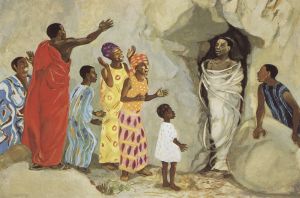
Perhaps, we are like Lazarus who are experiencing spiritual suffering and death. Perhaps, we are like Martha who is asking the Lord, “why are you not coming sooner?” Perhaps, we are like Mary who cannot do anything but mourns and is reduced into silence.
The Gospel of John tells us that Jesus loves Lazarus, Martha and Mary as His close friends. Yet, Jesus did not rescue Lazarus when he got gravely ill, and even Jesus visited them after Lazarus died four days. Jesus allowed terrible things to take place in the life of Lazarus, Martha, and Mary, not because He wanted to punish them, or He does not care, but because He loves them.
In His love, God allows us to endure the sense of losing God, and experience suffering and even death. God knows too well that through suffering, we may love even deeper, we grow in faith, and re-discover God, alive and even closer. After all, there is no true resurrection, unless we enter the darkness of the tomb.
My deepest gratitude and prayer for our medical personal who give their all in to fight the disease and save lives.
Valentinus Bayuhadi Ruseno, OP
 Di antara lima indra manusia, indra peraba [sentuhan] adalah yang paling dasar dan fondasi bagi indra yang lainnya. Indra penglihatan perlu bersentuhan dengan spektrum cahaya. Indra perasa perlu bersentuhan dengan bahan kimia dalam makanan. Indra pendengaran harus menerima getaran suara di udara. Sentuhan menjadikan kita manusia, makhluk yang bertubuh. Tidak mengheran jika banyak pengalaman traumatis [bahkan masalah mental] berakar pada sentuhan yang kurang diterima atau tidak seharusnya diterima.
 Dalam menyembuhkan orang buta, Yesus melakukan sesuatu yang agak tidak biasa: Ia meludah ke tanah, membuat tanah liat dengan air liurnya, dan mengolesi tanah liat itu di mata orang buta tersebut. Saat ini kita sedang melawan Covid-19, jenis virus korona yang menyebar dengan cepat, kita dididik bahwa salah satu media kontaminasi adalah tetesan manusia seperti air yang keluar dari mulut kita. Ketika air yang sudah terkontaminasi dengan virus bersentuhan dengan mulut, hidung dan mata, itu menjadi titik awal berjangkitnya si virus di tubuh kita.
 We relate to Jesus in many ways. Some consider Him as a teacher, some call Him as a friend, and some others would simply acclaim Him as Lord and Savior. However, little known to us that the Gospel introduces Him as the bridegroom.
 Kita melihat Yesus sebagai beberapa figur. Beberapa orang menganggap Dia sebagai guru, beberapa memanggilnya sebagai sahabat, dan beberapa yang lain hanya akan menyatakan Dia sebagai Tuhan dan Juru Selamat. Namun, sedikit yang kita ketahui bahwa Injil memperkenalkan Dia sebagai mempelai laki-laki.
 The Church has selected the story of Transfiguration as the reading of the second Sunday of Lent. We may ask how this kind of powerful story may fit into the entire season of Lent. The key is that the Transfiguration is fundamentally linked to the Cross of Jesus. In Luke’s version of the transfiguration, Jesus was talking to Moses and Elijah about His “exodus.” This reminds the ancient Israelites who exited Egypt, walked through the desert, and entered the Promised Land. Yet, the real end of the exodus is the city of Jerusalem, and eventually the holy Temple where God dwelled among His people. Just like the ancient Israelites, Jesus’ exodus has to end in Jerusalem.
 Gereja telah memilih kisah Transfigurasi sebagai Injil Minggu Prapaskah kedua. Kita mungkin bertanya bagaimana kisah kemuliaan semacam ini dapat masuk ke dalam seluruh konteks Prapaskah. Kuncinya adalah bahwa Transfigurasi secara mendasar terkait dengan Salib Yesus. Dalam versi transfigurasi dari Lukas, Yesus berbicara kepada Musa dan Elia tentang “eksodus” -nya. Ini mengingatkan kita akan bangsa Israel kuno yang keluar dari Mesir, berjalan melewati padang pasir, dan memasuki Tanah Perjanjian. Namun, akhir eksodus yang sebenarnya adalah kota Yerusalem, dan akhirnya Bait suci tempat Allah tinggal di antara umat-Nya. Sama seperti bangsa Israel kuno, eksodus Yesus harus berakhir di Yerusalem.
 Hari Minggu Prapaskah pertama dimulai dengan kisah Yesus di padang gurun, berpuasa dan dicobai oleh iblis. Matius memberi kita lebih banyak perincian dalam kisah pencobaan, dan dari Matius, kita menemukan tiga pencobaan Kristus. Mengapa Setan menggoda Yesus? Kenapa tiga godaan?
 In Medio Ecclesiae