
The Birthday of the Church

Pentecost Sunday [A]

May 31, 2020

John 20:19-23

pentecost coptic“Happy Birthday!” today is the feast of Pentecost, and today is the birth of the Church. We should rejoice because our Church is getting older by age, but getting ever stronger by vitality and creativity in preaching the Good News. Yet, the question is why we celebrate the birthday of the Church on the Pentecost Sunday?

To answer this, we need to understand the biblical meaning of the celebration of Pentecost and what took place to the disciples on the day the Holy Spirit descended upon them. The word Pentecost means the fiftieth, and the feast of Pentecost takes place on the fiftieth day after Sunday Easter. However, the Christian feast itself is originally a Jewish religious festival: the feast of Shavuot or the Feast of Weeks. The feast took place seven weeks after the grand celebration of the Passover. Together with Passover and the Feast of Tabernacle (Booths), Pentecost are the major pilgrimage festivals that require any male Jews to make their way to Jerusalem. Initially, the feast is agricultural in nature. The people of Israel gave thanks for the successful harvests and offered the fruits of their harvest to the Lord. Yet, it also gained a religious meaning. In the feast of Shavuot, the Israelites commemorate the giving of the Law and the making of the covenant with the Lord God in Mount Sinai.

This explains why many people from different nations gathered in around the place of the disciples: they were pilgrims of Pentecost. This answers a more fundamental question about the identity of the Holy Spirit: Why did the Holy Spirit have to present Himself as fire, and no other image like a dove? If we go back to the Sinaitic event itself, we are going to find something remarkable. When God made His covenant and handed down His Law, He appeared Himself to entire Israel as fire [see Exo 19:18]. The Holy Spirit appeared in fire simply because He was the same God who manifested Himself in Sinai. The Pentecost Sunday reveals the fundamental truth about the Holy Spirit that the promised Paraclete is divine.

In Sinai, the Israelites received the Law and entered into a covenant with the Lord. God embraced them and made them “a priestly kingdom and a holy nation [see Exo 19:6]. Israelites became a nation that belongs to God. In the new Pentecost, the Holy Spirit came upon the disciples and instilled in them the New Law of Love. He fashioned them to be new People of God [see Pet 2:9]. The new community of God’s family has been born!

Yet, these new people are even greater. The Holy Spirit empowered the disciples to preach the Good News to people from different nations and languages. The Pentecost reversed the negative effect of the tower of Babel [see Gen 11:1-9]. When people were so proud of themselves and tried to become like God with their power, different languages turned out to be a curse that divides them. Yet, with the Holy Spirit that transformed the hearts and instilled humility, languages become a blessing that unites the different people.

We thank the Holy Spirit that gave birth to the Church. We give thanks to the Holy Spirit that has called us to part of the new people of God.

Valentinus Bayuhadi Ruseno, OP

Selamat Ulang Tahun, Gereja!

Minggu Pantekosta [A]

31 Mei 2020

Yohanes 20: 19-23

pentecost 3“Selamat ulang tahun!” Hari ini adalah hari raya Pentekosta, dan hari ini adalah kelahiran Gereja. Kita harus bersukacita karena Gereja kita bertambah dalam usia, tetapi semakin kuat, bijaksana dan kreatif dalam memberitakan Kabar Baik. Namun, pertanyaannya adalah mengapa kita merayakan ulang tahun Gereja pada hari Minggu Pentekosta?
Untuk menjawab ini, kita perlu memahami makna alkitabiah dari perayaan Pentekosta dan apa yang terjadi pada para murid pada saat Roh Kudus turun ke atas mereka. Kata Pentekosta berarti “yang kelima puluh”, dan hari raya Pentekosta terjadi pada hari kelima puluh setelah Minggu Paskah. Namun, pesta Gereja itu sendiri pada awalnya adalah sebuah festival keagamaan Yahudi: Hari Raya Shavuot atau Hari Raya Tujuh Minggu. Perayaan itu berlangsung tujuh minggu setelah perayaan akbar Paskah. Bersama-sama dengan Paskah dan Hari Raya Pondok Daun, Pentekosta adalah perayaan perziarahan utama yang mengharuskan setiap pria Yahudi untuk melakukan perjalanan ke Yerusalem. Awalnya, ini adalah perayaan agrikultural. Orang-orang Israel bersyukur atas panen yang berhasil dan mempersembahkan hasil panen mereka kepada Tuhan. Namun, itu juga memiliki makna religius. Dalam perayaan Shavuot, orang Israel memperingati pemberian Hukum dan pembuatan perjanjian dengan Tuhan Allah di Gunung Sinai.

Ini menjelaskan mengapa banyak orang dari berbagai bangsa berkumpul di sekitar tempat para murid: mereka adalah peziarah Pentekosta. Perayaan ini juga menjawab pertanyaan yang lebih mendasar tentang identitas Roh Kudus: Mengapa Roh Kudus harus menampakkan diri-Nya sebagai api, dan tidak dengan citra yang lain seperti merpati? Jika kita kembali ke peristiwa di gunung Sinai itu sendiri, kita akan menemukan sesuatu yang luar biasa. Ketika Allah membuat perjanjian-Nya dan menyerahkan Hukum-Nya, Dia menampakkan diri-Nya kepada seluruh Israel sebagai api [lihat Kel 19:18]. Roh Kudus hadir dalam api hanya karena Dia adalah Allah yang sama yang memanifestasikan diri-Nya di Sinai. Hari Minggu Pentekosta mengungkapkan kebenaran mendasar tentang Roh Kudus bahwa Parakletos yang dijanjikan itu adalah Tuhan.

Di Sinai, orang Israel menerima Hukum dan masuk ke dalam perjanjian dengan Tuhan. Allah menjadikan mereka “kerajaan imamat dan bangsa yang kudus [lihat Kel 19: 6]. Bangsa Israel menjadi bangsa yang kepemilikan Tuhan. Dalam Pentekosta yang baru, Roh Kudus turun ke atas para murid dan menanamkan dalam diri mereka Hukum Cinta Kasih yang Baru. Dia membentuk mereka untuk menjadi Umat Allah yang baru [lihat Pet 2: 9]. Komunitas baru keluarga Allah telah lahir hari ini!

Namun, umat Allah baru ini bahkan lebih besar. Roh Kudus memberi kuasa kepada para murid untuk memberitakan Kabar Baik kepada orang-orang dari berbagai bangsa dan bahasa. Pentekosta membalikkan efek negatif dari menara Babel [lihat Kejadian 11: 1-9]. Ketika orang-orang begitu bangga pada diri mereka sendiri dan berusaha menjadi seperti Tuhan dengan kekuatan mereka, berbagai bahasa berubah menjadi kutukan yang memecah belah mereka. Namun, dengan Roh Kudus yang mengubah hati dan menanamkan kerendahan hati, bahasa menjadi berkat yang menyatukan orang-orang yang berbeda.

Kita bersyukur kepada Roh Kudus yang telah melahirkan Gereja. Kita bersyukur kepada Roh Kudus yang telah memanggil kita untuk menjadi bagian dari umat Allah yang baru.

Valentinus Bayuhadi Ruseno, OP

Pray like Jesus

7th Sunday of Easter

May 24, 2020

John 17:1-11a

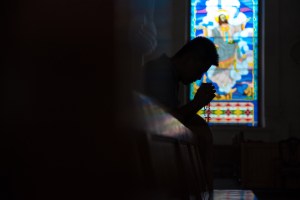
man in prayer 2We are aware that prayer is a fundamental part of Jesus’ life. He prays on a regular basis, and especially when He is preparing to embrace decisive events, like Baptism on the Jordan [Luke 3:21], the election of the twelve apostles [Luke 6:12], transfiguration [Luke 9:28], and the Passion [Matt 26:36–44]. However, we seldom hear what Jesus says in His prayers. In the Synoptic Gospels [Matthew, Mark, and Luke], we are fortunate enough to hear Jesus’ compact and emotional prayer in the Garden of Gethsemane before He enters into His Passion. However, John the evangelist makes sure that we are going to discover what Jesus prays, and it is substantially longer than we ever heard before.

John devotes the entire chapter of His Gospel for this prayer [John 17:1-26]. As expected, He prays to the Father with extraordinary affection and confidence. Yet, what makes it noteworthy is that Jesus does not say only about Himself and His mission, but also prays for His disciples. Jesus is acting as the priest who is interceding on behalf of His disciples. That is why we call this section the high priest’s prayer of Jesus Christ.

From Jesus’ prayer, we unearth some powerful lessons:

Firstly, if prayer is essential in the life of Jesus, it is because Jesus understands that prayer is His line of communication to the Father. Jesus knows well that communication is the key to every flourishing relationship. Perhaps, we fail to see this truth, and that is why we feel prayer is burdensome. We are not eager to attend the mass because we simply understand it as an obligation. We relegate personal prayer to the sideline as we make other things as our priority. Sadly, we immediately blame God if our plans do not work according to our whim, or we even threaten God to grant our wishes. Thus, changing perspective about prayer is crucial and even life-transforming.

Secondly, if prayer is communication, then it should always be a dialogue. Often when we start growing in prayer, we think that we need to always say something to the Lord. I remember one seminarian asked me, “Father, what else should I say if I am running out of words in my prayers?” I told him, “Perhaps, it is time to listen to God.” The next expected question is, “How do I listen to God?” Surely there is no one-size-fits-all answer to this, but I like what St. Jerome says, “You pray: You speak to the bridegroom. You read [scriptures]: He speaks to you.” Yet, we need to remember that dialogue of words is not the end of the communication. The end is the unity of the persons in dialogue. Jesus says, “I am in my Father, and you are in me, and I am in you [John 14:20].”

Lastly, our prayer involves the third person. This is the direct consequence of Jesus’ priestly prayer. Prayer is a dialogue, but just like other dialogue, it may speak about other persons. This is when we pray to God for others. Because Jesus leaves us an example in His priestly prayer, it is all the more imperative for us to care for others through prayers. In time we cannot reach other people who need our help; prayers remain the best way to love them. Indeed the saints in heaven continue to care for us despite not able to physically appear to us through their prayers.

Prayer unites us with God in love and prayer also unites us with people we love in God.

Valentinus Bayuhadi Ruseno, OP

Berdoa seperti Yesus

Minggu Paskah ke-7

24 Mei 2020

Yohanes 17: 1-11a

man in prayer 4Doa adalah bagian mendasar dari kehidupan Yesus. Dia berdoa secara teratur, dan terutama ketika Dia bersiap untuk merangkul peristiwa-peristiwa yang menentukan, seperti Pembaptisan di Sungai Yordan [Lukas 3:21], pemilihan kedua belas rasul [Lukas 6:12], transfigurasi [Lukas 9:28], dan jalan salib-Nya [Mat 26:36-44]. Namun, kita jarang mendengar apa yang Yesus katakan dalam doa-doanya. Dalam Injil Sinoptik [Matius, Markus dan Lukas] kita cukup beruntung mendengar doa Yesus yang pendek dan emosional di Taman Getsemani sebelum Dia memasuki sengsara-Nya. Namun, penginjil Yohanes memastikan bahwa kita akan menemukan apa yang Yesus doakan dan hal ini jauh lebih panjang daripada yang pernah kita dengar sebelumnya.
Yohanes mencurahkan seluruh bab untuk doa ini [Yohanes 17: 1-26]. Yesus berdoa kepada Bapa dengan kasih dan keyakinan yang luar biasa. Namun, yang membuat doa ini  penting adalah bahwa Yesus tidak hanya berdoa tentang diri-Nya dan misi-Nya, tetapi juga berdoa untuk para murid-Nya. Yesus bertindak sebagai imam yang menjadi perantara bagi para murid-Nya. Itulah sebabnya kita menyebut bagian ini sebagai doa Yesus Kristus sebagai imam besar.

Dari doa Yesus, kita menggali beberapa pelajaran yang penting:

Pertama, jika doa sangat penting dalam kehidupan Yesus karena Yesus mengerti doa adalah jalur komunikasi-Nya kepada Bapa. Komunikasi adalah kunci untuk setiap hubungan untuk berkembang, dan Yesus mengetahui hal ini dengan baik. Mungkin, kita gagal melihat kebenaran ini, dan itulah sebabnya kita merasa doa itu membosankan. Kita malas menghadiri misa karena kita hanya memahaminya sebagai kewajiban. Kita menempatkan doa pribadi hanya sebagai tambahan karena kita menjadikan hal-hal lain sebagai prioritas kita. Anehnya, kita segera menyalahkan Tuhan jika rencana kita tidak berjalan sesuai dengan keinginan kita, atau kita bahkan mengancam Tuhan untuk mengabulkan keinginan kita. Jadi, mengubah perspektif tentang doa adalah penting dan bahkan akan mengubah kehidupan.

Kedua, jika doa adalah komunikasi, maka harus selalu berupa dialog. Sering kali ketika mulai tumbuh dalam doa, kita berpikir bahwa kita harus selalu mengatakan sesuatu kepada Tuhan. Saya ingat seorang frater bertanya kepada saya, “Romo, apa lagi yang harus saya katakan jika saya kehabisan kata-kata dalam doa saya?” Saya mengatakan kepadanya, “Mungkin, ini saatnya untuk mendengarkan Tuhan.” Pertanyaan selanjutnya adalah, “Bagaimana saya mendengarkan Tuhan?” Tentunya tidak ada jawaban yang baku, tetapi saya suka apa yang dikatakan St Heronimus, “Kamu berdoa: kamu berbicara kepada mempelai laki-laki [Yesus]. Kamu membaca [Kitab Suci]: Dia berbicara kepadamu. ” Namun, kita perlu ingat bahwa dialog kata-kata bukanlah akhir dari komunikasi. Akhirnya adalah orang-orang dalam dialog menjadi satu. Yesus berkata pada dirinya sendiri, “Aku di dalam Bapa-Ku, dan kamu di dalam Aku, dan Aku di dalam kamu [Yohanes 14:20].”

Terakhir, doa kita melibatkan orang ketiga. Ini adalah konsekuensi langsung dari doa imam Yesus. Doa adalah dialog, tetapi sama seperti dialog lainnya, doa dapat berbicara tentang orang lain. Inilah saatnya kita berdoa kepada Tuhan untuk orang lain. Karena Yesus memberi kita teladan dalam doa-Nya, maka semakin penting bagi kita untuk memelihara sesama melalui doa. Pada saatnya kita tidak dapat menjangkau orang lain yang membutuhkan bantuan kita, doa tetap menjadi cara terbaik untuk mencintai mereka. Sesungguhnya orang-orang kudus di surga terus memelihara kita meskipun tidak mampu secara fisik menampakkan diri kepada kita, melalui doa-doa mereka.

Doa menyatukan kita dengan Tuhan dalam kasih dan doa juga menyatukan kita dengan orang-orang yang kita kasihi di dalam Tuhan.

Valentinus Bayuhadi Ruseno, OP

The Paraclete

6th Sunday of Easter

May 17, 2020

John 14:15-21

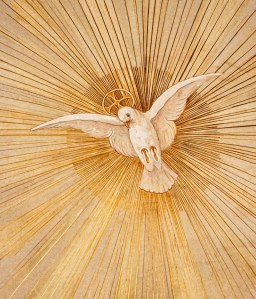
holy spirit dove 4In the last supper, Jesus promised the disciples that He would send another advocate to be with them forever. Who is this other advocate?

We all know that He is the Holy Spirit, the third person of the Most Holy Trinity. Yet, how did Jesus describe Him in the Gospel of John, and why did He call the Spirit as such? Jesus named Him as the Paraclete, or in Greek, “Parakletos.” This exceptional word comes from two more basic Greek words, “para” means “at the side,” and “kaleo” means “to call.” Thus, “parakletos” can be understood as someone who is called to be at our side, especially in times of need. It is crucial to see the original setting where this word came: it was the courtroom. No wonder that the word “parakletos” may be translated into English as an advocate like a lawyer who assists us, defend us and speak on our behalf in the legal trial. Yet, as we know, a good lawyer does not only assist within the courtroom, he is there before and after the trial. He gives his advice and prepares us for the proceedings. In the end, he consoles us if we face severe judgment as well as rejoices if we emerge victoriously. No wonder in English, the word “paraclete” can be translated as an advocate, comforter, counselor, and even helper. But why did Jesus choose this image in the first place?

The reason is that Jesus knew that as the disciples preached His Gospel, they would face many trials. Peter and John faced trial before the Sanhedrin [Acts 4:5 ff]. Stephen was accused of blasphemy and stoned to death [acts 7]. And Paul was put under many judgments before he gave up his life for Jesus. In this kind of reality, Jesus did the right thing: to send the Paraclete. The Holy Spirit would be at the side of the disciples facing trials and hardship as they were preaching Jesus. Indeed, it is inconceivable for these disciples to endure and even give up their lives without the Holy Spirit that were at their side.

In our time, as disciples of Christ, we are facing a global trial caused by the virus covid19. Some of us are luckier because we just need to stay at home. Some of us are fortunate because we can enjoy the livestreaming mass, even twice a day! But for many, the pandemic means losing their livelihood and even their lives. For many, they cannot go to the church even when there was no pandemic.

We indeed need the Paraclete, but one of the gifts of the Holy Spirit is that we are also empowered to be a little paraclete to our brothers and sisters. The moment we, the Dominican community in Surabaya, was required to close the church temporarily for the public service, we immediately were eager to provide an online service to our parishioners. We are thankful that many people donate relief goods to our parish, and our parish priests assisted by lay partners work hard to channel this help to those who are in need.

Instead of complaining that we cannot go to the Church or blaming others for the situations, we should ask the Holy Spirit to empower us to become little paracletes and find ways to be advocates, comforters and at the side of our brothers and sisters in need.

Valentinus Bayuhadi Ruseno, OP

Parakletos

Minggu Paskah ke-6 [A]

17 Mei 2020

Yohanes 14: 15-21

holy spirit doveDalam perjamuan terakhir, Yesus berjanji kepada murid-murid bahwa Ia akan mengirim penolong yang lain untuk bersama mereka selamanya. Siapa penolong yang lain ini?

Kita semua tahu bahwa Dia adalah Roh Kudus, pribadi ketiga dari Tritunggal Mahakudus. Namun, bagaimana Yesus menggambarkan Dia dalam Injil Yohanes, dan mengapa Ia menyebut Roh Kudus sebagai “penolong”? Yesus menamai Dia sebagai penolong, atau dalam bahasa Yunani, “Parakletos.” Kata luar biasa ini berasal dari dua kata dasar Yunani, “para” berarti “di samping,” dan “kaleo” berarti “memanggil.” Dengan demikian, “parakletos” dapat dipahami sebagai seseorang yang dipanggil untuk berada di samping kita, terutama pada saat dibutuhkan. Sangat penting untuk melihat konteks asli kata ini muncul: di ruang sidang. Tidak heran bahwa kata “parakletos” dapat diterjemahkan ke juga sebagai advokat yang membantu, membela kita, dan berbicara atas nama kita dalam persidangan. Namun, seperti yang kita ketahui, seorang pembela yang baik tidak hanya membantu di dalam ruang sidang, ia ada baik sebelum maupun sesudah persidangan. Dia memberikan nasihatnya dan mempersiapkan kita untuk proses pengadilan. Pada akhirnya, dia menghibur kita jika kita menghadapi hukuman berat atau juga bersukacita jika kita berhasil menang. Tidak heran jika kata “parakletos” dapat diterjemahkan sebagai advokat, penghibur, penasihat, dan penolong. Tetapi mengapa Yesus memilih kata ini dari kata-kata yang lain?

Alasannya adalah bahwa Yesus tahu bahwa ketika para murid mulai mewartakan Injil-Nya, mereka akan menghadapi banyak kesulitan termasuk diadili. Petrus dan Yohanes menghadapi pengadilan di hadapan Sanhedrin [Kis 4:5 dst]. Stephanus dituduh melakukan penistaan ​​agama dan dilempari batu sampai mati [Kis 7]. Dan Paulus menjalani banyak persidangan sebelum dia menyerahkan hidupnya untuk Yesus. Dalam kenyataan semacam ini, Yesus melakukan hal yang benar: mengirim Parakletos. Roh Kudus akan berada di sisi para murid menghadapi cobaan dan kesulitan ketika mereka mewartakan Yesus. Memang, sulit memahami tindakan para murid ini untuk bertahan dan bahkan menyerahkan hidup mereka tanpa Roh Kudus yang ada di pihak mereka.

Di zaman kita, sebagai murid Kristus, kita menghadapi masa sulit global yang disebabkan oleh virus covid19. Beberapa dari kita beruntung karena kita hanya perlu tinggal di rumah. Beberapa dari kita beruntung karena kita dapat menikmati misa livestreaming, bahkan dua kali sehari! Tetapi bagi banyak orang, pandemi berarti kehilangan mata pencaharian dan bahkan hidup mereka. Bagi banyak orang, mereka tidak dapat pergi ke gereja bahkan ketika tidak ada pandemi.

Kita memang membutuhkan Parakletos, tetapi salah satu karunia Roh Kudus adalah bahwa kita juga diberdayakan untuk menjadi parakletos kecil bagi saudara-saudari kita. Saat kami, komunitas Dominikan di Surabaya, diminta untuk menutup gereja sementara untuk pelayanan publik, kita segera mencari cara agar dapat memberikan layanan online kepada umat paroki kita. Kita juga bersyukur bahwa banyak orang menyumbangkan barang-barang bantuan ke paroki, dan para imam paroki dan juga para pengurus gereja bekerja keras untuk menyalurkan bantuan ini kepada mereka yang membutuhkan.

Alih-alih mengeluh bahwa kita tidak dapat pergi ke Gereja atau menyalahkan orang lain atas situasi buruk yang kita alami, kita harus meminta Roh Kudus untuk memberdayakan kita untuk menjadi parakletos kecil dan menemukan cara untuk menjadi pembela, penghibur dan di pihak saudara-saudari kita yang membutuhkan.

Valentinus Bayuhadi Ruseno, OP

Jesus and His Bride in Time of Pandemic

5th Sunday of Easter

May 10, 2020

John 14:1-12

joseph n maryWe have closed our churches for public service for weeks. We shifted to livestreaming masses, and we are learning to adjust and to give priority to our health and life, we realize our hearts remain troubled. We long to see Jesus in the Most Blessed Sacrament, we desire to receive Him in the Eucharist, we want to serve Him in the churches, and we miss the sacrament of confession. We are unsure when it is going to end and be back to normal.

We are like the disciples in the Gospel. Their hearts were troubled because Jesus was about to leave them. They were having a Passover meal, and it was supposed a festive celebration. Yet, Jesus announced to them that someone would betray Him, and He would be taken away from them. The disciples had thrown everything away and followed Jesus because they were hoping that Jesus, as the Messiah, would overthrow the Roman empire and restore the glory of Israel. They could not square with the probability of utter failure. Were they holding on false hope? Was Jesus a hoax? Were their sacrifices useless? We are like the disciples. After we give everything to follow Jesus, to serve His Church, and to work in His vineyard, we feel He is missing. Where is Jesus when we needed Him most?

Jesus knew His disciples’ hearts and assured them as He did to have in God and Jesus. Yet, what comes after this word of affirmation is that Jesus told the disciples that there are many dwelling places in His Father’s house, and He will go to prepare the places. To comfort the disciples, Jesus did not say that He would come back victorious, or He would destroy all enemies of Israel. He said that He is going to prepare a dwelling place. It is just not making much sense.

To understand this, we need to know the wedding ceremony at the time of Jesus. During this time, the wedding was done in two steps. The first one is the betrothal, and the second stage is the wedding celebration. During the betrothal, the couple has exchanged vows and have become husband and wife in the eyes of the Law, but they have not stayed together in one house. They had to wait for around one year before the final ceremony. After around year, the bride would be brought in procession to the home of the groom, and they will have a week-long celebration. Why one-year wait? The reason is practical. It gives enough time for the man to prepare for the celebration as well as build a proper place for the bride.

One particular image that the Church has in relation to Jesus is that she is the bride of Christ. If we apply this Jewish wedding rite to the Church and Jesus, we discover that betrothal has taken place, but not yet the final step. Jesus is not with His Church because He is Father’s House to prepare the dwelling place for us, His bride.

In the time of the pandemic, our hearts are sorely troubled, and with the churches are closed, we feel that our Lord is taken away from us. Yet, a difficult time can actually be a passage going to the much better dwelling place prepared by Jesus. We may not see yet the better things we will experience, yet Jesus assures us that God is in control. In this stormy life, we may see a beautiful place prepared by Jesus, our groom.

Valentinus Bayuhadi Ruseno, OP

Yesus dan Mempelai-Nya di Masa Pandemi

Minggu Paskah ke-5

10 Mei 2020

Yohanes 14: 1-12

last supperKita telah menutup gereja-gereja kita untuk pelayanan publik untuk beberapa minggu sekarang. Kita beralih ke misa livestreaming, dan kita belajar untuk menyesuaikan diri dan mengutamakan kesehatan dan kehidupan kita. Tetapi, kita menyadari bahwa hati kita tetap gelisah. Kita ingin melihat Yesus dalam Sakramen Mahakudus, kita berhasrat untuk menerima-Nya dalam Ekaristi, kita ingin melayani-Nya di paroki dan komunitas, dan kita kehilangan sakramen pengakuan dosa. Kita tidak yakin kapan akan berakhir dan kembali normal.
Kita seperti para murid dalam Injil minggu ini. Hati mereka gelisah karena Yesus akan meninggalkan mereka. Mereka sedang berada pada perjamuan Paskah, dan hal ini seharusnya merupakan perayaan yang menggembirakan. Namun, Yesus mengumumkan kepada mereka bahwa seseorang akan mengkhianati Dia dan Dia akan diambil dari mereka. Para murid telah meninggalkan segalanya, dan mengikuti Yesus karena mereka berharap bahwa Yesus sebagai Mesias akan menggulingkan kekaisaran Romawi dan mengembalikan kemuliaan Israel. Mereka tidak bisa menerima kemungkinan kegagalan total dari Yesus. Apakah mereka berpegang pada harapan palsu? Apakah Yesus menyebarkan kabar hoax? Apakah pengorbanan mereka sia-sia? Kita seperti para murid. Setelah kita memberikan segalanya untuk mengikuti Yesus, untuk melayani Gereja-Nya dan untuk bekerja di kebun anggur-Nya, kita merasa Dia hilang. Di mana Yesus ketika kita paling membutuhkan Dia?

Yesus mengenal hati para murid-Nya dan meyakinkan mereka untuk miliki iman kepada Allah dan kepada-Nya. Namun, apa yang muncul setelah kata penguatan ini adalah bahwa Yesus memberi tahu para murid bahwa ada banyak tempat tinggal di rumah Bapa-Nya dan Dia akan pergi untuk mempersiapkan tempat-tempat itu. Untuk menghibur para murid, Yesus tidak mengatakan bahwa Ia akan kembali menjadi pemenang, atau Ia akan menghancurkan semua musuh Israel. Dia berkata bahwa Dia akan menyiapkan tempat tinggal. Hal ini tidak masuk akal.

Untuk memahami hal ini, kita perlu mengetahui upacara pernikahan di zaman Yesus. Pada masa ini, pernikahan dilakukan dalam dua tahap. Yang pertama adalah pertunangan dan tahap kedua adalah perayaan pernikahan. Pada tahap pertunangan, kedua mempelai sebenarnya telah berjanji dan telah menjadi suami dan istri di mata Hukum, tetapi mereka belum tinggal bersama dalam satu rumah. Mereka harus menunggu sekitar satu tahun sebelum upacara tahap terakhir. Setelah sekitar tahun, pengantin wanita akan dibawa dalam prosesi ke rumah pengantin pria, dan mereka akan mengadakan perayaan selama seminggu. Kenapa menunggu satu tahun? Alasannya praktis. Ini memberi cukup waktu bagi mempelai lelaki itu untuk mempersiapkan perayaan serta membangun tempat yang layak bagi pengantin wanita.

Satu citra Gereja sehubungan dengan Yesus adalah bahwa ia adalah mempelai wanita Kristus [lih. Yoh 3:29; 2 Kor 11:2]. Jika kita menerapkan upacara pernikahan Yahudi pada zaman Yesus ini bagi Gereja dan Yesus, kita menemukan bahwa pertunangan telah terjadi, tetapi belum mencapai perayaan pernikahan. Yesus tidak bersama Gereja-Nya karena Dia ada Rumah Bapa untuk mempersiapkan tempat tinggal bagi kita, mempelai-Nya.

Pada saat pandemi, hati kita pasti gelisah, dan dengan gereja-gereja ditutup, kita merasa bahwa Tuhan kita diambil dari kita. Namun, waktu yang sulit sebenarnya bisa menjadi perjalanan menuju tempat tinggal yang jauh lebih baik yang disiapkan oleh Yesus. Kita mungkin belum melihat hal-hal yang lebih baik yang akan kita alami, tetapi Yesus meyakinkan kita bahwa Allah memegang kendali. Dalam kehidupan yang penuh badai ini, kita dapat melihat tempat yang indah yang disiapkan oleh Yesus, mempelai kita.

Valentinus Bayuhadi Ruseno, OP

Why Sheep?

Fourth Sunday of Easter [A]

May 3, 2020

John 10:1-10

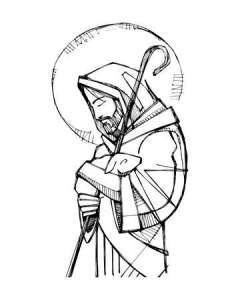
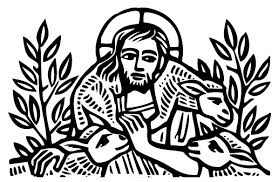
Today is the fourth Sunday of Easter and good shepherd 5traditionally it is also called as the Good Shepherd Sunday. This is for an obvious reason. The Gospel reading tells us about Jesus who introduces Himself as the gate of the sheepfold and the Good Shepherd. The other readings also point the image of God as the good shepherd, like the world-renown psalm 23, “the Lord is my shepherd.”
The gospel of John has no parables like the other three gospels, but John has something else. The gospel gives us the seven “I AM” statements.  “I am the bread of life.” (John 6:35, 41, 48, 51); “I am the light of the world.” (John 8:12); “I am the door of the sheep.” (John 10:7,9); “I am the resurrection and the life.” (John 11:25); “I am the good shepherd.” (John 10:11, 14); “I am the way, the truth, and the life.” (John 14:6); “I am the true vine.” (John 15:1, 5). These statements reveal the particular ways Jesus relates with us His disciples. If Jesus is the bread of life, we cannot live without consuming Him. If He is the light, we cannot see and find our way home.

When Jesus proclaims that He is the door of the sheep and the good shepherd, this assumes that Jesus treats us as His sheep. The question is why sheep? Why not cuter animals like Persian cats or Shih Tzu? Why not something useful like German shepherd or horse? Ok, sheep can be useful also as farm animal. Lamb and mutton are one of the finest meats, and the wool can turn to be expensive cloth. But, does Jesus consider us as sheep because our cuteness or usefulness?

Together with goats, sheep is are one of the domesticated animals. Humans have farmed sheep for the last ten thousand years. In the Palestine at the time of Jesus, sheep is a very common animal, and despite working as carpenter, it is not difficult for Jesus to observe the life of shepherd and its flocks. What makes sheep different from goat is that sheep has no built-in self-defense mechanism. Unlike the goats, they are equipped by sturdy horns and can be aggressive when attacked. Sheep are basically defenseless and thus, they depend heavily on the shepherds to protect them.

We might raise our eyebrow and reject the idea that we are helpless like the sheep. Afterall, humans are on the top of animal kingdom because our intelligence and physical prowess.  Indeed, this is true, if we only limit ourselves to biological or natural aspect of our humanity. If we consider our spiritual life, we are no better than a sheep. Without God’s protection and His angels’, we are just punching bags of the evil spirits. Without God’s laws and guidance, we do nothing but harm ourselves. More importantly, without God, we cannot be saved.

In the final analysis, borrowing the words of Bishop Robert Barron, Christianity is the religion of salvation, and not self-help. No matter good we are, we cannot reach heaven without God’s grace. Our actions are only meaningful as far as it is aided by God’s love. The image of the sheep leads us to humble and grateful realization of who we are. We are nothing without God, yet no matter spiritually weak and defenseless we are, God remains faithful to us and will lead the green pasture because He is our Good Shepherd.

Valentinus Bayuhadi Ruseno, OP

Mengapa Domba

Minggu Paskah keempat [A]

3 Mei 2020

Yohanes 10: 1-10

good shepherd 4Hari ini adalah hari Minggu Paskah keempat dan secara tradisional juga disebut sebagai Minggu Gembala yang Baik. Bacaan Injil berbicara tentang Yesus yang memperkenalkan diri-Nya sebagai pintu gerbang domba dan juga Gembala yang Baik. Mazmur tanggapan diambil dari mazmur 23 yang menyatakan bahwa “Tuhanlah gembalaku.” St. Petrus dalam Suratnya mengatakan bahwa kita adalah domba-Nya yang hilang, tetapi sekarang telah kembali kepada Yesus sang Gembala [lih. 1 Pet 2:25].

Injil Yohanes tidak memiliki perumpamaan seperti ketiga Injil lainnya, tetapi Yohanes memiliki hal lain. Injil ini memberi kita tujuh pernyataan “AKU ADALAH”. “Aku adalah roti kehidupan.” (Yoh 6:35, 41, 48, 51); “Aku adalah terang dunia.” (Yoh 8:12); “Aku adalah pintu domba.” (Yoh 10: 7,9); “Aku adalah kebangkitan dan hidup.” (Yoh 11:25); “Aku adalah gembala yang baik.” (Yoh 10:11, 14); “Aku adalah jalan, kebenaran, dan kehidupan.” (Yoh 14: 6); “Aku pohon anggur yang benar.” (Yoh 15: 1, 5). Pernyataan-pernyataan ini mengungkapkan cara-cara istimewa Yesus berhubungan dengan kita para murid-Nya. Jika Yesus adalah roti kehidupan, kita tidak dapat hidup tanpa memakan Dia. Jika Dia adalah terang, kita tidak dapat melihat dan menemukan jalan pulang.

Ketika Yesus menyatakan bahwa Dia adalah pintu domba dan gembala yang baik, ini mengasumsikan bahwa Yesus memperlakukan kita sebagai domba-Nya. Pertanyaannya adalah mengapa domba? Mengapa tidak binatang yang lebih lucu seperti kucing Persia atau Shih Tzu? Mengapa bukan sesuatu yang bermanfaat seperti anjing German shepherd atau kuda? Ok, domba bisa bermanfaat juga sebagai hewan ternak. Daging domba adalah salah satu daging terbaik, dan wolnya bisa menjadi kain mahal. Tetapi, apakah Yesus menganggap kita sebagai domba karena keimutan atau kegunaan kita?

Bersama dengan kambing, domba adalah salah satu hewan paling awal yang telah didomestikasi. Manusia telah memelihara domba sejak sepuluh ribu tahun. Di Palestina pada zaman Yesus, domba adalah hewan yang sangat umum, dan meskipun bekerja sebagai tukang kayu, tidak sulit bagi Yesus untuk mengamati kehidupan gembala dan kawanan ternaknya. Apa yang membuat domba berbeda dari kambing adalah bahwa domba tidak memiliki mekanisme pertahanan diri. Kambing di sisi lain dilengkapi dengan tanduk yang keras dan bisa menjadi agresif ketika diserang. Domba pada dasarnya tidak berdaya dan karena itu, mereka sangat bergantung pada gembala untuk melindungi mereka.

Kita mungkin menolak gagasan bahwa kita tidak berdaya seperti domba. Bagaimanapun, manusia berada di puncak kerajaan hewan karena kecerdasan dan kecakapan fisik kita. Memang, ini benar, jika kita hanya membatasi diri pada aspek biologis atau alami dari kemanusiaan kita. Namun, jika kita mempertimbangkan kehidupan rohani kita, kita tidak lebih baik dari domba. Tanpa perlindungan Tuhan dan para malaikat-Nya, kita hanya menjadi bulan-bulanan roh jahat. Tanpa hukum dan petunjuk Tuhan, kita hanya membahayakan diri kita sendiri. Lebih penting lagi, tanpa Tuhan, kita tidak bisa diselamatkan.

Meminjam kata-kata Uskup Robert Barron, Kekristenan adalah agama keselamatan, dan bukan “self-help religion”. Betapa pun baiknya kita, kita tidak dapat mencapai surga tanpa rahmat Tuhan. Tindakan kita hanya bermakna sejauh itu dibantu oleh kasih Tuhan. Gambaran domba membawa kita pada kesadaran tentang siapa kita. Kita bukan apa-apa tanpa Tuhan, namun walaupun kita lemah secara rohani dan tidak berdaya, Tuhan tetap setia kepada kita dan akan memimpin padang rumput hijau karena Dia adalah Gembala Baik kita.

Valentinus Bayuhadi Ruseno, OP