

13th Sunday in Ordinary Time
June 28, 2020
Matthew 10:37-42

In many cultures like Indonesia, Filipino, and Chinese, to honor our parents is of prime importance. In Indonesia, to highlight the value, a folklore “Malin Kudang” was taught even in elementary. In essence, Malin not only failed to respect his parents, but also deliberately ignored them. Thus, his mother cursed him into a stone. it is just unforgivable to disrespect someone who gave your life and raise you to life.
Respecting the parents is also one of the highest values for the Jewish people. What is remarkable is that they are not honoring their parents because it is something natural to do, but because it is a divine commandment. Going back to the Decalogue, to honor our mothers and fathers is, in fact, the fourth commandment, highest among the commandments regulating the human community. Even the Hebrew word used is “kabad”, which can mean “to honor” but may mean also to glorify. Thus, God instructed the Israelites and Christians as well not simply honor but to glorify our parents.
However, today’s Gospel tells us that Jesus demands even something unthinkable, that if we love our parents more than Jesus, we are not worthy of Him. Peter, Andrew, and John and the rest of the disciples have left their stable jobs and the comfort of their home to follow Jesus, but Jesus even lays down a more radical requirement. To follow Him is not just physically be present with Him, but the disciples have to give their total love for Jesus above everyone else. Who is this Jesus who requires His followers the love beyond our parents?
The answer is not that complicated. Jesus deserves all the love and loyalty we have simply because He is God. In Book of Deuteronomy [6:4-5], Moses instructed Israelites how to love and honor God, “Hear, O Israel! The Lord is our God, the Lord alone! Therefore, you shall love the Lord, your God, with your whole heart, and with your whole being, and with your whole strength.”
And how did Jesus know that His disciples love Him more than anybody else, and not merely lips service? As proof of their love, Jesus asks them to show this: “take up your cross and follow me!” In Jesus’ time, the cross is a most gruesome torture and execution method and is designed to prolong the agony. In essence, Jesus tells His disciples if they really love Him above all else, they need to be ready to endure prolonged suffering and even die a horrible death for Him. When we face Jesus, the choice is: all for Jesus or none at all.
Does it mean we shall stop loving our parents and children? Does it mean we no longer do good works for others and just stay in prayers for as long as we can? Not at all. Loving God above other things places us in the right perspective and orients us to the right destination. Now we may love others including our family for the love of God. It means that when we love them, we bring them closer to God. Now we may do our works and service for God, not for the sake of gaining personal benefits. When we work hard and we are blessed with success, the first thing we remember is to give praise to the Lord. And, if we encounter roadblocks in our lives or if we need to endure suffering, we are not losing hope because this is also an opportunity to love God even more.
Valentinus Bayuhadi Ruseno, OP
 Dalam banyak budaya seperti di Indonesia, Filipina dan Cina, menghormati orang tua kita adalah hal yang sangat penting. Di Indonesia, untuk mendidik nilai ini, cerita rakyat “Malin Kudang” diajarkan bahkan di sekolah dasar. Intinya, Malin tidak hanya gagal menghormati orang tuanya, tetapi juga sengaja mengabaikan ibunya yang sudah tua. Karena itu, dia dikutuk menjadi batu. Adalah sesuatu yang tidak termaafkan untuk tidak menghormati seseorang yang telah memberikan hidup kita dan mendidik kita untuk hidup.
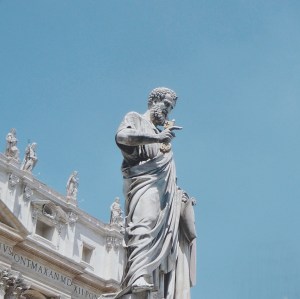 Jesus never promises that the disciple will have easy and prosperous lives. Jesus demands the opposite. After being chosen, the twelve disciples are sent to preach that the Kingdom is at hand, and yet they will not go like any royal emissaries with their military escort. No! They will travel as simple men going on foot and carrying minimal provision. They will rely on the generosity of their hosts, and the worst part is that they are going to face rejection.
 Yesus tidak pernah berjanji bahwa murid-murid-Nya akan memiliki kehidupan yang mudah dan makmur. Yesus menuntut yang sebaliknya. Setelah dipilih, kedua belas murid diutus untuk mewartakan bahwa Kerajaan Allah sudah dekat, namun mereka tidak akan pergi seperti utusan kerajaan duniawi dengan pengawalan voorijder. Tidak! Mereka akan pergi sebagai orang sederhana yang berjalan kaki dan membawa persediaan ala kadarnya. Mereka akan mengandalkan kemurahan hati tuan rumah mereka, dan bagian terburuknya adalah mereka akan menghadapi penolakan.
 Hari Raya Tubuh dan Darah Yesus Kristus berawal dari inisiatif St. Juliana dari Liege, yang meminta uskupnya dan sahabat-sahabatnya untuk menghormati secara khusus sakramen Ekaristi, dan kehadiran nyata Yesus Kristus dalam Sakramen Mahakudus. Berdirinya Ekaristi sendiri terjadi dalam Perjamuan Terakhir Tuhan, dan setiap Kamis Putih, Gereja merayakan peristiwa ini. Namun, karena Kamis Putih adalah bagian yang tidak terpisahkan dari Trihari suci Paskah, perhatian diberikan pada persiapan bagi umat beriman untuk memasuki misteri Sengsara dan Kebangkitan Tuhan kita. Karena berakar di Kamis Putih, Hari Raya Corpus Christi dirayakan pada hari Kamis setelah hari Minggu Tritunggal. Namun, di beberapa negara seperti Indonesia, perayaan dipindahkan ke hari Minggu berikutnya untuk mengakomodasi partisipasi yang lebih besar dari umat beriman.
 The solemnity of the Body and Blood of Jesus Christ takes its origin from the initiative of St. Juliana of Liege, who asked his bishop and his friends to honor, in a special way, the institution of the Eucharist, and the real presence of Jesus Christ in the Blessed Sacrament. The institution of the Eucharist itself took place in the Last Supper of the Lord, and every Holy Thursday, the Church celebrates this event. However, since Holy Thursday is an inseparable part of the Easter Triduum, the attention is given to the mystery of the Passion and Resurrection of our Lord. Because of its rootedness in Holy Thursday, the solemnity of Corpus Christi is celebrated on Thursday after the Trinity Sunday. Yet, in several countries, the celebration is moved to the next Sunday to accommodate the greater participation of the faithful.
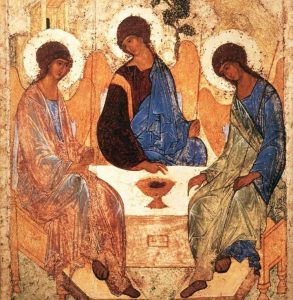 We are re-entering the ordinary season of the Church, and one of the greatest feasts within the ordinary time is the solemnity of the Most Holy Trinity. The Church has placed the celebration of the great feast on Sunday after the Pentecost. The reason may not be that obvious, but if we look at the bigger picture, it is nothing but a natural procession of truth. In Easter, we are celebrating the resurrection of Jesus that cements the divinity of Christ. On the Pentecost, we witness the divinity of the Holy Spirit being affirmed [see last Sunday’s reflection]. Now, we are rejoicing for the Three divine persons in God.
 Kita memasuki kembali masa biasa Gereja, dan salah satu perayaan terbesar dalam masa biasa adalah kesungguhan Tritunggal Mahakudus. Gereja telah menempatkan perayaan besar ini pada hari Minggu setelah Pentekosta. Alasannya mungkin tidak begitu jelas bagi kita, tetapi jika kita melihat gambaran yang lebih besar, itu sebenarnya adalah prosesi kebenaran yang wajar. Di Paskah, kita merayakan kebangkitan Yesus yang mengukuhkan keilahian Kristus, dan pada hari Pentekosta, kita menyaksikan keilahian Roh Kudus ditegaskan [lihat refleksi hari Minggu lalu]. Sekarang, kami bersukacita karena Tiga pribadi Ilahi di dalam Tuhan.
 In Medio Ecclesiae