

22nd Sunday in Ordinary Time [A]
August 30, 2020
Matthew 16:21-27
 Last Sunday, we listen to the confession of Peter on the true identity of Jesus. Here, Simon received a new name, the keys of the kingdom and the authority to bind and to loosen. He became the prime minister of the kingdom, the first pope. However, today, we witness the dramatic turn around. When Jesus foretold about His incoming passion, Simon reactively put his Master aside, and rebuked Him. As a response, Jesus expressed harshly,
“Get away behind me, Satan! You are a stumbling stone to me!”
Last episode, Simon was Peter, and today, Simon is “Satan.” Last week, Simon was the foundational rock, and today, Simon is the stumbling stone. Previous story, Simon was inspired by the Holy Spirit, and now, he is thinking his self-interest.
To call Simon that he was “Satan” is unexpected, but not uncalled-for. Perhaps Jesus would like to point out that Peter’s action was influenced by the devil himself. Often, we think that the evil spirits influence us in the case of diabolic possessions, but in reality, diabolic possessions are an extraordinary way of attacking us. There is an ordinary way: it is through temptations and inducing ideas that oppose to the plan of God. The real battle takes place not so much in the possession of our bodies, but of our minds and souls.
Peter is also called as the stumbling stone, and in Greek, it is “scandalon.” Last Sunday, he was given a new identity, Peter, the foundation rock, but now, he turns to be a stumbling stone. Both are stone, but two opposing purposes. The foundation rock is to support the Church and God’s will, but the stumbling stone is to stop or at least, to obstruct and slow down God’s will. Jesus has set his eyes on Jerusalem, to offer His life as sacrifice on the cross and gloriously rise from the death. Yet, Simon, the stumbling stone, tried to oppose and prevent Jesus from fulfilling His Father’s will. Interesting enough, the word “Satanas” in Greek, may mean ‘the adversary.’ Simon becomes the adversary against Jesus’ mission.
Last week, I reflect on the mission of Simon Peter and how we become little Peters as God calls us for particular vocation and service despite our unworthiness. However, Jesus tells us that the real hindrance to our mission is not our weakness and unworthiness, but our selfish interest and agenda. Instead saying, “Your will be done,” we shout, “My will be done.” This is the devil’s game plan, that we put ourselves first, rather than God. Some of us are ordained priests, yet instead serving the people with dedication, we are busy to seek comfort and amass fortune for ourselves. Some of us are parents, yet instead bringing our children to God, we are preoccupied in chasing our own ambitions and careers.
Thus, Jesus makes a bold reminder, “what is the point of gaining the whole world and yet losing our souls?” At the gate of heaven, St. Simon Peter will ask us, “Have you been a stumbling stone to God’s will or have your been a foundation rock to His plan?”
Valentinus Bayuhadi Ruseno, OP

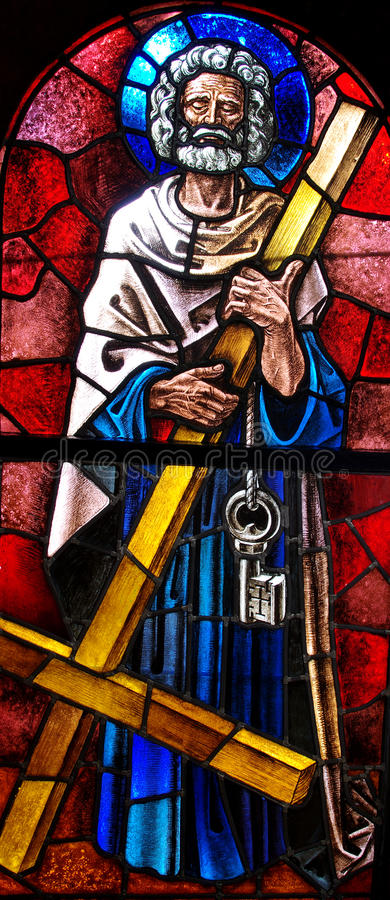 Today’s Gospel speaks volume about the new identity and roles of St. Simon Peter as the leader of the college of the apostles, and thus, the leader of the Church. He is the chosen foundation rock upon which Jesus built His Church. He is the prime minister who holds the keys of the kingdom of God. He is the chief priest who is responsible for the Temple of God. He is the chief Rabbi whose teachings binds the entire faithful. These are the bigger-than-life privileges and one may wonder, “Among the disciples, why was he chosen? Did Jesus know that he would deny Him three times?”
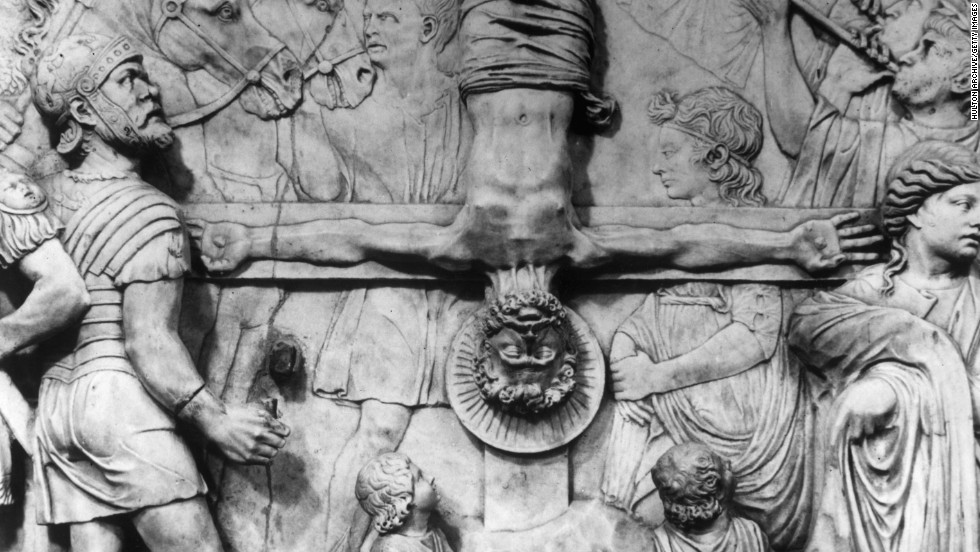 Injil hari ini berbicara banyak tentang identitas baru dan peran St. Simon Petrus sebagai pemimpin para rasul, dan dengan demikian, pemimpin Gereja. Dia adalah batu fondasi pilihan yang di atasnya Yesus membangun Gereja-Nya. Dia adalah perdana menteri yang memegang kunci kerajaan Tuhan. Dia adalah imam kepala yang bertanggung jawab atas Bait Allah yang baru. Dia adalah Rabi kepala yang ajarannya mengikat seluruh umat beriman. Ini adalah hak istimewa yang luar biasa dan orang mungkin bertanya-tanya, “Di antara para murid, mengapa dia yang dipilih? Apakah Yesus tahu bahwa dia akan menyangkal-Nya tiga kali? “
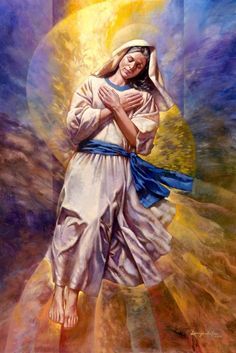 Often, we, Catholics, are accused of overemphasizing Mary in our faith, liturgy, and even our daily lives. The usual objections are: “Why do we should see Mary if we can go directly to Jesus? Why should there be Mary between you and Jesus?”
 Seringkali, kita, umat Katolik, dituduh terlalu menekankan Maria dalam iman, liturgi, dan bahkan kehidupan kita sehari-hari. Keberatan yang biasa kita dengar adalah: “Mengapa saya harus lewat Maria jika saya dapat langsung kepada Yesus? Mengapa harus ada Maria di antara saya dan Yesus?” Jenis-jenis keberatan ini berasal dari asumsi dasar bahwa keselamatan adalah hanya tentang saya dan Yesus. Kita hanya membutuhkan Yesus, dan sisanya adalah penghalang bagi Yesus. Kita tidak membutuhkan Gereja, orang-orang kudus, dan khususnya Maria. Ini adalah “kelebihan bagasi” yang harus disingkirkan agar kita bisa terbang dengan mudah kepada Tuhan.
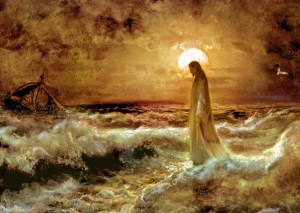 The story of Jesus walking on water is a well-known account being shared by three gospels: Matthew 14:22-33, Mark 6:45–52 and John 6:15–21. However, unique to Matthew is the part of Peter who also walked on water, but sank after a few steps. Let us focus our attention on this unique moment in the life of Simon Peter.
 Kisah Yesus berjalan di atas air adalah kisah terkenal yang ditulis oleh tiga Injil: Matius 14: 22-33, Markus 6: 45–52 dan Yohanes 6: 15–21. Namun, yang unik dari Matius adalah bagian dari Petrus yang juga berjalan di atas air, namun tenggelam setelah beberapa langkah. Mari kita fokuskan perhatian kita pada momen unik dalam kehidupan Simon Petrus ini.
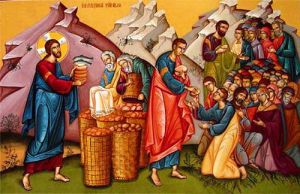 The miracle of the multiplication of the bread is one of the few stories that appear in the four Gospels. This may point to the veracity of the miracle itself that impressed and impacted the lives of the apostles. Though the general plot is the same, every Evangelist has presented their own emphasis. Today we are zeroing in the Gospel of Matthew and his particular emphases.
 Mukjizat penggandaan roti adalah salah satu dari sedikit kisah yang muncul dalam keempat Injil. Ini mungkin karena kebenaran mukjizat itu sendiri yang mengesankan dan membekas di hati para rasul. Meskipun alur ceritanya sama, setiap Penginjil telah memberikan penekanan mereka sendiri. Hari ini kita memusatkan perhatian pada Injil Matius dan penekanannya yang khas.
 In Medio Ecclesiae