
Jesus and Exorcism

Fourth Sunday in Ordinary Time [B]

January 31, 2021

Mark 1:21-28

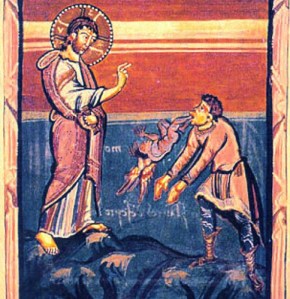
Jesus performed His first exorcism in the Gospel of Mark. Reading the context, we discover that Jesus was teaching in the synagogue, and the people recognized Him teaching with authority. When Jesus taught with authority, it does not merely mean He preached with eloquence and chrism, but His teachings manifested in powerful signs, like healings and exorcism.

The word exorcism is usually understood as expelling the evil spirits or demons from a person possessed or a place infected. Unfortunately, because of Hollywood movies’ influence, the understanding of exorcism has been corrupted, deformed, and even ridiculed. Yet, the Catholic Church, exorcism is rooted in Jesus Christ Himself.

The literal meaning of ‘exorcism’ is to ‘bind with an oath.’ Then, how did this word become related to evil spirits? When we swear an oath, we need to invoke a higher being as the guarantor of our promise. Naturally, an oath is to say a pledge by invoking the Lord Himself as a witness. In the context of exorcism, the priest-exorcist will invoke the name of God to bind the demons and send them ‘at the feet of the cross of Jesus’ for the judgment. There is no genuine and effective exorcism without invoking the name and power of the true God.

What is interesting is that Jesus drove out demons without invoking the name of God. He said, “Quiet, come out of him!” Jesus was exorcising with His authority, and the demons obeyed Him because they recognized His divine power. The demons also acknowledge Jesus not as Messiah or the king of the Jews, but as ‘the Holy One of God.’ If we go back to the Old Testament, this particular title refers to Israel’s high priest. “… Aaron, the holy one of the Lord… [Psa 106:16].” The demons revealed another dimension of Jesus’ identity: He is the high priest. From this truth, we may conclude that exorcism is a priestly duty.

Participating in the high priestly office of Jesus, the bishops are the chief exorcists in their dioceses. We remember that bishops are high priests in their respective dioceses. Each bishop then may appoint and delegate some well-trained priests to become exorcists. I was fortunate to meet and discuss many things with Fr. Jose Syquia, an exorcist of the Archdiocese of Manila.

However, we must not forget that we also share in the priesthood of Jesus Christ because of our baptism. So, we also have authority over the evil spirits. As laity, we are allowed to say specific prayers of deliverance when we feel extraordinary presence and activities of the evil spirits. The prayer to St. Michael, the archangel, is most recommended for the laity. Yet, we must not forget that the evil spirits work in very subtle ways, primarily through temptations to sin. Often, without realizing it, we are already under the control of the devil as we live a life full of vices. This is our daily war against the kingdom of Satan, and we cannot win without invoking the name of Jesus, constant prayers, the sacraments, and the help of the Church.


Valentinus Bayuhadi Ruseno, OP
Yesus dan Eksorsisme

Minggu Keempat di Masa Biasa [B]

31 Januari 2021

Markus 1: 21-28

Yesus melakukan pengusiran setan atau eksorsisme pertama-Nya dalam Injil Markus. Membaca konteksnya, kita menemukan bahwa Yesus sedang mengajar di sinagoga dan orang-orang mengenali Dia mengajar dengan otoritas. Ketika Yesus mengajar dengan otoritas, ini tidak hanya berarti Dia berkhotbah dengan kefasihan dan krisma, tetapi ajaran-Nya dimanifestasikan dalam tanda-tanda yang nyata dan menakjubkan, seperti penyembuhan dan pengusiran setan.

Kata eksorsisme biasanya diartikan sebagai mengusir roh-roh jahat dari seseorang yang kerasukan atau tempat yang terjangkiti. Sayangnya, karena pengaruh yang datang dari film-film Hollywood, pemahaman tentang eksorsisme telah terdistorsi, dan bahkan menjadi bahan lelucon. Namun, bagi Gereja Katolik, eksorsisme berakar di dalam pribadi Yesus Kristus sendiri, dan sebuah misi yang mulia.

Arti harafiah dari ‘eksorsisme’ adalah ‘mengikat dengan sumpah.’ Lalu, bagaimana kata ini bisa akhirnya berhubungan dengan roh jahat? Ketika kita bersumpah, kita perlu memanggil seseorang yang lebih tinggi dari diri kita sebagai penjamin janji kita. Secara sederhana, sumpah adalah mengucapkan janji dengan memanggil Tuhan sendiri sebagai saksi kita. Dalam konteks eksorsisme, imam yang bertugas sebagai eksorsis akan memanggil nama Tuhan untuk mengikat setan, dan mengirim mereka ‘ke kaki salib Yesus’ untuk menerima penghakiman. Kita tidak bisa mengusir setan dengan menggunakan otoritas kita sendiri karena setan adalah makhluk yang juah lebih kuat dari kita. Hanya dalam nama Tuhan yang benar, eksorsisme yang sejati dan efektif dapat terjadi.

Satu hal yang menarik dari Injil adalah Yesus mengusir setan tanpa menyebut nama Tuhan. Dia hanya berkata, “Diam, keluarlah dari dia!” Yesus mengusir dengan otoritas-Nya sendiri dan setan-setan mematuhi-Nya karena mereka mengenali kuasa ilahi-Nya. Setan juga mengenali Yesus bukan hanya sebagai Mesias atau sebagai raja orang Yahudi, tetapi sebagai ‘Yang Kudus dari Tuhan.’ Jika kita kembali ke Perjanjian Lama, gelar khusus ini mengacu pada imam agung Israel, secara khusus Harun. “… Harun, Yang Kudus dari Tuhan… [Mzm 106: 16].” Melalui mulut setan, Injil mengungkapkan dimensi lain dari identitas Yesus: Dia adalah sang Imam Agung. Dari kebenaran ini, kita dapat menyimpulkan bahwa eksorsisme adalah bagian dari tugas imamat.

Berpartisipasi dalam identitas Yesus sebagai imam agung, para uskup adalah eksorsis utama di keuskupan mereka. Kita ingat bahwa uskup adalah imam agung di keuskupan masing-masing. Setiap uskup kemudian dapat menunjuk dan mendelegasikan beberapa imam yang terlatih untuk menjadi eksorsis di keuskupan mereka. Waktu saya di Manila, saya beruntung bisa bertemu dan berdiskusi banyak hal, dengan Romo Jose Syquia, seorang eksorsis dari Keuskupan Agung Manila.

Namun demikian, kita tidak boleh lupa bahwa karena pembaptisan kita, kita juga mengambil bagian dalam imamat Yesus Kristus. Jadi, kita juga memiliki otoritas atas roh-roh jahat. Sebagai orang awam, kita diizinkan untuk mengucapkan doa-doa pembebasan tertentu ketika kita merasakan kehadiran dan aktivitas roh-roh jahat yang luar biasa. Doa kepada St. Michael, sang malaikat agung, adalah salah satu contoh doa pembebasan yang bisa digunakan kaum awam. Namun, kita tidak boleh lupa bahwa sebenarnya roh-roh jahat bekerja dengan cara yang sangat halus, terutama melalui godaan untuk berbuat dosa. Seringkali, tanpa disadari, kita sudah di bawah kendali iblis saat kita menjalani hidup yang penuh dengan dosa dan kejahatan. Sebagai pengikut Kristus, kita perlu menghadapi perang kita sehari-hari melawan kerajaan Setan, dan kita tidak bisa menang tanpa menyebut nama Yesus, tanpa doa yang konstan, tanpa sakramen, dan tanpa bantuan Gereja.


Valentinus Bayuhadi Ruseno, OP

We are Fishers of Men

3rd Sunday in Ordinary Time [B]

January 24, 2021

Mark 1:14-20

We once again listen to the story of the calling of the first disciples: Simon and Andrew, as well as James and John, the sons of Zebedee. Jesus called them, and He would make them ‘the fishers of men.’ Yet, from countless possibilities of professions and occupations, why did they have to be ‘the fishers of men’? Why not merely Jesus’ promotion team? Why not Jesus’ soldiers?

The answer is not far from who the first disciples were. They were fishermen of Galilee. Yet, this time, they were no longer catching fish but gathering people for Christ. While they left almost everything behind and followed Jesus, they brought their lives, characters, experiences, and skills with them. They remained fishermen, but this time Jesus transformed the object of their catch: men and women.

The second reason why they were called ‘fishers of men’ is even more profound. It speaks of the fulfillment of the Old Testament’s prophesy. The great prophet Jeremiah who lived around 500 years before Christ, once said, “For I will bring them back to their land that I gave to their ancestors. I am now sending for many fishermen, says the Lord, and they shall catch them… [Jer 16:15-16].” The historical context of this prophecy is critical. After Salomon’s reign, the kingdom of Israel was divided into two smaller kingdoms. The northern kingdom was the coalition of 10 tribes, and the southern kingdom was the tribe, Judah and Benjamin. In 721 SM, the northern kingdom was destroyed by the Assyrian empire, and the ten tribes were deported to foreign lands. Then in 587 SM, the southern kingdom was demolished by the Babylonian empire, and the inhabitants were brought to the Babylonian lands. Jeremiah prophesied that God would bring back the scattered Israelites by sending ‘fishermen.’

By calling His first disciples as ‘fishers of men,’ Jesus was fulfilling Jeremiah’s prophecy. Jesus was gathering back the lost tribes of Israelites to Himself as the new Israel. This is why Jesus called and chose twelve apostles. The twelve apostles shall serve as the leaders of the new twelve tribes of Israel.

The identity and mission as ‘fishers of men’ are primarily for the apostles, yet every baptized Christians are sharing in this identity. We are fishers of men and women for Christ. Some of us may be called to get a quantity gain, like a priest who baptized thousands of people. Some of us may be invited to have a quantity yield, like parents who raise and educate their children as mature and responsible Catholics. Some of us stand in between these two kinds of catches, like zealous catechists, courageous lay missionaries, faithful religious sisters who take care of schools or orphanages, or indefatigable community leaders.

Surely to be a fisherman is not a stress-free job. Sometimes, we are facing storms and dangers. Sometimes, we are getting nothing after our best effort. Occasionally, we get in a disagreement with our fellow fishermen. However, the Gospel reminds us that we are not fishermen because we are good, but because Jesus calls us and makes us His fishermen. We draw our purpose and strength from Jesus because we are participating in Jesus’ mission to gather people to Himself. We are working together with apostles to fulfill God’s promise of the New Israel. We are the fishers of men.

Valentinus Bayuhadi Ruseno, OP

photocredit: paolo-nicolello

Kita adalah Penjala Manusia

Minggu ke-3 di Masa Biasa [B]

24 Januari 2021

Markus 1: 14-20

Kita mendengarkan kisah panggilan murid-murid pertama: Simon dan Andreas, juga Yakobus dan Yohanes, anak-anak Zebedeus. Yesus memanggil mereka dan Dia akan menjadikan mereka ‘penjala manusia’. Namun, dari berbagai profesi dan pekerjaan yang tak terhitung jumlahnya, mengapa mereka harus menjadi ‘penjala manusia’? Mengapa tidak jadi tim promosi Yesus? Mengapa bukan tentara Yesus?

Jawabannya tidak jauh dari siapa murid pertama itu. Mereka adalah para nelayan di Galilea. Namun, kali ini, mereka tidak lagi menangkap ikan, tetapi mengumpulkan orang bagi Kristus. Meskipun mereka meninggalkan hampir semuanya dan mengikuti Yesus, pada dasarnya mereka membawa serta kehidupan, karakter, pengalaman, dan keterampilan mereka. Mereka tetap menjadi nelayan, tetapi kali ini Yesus mengubah objek yang mereka tangkap: manusia.

Alasan kedua mengapa mereka disebut ‘penjala manusia’ bahkan lebih bermakna. Hal ini berbicara tentang pemenuhan sebuah nubuat di Perjanjian Lama. Nabi besar Yeremia yang hidup sekitar 500 tahun sebelum Kristus, pernah berkata, “Sebab Aku akan membawa mereka pulang ke tanah yang telah Kuberikan kepada nenek moyang mereka. Sesungguhnya, Aku mau menyuruh banyak penangkap ikan, demikianlah firman TUHAN, yang akan menangkap mereka… [Yer 16: 15-16].” Untuk mengerti maksud nubuat ini, kita perlu melihat konteks historisnya. Setelah pemerintahan raja Salomon, kerajaan Israel terbagi menjadi dua kerajaan yang lebih kecil. Kerajaan utara yang merupakan gabungan 10 suku, dan kerajaan selatan yaitu suku Yehuda dan Benyamin. Pada 721 SM, kerajaan utara dihancurkan oleh kekaisaran Asyur, dan sepuluh suku itu dideportasi ke negeri asing. Kemudian pada tahun 587 SM, kerajaan bagian selatan dihancurkan oleh kerajaan Babel, dan penduduknya dibawa ke tanah Babel. Yeremia bernubuat bahwa Tuhan akan mengembalikan bangsa Israel yang tercerai-berai dengan mengirim ‘penangkap ikan’.

Dengan menyebut murid-murid-Nya yang pertama sebagai ‘penjala manusia’, Yesus sedang memenuhi nubuat Yeremia. Yesus sedang mengumpulkan kembali suku-suku Israel yang hilang di dalam diri-Nya sebagai Israel baru. Inilah mengapa Yesus memanggil dan memilih dua belas rasul. Kedua belas rasul akan menjadi pemimpin dari dua belas suku baru Israel.

Identitas dan misi sebagai ‘penjala manusia’ ini tidak hanya bagi para rasul, namun setiap orang yang telah dibaptis berbagi dalam identitas ini. Kita adalah penjala manusia bagi Kristus. Beberapa dari kita mungkin dipanggil untuk mendapatkan tangkapan yang berlimpah, seperti seorang imam yang membaptis ribuan orang. Beberapa dari kita mungkin dipanggil untuk memiliki hasil yang berkualitas, seperti orang tua yang membesarkan dan mendidik anak-anak mereka sebagai orang Katolik yang dewasa dan bertanggung jawab. Beberapa dari kita berdiri di antara dua jenis tangkapan ini, seperti katekis yang berdedikasi, misionaris awam yang berani, suster yang setia mengurus sekolah atau panti asuhan, atau pemimpin komunitas yang tak kenal lelah.

Pastinya menjadi nelayan bukanlah pekerjaan yang bebas stres. Terkadang, kita menghadapi badai dan bahaya. Terkadang, kita tidak mendapatkan apa-apa setelah usaha terbaik kita. Terkadang, kita berselisih paham dengan sesama pekerja. Namun, Injil mengingatkan kita bahwa kita bukan penjala manusia karena kita layak dan sempurna, tetapi karena Yesus memanggil kita dan menjadikan kita penjala manusia-Nya. Kita mengambil tujuan dan kekuatan kita dari Yesus karena kita berpartisipasi dalam misi Yesus untuk menyatukan seluruh umat manusia di dalam-Nya. Kita bekerja dengan para rasul untuk memenuhi janji Tuhan tentang Israel Baru. Kita adalah penjala manusia.

Valentinus Bayuhadi Ruseno, OP

photocredit: fredrik ohlander

Yesus, Anak Domba Allah kita

Minggu Kedua Masa Biasa [B]

17 Januari 2021

Yohanes 1: 35-42

Yohanes Pembaptis menyebut Yesus sebagai ‘Anak Domba Allah.’ Jika kita menghadiri perayaan Ekaristi, kita akan selalu mendengar ungkapan ini. Tepat sebelum komuni, imam akan memegang roti dan anggur yang telah dikonsekrir, dan memperlihatkan kepada kita semua, lalu berkata, “Lihatlah Anak Domba Allah, Lihatlah Dia yang menghapus dosa dunia. Berbahagialah kita yang diundang ke perjamuan-Nya!”

Saya seorang Katolik sejak kecil dan saya tidak dapat mengingat lagi kapan saya mendengar Anak Domba Allah ini untuk pertama kalinya. Namun, saya tidak pernah bertanya mengapa Yesus dipanggil seperti itu. Mungkin, itu hanyalah salah satu gelar Yesus. Namun, Saya secara bertahap mempelajari kebenaran yang indah ini saat saya masuk seminari dan mendalami pembelajaran teologi dan Kitab Suci.

Jika kita menempatkan diri kita pada posisi para murid yang hidup di Palestina abad pertama, kita akan melihat betapa dalamnya gelar ini. Ketika para murid mendengar ‘Anak Domba Allah yang menghapus dosa dunia,’ mereka dengan mudah mengerti apa yang dimaksud oleh Yohanes Pembaptis.

Pertama, domba adalah hewan korban utama di Bait Allah Yerusalem. Setiap hari anak domba disembelih dan dipersembahkan kepada Tuhan. Khususnya pada hari raya Paskah, ribuan ekor domba dibawa ke Bait Allah dan dikorbankan. Meskipun pengorbanan anak domba bukan satu-satunya cara untuk menyembah Tuhan yang benar, ini berfungsi sebagai cara beribadah yang utama. Dengan menyebut Yesus sebagai Anak Domba Allah, kita mengakui bahwa penyembahan yang benar dan utama kepada Allah terjadi di dalam Yesus.

Kedua, salah satu hari raya Yahudi terpenting adalah hari raya Paskah. Ini merayakan kebebasan dari perbudakan bani Israel dari Mesir. Salah satu ciri utama dari perayaan ini adalah anak domba yang dikorbankan. Kitab Keluaran memberikan rincian bagaimana Paskah pertama harus diperingati. Anak domba berumur satu tahun yang tidak bercacat harus disembelih. Darahnya ditempatkan di tiang pintu rumah orang Israel dan tubuhnya yang dipanggang akan dimakan [lihat Keluaran 12]. Untuk menerima Yesus sebagai Anak Domba Allah, kita menyadari bahwa kita diselamatkan oleh pengorbanan dan darah Yesus, dan kita juga perlu makan tubuh-Nya.

Ketiga, satu nubuat yang menghubungkan seorang manusia dengan seekor domba berasal dari Yesaya. Nabi besar ini berbicara tentang sosok misterius ‘hamba Tuhan yang menderita.’ Hamba Allah ini akan menebus Israel, tetapi Dia harus menanggung penderitaan dan kematian yang hebat, meskipun tidak bersalah. Sang Nabi menulis, “Dia dianiaya, tetapi dia membiarkan diri ditindas dan tidak membuka mulutnya seperti anak domba yang dibawa ke pembantaian… [Yes 53: 7]. ” Dengan menerima Yesus sebagai Anak Domba Allah, kita menerima Yesus sebagai Penebus kita yang menderita dan wafat bagi kita.

Sekarang, kita telah mengenali Yesus sebagai Anak Domba Allah, kita perlu melakukan apa yang dilakukan para murid pertama: mereka ‘tinggal’ bersama Dia. Para murid tidak hanya mengenal dan menerima Yesus, tetapi mereka mengikuti dan tinggal bersama-Nya. Tidaklah cukup bagi kita untuk melihat Yesus sebagai Anak Domba, tetapi kita diundang untuk tinggal bersama-Nya, untuk menjadi murid-Nya yang sejati.


Valentinus Bayuhadi Ruseno, OP

photocredit: Daniel Sandvik

Jesus, Our Lamb of God

2nd Sunday of Ordinary Time [B]

January 17, 2021

John 1:35-42

John the Baptist identified Jesus as the ‘Lamb of God.’ If we are attending the celebration of the Eucharist, we cannot miss hearing this phrase. Just before the communion, the priest will hold the consecrated bread and wine, and present them to the faithful, then saying, “Behold the Lamb of God, Behold Him who takes away the sin of the world. Happy are those invited to the supper of the Lamb!”

I am a cradle Catholic, and I could no longer remember when I heard this Lamb of God for the first time. Yet, I never bother asking why Jesus is called such because it does not make much sense. Perhaps, it is just another fancy title of Jesus. I gradually learn this beautiful truth as I go deeper into my theology study and scriptures.

If we put ourselves in the shoes of the disciples who were living in the first century Palestine, we will see a lot more going on. When the disciples heard ‘the Lamb of God who takes away the sin of the world,” they quickly understood. It was undoubtedly mind-blowing, but they were expecting to hear that.

Firstly, a lamb was a primarily sacrificial animal in the Jerusalem temple. Every day lambs were slaughtered and offered to God. Especially during the feast day of Passover, thousands of lambs were brought to the Temple and sacrificed. It was a massive display of devotion to behold. Though the lamb’s sacrifice is not the only way to worship the true God, it serves as the ordinary way of worship. By calling Jesus the Lamb of God, we acknowledge that God’s true worship takes place in Jesus.

Secondly, one of the most important Jewish feasts is Passover. It celebrates the freedom from the slavery of God. One of the central features of this celebration is the sacrificed lamb. The Book Exodus gives the details of how the Passover has to be commemorated. An unblemished one-year-old lamb has to be slaughtered. Its blood was placed on the Jewish household doorpost, and its roasted body shall be eaten [see Exo 12]. To accept Jesus as the Lamb of God, we recognize that the sacrifice and blood of Jesus save us, and we need to eat also His body.

Thirdly, one prophesy that connects a person, and a lamb is from Isaiah. The great prophet spoke about the mysterious figure of ‘suffering servant of God.’ This man shall redeem Israel, but He has to endure great suffering and death, despite being innocent.  The prophet wrote, “He was oppressed, and he was afflicted, yet he did not open his mouth; like a lamb that is led to the slaughter… [Isa 53:7].” By receiving Jesus as the Lamb of God, we accept Jesus as our Redeemer who has to suffer and die for us.

Now, we have recognized Jesus as the Lamb of God; we need to do like the first disciples did: they remained with Him. The disciples did not merely know and accept Jesus, but they followed and stayed with Him. It is not enough for us to see Jesus as the Lamb, but we are invited to remain with Him, to become His true disciples.

Valentinus Bayuhadi Ruseno, OP

photo credit: Daniel Sandvik

Baptism and the Cross

Baptism of the Lord

January 10, 2021

Mark 1:7-11

Baptism of the Lord is one of the defining moments in the life of Jesus. The synoptic gospels [Matthew, Mark, and Luke] writes this event, though with their own perspective and emphasis. We are in the liturgical year B, and thus, we are listening from the Gospel of Mark. Mark’s version is noticeably the shortest, but it does not mean it does not deliver a powerful message. The Baptism of Jesus in the River Jordan is a turning point in Jesus’ life. After this Jesus will be in the desert for 40 days, tempted by the devil, but he will prevail. Then, from this, Jesus will begin His public ministry and unreservedly move toward Jerusalem, to Cross, Death, and Resurrection.
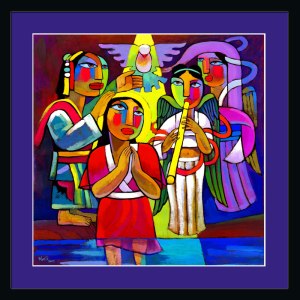
Often, we ask, “why should John baptize Jesus?” We are well aware that John’s baptism is an outward sign of inner repentance. If a person repents, it means that the person has been living a sinful life. Does it mean that Jesus is a sinful man, He asks for John’s baptism? Surely, Jesus who is God, is perfectly sinless, but the question remains, “why should Jesus be baptized?”  Mark does not give us a straight answer, yet the Church offers us the reason. Catechism of the Catholic Church states, “The baptism of Jesus is on his part the acceptance and inauguration of his mission as God’s suffering Servant. He allows himself to be numbered among sinners… Already he is anticipating the “baptism” of his bloody death… [CCC 536].”

Simply put, Jesus’ baptism speaks of this solidarity with us sinners, and this solidarity does not stop in the symbolic baptism of John, but this will find its fulfillment in the cross. As sinners, we deserve to die, but it is God who dies for us. The Church’s answer is beautiful, but is it truly in the mind of the evangelists, especially Mark?

When Jesus is baptized, Mark describes the sky as ‘torn apart’ and a voice came, “You are my Son, the Beloved…” The Greek word for ‘tearing apart’ is ‘schizo,’ and the same word is employed again by Mark when he recounts the happening in the Temple when Jesus died on the cross: the giant curtain that separates the holy place and the holiest place inside the Jerusalem temple [see 15:38]. Meanwhile, Mark also recounts a Roman centurion proclaims that Jesus is truly the Son of God, after witnessing remarkable events during Jesus’ death. From here, we can draw an interesting insight. With this basic pattern between what happens in baptism and in the cross, Mark is telling us that these two events are indeed related. The Baptism points to the Cross, and the Cross is the fulfillment of the Baptism.

It reveals the reason why the Father is so ‘so well pleased with His Son.’ The reason is through baptism, Jesus signals to all of us His eagerness to do His Father’s will. Though Jesus is sinless, He takes up our burden of sin and dies for us as proof of the Father’s love for us.

If in His baptism, Jesus accepts the cross, we, as the baptized Christians, are also called to carry our crosses. As we share Christ’s cross and carry it faithfully, we can hope to love radically. As we love deeply, we may hope for our salvation.


Valentinus Bayuhadi Ruseno, OP

Pembaptisan Yesus dan Salib

Pembaptisan Tuhan

10 Januari 2021

Markus 1: 7-11

Baptisan Tuhan adalah salah satu momen yang menentukan dalam hidup Yesus. Injil sinoptik [Matius, Markus dan Lukas] menulis peristiwa ini, meskipun dengan perspektif dan penekanan yang berbeda. Karena kita berada di tahun liturgi B, kita mendengarkan dari Injil Markus. Versi Markus memang terlihat paling pendek, tetapi bukan berarti tidak menyampaikan pesan yang mendalam. Pembaptisan Yesus di sungai Yordan adalah titik balik dalam kehidupan Yesus. Setelah ini Yesus akan berada di padang gurun selama 40 hari dan dicobai oleh iblis. Kemudian, dari sini, Yesus akan memulai pelayanan publik-Nya, dan bergerak menuju Yerusalem, menuju Salib, Kematian dan Kebangkitan.

Seringkali, kita bertanya, “mengapa Yohanes harus membaptis Yesus?” Kita menyadari bahwa baptisan Yohanes adalah tanda lahiriah dari pertobatan batiniah. Jika seseorang menerima pembaptisan Yohanes, itu berarti orang tersebut membutuhkan pertobatan, dan berarti dia orang berdosa. Apakah ini berarti bahwa Yesus adalah orang yang berdosa, karena Dia meminta baptisan Yohanes? Yesus yang adalah Allah, tidak berdosa. Lalu, “mengapa Yesus tetap dibaptis?” Markus tidak memberi jawaban eksplisit, namun Gereja memberi kita alasannya. Di dalam Katekismus Gereja Katolik tertulis, “Baptisan Yesus adalah penerimaan dan pengukuhan misinya sebagai Hamba Allah yang menderita. Dia membiarkan dirinya terhitung di antara orang-orang berdosa … Dia sudah mengantisipasi ‘baptisan’ dari kematiannya yang berdarah … [KGK 536]. ”

Sederhananya, baptisan Yesus berbicara tentang solidaritas dengan kita para pendosa, dan solidaritas ini tidak berhenti pada baptisan Yohanes, tetapi ini akan menemukan pemenuhannya di kayu salib. Sebagai orang berdosa, kita pantas mati, tetapi Tuhanlah yang mati untuk kita. Pengertian Gereja ini sungguh indah, tetapi apakah ini benar-benar ada di benak para penginjil, terutama Markus?

Ketika Yesus dibaptis, Markus menggambarkan langit ‘terbelah’ dan suara terdengar, “Engkaulah Anak-Ku yang Kukasihi , kepada-Mulah Aku berkenan.” Kata Yunani untuk ‘membelah’ adalah ‘schizo,’ dan kata yang sama digunakan lagi oleh Markus ketika dia menceritakan kejadian di Bait Allah ketika Yesus wafat di kayu salib: tirai raksasa yang memisahkan tempat suci dan tempat tersuci di dalam Bait Suci Yerusalem, terbelah [lih. 15:38]. Sementara itu, Markus juga menceritakan seorang perwira Romawi yang menyatakan bahwa Yesus adalah benar-benar Putra Allah setelah menyaksikan kejadian luar biasa saat kematian Yesus. Dengan pola dasar antara apa yang terjadi di saat pembaptisan dan di kayu salib, Markus ingin mengatakan kepada kita bahwa kedua peristiwa ini memang terkait. Baptisan menunjuk ke Salib, dan Salib adalah penggenapan dari Baptisan Yesus.

Dari sini, kita tahu kenapa Bapa ‘berkenan kepada Putra-Nya.’ Ini karena melalui pembaptisan-Nya, Yesus memberi tanda kepada kita semua bahwa Dia akan melakukan kehendak Bapa-Nya yakni menuju Salib dan Kebangkitan. Meskipun Yesus tidak berdosa, Dia memikul beban dosa kita dan mati untuk kita sebagai bukti kasih Bapa bagi kita.

Jika dalam baptisan-Nya, Yesus menerima salib, kita sebagai umat Kristiani yang telah dibaptis juga dipanggil untuk memikul salib kita. Saat kita berpartisipasi di salib Kristus dan memikulnya dengan setia, kita bisa berharap untuk mengasihi lebih dalam. Saat kita mengasihi lebih dalam, kita bisa berharap untuk keselamatan kita.


Valentinus Bayuhadi Ruseno, OP

We are the Magi

The Epiphany of the Lord

January 3, 2021

Matthew 2:1-12

The Christmas season ends with the feast of Epiphany of the Lord or the Feast of the Three Kings. However, if we read the Gospel carefully, we will discover that one who visited Jesus is magi, and the word “king” is not used to describe them. The Gospel of Matthew also reveals neither their number nor names. St. Matthew only speaks of three gifts offered: gold, frankincense and myrrh.

Magi is coming from the Greek word ‘magos’, and it is the same root word for magic. In his book ‘Jesus of Nazareth: The Infancy Narratives,’ Pope Benedict XVI explains that Magi has a wide range of meanings. In one sense, it may point to a black magician like Simon the Magician [see Acts 8:9-24], but in another sense, the magi may refer to the philosophers of noble birth coming from the land of Persia. Ancient philosophers are educated people who devoted themselves to the pursuit of wisdom. This is the reason why we call the magi also the wise men. It seems that the wise men have eventually discovered through their careful study, that the great king who is the embodiment of wisdom herself has been born in the land of Judea.

Are they kings? The Church recognizes that the magi who brought three particular gifts are the fulfillment of ancient prophecy. Isaiah said, “Nations shall walk by your light,

and kings by your shining radiance. Raise your eyes and look about; they all gather and come to you… bearing gold and frankincense, and proclaiming the praises of the LORD [Isa 60:3-4,6; which is our first reading].” In short, Isaiah prophesized that the light will guide kings, and they will come and bring gifts of gold and frankincense, and praise the Lord. The magi match the description of Isaiah’s prophecy, and from here, we can also say that the magi are also kings who were guided by the light of the star and offered precious gifts to Jesus. They might be indeed kings of small nations or perhaps, members of royalty, otherwise Herod the great would not have received them in his palace and welcome them cordially.

What about their names? Writing from the 8th century, ‘Excerpta Latina barbari,’ introduces them as Balthasar, Melchior and Gaspar. Whether these are their real name or not, we are never sure. However, we are invited to have the spirit and character of these wise men.

To find Jesus, they left their homes’ comfort and embarked into a long and challenging journey. They also learned to open their hearts as they discovered that the great king is not in Herod’s palace, but a poor home of Joseph and Mary. Ultimately, they humbled themselves before Jesus as they worshipped Him and offered the best gifts representing their lives. Then, they may go home with great joy.

Epiphany means God’s manifestation to the nations, yet this manifestation requires the magi to get up, search, and be humble. We are the magi. We are invited to look diligently for Jesus. To be baptized, catholic is undoubtedly excellent, but it is just the first step of our incredible journey. We are called to go deeper into the beauty of our faith. We are challenged to see Jesus in even the most unexpected places. Unless we go out and seek, we never find. It is because we are the magi.

Valentinus Bayuhadi Ruseno, OP

Kita adalah Orang Majus

Hari Raya Epifani

3 Januari 2021

Matius 2: 1-12

Masa Natal diakhiri dengan hari raya Penampakan Tuhan Yesus atau juga dikenal sebagai Pesta Tiga Raja. Namun, jika kita membaca Injil dengan cermat, kita akan menemukan bahwa orang yang mengunjungi Yesus adalah orang majus, dan kata ‘raja’ tidak digunakan untuk mendeskripsikan mereka. Injil Matius juga tidak menyebutkan berapa atau nama mereka. St. Matius hanya berbicara tentang tiga hadiah yang dipersembahkan: emas, kemenyan dan mur.

Majus berasal dari kata Yunani ‘magos’ dan ini adalah akar kata yang sama untuk ‘magic’. Dalam bukunya ‘Jesus of Nazareth: The Infancy Narratives’, Paus Benediktus XVI menjelaskan bahwa kata ‘magos’ memiliki arti yang cukup luas. Di satu sisi, kata ‘magos’ menunjuk pada seorang penyihir seperti Simon yang mencoba membeli rahmat dari Petrus [lihat Kisah Para Rasul 8: 9-24], tetapi dalam arti lain, ‘magos’ merujuk pada para filsuf dari keluarga bangsawan yang datang dari tanah Persia. Filsuf kuno adalah orang-orang terpelajar yang mengabdikan diri untuk mencari kebijaksanaan. Inilah alasan mengapa kita menyebut orang majus sebagai orang bijak. Mereka tidak berhenti sampai menemukan sang Kebijaksanaan itu sendiri.

Apakah mereka raja? Gereja melihat bahwa orang majus yang membawa tiga hadiah ini adalah penggenapan nubuat kuno. Yesaya berkata, “Bangsa-bangsa berduyun-duyun datang kepada terangmu, dan raja-raja kepada cahaya yang terbit bagimu. Angkatlah mukamu dan lihatlah ke sekeliling, mereka semua datang berhimpun kepadamu… akan membawa emas dan kemenyan,  serta memberitakan perbuatan masyhur Tuhan. [Yes 60: 3-4,6; yang merupakan bacaan pertama kita].”

Singkatnya, Yesaya menubuatkan bahwa raja-raja akan dibimbing oleh cahaya dan mereka akan datang membawa persembahan emas dan kemenyan, dan memuji Tuhan. Dari sini, kita juga bisa mengatakan bahwa orang majus juga adalah raja yang dibimbing oleh cahaya bintang dan mempersembahkan hadiah berharga kepada Yesus. Mereka mungkin sungguh raja dari kerajaan kecil di timur atau anggota keluarga kerajaan, jika tidak Herodes Agung tidak akan menerima mereka di istananya dan menyambut mereka dengan hormat.

Bagaimana dengan nama mereka? Sebuah tulisan yang berasal dari abad ke-8, ‘Excerpta latina barbari,’ memperkenalkan mereka sebagai Balthasar, Melchior dan Gaspar. Apakah ini nama asli mereka? Kita tidak pernah tahu dengan pasti. Namun, kita diajak untuk memiliki semangat dan karakter orang majus tersebut.

Untuk menemukan Yesus, mereka meninggalkan kenyamanan tempat tinggal mereka, dan memulai perjalanan yang panjang dan sulit. Mereka belajar juga untuk membuka hati mereka ketika mereka menemukan bahwa raja agung tidak ada di istana Herodes, tetapi ada di keluarga miskin Yusuf dan Maria. Akhirnya, mereka merendahkan diri di hadapan Yesus saat mereka menyembah Dia dan mempersembahkan hadiah terbaik yang mewakili hidup mereka. Hanya dengan demikian, mereka bisa pulang dengan penuh sukacita.

Epifani berarti penampakan Tuhan kepada bangsa-bangsa, namun hal ini menuntut orang majus untuk bangkit, mencari dan menjadi rendah hati. Kita adalah orang majus. Kita diundang untuk mencari Yesus dengan tekun. Dibaptis menjadi katolik memang rahmat yang luar biasa, tetapi ini adalah langkah awal dari perjalanan besar kita. Kita dipanggil untuk masuk lebih dalam lagi untuk menemukan keindahan iman kita. Kita ditantang untuk melihat Yesus bahkan di tempat yang paling tidak terduga. Jika kita tidak mau pergi dan mencari, kita tidak pernah menemukan-Nya. Ingat bahwa kita adalah orang majus.

Valentinus Bayuhadi Ruseno, OP

photocredit: jeff jewiss