

Second Sunday of Lent [B]
February 28, 2021
Mark 9:2-11
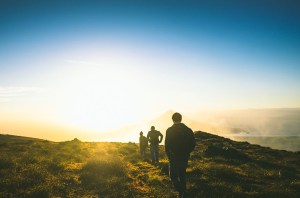 Mountain is a special place in the Bible. It is a place where God meets His people. In the Old Testament, there are many instances where mountains become a pivotal point of salvation history. After the great flood that cleansed the world, the Ark of Noah landed on Mount Ararat, and there, Noah offered sacrifice to God [see Gen 8:4]. Abraham was asked by God to offer his son Isaac on Mount Moriah. Just right before the sacrifice, the angel of God prevented Abraham and God recognized Abraham’s faith [see Gen 22]. When Moses was tending the flock of his father-in-law, Moses saw a burning bush yet was not consumed, and there, on the mount of Horeb, God called Moses to save Israelites from the Egyptians [see Exo 3]. After the liberation from Egypt, Moses and the Israelites the Law and established a covenant with God on the mount of Sinai [see Exo 24:18].
Jesus’ important life events took place in the Mountains. There is the mountain of temptation, where the devil brought Jesus and offered Him the worldly glories. There is the mountain of prayer, where Jesus spent His solitude with the Father. There is the mountain of teaching, where Jesus taught the most remarkable lessons like Beatitudes and love for enemies. There is a mountain of Transfiguration, where Jesus manifested His divine glory. There is the mountain of the cross, or Golgotha, where Jesus gave His life for our salvation. Lastly, there is the mountain of ascension, where Jesus went back to the heavens and sent His disciples to preach and baptize all the nations.
One distinctive feature in the Mount of Transfiguration is that he invited three disciples: Peter, James, and John. There are many reasons why these three were selected. St. Ambrose of Milan, representing the Fathers of the Church, believed that these three were chosen because of Peter who received the kingdoms’ keys, John, to whom was committed our Lord’s mother, and James who first suffered martyrdom. Meanwhile, St. Thomas Aquinas, a Middle age theologian, argued that James was the first martyr, John was the most beloved, and Peter was the one who loves Jesus most. However, we can also see it in a simple way. These three were disciples who were ready to follow Jesus and climb the high mountain.
Climbing the mountain is a challenging mission. One has to make necessary preparation without being excessive. Climbing requires physical stamina as well as mental toughness. As the climbing progresses, the persons’ authentic characters will be revealed. Facing difficulty, one can be very selfish or selfless. Confronting challenges, one can march with courage or retreat in fear. In a dire situation, one can exhibit decisive leadership or get panicked and lose his way. Peter, James, and John were up for the challenge, and they persevered to see the transfigured Jesus.
Often Jesus calls us to climb a mountain with Him. Sometimes, we climb the mountain of prayer as we need to face many hurdles in our prayer life. Occasionally, we need to climb the mountain of teaching because we are struggling with the Church’s particular teachings. Sometimes, we climb the mountain of Calvary, and we need to carry our cross, and on the top, we find no consolation but the death of the Savior.
Yet, the good news is that Jesus, who invited us to climb the mountain, is also walking with us. As we walk with Jesus, He guides us, strengthens us, and forms us. If we are faithful in mountains of temptations and Calvary, we will participate in His Transfiguration, resurrection, and ascension.
Valentinus Bayuhadi Ruseno, OP
photocredit: Tim Foster
 Gunung adalah tempat khusus di dalam Kitab Suci. Ini adalah tempat dimana Tuhan bertemu dengan umat-Nya. Dalam Perjanjian Lama, ada banyak contoh di mana gunung menjadi titik penting dalam sejarah keselamatan. Setelah banjir besar yang membersihkan dunia, Bahtera nabi Nuh mendarat di Gunung Ararat dan di sana, Nuh mempersembahkan korban kepada Tuhan [lihat Kejadian 8: 4]. Abraham diminta oleh Tuhan untuk mempersembahkan putranya, Ishak, di Gunung Moria. Tepat sebelum pengorbanan, malaikat Tuhan mencegah Abraham dan Tuhan menerima iman Abraham [lihat Kejadian 22]. Ketika Musa sedang menggembalakan kawanan bapa mertuanya, Musa melihat semak bernyala tapi tidak habis terbakar, dan di sana, di gunung Horeb, Tuhan memanggil Musa untuk menyelamatkan bani Israel dari Mesir [lihat Keluaran 3].
 Why did Jesus have to stay in the wilderness for 40 days? The answer is not difficult. He was reperforming what the Israelites did when they were liberated from Egypt. The Israelites stayed for 40 years in the wilderness before they entered the promised land. Yet, there is one more thing! Mark gives us a small, however important detail: in the wilderness, Jesus was staying with the beasts. Why so? If there is one man closely connected to the beasts in the scriptures, he is no other than Adam. Jesus is the new Israel who endured the harsh conditions of the desert and the new Adam who faced the onslaught of the devil.
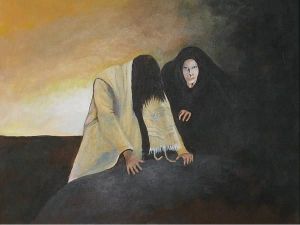 Mengapa Yesus harus tinggal di padang gurun selama 40 hari? Jawabannya tidak sulit. Dia mengulangi apa yang dilakukan orang Israel ketika mereka dibebaskan dari perbudakan Mesir. Orang Israel tinggal selama 40 tahun di padang gurun sebelum mereka memasuki tanah perjanjian. Namun, ada satu hal lagi! Markus memberi kita detail kecil namun penting: di padang gurun, Yesus tinggal bersama binatang-binatang. Kenapa demikian? Jika ada satu orang yang hidup bersama para binatang di dalam kitab suci, dia tidak lain adalah Adam. Yesus bukan hanya Israel baru yang menanggung kondisi keras padang gurun, tetapi juga Adam baru yang menghadapi serangan setan.
 Leprosy in the time of Jesus is not only physically and mentally deadly, but also spiritually incapacitating. Leprosy or currently known as the Hansen’s disease is horrifying sickness because it does not kill the person slowly, but it gradually deforms and incapacitates the person. The bacteria cause terrible damage in peripheral nervous to the point that the person is no longer feeling the sensation, especially pain. Without this sensation, the person fails to recognize and avoid bodily injuries. Losing limbs is shared among the victims with advanced stages of leprosy.
 Penyakit kusta pada zaman Yesus tidak hanya mematikan secara fisik dan mental, tetapi juga melumpuhkan secara rohani. Kusta atau yang sekarang dikenal dengan penyakit Hansen adalah penyakit yang mengerikan karena tidak hanya membunuh orangnya secara perlahan, tetapi lambat laun akan merusak wujud dan melumpuhkan orang tersebut. Bakteri kusta menyebabkan kerusakan yang parah pada jaringan saraf sehingga orang tersebut tidak lagi dapat merasakan sensasi, terutama rasa sakit. Tanpa sensasi ini, orang tersebut gagal mengenali dan menghindari cedera pada tubuh. Kehilangan anggota tubuh seperti jari adalah hal yang biasa terjadi pada penderita kusta stadium lanjut.
 Jesus cannot be separated from His healing ministries. Some of the healings are remarkable, like the healing of a woman with the hemorrhage and Jarius’ daughter [Mark 5:321-43]. They are astonishing because these are practically impossible cases. The woman has suffered for twelve years without sign of hope, and Jarius’ daughter is as good as dead. Yet, Jesus does heal not only those with grave illness but also those with curable sickness.
 Yesus tidak dapat dipisahkan dari pelayanan penyembuhan-Nya. Beberapa kisah kesembuhan merupakan kejadian yang luar biasa seperti kesembuhan seorang wanita dengan pendarahan dan juga anak perempuan Jarius [Markus 5: 321-43]. Penyembuhan ini adalah mujizat karena kasus-kasus yang dihadapi Yesus adalah hal-hal mustahil disembuhkan pada zaman-Nya. Sang wanita telah menderita pendarahan selama dua belas tahun tanpa harapan, dan putri Jarius sebenarnya sudah meninggal. Di sisi lain, Yesus tidak hanya menyembuhkan orang yang sakit parah, tapi juga mereka yang sakitnya tergolong tidak membahayakan.
 In Medio Ecclesiae