The Joy of Two Women

4th Sunday of Advent [C]
December 19, 2021
Luke 1:39-45

Mary was going to the place of Elizabeth in haste. But, why did she have to go in haste? Mary was full of excitement and joy Mary because she knew that her beloved relative had received the miracle from God. Elizabeth who called barren, was pregnant with a child. Mary was full of joy as she would like to witness this mighty deed of God.

STRUB, Jakob o Hans_La Visitacion, c.1505_ 382 (1929.21)/ Stitched Panorama

The excitement and joy were shared by Elizabeth when Mary arrived and greeted her. By the Holy Spirit’s guidance, Elizabeth recognized who Mary is. She is not just another relative, but Mary is the blessed among women because she was with God-made-man. Thus, Elizabeth dared to call her the mother of her Lord. Mary’s encounter with Elizabeth is also the first encounter between two great protagonists in the Gospel: Jesus and John the Baptist, between the Messiah and the one who prepares His way. Elizabeth immediately felt that the baby in her womb was leaping for joy upon hearing Mary’s greetings. Joy and excitement are not being shared by Mary and Elizabeth, but by John.

However, behind excitement and joy, there were great dangers and uncertainties. Mary was pregnant without a man. According to Torah [Deu 22:20], she could have been stoned and died. If she survived the death, Mary would bear the stigma and shame for her entire life. Elizabeth’s situation was not much better. As a woman who was already advanced in age, pregnancy and the process of deliverance could be extremely risky and even leading to death. Things just do not look good for these two mothers.

Yet, despite these terrible possibilities, both Mary and Elizabeth chose to rejoice and be full of excitement. What are the reasons? Firstly, both Mary and Elizabeth believed in the word and plan of God. Elizabeth herself said, “Blessed are you who believed that was spoken to you by the Lord would be fulfilled.” Both Mary and Elizabeth both understood that God’s plan for them was not always readily comprehensible and often involved great sufferings. Mary was facing the real possibility of stoning, and Elizabeth may not survive the childbearing, but both believed that God’s will is always the best plan for them. Joy springs after Mary and Elizabeth die to their own selves and let God’s will live in their wombs. Joy is always a pure gift, and these women are amazingly strong to open their hearts to God’s works.

Secondly, Mary and Elizabeth do not work alone. Another reason Mary visited Elizabeth is to accompany and assist her in the days of pregnancy and birth. Mary as a much younger and stronger relative opted to give her best supports in Elizabeth’s life-giving moment. We may argue that Elizabeth safely gave birth to John because Mary was giving her helping hands. At the same time, Elizabeth as an elder relative of Mary, strengthened and comforted Mary in this troubled time. Both survived and flourished because of God’s grace and also their love and care for one another.

Mary and Elizabeth are strong women because they rely on each other. Mary and Elizabeth are the happiest women because they give themselves up to God.

Valentinus Bayuhadi Ruseno, OP

Rejoice Always

Third Sunday of Advent [C]
December 12, 2021
Luke 3:10-18
Phil 4:4-8

The third Sunday of Advent is well known as Gaudete Sunday, or the rejoicing Sunday. The lovely Sunday takes its root from St. Paul’s letter to the Philippians, our second reading for the mass. St. Paul reminds the Christians in Philippi to rejoice always [Phil 4:4]. Thus, Gaudete Sunday invites us to possess that lasting joy, and must not be gloomy while we are preparing ourselves for the coming of our Lord, Jesus Christ.

photocredit: kelly sikk

if we try to closely reflect St. Paul’s words, we will discover something utterly amazing. St. Paul is not simply advising us to rejoice from time to time, but he commands us to rejoice all the time! How is it possible? Sadness and sorrow are inevitable parts of our lives. We are sad when we experience failures, we mourn when we lose someone important in our lives, and we feel the pain when we are hurt. It seems that St. Paul was overly optimistic about life. Yet, Paul simply teaches the truth. On a deeper level, sorrow and joy are not contradictory. For Paul, we can have a profound joy despite our sadness and sufferings.

If we try to examine Paul’s life, we will have a better understanding of what he means. Paul used to be the archenemy and persecutor of the Church, but after he encountered Jesus, he repented and became a zealous apostle of Christ. Was his life getting better after following Jesus? Not at all! Paul himself shared many hardships he had to endure for the sake of Christ and His body. Often, he got stoned, bitten, and imprisoned. When he was traveling, he endured the scourging sun and the freezing nights. Sometimes, he faced betrayals and false brothers. Yet, most of all, he had to take care of his flocks with all their problems and stubbornness.

His final ordeal was when he was under house arrest in Rome. He was waiting for his trial before Caesar, and the future was bleak as Nero the mad man was the emperor. He was in the chain and a Roman soldier constantly watched over him. Yet, despite this, he wrote a letter to the Philippians and asked them to rejoice always. How is it even possible?

The secrets are within the same letter. After commanding the Philippians to rejoice always, St. Paul asked for two things: do not worry about anything and to pray in thanksgiving always. Firstly, Paul was indeed in terrible situations, but he was not worried because he entrusted his life to God. He had faith that God would take care of him well. Secondly, Paul offered everything to the Lord in his prayer. More remarkably, he gave thanks always in his prayers. Paul even was able to appreciate ‘bad things’ in his life as an opportunity to praise the Lord. This is the secret of joy according to St. Paul. Do not worry, pray and be grateful!

What is more fascinating is that the word thanksgiving used by Paul in Greek is ‘eucharistia’. This reminds us of all that at the core of our worship is thanksgiving. Everytime we worship the Lord in the mass, we throw away our anxiety, offer our lives, and give thanks for everything we have received. Thus, joy is the inevitable result of our worship.

Valentinus Bayuhadi Ruseno, OP

Kenapa Yohanes Membaptis

Minggu Adven Kedua [C]
5 Desember 2021
Lukas 3:1-6

Pada Minggu Adven kedua, kita bertemu dengan sosok Yohanes Pembaptis. Dia adalah salah satu tokoh yang paling menonjol dan berpengaruh dalam Injil. Keempat penginjil menyebut dia dan sering menggambarkan dia sebagai orang yang tak kenal takut yang bahkan berani menantang orang yang paling berkuasa di Galilea, Herodes Antipas. Dari padang gurun Yudea, ia datang dan memposisikan diri pada tempat strategis di lembah Yordan. Tempat adalah jalan utama yang menghubungkan Yerusalem dengan seluruh Israel, dan Yohanes memanfaatkan momen itu untuk menyatakan kedatangan Mesias. Kita bisa membayangkan suaranya yang kuat menggelegar di seluruh lembah dan mengguncang setiap hati yang mendengarkan.

Mesias akan datang, dan jalan-Nya harus dipersiapkan. Namun, kita tidak mempersiapkan kedatangan-Nya dengan karpet merah, karangan bunga, atau parade musik besar. Dia tidak akan datang dan menyelami para pejabat dan disambut dengan perjamuan pesta. Dia tidak membutuhkan persiapan eksternal tetapi menuntut transformasi internal. Maka, Yohanes berteriak dengan suara nyaring, “Bertobatlah!”

Satu pertanyaan mungkin membuat kita bertanya-tanya: mengapa Yohanes membaptis orang? Membaptis berarti membasuh diri dengan air, dan dalam tradisi Yahudi, ini adalah sebuah ritual Yahudi yang umum untuk membersihkan diri dari kenajisan. Para peziarah Yahudi akan membasuh diri sebelum mereka memasuki Bait Allah Yerusalem, dan ada banyak kolam kecil untuk tujuan ini yang disebut ‘mikvah’ di kota Yerusalem. Satu tradisi mengatakan bahwa Yohanes berasal dari sekte Yahudi bernama Essenes. Kelompok ini terkenal karena kepatuhan mereka yang ketat terhadap Hukum Musa. Bahkan, mereka memiliki standar ekstrim dalam hal menjaga diri dari kenajisan, dan mereka akan melakukan ritual pembasuhan bahkan beberapa kali sehari. Jika tradisi ini benar, Yohanes tahu betul betapa pentingnya pembaptisan dengan air.

Namun, Yohanes tidak hanya mengulangi ritual pentahiran Yahudi yang lama. Dia merevolusi hal ini. Yohanes membaptis orang dengan air sebagai tanda eksternal dari pertobatan internal. Bagi Yohanes, tidak ada gunanya jika orang pergi ke Bait Allah dan melakukan berbagai ritual, tetapi hati mereka jauh dari Tuhan.

Yohanes Pembaptis mengingatkan inti Adven: persiapan rohani untuk kedatangan Yesus. Kita menyadari bahwa Adven adalah masa persiapan untuk kedatangan Kristus, tetapi seringkali kita tidak tahu bagaimana mempersiapkannya. Terkadang, kita menghabiskan waktu dan uang kita untuk membeli hadiah, menyiapkan dekorasi Natal, dan merencanakan liburan. Terkadang, kita sibuk berlatih untuk Misa Natal, atau mempersiapkan diri untuk pesta dan perayaan. Namun, jika kita lupa mempersiapkan diri secara rohani, kita bisa kehilangan segalanya.

Warna liturgi Adven adalah ungu, dan ungu yang sama yang kita gunakan pada masa Prapaskah. Jika ungu di Prapaskah berarti warna pertobatan, ungu Adven memiliki karakter yang sama. Ketika Yohanes Pembaptis mengingatkan orang-orang untuk mempersiapkan jalan bagi Mesias dengan perubahan hati, Gereja juga memanggil kita untuk mempersiapkan kedatangan Tuhan kita dengan pertobatan dan latihan rohani.

Valentinus Bayuhadi Ruseno, OP

[JANGAN LUPA SUBSCRIBE DAN SHARE YA UNTUK MENDUKUNG KARYA RM. BAYU, OP]

The Reason behind John’s Baptism

Second Sunday of Advent [C]
December 5, 2021
Luke 3:1-6

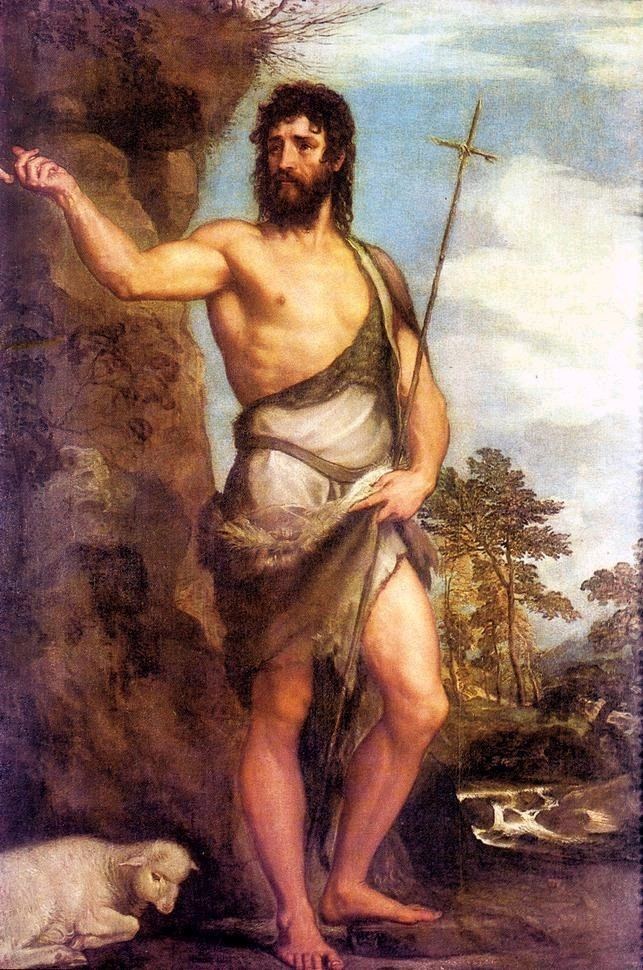
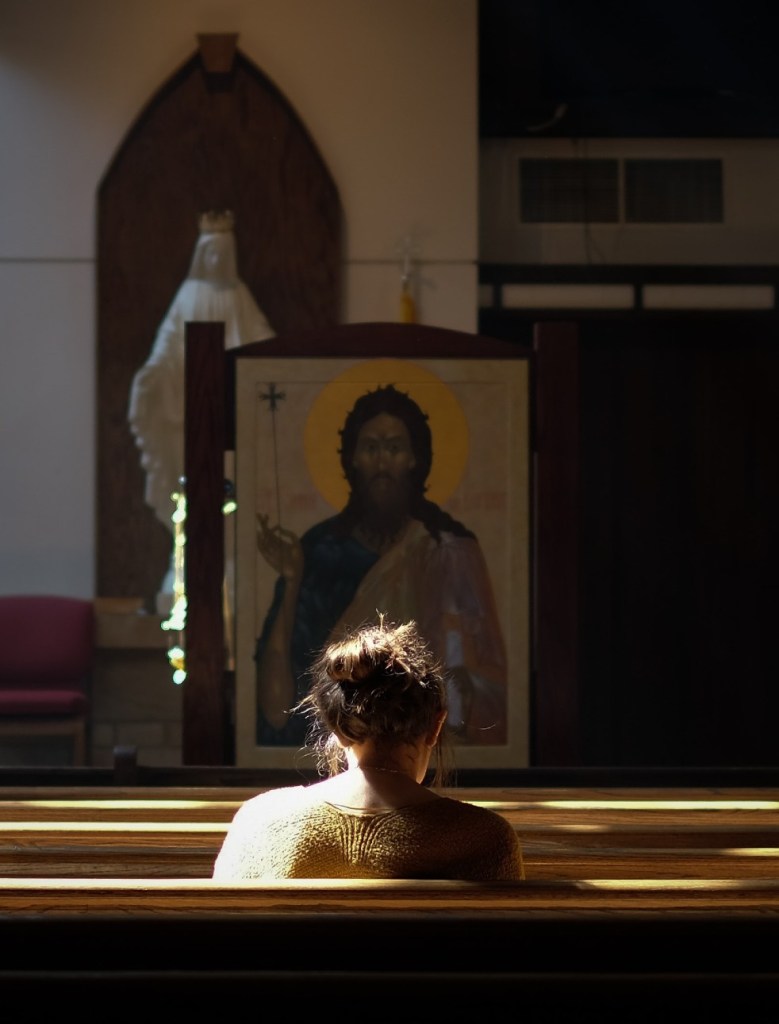
On the second Sunday of Advent, we encounter John the Baptist. He is one of the most prominent and impactful figures in the Gospel. The four evangelists mentioned him and often described him as a fearless man who even dared to challenge the most powerful man in Galilee, Herod Antipas. From the desert, he went and positioned himself in a strategic position in the Jordan valley. That was the major passageway that connected Jerusalem with the rest of Israel, and John seized the moment to preach the coming of Messiah. We could imagine his strong voice thundered throughout the valley and shook every heart who listened.

photocredit: John Applegate

The Messiah is coming, and His way must be prepared. Yet, one does not prepare His arrival with a red carpet, a flower garland, or a grand musical parade. He will not come and check the honor guards. He does not need external preparation but demands internal transformation. Thus, John shouted with a loud voice, “Repent!”

One question may keep us wondering: why did John baptize people? To baptize means to wash with water and washing oneself with water was a common Jewish ritual to cleanse oneself from ritual uncleanliness. Jewish pilgrims would wash themselves before they entered the Temple of Jerusalem, and there were many small pools for this purpose called ‘mikvah’. One tradition recognized that John was coming from a Jewish sect named Essenes. This group was famous for its strict adherence to the Law of Moses. In fact, they had an extreme measure when it came to ritual purity, and they would take a ritual bath several times a day. If this tradition is true, John knew too well how important baptism was.

However, John did not simply repeat the old Jewish purification ritual. In fact, He revolutionized it. John baptized people with water as an external sign of internal repentance. For John, it would be useless if people go to the Temple and perform various rituals, but their hearts are far from the Lord.

John the Baptist brings to mind the core of Advent: the spiritual preparation for the coming of Jesus. We recognize that Advent is the season of preparation for Christ’s coming, but often, we do not know how exactly to prepare. Sometimes, we are spending our time and money to buy gifts, to prepare Christmas decorations, and to plan for holidays. Sometimes, we are busy practicing for Christmas services, or ready ourselves for parties and celebrations. Yet, if we forget to prepare spiritually, we may lose everything.

The liturgical color of Advent is purple, and the very same purple that we use in the Lenten season. If the purple in Lent means the color of repentance, the purple of Advent has the same character. As John the Baptist reminded the people of his time to prepare the way for the Messiah by change of hearts, the Church also calls us to prepare the coming of our Lord with repentance and spiritual exercises.

Valentinus Bayuhadi Ruseno, OP