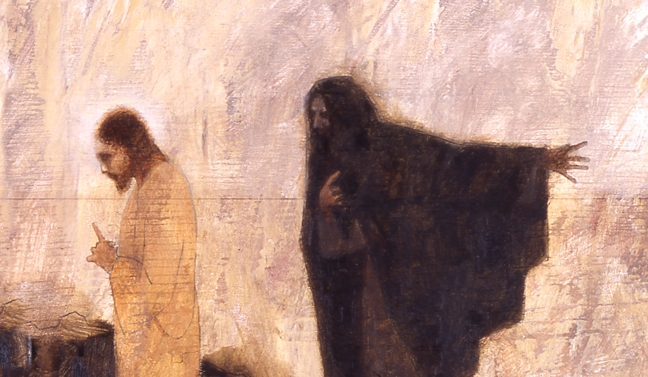
The Story of the Elder Son

4th Sunday of Lent [C]
March 27, 2022
Luke 15:1-3, 11-32

The parable of the prodigal is one of the most beautiful and heart-warming stories in the entire Bible. It is, in fact, the longest among Jesus’ parables and loaded with exciting details. While a great deal of the parable is given to the younger son, the story ends with the elder son. Many of us identify with the younger son. We used to live in the life of sin, far from God, and even become the enemies of God. Yet, we felt empty, and our lives go in the wrong direction. Then, going back to our senses, we repent and go back to the Lord. However, not a few identify themselves with the elder son.

Personally, I tend to be sympathetic to the elder son, perhaps because I am also the eldest in the family. I feel that the elder son’s anger is nothing but natural. I will be angry if my younger brothers ask for his inheritance and leave the family behind for a life of dissipation. I will be even more enraged when he suddenly comes back, and my parents will accept him as if nothing happens. At least, he must be disciplined and make reparations for what he has done. It is just and right!

Yet, after I go deeper into the story, I realize some critical details. The elder son is angry, and, in his wrath, he refuses to enter the home. Without realizing it, the elder son does what, the younger son did: leaving his house. Then, He says, “this son of yours!” He could have said, “Father, why do you treat my brother like this!” Without realizing it, the elder son does what the younger son did: distancing and disassociating himself from his father. Another interesting fact is that the elder son says, “I have been working like a slave for you.” Without realizing it, the elder son becomes what, the younger son has been: a slave.

Son though he is, he never considers himself as one, but rather a mere slave. We can see how the elder son only views his brother as another runaway slave and his father as an enslaver. A disobedient slave must be punished severely, and the loyal servant must be rewarded. Therefore, he is distraught. His paradigm is violated. He fails to see from his father’s perspective, and thus, he suffers.

From this story, we see a deeper meaning of metanoia or repentance. Metanoia [change of mind] does not simply mean turning from a life of sin to a life with God. It also means having the mind and heart of God. We are invited to think and act, no longer as slaves fearing punishment, but as mature children of God. Unfortunately, some of us are like the lost firstborn, who see ourselves as nothing more than servants, and we build our relationship with God based on fear, not love. We go to church because otherwise, we will go to hell. We serve because otherwise, we will be cursed. And we begin to see our neighbors as servants who have to follow the rules blindly; otherwise, they will be severely punished. Metanoia means no longer living in fear but as children of God living in love and freedom.

Valentinus Bayuhadi Ruseno, OP
The Holy Name of God

3rd Sunday of Lent [C]

March 19, 2022

Exodus 3:1-15

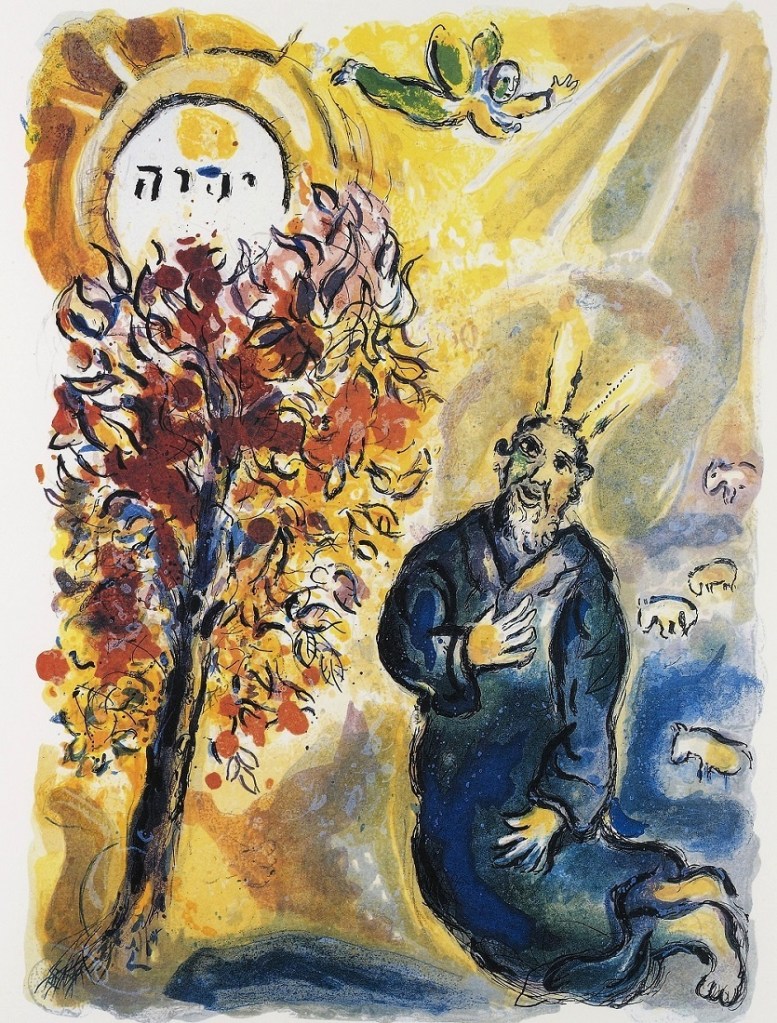
One historic moment in the history of salvation is the revelation of God’s personal name. Moses was just a murderer and fugitive who could have spent his entire life as a shepherd in Midian. Yet, God has another plan for him. He manifested Himself as the burning fire, yet not consuming its surrounding bush. A marvellous sight indeed! Moses was curious, and God called him and introduced Himself as the God of Abraham, Isaac, and Jacob. Moses recognized these names as his revered forefathers. Perhaps this was the first time Moses remembered the God of his forefathers after years.

Then, God called Moses for a mission. He was to lead His people free from slavery and bring them to the Promised Land. God had listened to the sufferings of His people and remembered the promise He made to Abraham. Before accepting God’s mission, Moses asked the name of God, and the reason was that the elders and the people of Israel seemed not to know His name. In the past, Jacob asked the name of God, but He refused. Yet, this time, God decided to reveal His sacred name. But why?

One of the reasons is that there were many gods in Eygpt, and to distinguish the true and one God from the false gods, His personal and unique name becomes necessary to be known. Another reason is that the people of Israel had lived in Egypt for so long, and they lived like the Egyptians, including worshipping the gods of the Egyptians. Thus, God had to reveal His name to make a clear break from the old habits and false idols. This was the only name worthy of all honour, glory and worship. So, Who is His name?

The first revelation is ‘I AM WHO AM’ or ‘I AM’ [Exo 3:14]. A strange name! Yet, this name reveals the deepest identity of God, who He is in Himself. The word ‘To BE’ here is the same word used in ‘Let there BE light’. This name of God unveils that God is the Eternal Existence Himself and the source of all other existences, both in the heavens and on the earth.

We own our existence to Him, and we cannot exist without Him. God is involved in our lives, not in incidental manners, like someone who helps us do our jobs or aids us in our daily needs. He is with us at the most fundamental level. He is ever active in supporting our very existence. Without Him, we are going back to nothingness. Thus, we are literally nothing without Him. The act of bringing us into reality and sustaining us is not other than the act of love. No wonder John, in his letter, declared that God is love.

Every time we call the name of God, we remember that we exist, live and breathe because of Him. Every moment of our lives is the concrete evidence of His love, and every moment of our lives is the perfect opportunity to offer thanksgiving.

Valentinus Bayuhadi Ruseno, OP

From Transfiguration to Calvary

Second Sunday of Lent [C]
March 12, 2022
Luke 9:28b-36

Every second Sunday of Lent, the Church chooses the event of Transfiguration for our Gospel reading. During this moment, Jesus, together with three trusted disciples, went up to the mountain, and there, he was transfigured or changed appearance. He was radiating a divine glory, and His face turned to be a bright light. The two most outstanding persons in the Old Testament, Moses and Elijah, appeared and accompanied Jesus. He was manifesting His divine nature to the three disciples, and it was an overwhelmingly joyful moment. Simon did not want the experience to pass and offered to build tents there. The question is that why does the Church choose this reading for this season of Lent?

The answer lies on the topic that Moses, Elijah and Jesus were discussing: Jesus’ exodus. When we hear the word exodus, the first thing that comes to mind is that the Israelites under Moses escaped the slavery of Egypt. The Israelites passed through the Reed Sea, the desert from Egypt and eventually entered the Promised Land. Their final destination was the city of Jerusalem.
Then, why did Jesus speak about His exodus?
The reason is that Jesus is the new Israel, and as the old Israel passed through exodus, Jesus had to undergo His exodus. However, unlike the old Israel that started their exodus in Egypt, Jesus began His exodus in Jerusalem. Unlike the old Israel that was not faithful to God in the desert and worshipped idols, Jesus was obedient to His Father through suffering and death. Unlike the old Israel who entered the promised Land with many lost battles, Jesus rose from the death and won definitively against Satan and His kingdom. Unlike the old Israel who went up to the earthly city of Jerusalem, Jesus gloriously ascended to the heavenly Jerusalem.
After the event of Transfiguration, Jesus no longer stayed in Galilee but steadily moved toward the city of Jerusalem. This is why we have this reading for the season of Lent. As Jesus journeyed to His exodus in Jerusalem, we are also walking with Jesus in this season of Lent toward the Paschal Triduum: from the Mount of Transfiguration to the mount of Calvary.
The story of Transfiguration in the context of Lent gives us a precious lesson. Like Peter, we like to linger in the glorious moments of our lives. Yet, Jesus teaches that our real glory has to pass exodus. Our Egypt, our starting point, is none other than our old and sinful selves. Any moment of glory without dying to ourselves is fake, fickle and even addictive. It is undoubtedly not easy because we are craving for the feeling of pleasure, and when we get used to it, the harder it is to detach ourselves. Through the disciple of Lent, fasting, prayer and almsgiving, we are learning how to die to our desire to enjoy instant gratifications. When we can adequately order our worldly desires, the more our hearts desire for God, and the moment we are one with God, we find our true joy.

Valentinus Bayuhadi Ruseno, OP

Yesus, sang Setan, dan Sabda Allah

Minggu Prapaskah ke-1 [C]
6 Maret 2022
Lukas 4:1-13

Minggu Prapaskah ke-1 [C]
6 Maret 2022
Lukas 4:1-13

Pada Minggu pertama Prapaskah, Gereja selalu memberikan bacaan Injil tentang Yesus di padang gurun selama 40 hari. Ada beberapa alasan untuk pilihan ini. Pertama, karena Yesus tinggal selama empat puluh hari di padang gurun, kita juga diundang untuk memasuki padang gurun Prapaskah selama 40 hari. Kedua, karena Yesus berpuasa dan berdoa di padang gurun, kita juga dipanggil untuk berpuasa dan berdoa selama masa Prapaskah ini. Ketiga, Yesus mengajar kita bagaimana melawan iblis dan godaannya. Karena saat ini kita berada di Tahun Liturgi C, kita dapat belajar dari kisah Yesus di padang gurun dari sudut pandang Lukas. Salah satu yang menonjol dalam perdebatan antara Yesus dan sang iblis adalah bagaimana firman Tuhan digunakan.

Pada Minggu pertama Prapaskah, Gereja selalu memberikan bacaan Injil tentang Yesus di padang gurun selama 40 hari. Ada beberapa alasan untuk pilihan ini. Pertama, karena Yesus tinggal selama empat puluh hari di padang gurun, kita juga diundang untuk memasuki padang gurun Prapaskah selama 40 hari. Kedua, karena Yesus berpuasa dan berdoa di padang gurun, kita juga dipanggil untuk berpuasa dan berdoa selama masa Prapaskah ini. Ketiga, Yesus mengajar kita bagaimana melawan iblis dan godaannya. Karena saat ini kita berada di Tahun Liturgi C, kita dapat belajar dari kisah Yesus di padang gurun dari sudut pandang Lukas. Salah satu yang menonjol dalam perdebatan antara Yesus dan sang iblis adalah bagaimana firman Tuhan digunakan.

Yesus menghadapi tiga godaan Iblis. Ini adalah tiga area di mana pribadi manusia secara rohani lemah. Yang pertama adalah godaan kedagingan, dan hal ini menyerang keinginan kita untuk kenikmatan badani seperti makanan dan hubungan suami-istri. Yang kedua adalah godaan keserakahan, dan hal ini mengeksploitasi keinginan kita untuk memiliki hal-hal yang kita lihat. Terakhir tapi paling mematikan, adalah godaan keangkuhan. Godaan ini membingungkan cinta-diri yang sejati dengan perilaku narsistik. Godaan ini adalah yang terburuk karena keangkuhan akhirnya menyedot kita ke dalam gagasan palsu bahwa kita bisa menjadi tuhan-tuhan kecil.

Ini adalah godaan yang Iblis lemparkan kepada Yesus. Godaan kedagingan diluncurkan ketika Yesus lapar dan diminta untuk mengubah batu dan roti. Godaan keserakahan dimulai ketika Yesus dibawa untuk melihat keajaiban dunia dan ditawarkan untuk memiliki semuanya. Terakhir, godaan keangkuhan dimulai ketika Yesus diundang untuk memamerkan kuasa-Nya karena Dia memiliki otoritas untuk memerintahkan para malaikat.

Tentu saja, iblis gagal total. Namun, yang lebih menarik adalah cara Yesus melawan iblis. Setiap kali iblis melancarkan serangan, Yesus dengan bijak membalasnya dengan kutipan dari Perjanjian Lama. Sungguh, Firman Tuhan adalah senjata ampuh melawan serangan dan godaan iblis. Jadi, penting bagi kita untuk mengenal Alkitab kita dan mempelajarinya dengan baik.

Namun, itu bukan akhir dari cerita karena iblis pun menggunakan ayat Alkitab. Dia mengutip bagian dari Mazmur 91, “Dia akan memerintahkan malaikat-malaikat-Nya tentang kamu, untuk menjaga kamu… [Mzm 91:11]”. Apa yang lebih luar biasa adalah bahwa Mazmur 91 secara tradisional digunakan untuk pengusiran setan. Iblis menggunakan kata-kata yang digunakan untuk mengusirnya! Bagaimana ini mungkin? Pasalnya, iblis menggunakan ayat alkitab di luar konteks dan hanya sesuai dengan tujuannya, yaitu menjebak Yesus.

Dari kisah ini, kita mendapat pelajaran berharga. Kata-kata Kitab Suci, bila digunakan dengan cara yang tidak tepat dan hanya sesuai dengan tujuan kita, menjadi alat Iblis. Kita dipanggil untuk meneladani Yesus dalam menjalankan firman Tuhan. Hanya jika kita benar-benar membaca Alkitab dalam konteks yang tepat dan dalam relasi kasih dengan Tuhan, ini benar-benar menjadi Firman Tuhan yang penuh kuasa.

Valentinus Bayuhadi Ruseno, OP

Jesus, the devil, and the Word of God

1st Sunday of Lent [C]
March 6, 2022
Luke 4:1-13

On the first Sunday of Lent, the Church always gives the Gospel reading on Jesus in the desert for 40 days. There are several reasons for this choice. Firstly, as Jesus stayed for forty days in the desert, we are also invited to enter the desert of Lenten season for 40 days. Secondly, as Jesus fasted and prayed in the desert, we are also called to fast and pray during this season of Lent. Thirdly, Jesus teaches us how to fight against the devil and his temptation. Since we are currently in the Liturgical Year C, we can learn from the story of Jesus in the wilderness from Luke’s perspective. One is prominent in the debate between Jesus and the devil is how the word of God is used.

Jesus is facing three devil’s temptations. The traditions call the three Concupiscences. These are three areas where human persons are spiritually weak. The first is the lust of the flesh, and it attacks our desire for bodily pleasures like food and sexual relationship. The second is the lust of eyes, and it exploits our desire to possess the things we see. Lastly but most deadly is pride. This confuses genuine self-love with narcissistic behaviors. This is the worst because pride eventually sucks us into the false idea that we can become a god without God.

These are the temptations that the devil throws into Jesus. The lust of the flesh is launched when Jesus is hungry and asked to turn stone and bread. The lust of the eye is commenced when Jesus is brought to see the worldly wonders and offers to have them all. Lastly, the temptation of pride is initiated when Jesus is invited to show off His power as He has the authority to command the angels.

Surely enough, the devil fails miserably. Yet, what is more, interesting is the way Jesus resists the devil. Every time the devil launches an attack, Jesus wisely counters it with the quotations from the Old Testaments. Indeed, the Word of God is a powerful weapon against the assault and temptation of the devil. Thus, we need to know our Bible and learn them by heart!

Yet, that is not the end of the story because even the devil uses the Bible verse. He quotes parts of Psalm 91, “He will command his angels concerning you, to guard you… [Psa 91:11]”. What is more remarkable is that Psalm 91 is traditionally used for exorcism. The devil is using the very words that used to expel him! How is this possible? The reason is that the devil uses the bible verse out of context and only to suit his purpose: to trap Jesus.

From this story, we learn a valuable lesson. The words of Scriptures, when misused way and only to fit our purpose, are become the instruments of the devil. We are called to imitate Jesus in living the word of God. Only if we indeed read the Bible in its proper context and a loving relationship with God, they truly become the powerful Word of God.

Valentinus Bayuhadi Ruseno, OP