Mercy Conquers All

Second Sunday of Easter [C]
April 24, 2022
John 20:19-31

Pope John Paul II has declared the Second Easter Sunday as the Divine Mercy Sunday. On April 30, 2000, the declaration took place when John Paul II canonized Sr. Faustina Kowalski. Since then, the devotion to the Divine Mercy has grown exponentially worldwide. Nowadays, many of us do not only pray the angelus prayer, but every three in the afternoon, the hour of Jesus’ death, recite the prayer of divine mercy. More and more people make divine mercy chaplet as daily devotion aside from the rosary. Many communities gather together and organize novena to the Divine Mercy. But, do you know what mercy is? And, why does it has to be the 2nd Sunday of Easter?

The Oxford dictionary gives us an exciting definition of mercy: compassion or forgiveness shown toward someone whom it is within one’s power to punish or harm. A story may illustrate this definition of mercy. During one of the Napoleonic wars, one of the young French soldiers deserted the army and fled the battlefield. Unfortunately, he got captured. Knowing that his son would be executed, the mother rushed to see Napoleon. She said to the general, “have mercy on my son!” Napoleon immediately replied, “your son’s crime is so heinous. Justice demands his death, and he does not deserve mercy.” The mother then answered, “It is not mercy if he deserves it!”.

Let’s go back to the Biblical Hebrew language. Mercy is related to the word ‘rahamim,’ which is rooted in the word ‘Rahim’ meaning ‘womb.’ Thus, ‘rahamim’ implies a mother’s feelings and attitude toward her children. We know that we have hurt our mothers too often if we try to reflect on our lives and our relationship with our mothers. Since we live in their wombs until we grow to adulthood, we give them countless headaches and heartaches. Yet, despite the terrible things we have done, our good mothers keep accepting and loving us as their children.

Then, why the second Sunday of Easter? This Sunday, the Church always selects the story of resurrection from John, the evangelist. There are some exciting details. The disciples locked themselves in the room because of fear of the Jews. Yet, more than fearing the Jewish authorities, they dreaded Jesus, who returned and took His vengeance. Yet, Jesus came not to bring punishment but forgiveness. Thus, the first thing He said was ‘Peace’! They have peace because Jesus, who has the power to inflict punishment, decides to have mercy on them.

Yet, Jesus does not stop there. He also breathed the Holy Spirit and gave them the divine authority to forgive sins. To teach the true meaning of mercy and forgiveness, Jesus has to suffer the cross, die, and get buried. Jesus teaches them that the worst things may fall upon Jesus, but this hatred, wrath, and vengeance will not have the last say.

We deserve death and hell with so many sins we have committed, but the resurrection points to us that however terrible we treat Jesus, mercy will always triumph. His forgiveness is always ready to embrace us. We need to do one thing: beg for that mercy.

Valentinus Bayuhadi Ruseno,OP
Jesus Resurrected?

Easter Sunday [C]
John 20:1-9
April 17, 2022

Jesus has risen! Alleluia! This is the foundation of our faith and our salvation. We know for sure that what Jesus said and what He did for us are true. Death is conquered, and the darkness’ power is decisively defeated.

photocredit: Bruno van der Kraan

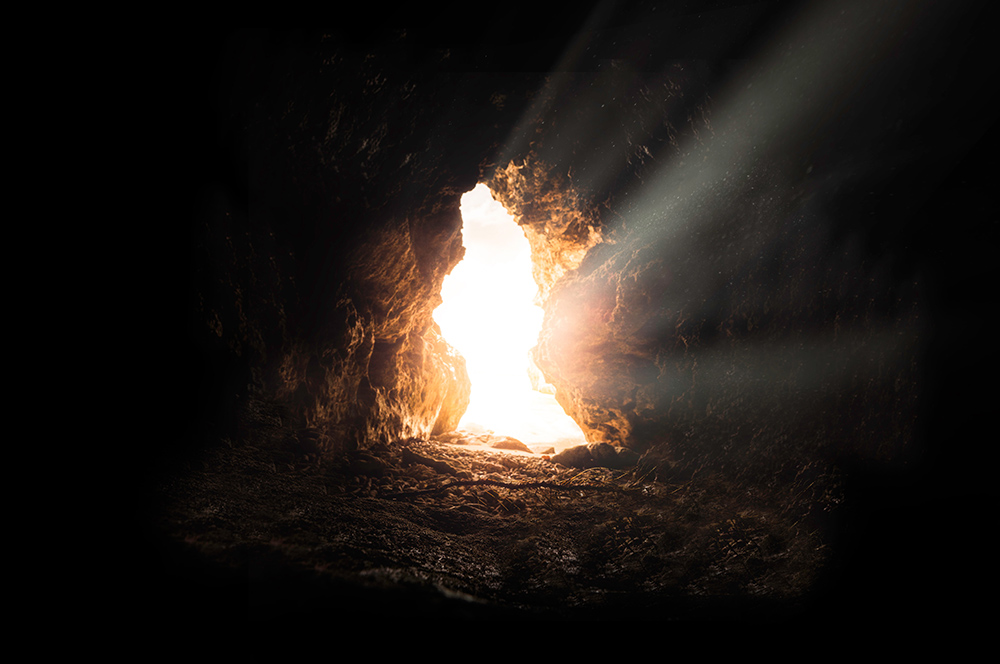
But, what is the evidence of Jesus’ resurrection? The answer is the empty tomb.
Yet, how do we know for sure that Jesus has indeed risen from the dead? Is an empty tomb enough evidence for His resurrection? Is there a possibility that Jesus’ body was stolen, or Jesus was still alive and was able to escape? Let’s check whether these arguments can hold water.
Firstly, His disciples came at night and stole their master’s body. Then they spread the rumor that Jesus has risen from the dead. At first, this sounds possible, but after closer examinations, we realize that Roman soldiers guarded the tomb. A bunch of fishermen was not just a match for the professional army. At the same time, the disciples were in complete disarray after their master was captured and crucified.

Secondly, the one crucified was not Jesus, which is a case of mistaken identity. This argument is not attainable. Judah played an essential role in ensuring that the one arrested was Jesus, not someone else. Jesus’ trial was done in public, and thus, it was easy to recognize whether the person was Jesus. Plus, the mother and other disciples of Jesus were also present during the crucifixion, and they recognized the one on the cross was Jesus.

Thirdly, Jesus was not dead, and He was able to find His way out of the tomb. This argument is implausible. Jesus was tortured severely and crucified. A soldier pierced His side to verify His death, which alone could deal a mortal blow. Just in case Jesus survived all these ordeals, the tomb would seal Jesus inside, and without proper ventilation and immediate treatment, Jesus would suffocate and die.

Aside from these counterarguments, had Jesus’ resurrection been a lie, it would eventually die down. Many Jewish people believed in the resurrection of the dead, but it will occur at the end of time, not during their lifetime. The Greeks and the Romans thought the idea of resurrection silly. Yet, Jesus’ disciples would gladly die for this truth. Even after horrific forms of torture, they would not give up their belief in the resurrection because it is simply the truth.

Another interesting detail is that the first witnesses of the empty tomb are women. In ancient Jewish society, women’s testimony was not honored. The evangelists could have altered the women’s witnesses with more credible male counterparts. Yet, they did not do that because they could not change the truth that the women were indeed the witnesses of the empty tomb.

There is no other fitting explanation than the resurrection. Jesus has risen, and our faith is not in vain. We have been redeemed, and we know that is true. We rejoice and celebrate for this Jesus’ victory over death.

Valentinus Bayuhadi Ruseno, OP

Jesus’ Prayers on the Cross

Palm Sunday of The Lord’s Passion
April 10, 2022
Luke 22:14 – 23:56

Every Palm Sunday, we listen to the Passion Narrative of Jesus Christ. Since we are in the liturgical year C, we hear from the Gospel of Luke, and it is notedly the longest among the four Gospel. If we try to compare the passion narratives of the four Gospels, we will discover basic similarities, but also some obvious nuances. What makes Luke’s account unique?

photocredit: Grant Witthy

Surely, there are several unique stories in Luke, but one outstanding character of Jesus is that Luke consistently describes Jesus as someone who loves to pray. In short, Jesus always prays, especially in His important moments of His life. He prays when John is baptizing Him. He is praying while in the desert for forty days. He prays at the mountain when He is transfigured. He prays in the Garden of Gethsemane. Even, Jesus prays when he is the cross.

Luke even gives us a window to what Jesus expresses to His Father. Jesus’ first prayer in the cross is ‘Father, forgive them, for they do not know what they are doing [Luk 23:34].’ We remember that His close friend denies Him, another betrays Him, and others are running away from Him. He is accused falsely and tortured brutally. He receives treatment worse than animals. He is even going to die like the worst criminals, in the most agonizing and humiliating way possible. Yet, despite all these, He prays for all of them, and gives His forgiveness. Jesus does not only teach ‘to love one’s enemies’ or ‘to pray for those who persecute you’. Jesus truly walks the talk.
Jesus does not stop there. When one of the thieves is asking for Jesus’ forgiveness. Jesus does not only forgive, but He also promises Him paradise. Despite the terrible situations, Jesus does not only pray, but also blesses a man who needs its most. Lastly, Jesus closes His earthly with another prayer, “Father into your hands I commends my spirit.” This time, Jesus recites Psalm 31:6. His entire life has been an obedience to God’s will, and it is proper that He ends it with giving His spirit peacefully to His Father.
Certainly, there are so much to learn and reflect from these three prayers of Jesus. Yet, one thing we can learn from here is Jesus teaches us how to face life full of sorrow and sufferings. Our lives may be difficult, but it does not mean we have to become bitter and vengeful. The first step is to pray. Instead, uttering curses and hatred, we bring our problems and sufferings into prayers. ‘Cast all your worries upon him because he cares for you [1 Pet 5:7]’. The second step is to forgive and to seek forgiveness. One of the reasons why life is so bitter is because we refuse to forgive. To forgive is not about forgetting, but it is about to let go our hatred and resentment, and let God fills us with His peace. The third step is to be grateful. Is it possible to be grateful? When we offer our sufferings to God and to unite them with Christ’s suffering, our trials and sorrow even can become blessing for others. Then, we know we know that our sufferings are never useless. We have always a reason to be grateful.

Valentinus Bayuhadi Ruseno, OP

Writing on the Sand

5th Sunday of Lent [C]
April 3, 2022
John 8:1-11

Jesus was facing an unsurmountable dilemma when confronted with a woman caught in adultery. The Pharisees demanded that Jesus throw her with a stone, following the Mosaic Law, which reads, “If anyone is caught sleeping with a married woman, both of them must die [Deut 22:22].” However, the flip side was that every Israelite at that time knew that they were not allowed by Roman Law to carry out the death penalty. So, if Jesus had not thrown the stone, He would have been accused of being unfaithful to the Law and not a man of God. However, if Jesus threw stones, He would be dealing with the Romans. What did Jesus do?

Jesus wrote on the ground. What did Jesus write? We don’t know for sure, and quite a lot of opinion has developed over the last thousand years. However, there is one interesting tradition about this. Jesus was fulfilling Jeremiah’s prophecy. About 600 years before Christ, Jeremiah once prophesied that ‘those who have turned away from Thee will be written on the earth because they have forsaken God, the fountain of living waters [cf. Jer. 17:13].’ Jesus was writing the names of those who had put Him to the test, the fountain of living water [cf. John 7:38].

Now it’s Jesus’ turn. Jesus threw this question back at them, “Who is without sin, let him throw the first stone.” Of course, Jesus was sinless, but the Pharisees always clamoured that they were an elite group who lived blemished according to the Mosaic Law and even had an obsession to force others to live Mosaic Law their ways. So it’s as if Jesus was saying, ‘OK, you who claim to be the perfect enforcers of the Mosaic Law, throw the first stone and prove that you are truly faithful to the Torah.’

A surprising thing happened. The Pharisees chose not to throw stones. They would rather disobey the Mosaic law than deal with the Romans. This shows that they are nothing more than opportunists and hypocrites. In front of the crowds, they showed themselves to be lovers of the Law, but they were ready to leave the Law in a disadvantageous situation.

It’s incomplete if we don’t see a little bit of Jesus’ action towards the woman. Jesus didn’t throw stones, but that doesn’t mean Jesus condoned or tolerated what happened. Jesus clearly said, ‘Go, and sin no more.’ Jesus stated that this woman was a grave sin that violated the sanctity of married life. However, Jesus, the God who has the right to forgive, read this woman’s contrite heart. Jesus forgave her. However, Jesus’ forgiveness was not cheap. Jesus demanded a radical change from a life of sin.

Who are we in this story? Are we like the Pharisees who are busy finding fault with others? Are we like those busy showing off, but we run away when we face a tough choice? Are we the ones who wallow in sin and don’t know what to do? Or, are we those who cannot appreciate the grace of God?

Valentinus Bayuhadi Ruseno, OP