Pleorexia

18th Sunday of Ordinary Time [C]
July 31, 2022
Luke 12:13-21

Jesus is reminding us about the danger of greed. The word greed in New Testament Greek is πλεονεξία [pleorexia]. The root word is ‘pleora’ and it means ‘full’ or ‘abundant’. Certainly, there is no problem with fullness or abundance. Yet, the word ‘pleorexia’ also includes the ending ‘-xia’, and this ending signifies a problem. Like the word ‘anorexia’ that indicates eating disorder to the point of starving oneself, so ‘pleorexia’ is also a serious disorder. It is sickness in relation to abundance. Unfortunately, unlike anorexia that is recognized as illness that must be treated and healed, greed is considered a normal behaviour and sometimes, celebrated.

photocredit: Josh Apple

In our materialistic world, we are brainwashed that the purpose of life is to have more, to achieve more, and to conquer more. The more you have, the more successful you are as a modern man. Afterall, to possess a lot of money and belongings make our lives easier and pleasurable. Our societies and economics are designed to favour those who have more and can spend more. When we have money to spend, we may enjoy VIP treatments in many places from an exclusive nativity ward to an high-end burial place. To have more also means prestige and popularity. We are wearing branded yet excessively expensive cloths, and using latest gadgets. All these are to show that we are prestigious ones. As we can see, the way of the societies operate makes us believe that greed is normal and in fact, desirable treat.

Jesus reminds His disciples that one’s life is not about possessions, and He reveals the true nature of greed: it is disorder. From the parable of the foolish rich man, Jesus uncovers the disease that many of us are afflicted from. The desire to have possessions as well as be blessed with abundance are not evil in itself because as long as we live in this world, we need this earthly goods. The problem comes when we desire them excessively or seek them as the end of our lives. Why do we desire them excessively? It goes back to our own fallen ego. Like our first parents who desired to possess the forbidden fruits for themselves, we also seek earthly goods for our benefits and pleasures.

Any disorder or illness needs to be treated and healed. The first step is to recognize that we are plagued by this greed. Like any illness, if we do not see greed as problem, we simply see it as normal and refuse to treat it. The second level is to pray to God for healing. The root of greed is our fallen nature, thus, we need God’s grace to heal our wounded souls. Third step is to make a habit to thank the Lord for all the earthly blessings we receive. We recognize that all things come from God and go back to Him. When God bless us with this earthly goods, we remember that these are means for our salvation and His glory.

Valentinus Bayuhadi Ruseno, OP
Teach us to pray

17th Sunday in Ordinary Time
July 24, 2022
Luke 11:1-13

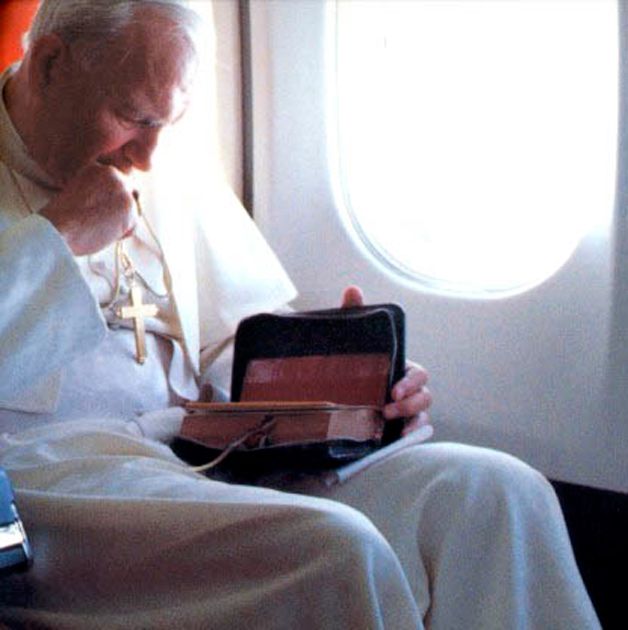
Luke tells us that the prayer ‘Our Father’ comes from Jesus’ mouth because His disciples are requesting Him to teach them to pray. Why do they ask this kind of request? As Jewish people, prayer has to their daily routine. Good Jewish man and woman would recite ‘Shema’ prayer at least twice day. During Sabbath, they would gather in the local synagogues to pray and read the Torah. For those living in Jerusalem, praying, and offering sacrifice in the Temple are their daily pious habit. Then, why are they still asking Jesus how to pray?

The first reason is that they observe that their Teacher is a prayerful person. In the Gospel of Luke, Jesus prays often and has a prayer habit. After whole-day teaching and healing, He would go to a secluded place and pray. The disciples may be curious on what Jesus’ prayer is. The second reason is that Jesus’ disciples hear that John the Baptist teaches his followers to pray. If John instructs his disciples on prayer, why not Jesus? Afterall, Jesus is greater than John the Baptist. Jesus gladly grants the desire of His disciples, and He teaches them on what to prayer [the Our Father] and how to pray [to relate God as our loving Father].

For many of us, prayer is something taken for granted. We pray everyday, and in different moments in our lives. On the top of that, we have also personal devotions like rosary, divine mercy chaplet, visiting the adoration chapel, and many others. Surely, we go to the Church every Sunday to pray and worship God. Prayer is just instinctive and natural to us.

However, if prayer and relation to God is natural to us, why do we need to ask the Lord to teach us to pray? Though prayer and reaching out to God is part of our nature, we still do not have a clue how to approach God properly. In prayers, we ask God almost everything. We request for good health, successful careers, protection from dangers, even for the right spouse. But, do we ever ask the Lord that we will be able to pray well and pleasing to God. Before we ask for anything else, our first prayer is to ask the Lord to teach us to pray according to His will.

The reason why we get disappointed, angry and even give up in praying to God is that we pray the wrong way. We may believe prayer is just another instant way to get we want, or prayer is a means to bribe God. Perhaps, we see God as a game master, and we see prayers as coupons. The many the coupons, the better the prize. Sometimes, we forget to pray to the true God, but simply to our personal idea and reflections of god.

Jesus invites His disciples to understand prayer in the right way. It is a relationship with a loving and wise Father. He knows what we need and what we want, and these things He will give according to His wisdom. God desires us to approach Him in prayer because He seeks loving and intimate union with us. He is ready to bestow the greatest gift for those who seek, the gift of the Holy Spirit, which is the gift of holiness and the gift of friendship with God.

Do we ask the Lord to teach us to pray? Do we desire what God desires? Do we knock for the gift of the Holy Spirit?

Valentinus Bayuhadi Ruseno, OP

Don’t be Distracted!

16th Sunday in Ordinary Time [C]

July 17, 2022

Luke 10:38-42

Martha and Mary of Bethany are often related to two modes of existence in the Church. Martha is the symbol of active or apostolic life, while Mary is the embodiment of the prayer and contemplative life. This tradition has very old root. It goes back to the third century AD, to theologian called Origen (see Fragments of the Gospel of Luke, 171). St. Gregory the Great in the sixth century affirmed this tradition and added the reason: “While both activities are essential to Christian living, the latter is greater than the former. For in heaven the active life terminates, while the contemplative life reaches its perfection. (Moralia, 2,6).” St. Thomas Aquinas of the middle age even gave nine reasons why contemplative life is better than active one! (see ST.II.II. q.182 a.1).

While respecting the long Catholic traditions, the text gives us a hint why Mary chose the better part. Jesus said to Martha, “Martha, Martha, you are worried and distracted by many things; there is need of only one thing. [Luk 10:41-42, NRSV]” Martha was not doing something wrong, and she was serving Jesus. In fact, she was performing her duty as a good host to Jesus. However, by doing so many things, Martha got distracted. Her attention was pull away from the very person she should give most. This is precisely the danger of active life. It distracts us from Jesus.

Meanwhile Mary was sitting at the feet of Jesus and listening to Jesus. The phrase ‘sitting at the feet of someone’ is a biblical technical term for ‘being a disciple of someone’. Like for example, Paul introduced himself as a student of Gamaliel, “At the feet of Gamaliel I was educated strictly in our ancestral law and was zealous for God… [Act 22:3].” Mary chose the better part because she dedicated herself as the true and faithful disciple. She gave her attention, her mind and heart, to Jesus and His words. One of the greatest joys of a teacher is to know the student is listening attentively and able to understand the lessens well.

From Martha and Mary, we learn a deeper meaning of discipleship. Living in this world, we are unavoidably living active lives. We are living in the world where the relation between people and technologies become more and more seamless. Modern people are more concerned with the WIFI connection rather than their mental health. With the pandemic, we discover new mode of life, like ‘WFH’. This even blurs the distinction between work zone and personal and family space. We also face the new mode of worship, ‘the online mass’. This surely hazes the distinction between the sacred and the mundane. Though the faithful start coming back to the parishes, many bring along this ‘online mass’ mentality, and even more distracted during the celebration of the Eucharist.

Certainly, we have so much homework to do. Aside from disciplining our minds and heart during the prayer time and Mass, we also instill a new culture in our lives. We can fill our day with short yet meaningful prayers: at the beginning of the day, before meals, before going to work, before and after our work, when we arrive home, when we bless our children, before we go to sleep. Pray the angelus also. Let the Lord fill in our minds and heart with His presence through the day, and let make our day holy.

Valentinus Bayuhadi Ruseno, OP

The Supremacy of Love

15th Sunday in Ordinary Time
July 10, 2022
Luke 10:25-37

The scholars of the Law [Greek: nomicos] were representing the intellectual elite in Jewish society at the time of Jesus. While the rest of Jewish people were struggling to fill their stomach and living in bare necessity, this group had a rare access to good education. We may reasonably suspect that the scholars were affluent enough to read and study the Torah extensively and undisturbed. Compared to the ordinary Jews, they were experts with the details and interpretation of the Law. No wonder, they could easily develop the vice of pride.


Luke described the scholar as one who ‘stood up’ and ‘test’ Jesus. Clearly, he came out with his intellectual superiority and confronted Jesus to prove that he was far better than Him. He might think, “Son of carpenter; he knows nothing!” But, his pride brought him nothing but defeat. He attacked Jesus with the most difficult question he had in his arsenal. “Teacher, what must I do to inherit eternal life?” Yet, Jesus was aware of his intention, and Jesus returned the question to the sender. The scholar could not resist himself and answer his prepared answer. You shall love the Lord, your God, with all your heart, with all your being, with all your strength, and with all your mind, and your neighbor as yourself (Deu 6:5).” Perhaps, he was expecting Jesus would not agree, and the debate would ensue. Yet, Jesus did agree.
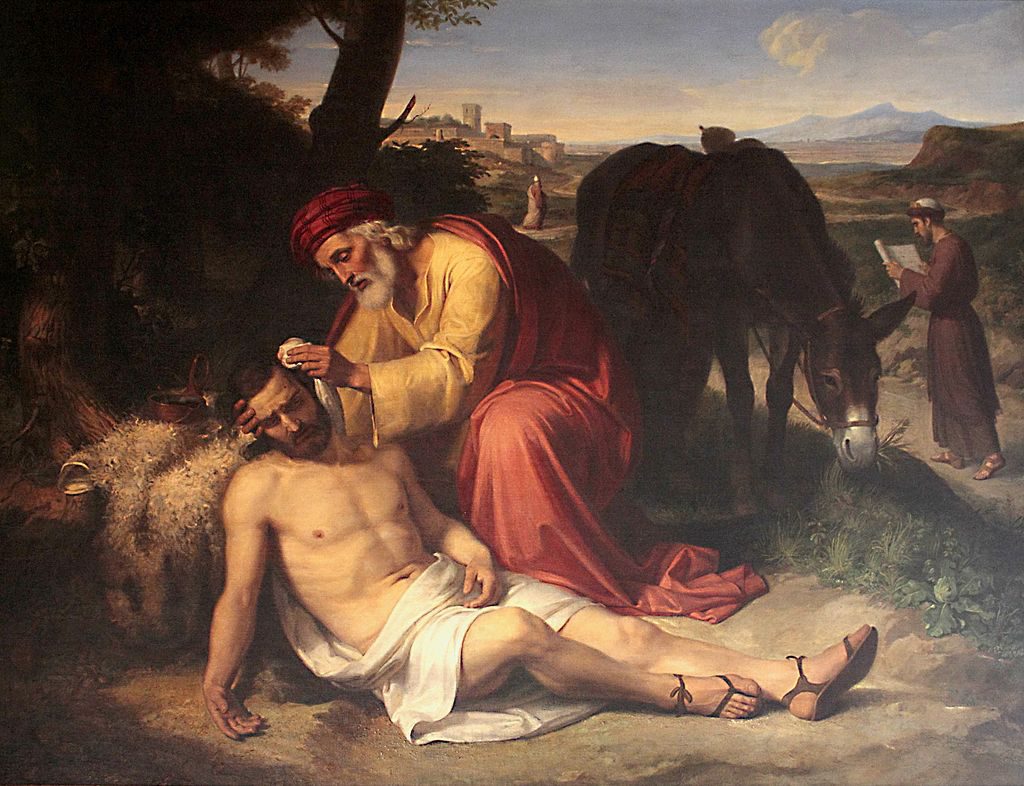
Refusing to accept his defeat, the scholar made a last-ditch attempt to justify himself. He asked Jesus who is this ‘neighbor’ he had to love. With His ingenuity and wisdom, Jesus then presented him one of the loveliest parables ever told: the Good Samaritan. The Samaritans are literally neighbors of Jewish people, but through centuries of hatred, they have become sworn enemies. Yet, unlike the priest and the Levite who were expert in the Law and served in the Temple daily, the Samaritan knew what it means to be merciful.
To love means to love radically. To love means to do good even to those who do not deserve our love. Yet, the genius of Jesus is not only to force the scholar to acknowledge his defeat, but He allowed the scholar to reflect on his life’s deeper purpose as a Jew.
At times, we are so confident with ourselves. We feel we know a lot. We engage in discussion and debate on various issues in the Church and society. We learn theology, spirituality and leadership, and we feel we are better than the rest of Church. We serve a particular ministry for so long, that we look down at newcomers in the group. Unconsciously, we become like this scholar of the Law who stands up and puts other into test. I confess also at times, I manifest this prideful attitude. When I teach, I often project myself as the all-knowing teacher and throw the hardest questions to my students. It gives a sense of pleasure when I know I am the only one who can answer the questions. Lord, have mercy on me!
Yet, Jesus reminds us today a simple yet fundamental truth: pride only brings defeat, only humility can bring us eternal life. And this humility can be best practiced in love. The true test of our faith, knowledge, and spirituality is charity.

Valentinus Bayuhadi Ruseno, OP

We are the Seventy

14th Sunday in Ordinary Time [C]
July 3, 2022
Luke 9:1-12, 17-20

In today’s Gospel, Jesus is sending His seventy disciples for a mission. Yes, we are reading it correctly; it is not just twelve disciples, but seventy. While we are used to the celebrated mission of the Twelve, Luke informs us about the less famous mission of the seventy. We are not sure who are these people. Perhaps, Matthias, who would replace Judas, was among them, but the rest we are almost clueless. However, for sure, these are people who have the same commitment, dedication, and passion like the big names, Peter, John, Andrew, and Matthew. These are the people who let ‘the dead’ bury their dead parents [see Luk 9:59]. These are the disciples that follow Jesus, leave everything and are willing to be dispatched into a difficult mission to preach the Kingdom, to heal the sick, and to drive out the demons.

photocredit: Jun Sahagun

We might also ask why seventy? If Twelve apostles represent the twelve tribes of Israel, what will the seventy signify? Surprisingly, when we go back to the Old Testament, seventy is also a significant figure. It is the sum number of the descendants of Jacob who migrated to Egypt [Gen. 46:27]. It was the number of the elders who were elected to help Moses in his task in leading Israel and to offer sacrifice in the wilderness [Exo 24:1]. Thus, seventy become the symbol of both Israel itself and the leaders of Israel. According to Jewish tradition, seventy is also the number of nations that came down from Noah [see Gen 11]. By choosing and commissioning His seventy disciples, Jesus sends His message to the world that He is establishing His New Israel with its leaders, and this Israel will include all people from all nation.

The story of the seventy disciples reminds us that the disciples of Jesus are not just the twelve. They are many others who have the same level of commitment like the Twelve yet somehow forgotten. While the Twelve represents the well-known figures of the Church like the pope and the bishops, the seventy bring to mind the nameless yet countless priests, religious men and women, and laity who are tirelessly building up the Body of Christs.

Some priests are popular among the laity because of their stormy preaching or funny homily, or actively engaged in social media, but they are countless priests who dedicate their lives to serve God’s people in the rural areas, in the middle of the tropical jungles, or in secluded islands. Perhaps, many of us do not even recognize the name of the priests who baptized us, who made us children of God! Surely, we possess Catholic laypeople who are influential in the society. We are proud of them because they are successful statesmen, businessmen, professionals, athletes, or entertainers that fearlessly acknowledge their Catholic before the public. Yet, the majority of the lay people are serving the Church and the societies without much noise. Perhaps, we do not recognize the names of catechists who teach us faith, or of Sunday School teachers who prepare us for the first communion. Definitely many of us are Catholic parents who dedicate our lives to raise God-fearing kids, but sometimes, misunderstood and unappreciated by our own children.

Our works and service may not be recognized in the eyes of the world, yet Jesus says, ‘do not rejoice because the spirits are subject to you, but rejoice because your names are written in heaven.’ Afterall, holiness is a quiet yet meaningful journey.

Valentinus Bayuhadi Ruseno, OP