The Scribes of the Kingdom

17th Sunday in Ordinary Time [A]

July 30, 2023

Matthew 13:44-52

The Scribes are often perceived as the bad guys. Together with the Pharisees and the elders, the scribes are often arguing and disagreeing with Jesus. Yet, interestingly, Jesus mentions the scribes of the kingdom of God. So, what is precisely the scribes? Are they the bad guys or the good guys? What does Jesus mean by ‘the Scribes of the Kingdom’?
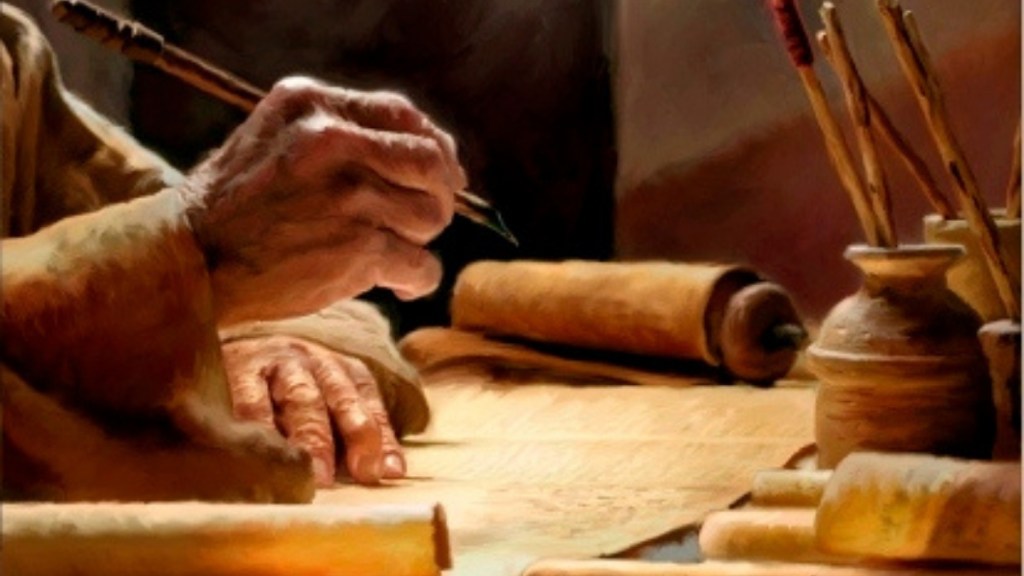
Scribes [in Greek: γραμματεὺς, grammateus] are unique professions in the ancient time. When most people were illiterate, and the writing material was scarce, the scribes played an essential role in keeping the record and passing down the written history. Being a scribe is not only about the ability to read but also highly specialized skills to write efficiently using ancient materials [stone tablets, animal skins, papyrus]. Most scribes worked for the royal court as they wrote various official documents and recorded the chronicles. Since, in ancient times, the royal officials and the religious leaders were often the same persons, the scribes also were tasked to write and copy sacred texts. 

In the time of Jesus, the Israelite scribes were highly specialized professionals in reproducing Torah scrolls and the prophets’ writings. They would form a small community and write sacred texts together. While they wrote, they would read the text aloud and, thus, avoid unnecessary errors. To copy the holy texts is their sacred duty. But not only reading and writing the text, the scribes also read, discussed and interpreted the meaning of the sacred text. With this privileged access to the sacred text, they also read and taught the Torah to the people of Israel. Scribes did not form a single organized group but joined existing groups like Pharisees, Sadducees and Essenes, or they decided not to be unaffiliated to any group. From here, we know that scribes were not homogenous. Some may disagree with Jesus at some point, but on some issues, they may agree. 

Then, Jesus mentioned ‘the scribes of the Kingdom’, who are these people? At the first level, these are the apostles of Jesus and other disciples. They are the ones who are responsible for writing the New Testament. Matthew and John are apostles, while Mark is the disciple of Peter and Luke is the companion of Paul. They also interpreted and preached the Old Testament as fulfilled by Jesus Christ.

However, at the second level, the scribes are all of us. Nowadays, we have easy access to the Bible. We are called not only to hear and read the word of God in the scriptures but also to understand it more profoundly and share it with others. While some people are taking the more prolonged and more intense study of the scriptures, like priests, bible scholars, and catechists, all of us are also called to take part in the scribes’ responsibility. 

I am happy that more Catholics are taking an interest in Bible Study. Some take a formal classes or attend seminars. Some make commitments to read Bible every day. Yet, scribes are not only someone who read and study the sacred text but also one who share and preach it. Thus, the challenge is how we are to share the word of God and take part in the mission of the Scribes of the Kingdom.

Valentinus Bayuhadi Ruseno, OP

The Kingdom of God

16th Sunday in Ordinary Time [A]

July 23, 2023

Matthew 13:24-43

One of the most fundamental themes of Jesus’s preaching is the Kingdom of God [in Matthew, it is called ‘the kingdom of heavens’]. Yet, what is the Kingdom of God? Where is this Kingdom? Why is it central to Jesus’ preaching and mission? 

What is the Kingdom of God? A kingdom is precisely a kingdom because it possesses a king or monarch as its highest authority. If we change its supreme leader into a president or prime minister, it ceases to be a kingdom and turns into something else, like a republic. Thus, the presence of a king in the Kingdom of God is non-negotiable. Who, then, is the king of the Kingdom of God? The answer is obvious: God Himself. Since Jesus is our God, then it is not hard to say that Jesus is the king of the Kingdom of God. Many new testament passages speak of this Kingdom of Jesus (see Eph 5:5; 2 Pet 1:11). Jesus himself acknowledged that He is the king of this Kingdom (see Luk 22:30).

Now, after we know the king of this Kingdom, we need to determine who the subjects are. After all, a king is not a king without the people whom he governs. Many will instantly answer that the members of the Kingdom are all who believe in Jesus. Yet, it is not as simple as that. If we observe other kingdoms or nations, to be a citizen of a particular Kingdom or country is not enough that we ‘believe’ that he is a citizen. He must undergo required procedures that make him a citizen, like processing certain legal documents, etc. More than that, it is imperative for a citizen to obey the law of the country. Otherwise, he will be punished accordingly.

Therefore, it is the same with the Kingdom of God. To become part of the Kingdom, we must undergo the required procedure. In the case of the Kingdom of God, it is the sacrament of baptism (see John 3:3-5). Yet, to be a good citizen of the Kingdom, we must not stop a baptism. We are expected to know and follow the laws of the Kingdoms. We are called to obey the words of Jesus, our king. We cannot call ourselves good Christians, good citizens of the Kingdom of Heaven, if we keep breaking the laws.

Another aspect of the Kingdom of Heaven that we must not overlook is that it is not yet ‘perfect’. Some may think that since it is the Kingdom of God, it must be super powerful, full of good things, and has no suffering. Yet, Jesus reminds us through His parables that God allows bad things to inflict the Kingdom of God on earth. God is like the landowner who allows the weed to grow together with the wheat in his field. Some may expect the Kingdom to grow strong like a cedar seed that will develop into a strong and majestic one. Yet, Jesus told us that the Kingdom is like a mustard seed, the smallest seed that will grow into ugly shrubs.

Through Jesus’ parables, we must not be surprised if bad things are happening even after we become citizens of the Kingdom. We are expected not to be shocked to experience pain and suffering as members of the Kingdom. God allows these bad things to happen as part of His plan for us.

Valentinus Bayuhadi Ruseno, OP

Sang Penabur dan Jalan-Nya yang Misterius

Hari Minggu ke-15 dalam Waktu Biasa [A]
16 Juli 2023
Matius 13:1-23

Ada yang aneh dengan perumpamaan Yesus ini. Penabur itu melakukan sesuatu yang tidak patut dicontoh sebagai seorang petani. Penabur itu menyia-nyiakan benihnya. Ia membiarkan benih-benih itu jatuh ke jalan setapak, tanah berbatu, dan semak duri, tempat-tempat yang pasti akan membunuh benih ini. Jika benih-benih ini adalah sumber hidup petani, maka, dia sedang membunuh dirinya sendiri. Mengapa penabur melakukan sesuatu yang tampaknya tidak berguna dan bahkan bodoh?

Untuk menemukan jawabannya, kita harus memahami tujuan dari perumpamaan-perumpamaan Yesus. Banyak dari kita percaya bahwa perumpamaan adalah cerita sederhana yang digunakan Yesus untuk menyampaikan dan menyederhanakan ajaran-Nya. Itulah sebabnya seorang teolog mendefinisikan perumpamaan sebagai ‘ajaran-ajaran surgawi dalam cerita-cerita duniawi’. Sampai batas tertentu, definisi ini benar, tetapi tidak menangkap keseluruhan tujuan perumpamaan. Ketika Yesus ditanya, “mengapa Ia mengajar dalam perumpamaan? Yesus menjawab, “Itulah sebabnya Aku berkata-kata dalam perumpamaan kepada mereka, sebab mereka melihat tetapi tidak melihat, mendengar tetapi tidak mendengar dan tidak mengerti (Mat. 13:13).” Yesus menggunakan perumpamaan bukan untuk mengungkapkan ajaran-Nya, tetapi justru untuk menyembunyikan ajaran-Nya. Mengapa? Yesus menjelaskan bahwa dengan menggunakan perumpamaan, hanya mereka yang percaya kepada Yesus yang akan mengerti perumpamaan tersebut dan mempelajari pesannya, sementara mereka yang tidak percaya, hanya akan bingung.

Sekarang, bagaimana kita memahami penabur yang tampaknya menyia-nyiakan benihnya? Sekali lagi, kuncinya adalah iman kepada Yesus. Kita diundang untuk membaca perumpamaan ini dari sudut pandang iman. Jika berbagai jenis tanah melambangkan kondisi jiwa kita, dan benihnya adalah firman Tuhan, maka siapakah penaburnya? Bagi kita, orang-orang percaya, jawabannya sudah jelas. Penaburnya adalah Allah sendiri. Sekarang, jika kita mengetahui semua makna dari karakter dan elemen-elemen perumpamaan ini, kita dapat lebih memahami cerita ini. Sama seperti sang penabur di perumpamaan, Allah menyampaikan firman-Nya bukan hanya kepada satu jenis jiwa, tetapi kepada semua jiwa. Mengapa? Karena Dia mengasihi semua jiwa, dan ingin agar semua jiwa datang kepada keselamatan. Allah mengasihi semua orang, bahkan mereka yang melakukan hal-hal yang jahat, mereka yang tidak mengenal-Nya, dan mereka yang membenci-Nya.

Dia mengirimkan sinar matahari dan hujan bagi kita semua, meskipun kita tidak bersyukur. Dia menyediakan banyak hal baik dalam hidup kita, meskipun kita menganggapnya remeh. Pada akhirnya, Dia mengutus Yesus, Firman-Nya yang menjadi manusia, untuk menyelamatkan kita yang berdosa. Karena begitu besar kasih-Nya akan dunia ini, sehingga Ia telah mengutus Anak-Nya yang tunggal, supaya setiap orang yang percaya kepada-Nya tidak binasa, melainkan beroleh hidup yang kekal (Yohanes 3:16). Allah, sang penabur ilahi, tidak mengukur segala sesuatu dengan ukuran ekonomi duniawi, tetapi mengasihi kita dengan cuma-cuma.

Namun, kita tidak boleh lupa bahwa kita juga harus melakukan bagian kita. Kita diundang untuk mengubah jiwa kita menjadi tanah yang subur. Mungkin, pada awalnya, pikiran dan hati kita keras, atau penuh dengan batu keraguan, atau penuh dengan duri kemarahan. Namun, Tuhan memberi kita kebebasan dan juga rahmat pertobatan untuk mengubah hati kita menjadi tanah yang subur di mana Firman Tuhan dapat bertumbuh. Sebagian dari kita mungkin memiliki hati yang subur, tetapi kita tidak boleh lalai, melainkan terus menyuburkan tanah kita agar firman Tuhan dapat berbuah berlimpah.

Jenis tanah seperti apakah kita sekarang? Apakah kita mengenali karya Allah dalam hidup kita? Apa yang kita lakukan untuk menerima firman Tuhan dan membiarkan firman itu bertumbuh dan berbuah?

Valentinus Bayuhadi Ruseno, OP

The Sower and His Mysterious Way

15th Sunday in Ordinary Time [A]
July 16, 2023
Matthew 13:1-23

There is something strange with Jesus’ parable.
The sower is committing something outrageous as a farmer. The sower is wasting his seeds. He lets the seeds fall into the pathway, Rocky grounds, and thorns, places that will surely kill them. If the seeds are the farmer’s lifeline, he kills himself. Why does the sower do something seemingly useless and even stupid things?

To find the answer, we must understand the purpose of Jesus’ parables. Many believe that parables are simple stories Jesus uses to convey and simplify His teachings. That is why one theologian defined parables as ‘heavenly teachings in worldly stories.’ To a certain extent, it is true, but it does not capture the entire purpose of the parable. When Jesus was asked, ‘Why did He teach in parables?’ Jesus answered, “This is why I speak to them in parables, because ‘they look but do not see and hear but do not listen or understand (Mat 13:13).” Jesus utilized parables not to reveal His teaching, but to conceal His teachings. Why? Jesus made it clear that by using parables, only those who believe Jesus will see through the parables and learn the messages, while those who do not believe will only be puzzled.

Now, how do we make sense of the sower who is seemingly wasting his seeds? Again, the key is belief in Jesus. We are invited to read this parable from the lens of faith. If the different kinds of soils represent the condition of our souls, and the seeds are God’s word, then who will be the sower? For us believers, the answer is obvious. The sower is God Himself. Now, if we know all the meanings of the characters and elements of the parables, we can make more sense of the story. God sends His words not only to one kind of soul but to all souls. Why? Because He loves all souls and wants all souls to come to salvation. God loves us, even those who do evil things, those who do not know Him, and those who hate Him.

He sends His sunlight and rains for all of us, though we are ungrateful. He provides many good things in our lives, even though we take them for granted. Ultimately, He sends Jesus, His Word made flesh, to save us sinners. For He so loved the world so that He sent His only begotten Son, so that who believed in Him may not perish but have eternal life (John 3:16). God, the divine sower, does not measure things in worldly economic terms, but loves us gratuitously.

However, we must forget that we have to do our part also. We are invited to transform our souls into fertile soil. Perhaps, in the beginning, minds and hearts are hard, full of rocks of doubts, or filled with thorns of anger. But God gives us freedom and the grace of repentance to change our hearts into the good ground where the Word of God may grow. Some of us may have a fertile heart, but we must not be negligent but continue to enrich our soils so that the word of God may bear fruits abundantly.

What kind of soils are we now? Do we recognize God’s works in our lives? What do we do to receive the word of God and allow them to grow and bear fruits?

Valentinus Bayuhadi Ruseno, OP

Kuk Yesus

Minggu ke-14 dalam Masa Biasa

9 Juli 2023

Matius 11:25-30

Saya sangat diberkati karena diberi kesempatan untuk mengambil program S3 di bidang Kitab Suci (Teologi Biblis) di Roma, di jantung Gereja Katolik. Izinkan saya berbagi mengapa saya memilih bidang ini dan bagaimana kecintaan saya pada Sabda Allah dimulai. Dan hal ini berkaitan erat dengan Injil hari ini.

Ketika saya masih di Novisiat (awal hidup biarawan), saya membaca ayat ini di mana Yesus berkata, ‘Marilah kepada-Ku, semua yang letih lesu dan berbeban berat, Aku akan memberi kelegaan kepadamu. Pikullah kuk yang Kupasang… karena kuk yang Kupasang itu enak dan beban-Ku pun ringan (Mat 11:28-30).”  Kuk adalah alat yang digunakan manusia atau hewan, seperti lembu atau keledai, untuk memikul beban. Kuk biasanya dibawa di pundak. Awalnya, saya membayangkan bahwa kita memiliki kuk yang harus kita pikul, yang memberatkan. Kuk ini melambangkan berbagai beban dan masalah dalam hidup kita. Kemudian, Yesus meminta kita untuk melepaskan kuk yang tidak perlu ini dan memikul kuk yang telah Yesus persiapkan untuk kita. Jadi, pada dasarnya ini adalah tentang ‘menganti’ kuk. Kuk Yesus lebih ringan daripada kuk kita; oleh karena itu, kuk ini memberi kita kelegaan dan istirahat.

Namun, seorang imam yang waktu itu masih belajar S3 dalam bidang Kitab Suci pernah mengunjungi kami. Dia membagikan sebagian pengetahuannya kepada kami, dan pada satu titik, dia memberi tahu kami tentang kuk. Di Palestina kuno (seperti di banyak tempat lainnya), ada jenis kuk yang dapat dibawa oleh dua orang atau hewan. Kuk ini dirancang untuk mendistribusikan beban ke kedua pundak secara merata. Jadi, ketika Yesus berkata, “Pikullah kuk yang Kupasang…” Yesus tidak hanya memberikan kuk kepada kita, tetapi Dia berbagi kuk dan memikulnya bersama kita. Kemudian, ketika kita lelah, Yesus akan memikul sebagian besar beban itu sehingga kita mendapatkan kelegaan.

Penjelasan imam ini cukup sederhana karena saya sudah pernah melihat jenis kuk seperti ini karena saya sering melihatnya ketika saya masih kecil. Namun, ketika dia menghubungkannya dengan kuk Yesus dan menemukan kelegaan, hal itu membuka pikiran saya dan memukau hati saya. Sungguh, saat saya pikir saya sudah tahu tentang Sabda Allah, ternyata saya tidak tahu apa-apa. Firman Tuhan itu kaya dan menarik hati. Jika sebuah kata sederhana seperti ‘kuk’ dapat memiliki makna yang dalam, maka demikian pula halnya dengan kata-kata, kalimat, dan realitas lainnya di dalam Alkitab. Kemudian, saya mulai membaca banyak tafsiran dan penjelasan tentang berbagai ayat Alkitab. Semakin banyak saya belajar, semakin saya ditarik ke dalam misteri yang tak berdasar namun indah. Seiring dengan perkembangan panggilan saya, saya memutuskan untuk memfokuskan studi saya di bidang ini.

Apakah kisah tentang Kuk ini berakhir dengan penemuan saya di Novisiat? Tidak! Ketika saya memasuki studi teologi saya di Manila, saya menyadari satu teologi Katolik yang khas: teologi partisipasi. Teologi ini mengajarkan kita bahwa Allah memang pelaku utama penebusan, tetapi Dia tidak memperlakukan kita hanya sebagai penerima yang pasif. Dia menjadikan kita sebagai partisipan aktif dalam karya keselamatan-Nya. Ya, Yesus telah wafat dan bangkit bagi kita, tetapi kita juga perlu berpartisipasi dalam misteri penebusan ini melalui iman, pengharapan dan kasih.

Kemudian, ketika saya menghubungkannya dengan ‘kuk’, teologi partisipasi menjadi lebih bermakna. Jika kita memikul kuk kita sendiri, maka kuk itu tidak lebih dari beban yang tak bermakna. Tetapi, ketika kita berpartisipasi dalam kuk Kristus, beban kita akan menjadi lebih ringan dan memiliki nilai rohani. Ya, kita sering kali tidak dapat melepaskan diri dari banyak situasi yang membebani dalam hidup kita, tetapi ketika kita menyatukannya dengan salib Yesus dan dengan setia memikulnya, semua itu akan menjadi berkat rohani dan sarana keselamatan.

Apakah kuk kita sehari-hari? Apakah kita memikulnya sendirian? Apakah kita mempersembahkannya kepada Tuhan? Apakah kita mengambil bagian dalam kuk-salib Yesus?

Valentinus Bayuhadi Ruseno, OP

Jesus’ Yoke

14th Sunday in Ordinary Time
July 9, 2023
Matthew 11:25-30

I am incredibly blessed to be given to opportunity to study my doctorate in Sacred Scripture (Biblical Theology) in Rome, at the very heart of the Catholic Church. Let me share why I chose the specific field and how my love for the Word of God began. And it is closely related to today’s Gospel.

When I was still in the Novitiate (the beginning of my religious life), I read this particular verse in which Jesus said, ‘Come to me, all of you who labor and are burdened, and I will give you rest. Take my yoke… for My yoke easy and my burden is light (Mat 11:28-30).” A yoke is an instrument men or animals use, like oxen or donkeys, to carry a burden. The yoke usually is carried on the shoulders. Initially, I imagined that we had our yokes to carry, burdensome. This yoke represents various unnecessary burdens and problems in our lives. Then, Jesus asks us to remove this unnecessary yoke and take up the yoke that Jesus has prepared for us. So, it is essentially about ‘changing’ or ‘transferring’ of the yoke. Jesus’ yoke is lighter than our yokes; therefore, it is lighter and gives us rest.

However, a priest still studying for his doctorate in Sacred Scriptures visited us once. He shared some of his knowledge with us, and at one point, he told us about the yoke. In ancient Palestine (like in many places), there was a type of yoke that two men or animals could carry. The yoke is designed to distribute the burden to both shoulders equally. Thus, when Jesus said, ‘Take my yoke…” Jesus did not simply give us the yoke, but He shares the yoke and carries together with us. Then, when we are tired, Jesus will take much of the burden so that we may find rest.

The priest’s explanation was simple because I am familiar with this type of yoke as I used to see it when I was little. Yet, when he connected to Jesus’ yoke and found rest, it blew my mind and captured my heart. There is something more than what meets the eye. The Word of God is rich and fascinating. If a simple word like ‘yoke’ can have a profound meaning, it must also be true with other words, sentences and realities in the Bible. Then, I began reading a lot of commentaries and explanations on various biblical verses. The more I learn, the more I am drawn into the bottomless yet beautiful mystery. As I progressed in my vocation, I decided to focus my study in this field.

Does the story of Yoke end in my discovery in Novitiate? No! As I entered my theological studies, I discovered one particular catholic theology: the theology of participation. This theology teaches us that God is indeed the principal agent of redemption, but He does not treat us just as passive recipients. He made us active participants in His work of salvation. Yes, Jesus died and rose for us, but we also need to participate in this mystery of redemption by faith, hope and charity.

Then, as I connect it to the ‘yoke,’ the theology of participation makes even more sense. If we carry our yoke by ourselves, it is nothing but dead weight. But, when we participate in the yoke of Christ, our burdens will be lighter and have spiritual value. Yes, we cannot often escape many burdensome situations in our lives, but when we unite them to Jesus’ cross and faithfully carry them, they become spiritual blessings.

What is our daily yoke? Do we carry them alone? Do we offer them to the Lord? Do we participate in Jesus’ Yoke?

Valentinus Bayuhadi Ruseno, OP

To Receive a Prophet

13th Sunday in Ordinary Time [A]
July 2, 2023
Matthew 10:37-42

Jesus said, “Whoever receives a prophet because he is a prophet will receive a prophet’s reward,” At first glance, this statement seems usual, but at a closer look, there is something extraordinary. A prophet of God will receive his reward, but should not a person who welcomes a prophet gains something less? After all, that person simply provides a temporary shelter, perhaps water and food; indeed, he does not labor as hard as the prophet. Then, why did Jesus insist that the host of a prophet shall receive a prophet’s reward?

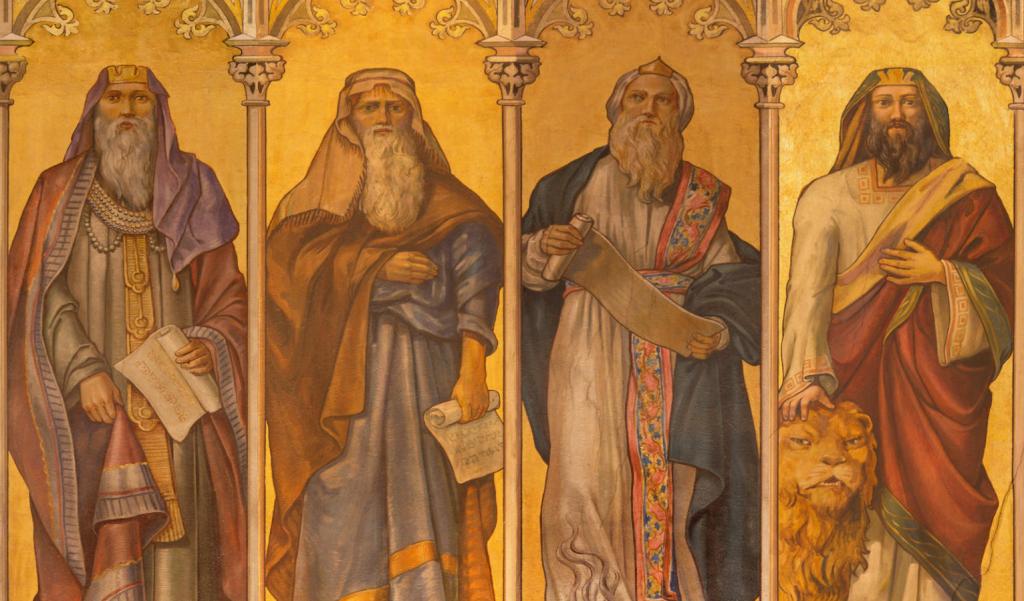
TThe neo-gothic fresco of big prophets Isaiah, Jeremiah, Ezekiel, Daniel by Leopold Bruckner from end of 19. cent. in Saint Nicholas church.

To understand the main reason behind Jesus’ extraordinary statement is that we need to know the roles of God’s prophets. A prophet, or in Hebrew נָבִיא (nabi), is a person who receives a gift/charisma to speak on behalf of God. In everyday use, the prophet foretells the future, but when it comes to the prophets of God in the Bible, predicting the future is only one aspect of their roles. The fundamental role of the prophet of God is to remind the people of their covenant with the Lord God and foretell the ugly things that would happen if they persisted in their sins. Thus, prophets of God are synonymous with the preachers of repentance.

Amos spoke against idolatry in Bethel. Elijah confronted wicked kings and queens. Jeremiah preached against injustice and evil deeds committed by Judah. John the Baptist criticized Herod Antipas for marrying his brother’s wife. These are several famous names in the Bible, but they sufficiently tell us what true prophets are. They speak the truth, and truth can be very inconvenient. Thus, many do not like true prophets and even persecute them. Jesus Himself told us, “A prophet is not without honor except in his own country and in his own house (Mat 13:57).”

It is not easy to receive a true prophet. It is hard to accept someone who speaks inconvenient truths about us. We naturally like people who praise and adore us, but we hate people who remind us about our wrongdoings. However, if we open ourselves and welcome the prophet of God into our lives, we receive the prophet’s reward. Yet, again, what is the prophet’s reward?
We may see the answer in the story of Jonah. He preached against the city of Nineveh. The people welcomed and listened to him. They repented, and they survived the disaster that would befall them. The Nineveh was saved because they accepted Jonah. Thus, the prophet’s reward is none other than salvation. As the prophet is saved when he faithfully preaches God’s word to the people despite rejection and persecution, the people will also be saved as they receive the prophet and repent.

Jesus invites us not only to be a prophet who speaks the truth and fidelity to God but also to be someone who accepts a prophet of God in our lives. Receiving is not only welcoming them into our houses but, more fundamentally, listening to their words and being moved toward God. How are the prophets in our lives? Do we reject them, or do we welcome them? What is the inconvenient truth they say that is for us to accept?

Rome
Valentinus Bayuhadi Ruseno, OP