


8th Sunday in Ordinary Time (Year A). February 26, 2017 [Matthew 6:24-34]
“You cannot serve God and mammon (Mat 6:24)”
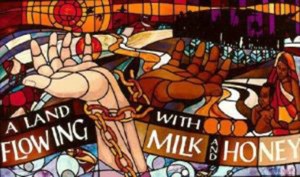 Mammon in Aramaic, the native language of Jesus, means riches, money or even properties. And nobody can serve both the true God and Mammon. In original Greek, Mathhew chose a stronger word than “to serve” Mammon, but it is to ‘become slave’ of Mammon. A slave is someone who no longer possesses freedom of his or her own; the lives are dependent on their master’s whim. Interesting to note is that the Mammon is not even a living being, and yet, people are freely laying their freedom to be its slave. It is irrational and in fact, unthinkable, but the reality narrates countless stories of people being possessed by riches and do inhuman things.
It is not an uncommon story that in many nations government officials are involved in large-scale corruptions, while ordinary citizens have to break their bones working and paying taxes. In Brazil, the Philippines and other countries, small farmers are violently evicted from their homes and lands by the greedy landowners. The grim reality of human trafficking is covert yet enormous. The children and women are abducted and traded as commodities, used as drug mules or sex objects. While others face immediate death as their bodily organs are harvested and sold in black market. Our beautiful forest and mountains are destroyed because of massive illegal logging and mining. This leads to nothing but ecological destruction, the animals are endangered, the rivers and seas become giant dumped sites of toxic waste, and our land is sorely barren and dead.
The mammon-worship does not only take place outside our fence, but without realizing it, it also plagues our own house and families. Who among us are addicted to work and begin to sideline our responsibilities in the family and neglect our health? Who among us start to think that giving money to our children is enough for their growth? Sometimes, the clergy and the religious are caught in the same mentality. We do our ministry as if there will be no tomorrow. We begin putting aside the basics like prayers, study, and community.
St. Thomas Aquinas makes it clear that riches and money cannot satisfy our deepest longing. He argues that wealth’s purpose is to meet our temporal human needs, but never to fulfill our spiritual and supreme desire. The real problem happens when we mistakenly accept riches as the fulfillment of our infinite desire for the infinite God. We make Mammon a god. We dethrone the true God and all serious problems start flooding in.
Jesus calls us to once again go back to true God. Other forms of gods, like wealth, money, gadgets, properties, cars, sex, prestige, works only drag us into slavery and misery. Just like the Hebrews in Egypt, only when they followed Yahweh, were they liberated from the slavery and marched toward the Promised Land. Yet, it was not easy. Like the Israelites who wanted to go back to Egypt after some time in the desert, we also cling to our Mammon firmly. It took 40 years for Israelites to struggle with their faithfulness to God, and perhaps we need years to before we rediscover the true God in your lives. Difficult indeed, yet, it is necessary because only God can bring us true happiness and liberation. We are liberated from the illusion of self-sufficiency, from the excessive ego-centrism. Not only we are freed, but also our family and our society, our environment and our earth. Want to make our world a better place? Let God be your God!
Br. Valentinus Bayuhadi Ruseno, OP

 Mamon dalam bahasa Aram, bahasa asli Yesus, berarti kekayaan, uang atau bahkan properti. Dan tidak ada yang dapat melayani Allah yang benar dan Mamon bersamaan. Dalam bahasa Yunani, Matius memilih kata yang lebih kuat dari “melayani” Mamon, tapi ia mengunakan untuk ‘menjadi budak’ Mamon. Seorang budak adalah seseorang yang tidak lagi memiliki kebebasan dan kehidupannya tergantung pada kemauan tuannya. Menarik untuk dicatat adalah bahwa Mamon itu bukan makhluk hidup, namun, banyak orang mau meletakkan kebebasan mereka untuk menjadi budaknya. Hal ini tidak rasional dan pada kenyataannya, tak terpikirkan, tetapi kenyataannya banyak orang yang memilih kekayaan dan melakukan hal-hal yang tidak manusiawi demi Mamon.
 Love is not for the fainthearted. It is difficult to love, even those whom we are supposed to love naturally and easily. At times, we feel regret in having committed ourselves in marriage to someone who turns out to be moody, demanding and no longer attractive. Sometimes, we want to kick out our children who become too stubborn and rebellious. Sometimes, we also think that we enter the wrong Congregation or convent.

 Cinta kasih bukanlah untuk orang yang lemah hatinya. Mengasihi itu sulit, bahkan bagi mereka yang seharusnya kita cintai secara alami dan mudah. Kadang-kadang, kita menyesal telah mengikat diri dalam pernikahan dengan seseorang yang moody, banyak tuntutan dan tidak lagi menarik. Kadang-kadang, kita ingin menendang keluar anak-anak yang menjadi keras kepala dan susah diatur. Kadang-kadang, kita, kaum berjubah, juga berpikir bahwa kita telah memasuki Kongregasi atau biara yang salah.
 The word ‘Pharisee’ has a rather negative connotation for us. In the Gospels, they are the bad guys. They often argued with Jesus and Jesus challenged their way of life. Even some planned to get rid of Jesus (see Mat 12:14). In our time, the term ‘Pharisaic’ simply means hypocrite.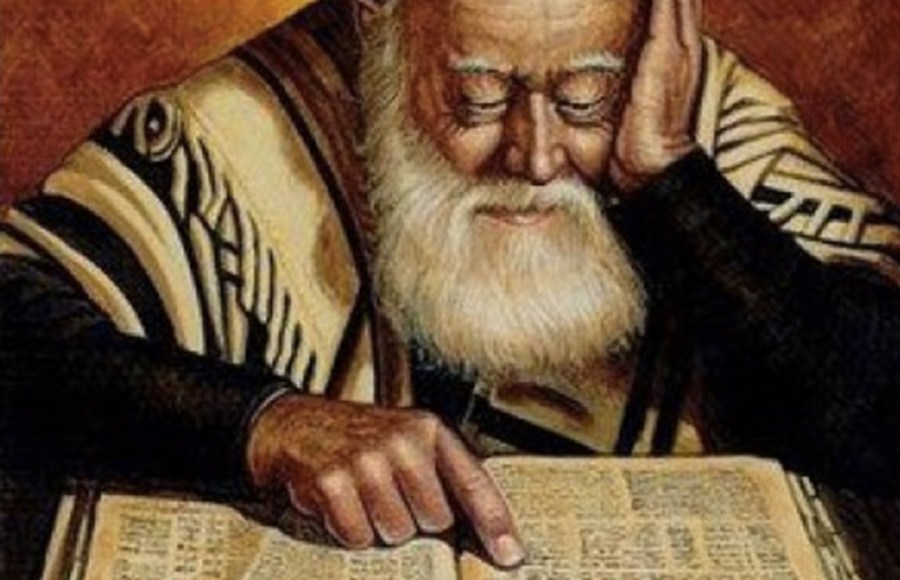
 Kata ‘Farisi’ memiliki konotasi negatif bagi kita. Dalam Injil, mereka adalah lawan-lawan Yesus. Mereka sering berdebat dengan Yesus dan Yesus mengkritik cara hidup mereka. Bahkan beberapa merencanakan untuk menyingkirkan Yesus (lihat Mat 12:14). Pada zaman sekarang, istilah ‘Farisi’ sering kali diasosiasikan dengan kemunafikan.


 Yesus mengatakan bahwa kita adalah garam dunia. Yesus tidak berkata kita ‘seperti’ garam dunia. Keduanya sangat berbeda, seperti ‘saya adalah Bayu’ jauh berbeda dengan ‘saya seperti Bayu.’ Kalimat pertama memberi hubungan esensial antara subjek dan predikat, sedangkan kalimat kedua hanya hubungan kesamaan yang sementara. Yesus pun tahu persis hal ini.
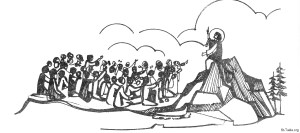 Matthew chapters 5 to 7 are well known as the Jesus’ sermons in the Mount. The section contains classic teachings and parables of Jesus like Beatitudes, the love for one’s enemy and the golden rule. Before Jesus began his sermon, He was sitting down. This gesture actually symbolizes the teaching authority of Jesus. On the Mount, Jesus was the teacher, and as a good teacher, He would expect people to listen attentively to His words. Thus, before Jesus commenced His sermon, He went up to the Mount to separate Himself from the crowd. Jesus knew that being part of the crowd was practically effortless and usually motivated selfishly: to be cured, to be fed and to be entertained. It could turn out to be very superficial, as a mass of people is drawn to one charismatic and powerful leader like Jesus, yet the moment its need is served or its leader is no longer satisfactory, it would be naturally disbanded.
 Injil Matius bab 5 sampai 7 dikenal sebagai khotbah Yesus di Bukit. Bagian ini berisi ajaran-ajaran dan perumpamaan Yesus yang sangat terkenal seperti 8 Sabda Bahagia, dan tentang mengasihi musuh kita. Sebelum Yesus memulai ajaran-Nya, Diapun duduk. Posisi ini sebenarnya melambangkan otoritas Yesus untuk mengajar. Di Bukit, Yesus adalah guru, dan sebagai guru yang baik, Dia akan mengharapkan mereka yang datang kepada-Nya untuk mendengarkan-Nya dengan penuh perhatian. Maka, sebelum Yesus memulai ajaran-Nya, Diapun naik ke bukit untuk memisahkan diri dari kerumunan. Yesus tahu bahwa menjadi bagian dari kerumunan adalah sangat mudah dan biasanya terdorong oleh motif-motif egois seperti ingin segera disembuhkan, untuk diberi makan dan dihibur. Alasannya sangat dangkal, mereka menjadi kerumunan karena tertarik dengan pemimpin karismatik seperti Yesus, namun saat kebutuhan mereka terpenuhi atau sang pemimpin tidak lagi memuaskan, kerumunan pun akan secara alami membubarkan diri.
 In Medio Ecclesiae