

Third Sunday of Advent [December 16, 2018] Luke 3:10-18
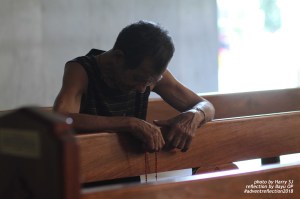 The second question that Archbishop Socrates Villegas of Lingayen-Dagupan asked us during our ordination was, “Are you broken enough?” Once again his question raised eyebrows and was, indeed, counter-intuitive. We want to be flawless, whole and perfect. We desire to achieve more in life, to be wealthy, healthy and pretty. We wish to be socially accepted, respected and gain certain prominence. We want to become somebody, and not nobody. We like others to call us as the famous doctors, the creative entrepreneurs, or successful lawyers. Or for us, people in the Church, we like people to consider us well-sought preachers, generous and builder-priests, or skillful and well-educated sisters.
However, we often forget that the people we serve are broken people. They are broken in many aspects of life. Some are broken financially, some are struggling with health problems, and many are crushed by traumatic experiences in the families. Some are dealing with anger and emotional instability, and some are confronting depression and despair. Some are hurt, and some other are forced to hurt. Many fall victims to injustice and violations of human rights. And all of us are broken by sin. We are serving broken people, and unless we are broken enough like them, our ministry is nothing but superficial and even hypocritical.
Therefore, as the ministers of the Church, we ask ourselves: are we disciplined enough in our study and allow the demands of academic life to push us hard to kiss the ground and continually beg the Truth to enlighten us? Are we patient enough in our life in the community and allow different personalities and conflicts in the seminary, convent or community to shape us up, to make us realize that life is much bigger than ourselves, and to enrich us? Are we resilient enough in our ministry and allow different people in our ministries to challenge our small world, to confront us with failures, and to face a reality that it is not them being served, but us? Are we humble enough in our prayer and allow God to take control of our lives?
In the center of our Eucharistic liturgy are the Word and the Body being broken. The Word of God in the scriptures is read, and the preacher ‘stretches’ and ‘breaks’ it into more relevant and meaningful words for the people of God. The Body of Christ in the consecrated hosts is literally broken, and so this may be enough for everyone. These Word and Body of Christ are broken for the broken people of God. Jesus saves and makes us holy by being one with us, by being broken for us. He is a broken Lord for His broken brothers and sisters.
We the ministers of God are like Jesus Christ, and thus, the questions are: Are we willing to recognize and accept our own imperfections? Are we strong enough to admit that we are weak? Are broken enough that we may share our total selves to our brothers and sisters? Are we like Christ who is broken for others to live?
Deacon Valentinus Bayuhadi Ruseno, OP
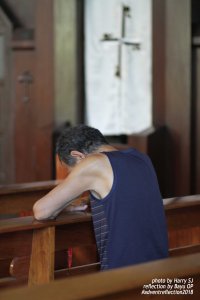 Pertanyaan kedua yang diajukan uskup agung Socrates Villegas dari Lingayen-Dagupan saat saya ditahbiskan adalah, “Apakah kamu sudah cukup terpecah dan remuk?” Sekali lagi pertanyaannya ini mengherankan. Kita ingin menjadi utuh dan sempurna. Kita ingin mendapatkan lebih banyak dalam hidup, menjadi kaya, sehat dan cantik. Kita ingin diterima secara sosial, dan dihormati dan memiliki pencapaian yang dapat dibanggakan. Kita ingin menjadi seseorang. Kita ingin orang lain menyebut kita sebagai dokter terkenal, pengusaha kreatif, atau pengacara yang sukses. Atau bagi kita, orang-orang yang melayani di Gereja, kita suka orang-orang menganggap kita sebagai pengkhotbah yang disukai, imam pembangun, atau suster yang terampil dan berpendidikan.
 During my ordination, Archbishop Socrates Villegas of Lingayen-Dagupan asked this question to us who would receive the sacred order, “Are you weak enough?” The question was mind-blogging and unexpected because often we have strength, power, and talents as our favorite subjects, and even obsession. We like to show to the world that we are achievers and conquerors. We parade our good education, high-earning job, or a beautiful face. The ‘superior’ mentality does not only affect the lay people traversing in the ordinary world, but also people dressed in white walking through the corridors of the Church. The clergy, as well as religious men and women, are not immune to this hunger for approval and sense of worthiness.
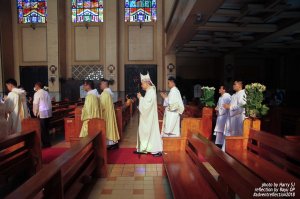 Saat pentahbisan saya, Uskup Agung Socrates Villegas dari Lingayen-Dagupan bertanya kepada saya, “Apakah kamu cukup lemah?” Pertanyaannya tidak terduga dan bahkan membalikan nalar karena sering kita merasa bahwa kekuatan dan talenta yang kita miliki adalah hal yang penting dalam hidup kita, dan menunjukan siapa diri kita sesungguhnya sebagai milik kita. Kita ingin menunjukkan kepada dunia bahwa kita adalah orang yang berprestasi. Kita memamerkan bahwa kita memiliki pendidikan yang baik, pekerjaan yang berpenghasilan tinggi, atau rupa yang cantik. Mental ‘superior’ ini tidak hanya mempengaruhi orang awam yang bergulat dalam kehidupan sehari-hari, tetapi juga orang-orang berjubah yang putih berjalan di koridor Gereja. Para klerus, serta biarawan dan biarawati, tidaklah kebal terhadap hasrat untuk mendapatkan persetujuan dan rasa kelayakan.
 I have been in the Dominican formation for more than 12 years, and if I add four years of my minor seminary formation in Indonesia, it stretches to 16 years! It is insanely long that it occupies a more than half of my life. If we believe that everything has a purpose, I can ask myself, “what is the point of this extremely lengthy formation?” Why should I stay through thick and thin of formation life, through hours of assiduous study, through various programs, through daily rigor of prayer life?
 Saya telah berada di formasi Ordo Dominikan di Filipina selama lebih dari 12 tahun, dan jika saya menambahkan empat tahun formasi seminari kecil saya di Indonesia, totalnya sampai 16 tahun! Ini sangat panjang karena lebih dari separuh hidup saya berada di formasi. Jika kita percaya bahwa semuanya memiliki tujuan, saya bertanya pada diri sendiri, “apa tujuan dari formasi yang sangat panjang ini?” Mengapa saya harus tetap berada dalam kehidupan formasi dengan suka dan dukanya? Mengapa saya harus menghabiskan banyak waktu dalam belajar? Mengapa saya harus bertekun dalam doa?
 In Medio Ecclesiae