

Feast of the Holy Family [B]
December 27, 2020
Luke 2:22-40
 We are celebrating the feast of the Holy Family, and indeed, we are celebrating not only the family of Jesus, Mary, and Joseph but every human family. Through this liturgical celebration, the Church is inviting us to recognize the importance and the value of our family. Not only acclaiming the fundamental worth of family, but we are also invited to embrace and celebrate family lives.
At a human level, many social experts have understood that healthy and thriving societies begin in robust families. The families do not only fill the communities with human populations, but they provide an environment where children can grow into physically and psychologically mature men and women. A healthy and mature adult turns to be an asset to society.
From the perspective of faith, the Church always considers family as the basic unit of society and the Church herself. In his apostolic exhortation, Familiaris Consortio, Pope St. John Paul II affirmed the family’s fundamental role as the intimate community of life and love. In the family, husband and wife learn to love each other deeper and deeper every day. In the family, parents offer unconditional and sacrificial love for their children. In the family, the children learn to give honor and respect to their parents and their brothers and sisters. Because only in love, human persons find their true fulfillment as God’s image who is Love.
The Scriptures also give premium to family life. To honor our mother and father is one of the Torah’s highest commandments [Exo 20:]. Sirach even claimed that honoring our parents can atone for our sins [Sir 3:3]. St. Paul himself, in his letter to the Colossians, instructed each member of the family on how to behave [see Col 3:12-21].
Yet, going back to Jesus, we discover that for Him, a family is indeed indispensable. As God, Jesus could have come to us directly from heaven. He did not need human aid. Yet, He chose to be born of the virgin Mary, and through the angel, instructed Joseph to become the husband of Mary and, thus, His foster father. When He became man, He entered a human family and grew through Joseph and Mary’s guidance and protection. Jesus has become part of a family, and His presence sanctified His human family. This is a poignant message for all that family is a school of holiness because Jesus is present.
We also admit that family life is not always smooth and sweet. Moments of frustrations, misunderstanding, anger, and sadness often come and struck us. Various problems ranging from economic stability to emotional immaturity beset our familial relationship. However, these ugly situations may be transformed into means of holiness if Jesus is present among us. Raising children can be tough and even irritating, but we can offer this cross to the Lord as prayer. A relationship with our spouse can be filled with misunderstanding, but before we vent our emotions, we may pause a moment and ask the Lord the best course of action we shall take. Thus, through these difficulties, we are made closer to the Lord.
We thank the Lord for the gift of life, love, and family.
Happy feast day of the Holy Family!
Valentinus Bayuhadi Ruseno, OP
 Kita merayakan pesta Keluarga Kudus, namun kita tidak hanya merayakan keluarga Yesus, Maria dan Yusuf, tetapi setiap keluarga di dunia. Melalui perayaan liturgi hari ini, Gereja mengundang kita untuk menyadari pentingnya dan berharganya keluarga kita. Tidak hanya menghargai nilai dasar keluarga, kita diundang untuk merangkul dan merayakan kehidupan keluarga.
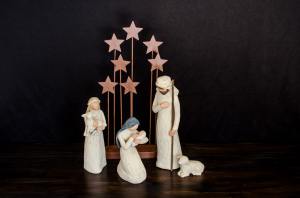 Christmas is one of the most beautiful and joyous times of the year. Christmas is the time to gather with the families and friends and to have an exchange of gifts. Christmas is the time to put up Christmas trees, place Nativity scenes, and play Christmas songs. Surely, Christmas is the time when families once again go to the church together.
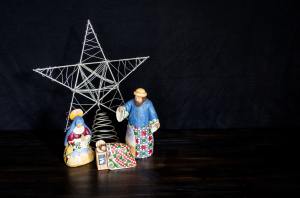 Natal adalah salah satu masa terindah dan menggembirakan. Natal adalah waktu untuk berkumpul dengan keluarga dan para sahabat, dan juga bertukar hadiah. Natal adalah waktu memasang pohon Natal, merancang Gua Natal, dan memutar lagu-lagu Natal. Pastinya, Natal adalah saat keluarga pergi ke gereja bersama-sama.
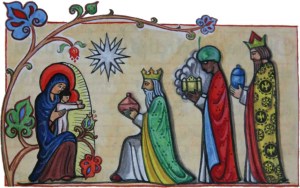 The journey of the three wise men from the East embodies the deepest human longing for a meaningful life and true happiness. Balthazar, Melchior and Gaspar, as the tradition called them, were neither Jews nor baptized Christians. In Greek ancient manuscripts of the Gospel, the word used to describe them is ‘magos’, meaning ‘someone with magical power’ or ‘magicians’, and practicing magic is detestable in the eyes of the Jews (2 Cro 33:6). Though we cannot be sure what kind of magic they crafted, but one thing is sure that they read the sign of times and followed the star. Because of this, they were instantaneously accused as one of those astrologers, star-readers who predict the human behaviors and the future, but I would argue that they were actually early astronomers instead astrologers. Like ordinary seamen who gazed the stars and hoped that they would guide them home, the magi did look at the star and believed that they would navigate their way to the true end.
 Perjalanan tiga orang bijak dari Timur menjadi symbol dari kerinduan terdalam manusia untuk kehidupan yang bermakna dan kebahagiaan sejati. Balthazar, Melchior dan Gaspar, sebagaimana tradisi menyebut mereka, bukanlah orang Yahudi ataupun Kristiani. Dalam naskah kuno Yunani dari Injil, kata yang digunakan untuk mendeskripsikan mereka adalah ‘magos’, yang berarti ‘seseorang dengan kekuatan magis’ atau ‘penyihir’, dan melakukan magis/sihir adalah kejahatan di mata orang-orang Yahudi (2 Taw 33:6). Meskipun kita tidak bisa memastikan apakah mereka sungguh penyihir apa bukan, satu hal yang pasti bahwa mereka membaca tanda-tanda zaman dan mengikuti sang bintang. Karena itu, mereka sering dituduh sebagai astrolog, pembaca bintang untuk memprediksi perilaku manusia dan masa depan, hal yang dilarang banyak agama, tapi saya berpendapat bahwa mereka sebenarnya adalah astronom. Seperti pelaut yang menatap bintang-bintang dan berharap bahwa bintang-bintang ini akan membimbing mereka pulang, orang majus ini juga melihat bintang dan percaya bahwa mereka akan berjalan di jalan yang benar.
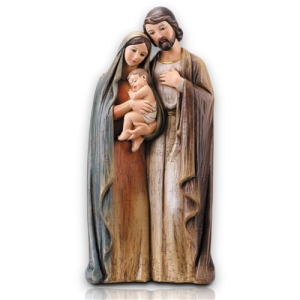 Jika kita diberi pilihan untuk memilih orang tua kita, orang tua seperti apa yang kita inginkan? Mungkin, sebagian dari kita ingin memiliki orang tua yang kaya. Beberapa dari kita mungkin berhasrat untuk memiliki orang tua yang berupa cantik, tampan atau berotak jenius. Beberapa dari kita mungkin ingin dilahirkan dalam keluarga kerajaan dan berpengaruh secara politis. Ini adalah impian-impian kita yang sangat wajar. Namun, yang mengejutkan, ini bukanlah pilihan yang Allah buat ketika Dia memilih orang tua-Nya. Dalam kebijaksanaan-Nya yang indah, Allah memilih Maria dan Yusuf dari Nazaret.
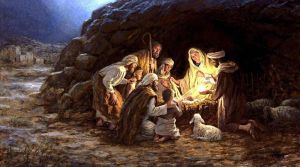 Today is Christmas, the day of Jesus was born in Bethlehem, and it is a traditional practice that in every Church or Christian family, there is a nativity scene. Usually, the baby Jesus was born in a kind of stable or shed, and He was placed on the wooden manger (a place where animals eat). Surely, Mary and Joseph are intently watching on the Baby, while other animals like sheep and cows become the silent witnesses of this most beautiful moment in human history. The scene will not be complete without the shepherds and the angel.
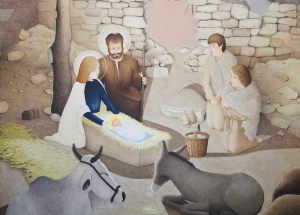 Hari ini adalah Natal, hari Yesus lahir di Bethlehem. Biasanya di setiap Gereja atau keluarga Kristiani, ada sebuah kadang atau gua yang menjadi tempat kelahiran Yesus. Di sini, Bayi Yesus ditempatkan di sebuah palungan kayu (tempat makanan binatang). Tentunya, ada patung Maria dan Yusuf yang dengan penuh perhatian mengawasi sang Bayi, sementara binatang-binatang lain seperti domba dan sapi menjadi saksi bisu dari momen terindah ini dalam sejarah manusia ini. Tentunya, kandang ini tidak akan lengkap tanpa gembala dan malaikat. Tempat kelahiran Yesus ini memang indah dan selalu mengingatkan kita akan kesederhanaan Natal yang sering kita lupakan di tengah hiruk pikuk perayaan Natal dan Tahun Baru.
 In Medio Ecclesiae