Adam and Us

10th Sunday in Ordinary Time [B]

June 9, 2024

Genesis 3:9-15

The story begins with a question from the Lord to Adam, “Where are you?” Yet, this is a strange question. Wasn’t God aware of where Adam was? But He is God, and He is supposed to know everything! Does it demonstrate ‘ignorance of God,’ or is there something deeper in the question?
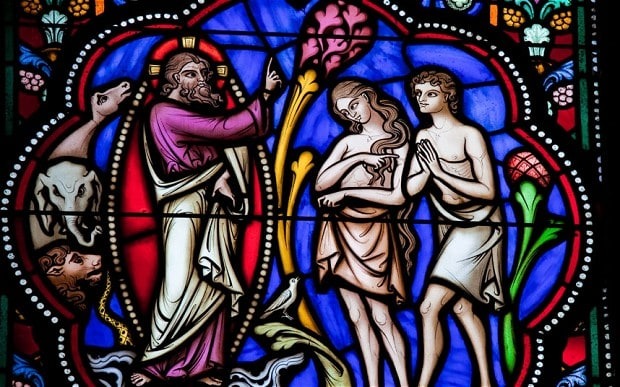
Firstly, we must recognize that the language of the early chapters of Genesis is much different from the rest of the Bible. The Church recognizes that “the account of the fall in Genesis 3 uses figurative language but affirms a primeval event, a deed that took place at the beginning of the history of man (CCC 390).” Scholars agree that the sacred author used an ‘anthropomorphic language,’ that is, God is described to act and behave like a human person. Thus, God is painted as one who strolled around the garden and suddenly noticed the absence of Adam and Eve.

Moving beyond ‘anthropomorphic language,’ God’s question to Adam is not about geographical location. God certainly knew well where Adam was. Nothing can hide from Him. Yet, the question remains true because God was not asking for a geographical position but rather a personal relationship. “Where are you in relation to me? Are you with me or against me? Are you on my side or the serpent’s side?”

Adam answered, “I was afraid.”  The original relationship between God and men was based on love and true honor. Yet, after sin, fear dominates. Adam no longer saw God as a loving father but a vengeful judge. Thus, he ran away and hid himself because he was fully aware of the judgment that awaited him. He was naked before the Lord, and he realized without God, he was nothing.

God then asked, “Did you eat from the tree?” Surely, God knew Adam had trespassed His law, but He phrased the fact in a rhetorical question as God solicited Adam’s confession. Unfortunately, instead of confessing and asking for forgiveness, Adam blamed the woman. Yet, on closer look, Adam was not exactly blaming the woman, “The woman you gave me, she gave me the fruit.” Indirectly, Adam blamed God! Adam deserves nothing but a miserable death, but did He die there and then? No! God rather pointed out to Adam that his refusal of God’s love had led him to hardship and suffering.

What would have happened if Adam had owned his sin and asked God’s mercy? Perhaps Adam and his descendants would have lived in a better world. Yet, Adam was too arrogant to beg forgiveness, and he and his descendants must walk through the valley of tears till the arrival of Jesus Christ.

Surely, it is pointless to blame Adam for our conditions, but we can always learn from this primordial story. Sin is what separates us from God and distorts our loving relationship into a nightmare. Either we see ourselves as fearful slaves or rebellious renegades. Yet, often, like Adam, our father, we are too arrogant to confess and blame others, situations, or, finally, God. Yet, on the other side of the story, we learn who our God is. He was not a vengeful god who would instantly obliterate Adam, but rather a loving father who patiently educates his rebellious son. He was not a cruel lord who would punish but a merciful God who wanted his stray children to return to Him through the arrival of His Son.

Rome

Valentinus Bayuhadi Ruseno, OP
Our Worship in the Eucharist

Solemnity of Corpus Christi [B]

June 2, 2024

Mark 14:12-16, 22-26

We are celebrating the solemnity of Corpus Christi, or the Body and Blood of Jesus Christ. Through this feast, the Church reminds us of the infinite value of the Eucharist. St. John Paul II once wrote, “The Eucharist, as Christ’s saving presence in the community of the faithful and its spiritual food, is the most precious possession which the Church can have in her journey through history.” (Ecclesia de Eucharistia, 9). In this reflection, I invite everyone to appreciate this most precious gift; hopefully, we may be more worthy of receiving the Eucharist, and be transformed.

Many of us have been going to the Eucharist for years and even decades. Still, unfortunately, instead of growing in respect and appreciation, some of us are losing true devotion and even becoming disrespectful towards the Eucharist. We skip the Sunday masses without valid reasons. We think it is enough to attend the Mass during Easter and Christmas. We are late to participate in the mass with proper justification. We are busy and distracted with many things in the Eucharist and look for any opportunity to use our gadgets. Some no longer bother to attend the Mass and no longer consider it something meaningful. Some of us still receive the holy Communion in unworthy conditions.

However, these improper things are done not only by the lay people, but also us, the priests. Some offer the Eucharist in inappropriate manners. On one extreme, some treat the Mass just like a performance or theatre; thus, we act excessively, break the rites to entertain the people and seek ovation. On another extreme, some of us are just too lazy to celebrate the Holy Mass; thus, we unjustifiably come late or do not prepare the homily and for the celebration itself. These are abuses, plain and simple. This is grave because these misconducts may cause the sheep to stray away, and the shepherds are responsible for this loss of souls.

Indeed, there are many reasons, but instead of blaming each other, I would like to focus on one thing. We need to recognize and appreciate what the Eucharist is. In most straightforward words, the Eucharist is Jesus Christ Himself. To celebrate worthily, the Eucharist means to offer our due worship to Jesus Christ, the true God. To receive communion is to receive Jesus Himself. The Eucharist is primarily about God, not us and how we get entertained. Therefore, the way we honor (or dishonor) God in the Eucharist will significantly affect our salvation. Indeed, the Eucharist is necessary for our salvation precisely because the Eucharist is about God, who loves us and wants us to be holy like He is holy.

The good news is that we are still on time. We can apply the principle “lex orandi, est lex credendi, est lex vivendi.” (literally, the law of praying is the law of believing, is the law of living). This means how we pray and worship will shape our beliefs, and in turn, our beliefs will form our lives. If we faithfully follow the right ways of worship, with the right intentions and disposition, the right gestures and actions, and with an effort to avoid distractions, we deepen our faith in God. Then, as we have deep faith in God, we will live in ways that will please the Lord.

Rome

Valentinus Bayuhadi Ruseno, OP

Holy Trinity and Baptism

The Solemnity of the Holy Trinity

May 26, 2024

Matthew 28:16-20

As we celebrate the mystery of the Holy Trinity, the Church invites us to meditate on our Baptism. We are baptized in the formula given by Jesus Himself. Jesus instructed His disciples, “Go therefore and make disciples of all nations, baptizing them in the name of the Father and of the Son and of the Holy Spirit (Mat 28:19).” Yet, what does it mean to be baptized with this Trinitarian formula?

Baptism claims us for God. We are baptized ‘in’ the name of the Father, and of the Son, and of the Holy Spirit. In New Testament Greek, the preposition ‘in’ is ‘εἰς’ (read: eis), and this points to a movement from one place to another or from an old condition to a new one. Thus, Baptism allows us to enter a new place, state, and status.

In Baptism, we are no longer outside of God, but now we are inside of God. We no longer belong to the world but now to God. We are no longer under the influence of Satan, but now we are animated by God’s grace. The grace of Baptism recreates us from the fallen children of Adam into God’s holy children. The same grace transforms us into redeemed members of Jesus’ body. And finally, this grace also sanctifies us and makes us become the temple of the Holy Spirit.

Since Baptism leads us to communion with the Holy Trinity and heaven is nothing but permanent union with God, Baptism is necessary for our salvation. No wonder St. Peter teaches with authority that Baptism saves us (1 Pet 3:21). However, we must remember that the grace we receive in Baptism must be properly received and manifested in our lives.

This union with God is not only something spiritual and invisible but concrete and visible. In this world, we believe that the family of God, the Body of Christ, and the Temple of the Holy Spirit have a visible manifestation: the Church. Baptism is also a gateway to our membership in the Church. Therefore, we demonstrate our belonging to the holy Trinity when we manifest our belonging to our local Church, parishes, and the universal Church. We express our spiritual union with the Holy Trinity when we celebrate the liturgy of the Eucharist worthily.

Thus, we cannot say we are in unity with the Holy Trinity, but we never attend mass because of laziness or receive the holy Communion unworthily.

We reveal our love for the holy Trinity when we love our fellow Christians and even those who do not believe yet in the Trinity. That is why St. John says, “If anyone says, ‘I love God,’ and hates his brother, he is a liar; for he who does not love his brother whom he has seen, cannot love God whom he has not seen (1 Jn 4:20).” We display our communion with the Holy Trinity when we separate ourselves with the devil and his works. We cannot say that we are children of God, but we live in sins, we steal from others, we are involved in esoteric practices, and we believe in superstitions.

The sacrament of Baptism does not stop with the pouring of water but manifests in our daily lives. Our belief in the Trinity does not simply mean intellectual acceptance of God’s presence but also transforms our lives and the way we live in the world.

Rome

Valentinus Bayuhadi Ruseno, OP

When is the Birthday of the Church?

Pentecost [B]

May 19, 2024

John 20:19-23

The solemnity of the Pentecost is usually called the birthday of the Church. But is this really true, or is it just a popular myth?

If we try to go into the official teaching of the Church, we will discover a passage from the Catechism of the Catholic Church, especially paragraph 766. Here, I quote, “The Church is born primarily of Christ’s total self-giving for our salvation, anticipated in the institution of the Eucharist and fulfilled on the cross. “The origin and growth of the Church are symbolized by the blood and water which flowed from the open side of the crucified Jesus.” “For it was from the side of Christ as he slept the sleep of death upon the cross that there came forth the ‘wondrous sacrament of the whole Church.’ ” As Eve was formed from the sleeping Adam’s side, so the Church was born from the pierced heart of Christ hanging dead on the cross.”

In short, the Church’s birthday is on Good Friday. The Church recognizes herself as the new Eve, born from the heart of Christ to be His bride. Consequently, calling the feast of Pentecost the birthday of the Church seems to be false. Yet, the truth is more profound than it seems.

Suppose we carefully observe the liturgy of the Pentecost, especially in the preface of Pentecost (a prayer said by the priest just before the Eucharist prayer). We will discover an interesting piece of information. I quote, “[We] give you thanks, Lord, holy Father… you bestowed the Holy Spirit today on those you made your adopted children uniting them to Your Only Begotten Son. This same Spirit, as the Church came to birth, opened to all people the knowledge of God…” In short, the liturgy of Pentecost is also celebrating the Church’s birthday.

So, how do we make sense of these seemingly conflicting pieces of information? Why does the official teaching of the Church seem to contradict the liturgy? To understand this, we need to see the birth of the Church not as one single instantaneous happening but rather as a process of giving birth. As the baby’s head is the first to come out, and then the rest of the body, we can see the ‘head of the Church’ came to being first under the cross of Christ and then the rest of ‘the body’ in the Pentecost. John, the beloved apostle, and Mary, the mother of Jesus, represented the head. While in the Pentecost, under the influence of the Holy Spirit, Peter, and other disciples began to proclaim God’s great things to all nations.

Another way to see this truth is that the Church was indeed born twice, first from Christ and second from the Holy Spirit. Following St. Paul, the Church is the body of the Church (Eph 1:22; CCC 792), and the Church also is the temple of the Holy Spirit (1 Cor 6:16, CCC 797). As the body of Christ, we are an organic unity between us and Christ, the source of our salvation. As the temple of the Holy Spirit, we are united to the Holy Spirit, the source of our holiness and our reason to sanctify others.

Happy birthday to the Catholic Church!

Rome

Valentinus Bayuhadi Ruseno, OP

True Happiness and Where to Find It

6th Sunday of Easter [B]
May 5, 2024
John 15:9-17

Happiness is a result of fulfilling our needs and desires. Since human beings have different needs, we also experience various kinds of happiness. We feel happy when we satisfy our hunger and complete our studies, but we also recognize that these are two distinct forms of happiness. Some types of happiness are emotionally intense but short-lived. Others do not give us thrills but are profound and lasting. Then, what kind of happiness do we need to set our eyes on?

To understand human needs, desires, and happiness, we need to understand who we are as a human person. We are beings with biological needs, and fulfilling these needs guarantees our survival. That is why things like good food, nice clothes and a proper house give us immediate pleasure. Part of our biological needs is the need to reproduce. Since this need relates to our basic survival as a species, nature has designed us to experience the most intense pleasure, but it also tends to be short-lived.

Yet, we are also beings with psychological needs. We look for emotional comfort, affirmation, and support. We do not only seek things to satisfy us but also other people who love us and to whom we express our emotions. The fulfilment of psychological needs yields more profound happiness and helps to counter various mental problems and disorders.

More than that, we are also beings with intellect and will. We also have a need to seek the truth and express our freedom and creativity. However, unlike other needs, this intellectual need requires us to spend a lot of effort and time, and often, it does not give us immediate, intense, emotionally charged pleasures. Yet, we know that though a good education is challenging and demands a lot of resources, its completion brings us profound satisfaction. Through education, we have grown, acquired skills and knowledge, and become better persons.

However, the Gospel teaches us that we are not only beings with biological, psychological, and intellectual needs. We are created not only for this earth. As the image of God, we are designed to go beyond this earthly life. The fathers of the Church speak of the human person as ‘capax Dei,’ that is ‘capable of God.’ Men and women are created for God. Then, how do we fulfil this spiritual need?

If we notice the dynamics between needs and happiness, we discover that the higher the needs, the more profound and lasting happiness we receive. Yet, the high-level needs require a higher level of effort. Consequently, to fulfil our need for God, we must be ready to give the most extraordinary effort, offering ourselves. More concretely, Jesus teaches us the way of true love, and the greatest love is to offer our lives to the persons we love. This is the paradox of true happiness. While other types of happiness are related to fulfilling needs for ourselves (we are the center), spiritual joy is moving away from ourselves. The more we are losing ourselves in love, the more we are open to God, the more we experience heavenly joy here on earth.

Rome
Valentinus Bayuhadi Ruseno, OP

God’s Word Prunes Us

5th Sunday of Easter [B]

April 28, 2024

John 15:1-8

Jesus is the vine, and we are His branches. He then declares that unfruitful branches will be cut, and healthy ones shall be ‘pruned.’ In fact, Jesus says, “You are already pruned because of the word that I spoke to you (John 15:3).” What does it mean? How does His word prune us? What is Jesus’ purpose?

If we have the opportunity to visit a vineyard, we will see how the vinedressers work. Among the things that they do is to cut the unhealthy and dead branches and prune the healthy ones. Pruning itself may include removing dead or unhealthy parts of the plant so that the vine may supply its nutrients to healthy branches. But also, the vinedressers would trim and slim down some overgrown branches since these branches typically don’t yield good grapes and suck up nutrients from their neighbour branches. All are done for one purpose: to produce a good quality grape.

Then, how does Jesus’ word prune us, the branches? Firstly, we recognize that we are creatures of language. The language we listen to and learn form who we are. Children who used to hear violent words tend to grow to be violent persons. Children who are fed with discouraging words tend to have low self-esteem. Yet, children who are never told words of proper corrections and discipline may become weak characters who always blame others. Children need to hear both encouraging and loving words as well as words of constructive corrections. Good words will make them grow confident, and proper discipline will make them avoid failures and dangers in the future.

It is the same with the Word of God. Listening to God’s word in the Bible, we discover many affirming words and heart-warming stories. Yet, the same Bible contains words, instructions, and stories that are strong and even demanding. The Gospel has lovely stories like those of Jesus, who blessed children and embraced sinners. Yet, the same Bible narrates Jesus, who said, “repent from our sins and believe in the Gospel.” Jesus, who opens the heavens for all of us, is also the same Jesus who teaches the reality of hell.   

Listening to the holy Scriptures every Sunday in the Eucharist, or even every day in our personal reading, allows God’s word to prune us. If we also do our parts to meditate on the words and internalize them, we are growing in holiness. In times of trials, God’s words strengthen us to hope. When in doubt, God’s words give clarity of faith. When we do wrong, God’s words correct us and invite us to repentance. When in fear, God’s words encourage us to love more and do good works. This is spiritual fruitfulness.

Another exciting thing also is that John used the word ‘καθαίρω’ (kathairo, I clean). This word can mean the act of pruning in the context of a vineyard, but the same word is used to describe Jesus’ act in healing the leper (see Mark 1:40-41). God’s words do not only prune our characters but also directly heal and purify our souls. The Church teaches us that we receive indulgences when we read the Bible for at least 30 minutes in a prayerful way. Have you read God’s words today?

Rome

Valentinus Bayuhadi Ruseno, OP

Vocation and Profession

4th Sunday of Easter [B]

April 21, 2024

John 10:11-18

Profession and vocation look similar and can even be interchanged. A woman, feeling a calling to heal others, chooses to pursue a career as a doctor. After years of training, she begins to work at a hospital or clinic, serve her patients, and earn a living. In this example, there is no significant difference between a profession and a vocation. But, looking deeper, the two are fundamentally different. However, what are the differences? How does this affect our faith and lives?

Simply put, professions are what we do, and vocations are who we are. The former is about ‘doing,’, and the latter is about ‘being.’ We do professions for a living, whereas vocations are our lives. The professions remain as long as we work or are employed, but when we are no longer working, we lose that profession or change to another. However, vocations define who we are. We do not lose our vocations when we stop working; in fact, our vocation gives identity to our actions. Some vocations only stop when we die, but some go into eternity.

Jesus, the Good Shepherd, is the best example we have. Jesus distinguishes Himself from ‘the hired men’ who do the same stuff as the shepherd but for profit. Thus, they will prioritize themselves, run, and abandon the flock when dangers come. Jesus’ vocation is shepherd; consequently, the sheep are an integral part of Jesus’ identity. Without sheep, a shepherd cannot be a shepherd. Yet, it is not enough to accept one’s vocation; we must live fully our vocations fully. Like Jesus, it is not enough to be any shepherd; Jesus chooses to be the ‘good’ shepherd, one who sacrifices his life for the salvation of his sheep.

There are different types of vocations in the Catholic Church. Firstly, our vocation is to be Christians. Then, we have those called to married lives, as husbands and wives, to families, fathers, and mothers. Some are also called to become religious women and men, as well as ordained ministers. These are vocations because they tell us about our identity, mission, and life. As a father, one does not simply do the fatherly stuff; in everything he does, he does it as a father. The same goes for other vocations.

One day, a parishioner came and told me that she had just had a miscarriage. She was distraught. Losing her baby daughter was extremely painful, and without a child, she believed that she had failed to be a mother. Then, I told her that she did not fail, and once she was a mother, she was always a mother. Even though she lost her daughter on earth, she still had her in the afterlife. The Catholic faith teaches that she must keep loving and caring for her daughter, albeit in different ways, spiritually. Her vocation as a mother is everlasting.

We all have our vocations, but it is not enough to accept them. Like Jesus, the good shepherd, we must choose to live our vocations fully.

Valentinus Bayuhadi Ruseno, OP

The Church and the Gospel

3rd Sunday of Easter [B]
April 14, 2024
Acts 3:13-15, 17-19

The first reading gives us St. Peter’s first preaching at the Pentecost. After the Holy Spirit descended upon the disciples, they began speaking about the great wonders God had performed in different languages. Some people who witnessed the event thought that they were drunk. However, St. Peter, as the leader of the apostles, denied this allegation and went further to preach the Gospel (see Acts 2). This was the first Gospel proclaimed by the Church. What is this Gospel, and what is its content?

Gospel (εὐαγγέλιον, euangelion) originally refers to the imperial announcement of great news that affects many lives in the Roman empire, like the ascension of the new emperor or the major war victories. Jesus adopted the term as He proclaimed the ‘Gospel of God’ (see Mar 1:14). Then, guided by the Holy Spirit, the Church, through her leaders, especially Peter, embraced the same vocabulary in his preaching.

The Gospel that the primitive Church proclaimed focuses on Jesus and what God of Israel did to Him. Peter said that out of ignorance, some Jewish leaders handed Jesus to the Roman authority to be crucified. By doing that, the author of life was denied and put to death. Yet, God raised Him from the dead. Through this great twist of events, God has fulfilled what he had announced through the prophets. The summary of the Gospel is the death and resurrection of Jesus Christ as the fulfillment of God’s plan (see also 1 Cor 15:1-6).

Yet, the good news does not stop there. Though the Jews, the Romans, and all of us, through our sins, have a share in the death of Christ, it does not mean that we are all forever condemned. In fact, through His death and resurrection, He has brought the grace of salvation. Yet again, to make this grace effective in our lives, we must open ourselves and accept it. How to do that? St. Peter explicitly says, “Repent and be converted!”

‘I repent’ in Greek is ‘μετανοέω’ (metanoeo), and this word suggests a transformation (meta) of mindset (nous). While ‘I convert’ in Greek is ‘ἐπιστρέφω’ (epistrepho), and this verb indicates a physical movement of turning back or away. Therefore, two words point both to internal renewal and external manifestation of repentance. To believe in the Gospel is not enough to mentally say, “I accept Jesus Christ in my heart” or “I believe in His resurrection,” but we continue to live in our sinful ways. On the other hand, if we perform many services and attend many prayers but do not enthrone Jesus in our hearts, it is mere showoff or even narcissistic.

This is the Gospel that the Church preaches, and since we are part of the Church, we are also responsible for sharing and living the Gospel. We announce to our families, friends, neighbors, and indeed all people. Yet, the Gospel is never a burden but rather a proof of love. If we love our brothers and sisters, then we desire the best for them, that is their salvation. Thus, preaching the Gospel is necessary to offer them this gift of salvation.

Rome
Valentinus Bayuhadi Ruseno, OP

Holiness and Mercy

2nd Sunday of Easter – Divine Mercy [B]

April 7, 2024

John 20:19-31

The second Sunday of Easter is also known as the Divine Mercy Sunday. Though the title is relatively recent (St. John Paul II established this celebration on April 30, 2000), the truth about divine mercy is essential part of God’s characteristics revealed in the Bible.  How do we understand divine mercy and how do we practice mercy to others?

Mercy is related to the word ‘rahamim,’ which is rooted in the word ‘Rahim’ meaning ‘womb.’ Thus, ‘rahamim’ implies a mother’s natural feelings and attitude toward her children. Our good mothers keep accepting and loving us as their children, despite our stubbornness and pains we gave them. Some mothers even will not hesitate to sacrifice themselves for their children’s lives.

Another perspective to understand mercy is its indispensable connection with justice. Justice is ‘to give someone’s due,’ while mercy is to give someone that is not his due (in positive way). Good fathers generally exemplify this point. A father is a figure of justice in the family. He imposes discipline to his children, and sometimes inflict punishments if his children fail to behave properly. Yet, a good father know that justice he establishes is also an act of mercy. Aside from the fact that father’s discipline tend to be more gentle, his tough education is actually a form of tough love that shapes his children’s characters. Failure to perform justice might result in his children’s bad attitudes, and bad personality is never good for our children’s future. Thus, justice in wider perspective is mercy.

Going deeper into the divine mercy in the Bible, we also discover the intimate connection between mercy and holiness. In Sinai, God instructed the newly established Israel to be holy as God is holy (see Lev 11:44-45; 19:2; 20:26). How to be holy like God? In Sinai, God gave His laws for Israel. These laws were to form Israel as God’s nation, and by observing these laws, they separated themselves from other nations. Therefore, to be holy, to be separated from others and for God, the Israel had to obey God-given laws.

However, in the Gospel of Luke, Jesus taught, “Be merciful as your Father is merciful (Luk 6:36).” Jesus deliberately translated holiness into mercy. In Luke 6, Jesus taught beatitudes and chartered new laws just like God had done in Sinai. However, Jesus’ laws are not to make His disciples ‘exclusively separated’ from other people, but rather to touch other with acts of mercy. Holiness definitely is separation from sins and for God, but being holy is also being merciful. Holiness is to allow others to experience the divine mercy in their lives. And as our neighbours are touched by mercy, they may come closer to God.

How do you experience divine mercy in our lives? How do we express mercy to others? Do we do justice as the foundation of our mercy? Do our acts of mercy lead us closer to God?

Rome

Valentinus Bayuhadi Ruseno, OP

The Empty Tomb 

Easter Vigil – Easter Sunday [B]

March 31, 2024

Mark 16:1-7

Jesus is either everything or nothing at all. Why? Because He made an extraordinary claim that He is divine. C.S. Lewis responded to this claim with three possible answers, ‘Lunatic, Liar or Lord.’ Either Jesus was a delusional man believing that He was God, or Jesus was an evil man who wanted to deceive the world for His profit, or He is the Lord because what He claimed is true. If Jesus’ claim is true, then He deserves all our worship, our love and adoration. Yet, if Jesus’ claim is false, then He is just nobody who happened to be a lunatic or liar. Then, what is the evidence of His claim?

The answer is the resurrection of Jesus. And what is the proof of His resurrection? The empty tomb! Yes, this is the first evidence we have. If we read the four gospels, we will find a resurrection story with slight variations, but all agree with the reality of the empty tomb. If I were Jesus, I would have chosen a more dramatic and visible way of resurrection. I would have even appeared to Pilate and the chief priests to make a bold statement. Yet, Jesus chose to show an empty tomb and later appeared to the women. But, these women? These women were the same women who stood near the cross of Jesus, and they went back early in the morning to anoint the body of Jesus to give a proper burial to Jesus. These women exhibited their faithfulness and love to Jesus. 

The evidence for Jesus’ resurrection has been discussed extensively by many scholars, and I would not have enough time to cover it here. Jesus did not appear to Pilate or Annas and Caiaphas because they had decided to reject Jesus as a lunatic or liar. Thus, Jesus’ resurrection is nothing but useless. They even spread lies that the body was stolen. One scholar said, ‘For disbelievers, no proofs are ever sufficient.’

However, we are here, just like the women who visited the tomb early in the morning. We are here because we believe in Jesus, and we love Him. Jesus’ choice for an empty tomb, rather than a grandeur showoff of His resurrection, invites us to enter the empty tomb and make decisions for ourselves. Pope Francis once said that Jesus did not need to remove the stone to go out from the tomb, but for us to enter the tomb. Do we still love Jesus even when we only see emptiness? Are we still faithful even if we did not find the Lord?

Yes, we believe in Jesus, and yes, we love Him. Yet, faith, hope and love are not static, but rather something that grows. God allows us to experience crosses and even empty tombs because, through these events, we may grow in our faith and love. We must not forget that when we carry a cross, we may be like Simon of Cyrene, who carried the cross of Jesus. We must not forget that Jesus was few steps away from the empty tomb, waiting to bless us.

Celebration of Easter is not just a annual ritual, with different fancies symbols, but an invitation for us to renew and deepen our faith and love for God. Afterall, Jesus is everything to us. Blessed Easter!

Valentinus Bayuhadi Ruseno, OP