Secret of Happiness

28th Sunday in Ordinary Time [A]

October 15, 2023

Matthew 22:1-14

Phil 4:12-14, 19-20

St. Paul ended his letter to the Philippians by sharing one of his greatest secrets, “I have learned, in whatever state I am, to be content …I have learned the secret of facing plenty and hunger, abundance and want. (Phil 4:12).” St. Paul is giving away the secret of facing all situations in his life, which leads him to happiness. Then, what is his secret of happiness?

Often, we believe that happiness means that we get what we want. We are happy when we earn a lot of money or material possessions. We would be thrilled if we got the latest smartphone or could buy a brand-new car. We are ecstatic when we succeed in our work, business, or relationship. Those actively engaging in the Church are pleased when we know our ministries and apostolates bear fruits. Yet, this is different from what St. Paul means by happiness. The word he used is ‘αὐτάρκης’ (autarkes), and this word means ‘contented, sufficient.’ Joy is not possessing all we desire but being contented with what we have.

Moreover, the apostle wrote, “I know how to be abased, and I know how to abound (Phil 4:12).” He reminded us that not only do we have to know how to endure and persevere in times of hardships and trials, but also to navigate our ways in time of abundances. On previous Sundays, I have written about St. Paul’s advice in times of suffering, but St. Paul also had advice for us living in abundance. Certainly, there is nothing wrong with this enjoyment of earthly things and success, but these things also may lead us to greed and pride.

Greed. Since these earthly possessions provide us comfort and pleasure, they may trap us into inordinate attachment toward these temporary things. We become addicted to the fun they induce and want more and more of it. Then, we turn to be enslaved as we justify all means to achieve these worldly things. We cheat, we steal, and even we manipulate others. St. Paul himself warns us, “The love of money is the root of evil (1 Tim 6:10).”

Pride. Abundance may lead to another very dangerous vice, that is pride. As we gain many things through hard work, we begin to think we are solely responsible for these achievements. We think highly of ourselves and look down on others. We forget that what we have are God’s blessings and rely solely on our strength.

So what is St. Paul’s secret to true happiness? He wrote, “I can do all things in Him who strengthens me. [Phil 4:13]” Yes, the Lord strengthens us to persevere in the time of trials, but we must be “in Christ” also in the time of abundance. What does it mean? Firstly, to be in Christ in a time of abundance means we put humility to recognize that our success and possessions are primarily God’s blessings. This is a remedy against pride. Secondly, to be in Christ in a time of abundance means always considering whether our actions will please Jesus. Will stealing money be pleasing to Jesus? Will excessive spending be pleasing to Jesus? This is a remedy against greed. In short, if we want to be happy, live in Christ, live a holy life.

We can do all things, both in times of suffering and abundance, in Him who strengthens us.

Rome

Valentinus Bayuhadi Ruseno, OP

Have no Anxiety

27th Sunday in Ordinary Time [A]
October 8, 2023
Matthew 21:33-43
Phil 4:6-9

At the end of his letter, St. Paul commanded the Church in Philippi to have no anxiety. His advice seems friendly and comforting, yet if we look carefully, St. Paul was not simply giving counsel but a command. “Have no anxiety!” Yet, is it possible to be free from anxiety? What is anxiety? Does it serve any purpose in our lives? And, what was St. Paul’s advice to handle anxiety?

Kelly Sikkema

Anxiety is a natural response to stress or a perceived threat. Anxiety triggers both psychological and physiological reactions. Anxiety causes a complex emotional state characterized by uneasiness, fear, nervousness, and even anger and excitement. Physically, anxiety may lead to palpitation, breaking into a cold sweat, muscle tension, stomachache, and many others. Anxiety itself is not harmful and can serve a good purpose. Anxiety encourages us to prepare ourselves better when facing complex and unexpected situations. Yet, often, anxiety tends to be excessive, paralyzing, and may even lead to mental disorders. Then, when our mental health has suffered because of excessive anxiety, the best course will be consulting experts like competent psychiatrists. Yet, when the level of anxiety is within the healthy range of emotions, St. Paul’s advice may greatly benefit us in moderating our anxiety. So, what are St. Paul’s counsels for us?

Firstly, St. Paul wrote, “Finally, brethren, whatever is true, whatever is honorable, whatever is just, whatever is pure, whatever is lovely,… think about these things (Phil 4:8).” In short, St. Paul advised us to think of good things, rather than to focus on the worse possible outcomes. St. Paul recognized that the essential factor that causes and sustains anxiety is what we perceive and keep entertaining in our thoughts. The Greek word for anxiety is ‘μεριμνάω’ (- merimnao), and this word may be related to the Greek word ‘μνήμη’ (mneme), which means memory. What we keep in our memories will affect us both psychologically and physically. Amazingly, this fact is not far from modern psychiatry, which identifies that our cognitive function plays an essential role in anxiety.

Yet, it is not only about ‘thinking positive,’ but to see lives through the lens of faith. St. Paul also said that to counter excessive anxiety, we must offer our concerns to God in prayers and be grateful (see Phil 4:6). Yes, facing problems and difficulties may cause anxiety. Still, by bringing them to God in our prayers, we learn to trust that God will take care of us. More importantly, we need to learn from St. Paul. When writing this letter, he was in chains, persecuted, and facing the possibility of execution. These conditions were severe causes of heavy anxiety for Paul. Yet, Paul was thankful and even rejoicing in his conditions. Why? He knew well that even his sufferings were part of God’s providence and would be eventually beneficial for the Church (see Col 1:24; Phil 1:21). Thus, he did not drown himself in anxiety or run away by denying the faith. He courageously embraced his situations and offered his thanksgiving to God.

In conclusion, there are two things to counter excessive anxiety: think of the good things and have faith in God’s care for us.

Valentinus Bayuhadi Ruseno, OP

Repentance and Salvation

26th Sunday in Ordinary Time [A]
October 1, 2023
Matthew 21:28-32

From the Βiblical context, we can easily understand the meaning of the parable of two sons. The son who initially refused to obey his father but eventually changed his heart symbolizes the Jewish society’s public sinners, like the tax collectors and prostitutes. They were indeed sinners, but finally, they repented when they heard the preaching of John and Jesus. The son who initially said yes to his father but, in reality, did not go to the vineyard is representing the elders and leaders of Israel. They heard the preaching of both John and Jesus, but they refused to listen and even persecuted them.

The parable is simple and easily understood, but what is at stake is our eternal salvation. The message is clear: everyone must repent and obey God’s will. Whether the people committing grave sins or claiming themselves as faithful and religious, all have to strive for holiness. However, this parable is not only for the elders and leaders of Israel in the time of Jesus, but for us, who call Jesus Lord, go to the Church every Sunday, and even involve many ministries.

We may ask, “Is it not enough to be baptized Catholic?” Is it not good enough to attend mass every Sunday? Do our ministries have any meanings before God? Surely, these are important in our Christian life and also part of doing the will of God. Yet, the Pharisees and the Jewish elders during the time of Jesus were doing more or less the same things. They were circumcised as babies and learned how to read Torah since childhood. They went to synagogues on the Sabbath and also offered sacrifices when they were in Jerusalem. They may also be involved in many religious activities in their communities. What we do are not particularly different from the Pharisees! So, what shall we do?

Learning from the parable, the key element is doing the will of the Father and His will that we turn away from sins (or repentance) and turn ourselves to God (or holiness). Yes, we are baptized Catholic, but are we convinced that Catholic faith is a saving faith? Yes, we go to the Church every Sunday, but do we worship the true God or go to the Church to look for personal comfort and benefits? Yes, we are active in many communities and ministries, but what is the point if we become proud of ourselves and arrogant toward others who cannot serve like us? Yes, we call ourselves followers of Christ, but perhaps we are secretly clinging to sinful behaviors.

So what shall we do? Repentance can be done every moment. In Catholic tradition, we have a daily examination of conscience, and when done correctly, it helps us to be aware of our actions and motives. Secondly, spiritual readings enrich our souls. We can choose from the Bible, lessons from the saints, or the Catechism of the Catholic Church. Thirdly, we go to the confession regularly. We must not let sins pile up in our hearts and gradually dull our conscience. The sacrament of confession grants forgiveness and sharpens our sense of what is pleasing to God and what is not. Surely, there are other things we can do, but fundamentally, unless we truly repent from our hearts, we might lose our eternal salvation.

Rome

Valentinus Bayuhadi Ruseno, OP

Myths about Forgiveness

24th Sunday in Ordinary Time [A]

September 17, 2023

Matthew 18:21-35

There are three myths about forgiveness that we often hear. Here, we try to debunk these myths and go deeper into the meanings of genuine forgiveness. 

To forgive is to forget.

This is the most repeated line about forgiveness. We are told that the best way to forgive is to forget about the events that hurt us as well as the persons who offended us. Yet, this is not forgiveness but rather a convenient escape. In fact, the more we try to forget it, the more it hurts us. Violent efforts to suppress our painful memories lead to mental and spiritual problems. True forgiveness is to face and embrace our painful memories and confront people who have hurt us. The path to forgiveness often takes months and even years to find true peace.

To forgive is for the weak people.

Nothing is far from the truth than this statement. Our natural feelings when we are wronged are anger, hatred, and bitterness; because of these feelings, our natural tendency is to take revenge or run away. The bigger the pain, the more powerful is the tendency. This is why to do the opposite (to forgive) needs an enormous force of mind and courage of will. To forgive is only for the strong. Another point is that we need to distinguish between revenge and justice. While revenge seeks to destroy our enemies by inflicting the most extensive damage possible, justice is ‘to give/receive one’s due.’ Justice seeks reparation, repentance, and reconciliation.

To forgive is stupid.

The usual imagination when we forgive is that we allow people to keep abusing us. In short, we become ‘doormat’ of others. Yet, this is not true forgiveness but cowardice. Real forgiveness starts with justice and courage. Forgiveness also includes repentance of those who harm us. Repentance may come in different forms. The best example will be the case of John Paul II and Ali Acka. The Holy Pope forgave Ali, but Ali still needed to serve his sentence in prison. People who hurt us sometimes refuse to change their behaviors, so we must raise the victim’s mentality and not allow ourselves to be abused repeatedly. 

To err is human, but to forgive is divine.

The last part is not a myth but the truth. Humanly speaking, forgiving is extremely difficult because our natural tendency is to take revenge or run away. Thus, we need the help of grace to rise above our human weakness. We remember that “God has forgiven us and that is why we forgive.” Therefore, living in grace is necessary for forgiveness. We ask for graces through our regular participation in the Eucharist and the sacrament of reconciliation. We ask the Lord also for strength in our prayers, as well as we pray for those who hurt us for their repentance. To seek support and advice from our trusted friends and capable professionals is also crucial because God may make them His instruments in helping us. 

Valentinus Bayuhadi Ruseno, OP
Fraternal Correction: The greatest work of Charity

23rd Sunday in Ordinary Time [A]

September 10, 2023

Matthew

To correct our brothers and sisters who are not living according to the Laws of God is an act of mercy and love. In Catholic tradition, fraternal correction is essential to the seven-spiritual works of mercy. Why correcting others is considered to be an act of mercy and love? Why is it difficult to do? Here, I share my reflection on why a fraternal correction is necessary, but at the same time most challenging, as well as some tips to do this act of charity.

To correct our brothers and sisters is a work of mercy and love because we want their souls to be saved from the fire of hell and to enjoy eternal life with God. Thus, together with evangelization, which is to bring people to know and come closer to Christ, fraternal correction is considered the most excellent work of charity. Because we love them, we grieve when our brothers and sisters go astray from the Lord’s way. Thus, we show our love and remind them to return to the Lord. 

However, though correcting our brothers and sisters is noble and merciful, it is one of the most challenging things to perform. There are several reasons for this. Firstly, ignorance. We are simply ignorant of Christian basic morality. Since we do not know, we can correct others. This is a big problem because many of us do not have the full knowledge yet about the Laws of God. Yet, it is also the easiest to solve because proper instructions and catechesis will significantly help us.

 Secondly, fear. Our love is not strong enough, and fear possesses us. We are afraid to confront our brothers because we hate hurting their ‘feelings.’ Sometimes, we are afraid that we might break our amicable relationship. We do not like to have ‘enemies.’ Thus, we condone their wrongdoings by keeping quiet. Now, this is dangerous because not only will our brothers lose their souls,  but we are also losing our souls because now we become the accomplices. We commit the sin by omission.

Thirdly, relativism. The virus of relativism is a subtle yet very dangerous plague to Christianity. Christians believe in one God and one moral Law coming from Him, but relativism says the opposite: there is neither absolute truth nor universal moral standard. A relativist person will say, ‘That act may be wrong according to my standard, but it may be true according to his.’ Thus, we refuse to correct others’ sinful behaviors because we ‘respect’ their perspective. This is even more dangerous because it destroys our proper understanding of Christianity and confuses many others.

Here are some tips for fraternal correction. Firstly, we must have a solid knowledge of Catholic morality. If we are doubtful, we consult the catechism of the Catholic Church or good and capable priests near you. We must remember that fraternal correction deals primarily with sinful behaviors and false doctrines. Of course, we may correct them in other aspects of their lives. Secondly, we can start with our loved ones, those closest to us. We do it with gentleness and patience. As Jesus said, we do it first privately so as not to be seen by others, and we might become prideful. Thirdly, if our correction faces strong resistance, we read ‘Ezekiel 33’ (our first reading). Though seeing our loved ones far from God is frustrating, we must also trust God’s providence.

Valentinus Bayuhadi Ruseno, OP 

Our Perfect Sacrifice

22nd Sunday in Ordinary Time

September 3, 2023

Roman 12:1-2

Matthew 16:21-27

Any true worship in the Bible comes in the form of offering sacrifice. What is a sacrifice? Sacrifice takes place when we offer something precious to God, and in ancient societies, cattle are considered to be precious possessions. Abel offered the firstlings of his flock, their fat portions [see Gen 4:4]. After the flood, Noah built an altar, and sacrificed animals that were pleasing to the Lord [see Gen 8:20]. At the feet of Sinai, Moses slaughtered oxen as sacrifices to the Lord as the covenant between God and Israelites was established [See Exo 24:4-5]. Yet, at times, non-bloody sacrifices are also offered. Melchizedek brought bread and wine as offerings [see Gen 14:18]. The entire book of Leviticus regulates the sacrificial worship of the Israelites. 

If the Eucharist is our worship, then what do we offer as a sacrifice in the Eucharist? Surely, it is neither animals nor any earthly things. Our sacrifice in the Eucharist is Jesus [see 1 Cor 5:7]. Since Jesus is divine and sinless, He becomes the perfect sacrifice, and consequently, the Eucharist is the perfect worship. 

However, if we see part of the Eucharist carefully, we encounter a sentence that the priest utters, “pray brethren, that my sacrifice and yours, may be acceptable to God, the almighty Father.”  This is intriguing because this sentence tells us that the faithful attending the Eucharist have a different sacrifice from the priest’s offering. If the sacrifice offered by the priest is the Body and Blood of Christ, then what is the sacrifice of the people?

St. Paul helps us answer this question. In his letter to the Romans, he wrote, “I appeal to you therefore, brothers and sisters, by the mercies of God, to present your bodies as a living sacrifice, holy and acceptable to God, which is your spiritual worship [Rom 12:1; second reading].” Our sacrifices are our bodies and our lives. And, we offer our lives in the Eucharist and we unite them to the sacrifice of Jesus Christ, this becomes our spiritual worship. 

Yet, Paul is also appealing that we offer not any kind of body, but holy and pleasing to the Lord. Thus, it is our duty to keep our lives from sins and things that are unpleasant to God. We cannot say that it is enough to believe in Christ, but we are not obeying His laws. We cannot claim that it is enough to go to the Church every Sunday but do evil on the other days. Every day is an opportunity to make our lives pleasing to the Lord.

Lastly, we need to remember that suffering is also part of our lives. Thus, if we endure unavoidable sufferings with patience, this too can be part of our living sacrifice that is pleasing to God. In the Eucharist, our lives and our sufferings are offered as our living sacrifice and since it is pleasing to God, our lives transformed into blessings. Now, we know why God allows suffering in our lives. This is why Jesus rebuked vehemently Peter for preventing Him from bearing the cross and dying. In Christ, eventually, sufferings may even become blessings.

Valentinus Bayuhadi Ruseno, OP

Pope: Leader and Father

21st Sunday in Ordinary Time [A]
August 27, 2023
Matthew 16:13-20

The Catholic Church is known for her distinctive features and teachings, like belief in the Holy Trinity, the real presence of Jesus Christ in the Eucharist, the Bible as the written Word of God, and the veneration of the Blessed Virgin Mary and other saints. Yet, one feature stands out because it is not only teachings, things, or rites but a living person. This is the Pope. Most of the earth’s population arguably recognizes modern-day popes, like St. John Paul II, Benedict XVI, and Francis. What are the roles of the pope? Why is the pope central to the Catholic Church?

Indeed, I cannot do justice here. I want to focus on the pope as our leader and father. Every human community needs leaders, and this includes the Catholic Church. While it is true that the real founder and head of the Catholic Church is Jesus Christ, He entrusted the role of leading and shepherding to man and his successors. This is why Jesus gave Peter the keys to the Kingdom of Heaven. Why keys? Our first reading provides us with the answer [Is 22:19-23]. Here, through the prophet Isaiah, the Lord appointed Eliakim, son of Hilkiah, as the master of the palace. This was the highest position in the Kingdom, just second to the king himself. We can liken him to Prime Minister, who takes charge on the king’s behalf. How do we know that he is the master of the palace? He has the key to the house of David. Thus, like Eliakim, Peter received the keys to the Kingdom. Therefore, he is the master of the palace of Jesus Christ.

Then, why do we call the leader of the Catholic Church as Pope? The word pope comes from the Latin’ Papa,’ meaning ‘father.’ Then, why do we call him ‘father’ or ‘Papa’? Again, the answer goes back to the Old Testament, to Eliakim. As the master of the palace, Eliakim shall be the father to the inhabitants of Jerusalem. Therefore, like Eliakim, Peter shall be the father to the inhabitants of the Kingdom. While the leadership role is often clearly defined, the role of a father is often misunderstood. A father is a head figure in the family. Thus, Catholic Church is not only an organization but fundamentally a family.

A father protects and provides for his family. Thus, the pope is responsible for protecting the faithful from dangers, especially spiritual threats like false doctrines. He also provides for our spiritual needs, like Eucharist, prayers, and exhortations. Father is also a man who educates and disciplines his children. Therefore, the pope is expected to raise us in true faith and correct us if we begin to go astray. Indeed, a pope cannot take care of us individually. Still, he can lead and educate us through his representatives, especially bishops and parish priests.

One more thing that we must never forget is that the pope is also a frail human. We see Peter, who kept failing, then we may encounter some popes who do not meet our expectations. Indeed, it must be a difficult situation for the Church, but all the more, we need to pray for our leader and father.

Valentinus Bayuhadi Ruseno, OP

A Woman Called Dog

20th Sunday in Ordinary Time [A]

August 20, 2023

Matthew 15:21-28

Today’s gospel is genuinely puzzling. How could Jesus act so harshly toward a woman in distress? Why did Jesus have to call her ’a dog’? Where was Jesus’ compassion and mercy?

A bit of historical context may help us. Jesus and His disciples were going toward the district of Tyre and Sidon. These two ancient cities were outside Israel’s territory to the north (presently in Lebanon). The primary purpose of coming to this area was to rest. The constant ministries in Palestine drained the energy, and they needed rest. So, we can imagine Jesus and His followers were exhausted after the various ministries and long journeys, but suddenly, a Canaanite woman came and disturbed their peace.

The typical reaction would be to ask the woman to leave, and this is precisely what the disciples suggested to Jesus. Yet, Jesus did not send her away nor ignore her but instead started a dialogue. We may recognize that Jesus has a particular plan for this woman. But what is His goal for her?

Firstly, Jesus told her that He came for the lost sheep of the house of Israel, meaning His priority would be the Israelites and not the Gentiles. Yet, the woman refused to give up and even kneel before Jesus. Interestingly, the Greek word used is ‘προσκυνέω’ (proskuneo), and this word can be translated as ‘to worship.’ Despite the apparent rejection, she stepped up her determination and even worshiped Jesus. Looking at her reaction, Jesus also came with stronger words, “It is not fair to take the children’s bread and throw it to the dogs (Mt 15:26)” Again, the woman refused to yield. Unexpectedly, she was neither angry nor insulted. Instead, she said, “Yes, Lord, yet even the dogs eat the crumbs that fall from their masters’ table (Mt 15:27).” Because of her great love for her daughter and her trust in Jesus, it did not bother her to be associated to ‘dogs’ and even content with the leftovers. Hearing her answers, Jesus proclaimed that she had great faith and would receive her request.

Yet, a question lingers. Is it truly an insult to call the woman ’a dog’? It is interesting to notice that the Greek word used is ‘κυνάριον’ (kunarion), and it is not just any dog, but a little household dog. Yes, it is a dog, but it is a part of the family and often well-loved. While it is true that the Gentiles were not Jesus’ priority yet, they were very close to His heart. Now, aware of this, ‘kunarion’ can be either an insult or a term of endearment. Fortunately, the woman decided to see this term not as an insult but as an opportunity to get closer to Jesus.

We recognize now that Jesus was making the woman the model of faith in the face of trials and difficulties. Through her, Jesus demonstrated that God’s apparent silence to our request is, in fact, God’s plan for us. Without the test of faith, we will not grow in our relationship with God. Test of faith is part of God’s pedagogy. It is how He trained His beloved ones. He tested Abraham, challenged Moses, and allowed David to endure persecution. It is our privileged to be tested by God.

Valentinus Bayuhadi Ruseno, OP

Elijah and the Lord God

19th Sunday in Ordinary Time [A]

August 13, 2023

Matthew 14:22-33

1 Kgs 19:9-13a

Elijah is considered one of the greatest prophets of the Old Testament. His name means the Lord is God (a combination of ‘El’ and ‘YHWH’), and this speaks volumes of his mission to defend the worship of the true God, to oppose vehemently idolatry and to constantly remind Israelites of their covenant with their God. He courageously criticized even kings and queens. He was also renowned as a mighty prophet who performed many miracles.

One of his greatest showdowns is the contest on Mount Carmel (see 1 King 18). He challenged the prophets of Baal to call out to their god and ask it to pour down rain because the land had experienced a long drought. This trial is to prove who is the real God, the Lord or Baal. Around 400 prophets of Baal accepted the challenge and performed all sorts of rituals but to no avail. Elijah even mocked them. He said something like, “Your god must be asleep or going on vacation”. Then, when his turn came, he did a simple ritual and called the Lord God. His prayer was answered, and the rain suddenly fell from the sky. Feeling victorious, Elijah slaughtered all the Baal prophets.

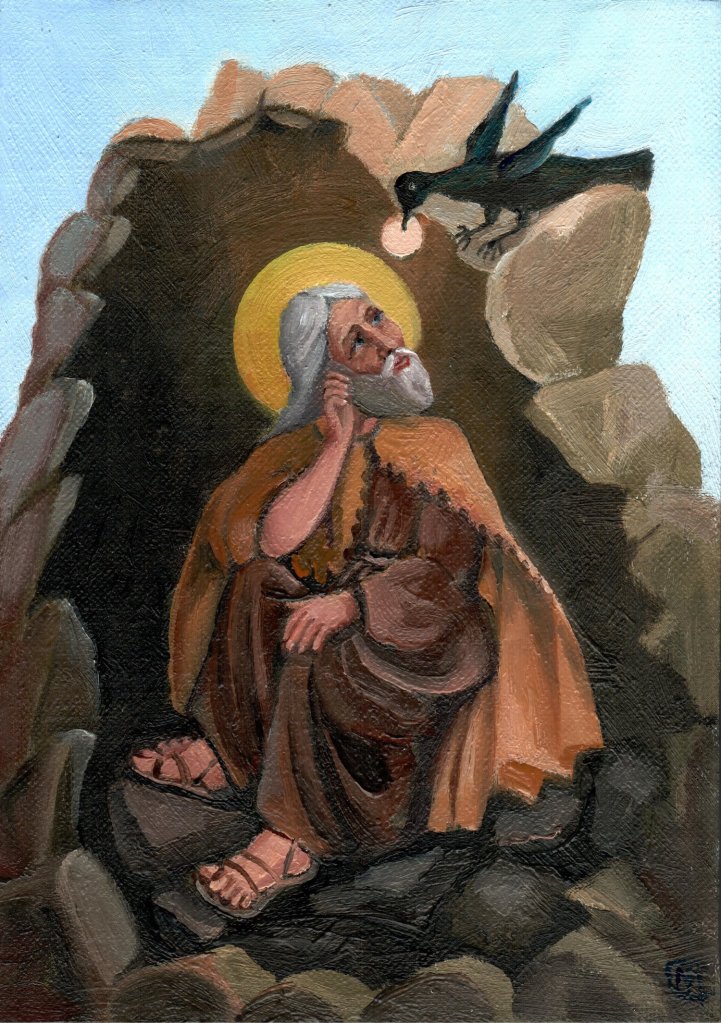
This event enraged Jezebel, wife of Ahab, king of Israel, and as the avid support of Baal, she ordered that Elijah be seized and executed. Unexpectedly, Elijah, the mighty prophet of God and miracle worker, became afraid and ran away. Tired of running, he asked the Lord to take his life. Yet, the Lord sent His angel to feed him. He continued his journey to Mount Horeb in Sinai. There, he encountered the Lord, but not in the way he expected. The Lord was not in the great wind, earthquakes, or powerful fire but the calm whisper sound. Indeed, God was in the least expected place. However, after Elijah realized God’s presence and spoke with Him, Elijah was back on his feet and walked back to Israel to continue his missions.

The life of Elijah teaches us several precious lessons. Often like Elijah, we became afraid, intimidated and unsure of our lives and missions in the face of danger and suffering. We tend to forget the great things the Lord has done through our hands. We have this ‘spiritual amnesia’. We ignore the truth that the Lord who has been with us in the past is also the same Lord who will be with us in the future. Even trials and pains are part of His providence.

The second lesson is also precious. God can often be found in the places and times we do not expect. Surely, God is present in the Eucharist and our prayers. Yet, the Lord is hidden in the ordinary people we meet daily. Jesus is there in simple acts of kindness and love we receive. God is there when we can be faithful to our day-to-day commitment to our spouse and children. Despite our struggles, the Lord is there when we keep doing good things for others.

Valentinus Bayuhadi Ruseno, OP

Transfiguration and the Cross

Feast of Transfiguration [A]
August 6, 2023
Matthew 17:1-9

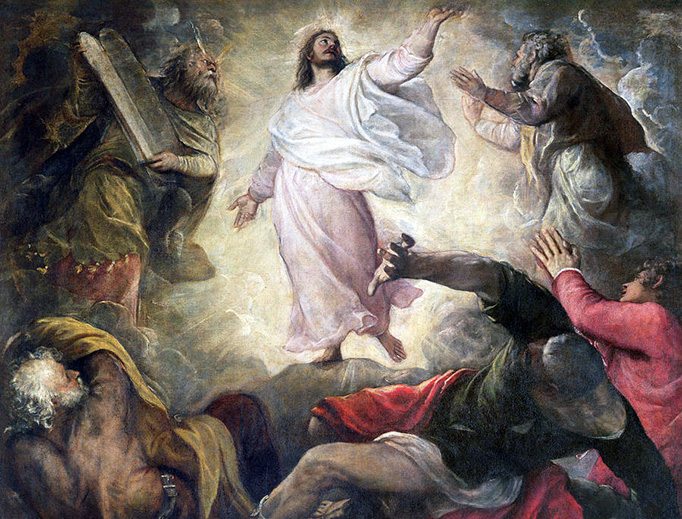
Today the Church is celebrating the event of Transfiguration. This is an extraordinary event in the life of Jesus in which Jesus transfigured or manifested His divine nature to His chosen disciples, Peter, James and John. His appearance became dazzling white, majestic and divine, and the most prominent figures of the Old Testament, Moses and Elijah, also showed up. Moses and Elijah witnessed the Lord in the mountain during their time. Now, they witnessed the same Lord in the mount of TransfigurationTransfiguration. To see Jesus in His divinity must be a phenomenal experience for Peter, James and John. Surely, Peter wanted to savor the experience forever, and thus, he offered to build a tent so they could stay as long as possible in that beatific moment.

However, Jesus had another plan and returned to His ordinary human appearance. Jesus then went down from the mount and walked toward Jerusalem. There, He embraced His cross, brutal suffering and horrifying death. He was treated as the worst criminal and abandoned by His closest disciples. Perhaps, some disciples were disappointed and losing hope, and some were angry and frustrated. Even Peter, James and John seemed to forget the glorious experience of Transfiguration. James ran away. Peter even denied Him. Only John stayed and accompanied the mother of Jesus at the foot of the cross. Yet, this is precisely the point of TransfigurationTransfiguration. The divine Jesus on the mount transfiguration is the same dying Jesus on the Mount of Calvary. The most beautiful Jesus on the cloud, accompanied by Moses and Elijah, is the tortured Jesus on the cross flanked by two criminals.

Transfiguration teaches us precious lessons. Like the disciples, we often want to stay with Jesus when Jesus is in His luminous moments. Yet, when Jesus is crucified and looks miserable, we fail to see Him, run away and even deny Him. We forget that He is the same Jesus. We can easily recognize Jesus and thank Him when our lives are blessed with financial stability, good health, or successful careers. And naturally, we tell the Lord we want to stay forever in these glorious moments. Yet, do we see Jesus when our lives are hard? Perhaps, like the apostles, we are angry, frustrated, and blaming Jesus.

So, how are we able to see Jesus on the cross? We need to learn from the apostle John, and how can John see Jesus and stay faithful? John could see Jesus on the cross because he was not alone. He was seeing Jesus together with Jesus’ mother. He was learning from the example of Mary, who was standing at the cross of His Son. If we want to see Jesus on the cross and stay faithful to Him, we must be with His mother and learn from her. Do we invite Mary when our lives are hard? Do we pray the rosary in times of trials?

However, Mary does not only stand for her person but also the Church. Do we recognize that we are part of the Church, the Body of Christ? Do we allow the Church to accompany us as we walk through our difficult times? Do we help and support others also in our community or parish?

Valentinus Bayuhadi Ruseno, OP