
See Mary, See Jesus

The Solemnity of the Assumption of Mary

August 15, 2020

Luke 1:39-45

assumption of mary 2Often, we, Catholics, are accused of overemphasizing Mary in our faith, liturgy, and even our daily lives. The usual objections are: “Why do we should see Mary if we can go directly to Jesus? Why should there be Mary between you and Jesus?”

These kinds of objections follow from the underlying presupposition that salvation is only about Jesus and me. We just need Jesus, and the rest are obstacles to Jesus. We do not need the Church, the saints, and especially Mary. These are excess baggage that has to be removed so that we can fly quickly to God. While we might be saved with this faith, but this is a narrow, individualistic, and even pompous view of faith, and more fundamentally, it is not kind of faith that God of the Bible teaches us.

In the Bible, God lays down the foundation for our salvation which is through His family. The primary keyword is covenant [or even translated as testament]. It is a solemn agreement to unite two parties into a family. God invited Adam, Noah, Abraham, Moses, and David and their families to be part of God’s family and salvation may be available for these people. And in the fullness of time, Jesus, the Son of God, forged a new and eternal covenant with God on behalf of humanity and entire cosmos. We are saved through the family of Jesus, the kingdom of God.

If we call God as our Father, then we are brothers and sisters in the family of God. If we are brothers and sisters, we have responsibility for one another’s salvation. The saints ceaselessly love and pray for us because they are our holy brethren in heaven, and want us to join them. Their presence does not in any way hinder our gaze on Jesus because precisely the more we see them, the more we see God’s perfection. If we can appreciate the mountains or oceans as work of God’s power and beauty, the more we shall appreciate the saints as supernatural masterpieces of God.

Chief among the saints is Mother Mary. She is the type-A of a human perfected by God’s grace. The more we see Mary, who she is and what she has become, the more we come closer to God in awe and adoration. If God can do great things to Mary, He will do the same to us. If God can redeem Mary perfectly, He will redeem us as well. If God can bring Mary to heaven, He will bring us also to heaven. And as the great sister in faith, she has even the utmost responsibility to bring us closer to God. She prays for us the hard; even she prays harder for those people who hate her.

St. Luke masterfully narrates how Mary, as the new ark of the covenant, brings Jesus in her womb to Elisabeth and John the Baptist. We also notice Elizabeth does not separate the two. When she sees Mary, she recognizes the Lord, and when she is aware of God’s presence, she acknowledges the sacred bearer, Mary. Through Jesus who is in Mary, Elizabeth and John are able to discover their authentic joy.

Valentinus Bayuhadi Ruseno, OP

Focus on Jesus

19th Sunday in Ordinary Time

August 9, 2020

Matthew 14:22-33

just walk on waterThe story of Jesus walking on water is a well-known account being shared by three gospels: Matthew 14:22-33, Mark 6:45–52 and John 6:15–21. However, unique to Matthew is the part of Peter who also walked on water, but sank after a few steps. Let us focus our attention on this unique moment in the life of Simon Peter.

The sudden and unusual appearance of Jesus startled the disciples who were still battling the strong wind. The disciples’ natural reaction was fear. They thought they saw a ghost. Matthew gives us a little interesting detail: the disciples were afraid not because of the raft sea, but because of Jesus’ presence. We remember that many of them were seasoned fishermen and dealing with unpredictable conditions in the lake of Galilee was their part of their job description.  Yet, to see someone walked on water was just unprecedented. Thus, Jesus took the initiative to calm the storms inside their hearts and assured them that He is the “I AM” who controlled the forces of nature.

Peter, the bold leader and yet impulsive man, wanted to prove what he saw and heard. He then challenged Jesus and himself by saying, “Lord, if it is you, command me to come to you on the water.” Jesus invited him to come. The miracle took place. Simon Peter was able to walk on water. Yet, his weak human nature once again set in. After a few miraculous steps, he got distracted by the wind, lost his focus on Jesus, and he began to sink. Jesus had to save him and told him, “O you of little faith, why did you doubt?” We notice that Jesus did not say, “You, who have no faith!” but rather, “little faith.” This shows that Peter possessed indeed faith, proven by his several miraculous steps, but it was still small, easily distracted, and doubt-ridden.

Many of us can easily relate to Simon Peter, our first Pope. We believe in Jesus, and we know that we have faith in Him. Yet, we are aware also that our faith is still small. We may go to the Church every Sunday or pray from time to time, believe that Jesus, our God and Savior, and accept the teachings of the Church, but our faith is just tiny part of our life, that can be set aside when other and bigger concerns like work, career, relationship and others. We give God our leftovers, our time and effort. Even in our prayer and worship, we are easily distracted. Rather than focusing ourselves in Jesus, we give our attention to our cellphones and all the excitement they offer. Then, when we face the storms of life, we begin to sink, and when we are drowning, that is that the time, we shout, like Peter, “Lord, save me!”

We are called to set our gaze on Him and to learn to have true eyes of faith. These are eyes to ponder the Eucharist not as mere bread and wine, not as monotonous repetition, but as the real presence of Jesus who has sacrificed His life for us. This is a faith that empowers us to see Jesus’ presence in our daily and ordinary events. Thus, not even the fiercest storms can sink us because we focus our eyes on Jesus.

Valentinus Bayuhadi Ruseno, OP

His Co-Workers

18th Sunday in Ordinary Time [A]

August 2, 2020

Matthew 14:13-21

multiplication of bread 1The miracle of the multiplication of the bread is one of the few stories that appear in the four Gospels. This may point to the veracity of the miracle itself that impressed and impacted the lives of the apostles. Though the general plot is the same, every Evangelist has presented their own emphasis. Today we are zeroing in the Gospel of Matthew and his particular emphases.
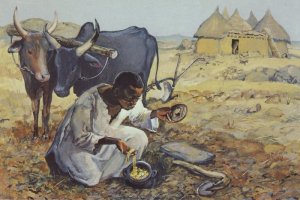
One of these particular emphases is the special role of the disciples. Certainly, without Jesus, there will be no miracle at all, but Jesus makes sure that His disciples also will participate in His miraculous work, and amazingly, the disciples respond well to Jesus’ invitation. Let us look into some details.

Firstly, the initiative is coming from the disciples. They are the ones who notice the condition of the people, exhausted and famished. They propose a practical solution to the situation: send them away to look for food. They may come up with such a plan because of a noble reason. They wanted their tired teacher as well as the people to find some rest after a long and grilling day of teaching and healing. Yet, they forget that Jesus is the rest Himself, as He once said, “come to me you who labor and are burdened, and I will give you rest [Mat 11:28].” For Jesus, the initiative is commendable, but He is not satisfied with the solution. Thus, He says to them, “You give them food yourselves.”

We can imagine the faces of the disciples as they are looking at each other and baffled. Yet, instead outrightly dismissing His demand as something absurd, they do even something extraordinary. They offer Jesus what they have. It is small and far from enough, yet a sincere offering nonetheless. From here, we can already detect that the disciples have somehow grown. They have followed their Master for some time and they have witnessed many miracles of Jesus, listened to countless of His teachings, and seen how Jesus tenderly loved the people. They have grown like Jesus. They have faith that Jesus can do the impossible, and they become more and more compassionate like Jesus.

It is no wonder that after Jesus blesses and breaks the bread, He chooses to give them to the disciples. He trusts now that the disciples will carry on His mission of caring and loving the people. Indeed, they faithfully bring the broken bread to the people. This miracle is the first yet crucial step for Jesus and His disciples because later, Jesus will entrust the same disciples to bring Jesus Himself to His people in the Eucharist.

Jesus surely can perform the miracle by Himself, and as God, He has no need of any man’s help. Yet, because His very nature is love, He wants people He loves to become the loves themselves. Jesus invites the disciples to participate in His miracle of love, and so that they may learn to love deeper. As Jesus shares His life to them, the disciples as the sharers of His mission will eventually love till the end.

That is how Jesus forms us as His disciples. He invites us to actively participate in His life and mission. This is a mission to feed, to care, and to love His people. This is the beauty of our faith and religion. It is not a passive and powerless faith, yet a faith that is truly alive, shared and enriching, a faith that grows into hope and hope perfected into love.

Valentinus Bayuhadi Ruseno, OP

The True Treasure

17th Sunday in Ordinary Time [A]

July 26, 2020

Matthew 13:44-52

parable of hidden treasureThe parables of the hidden treasure and of fine pearl are among the shortest yet loveliest parables of Jesus. Finding a fine pearl or a hidden treasure is surely an exciting discovery.  We can naturally share the joyful experience. Yet, the key to unlock the secrets of the parables is to spot the surprising twists. If we find a treasure, we instinctively grab it and bring it home.  If the treasure is exceedingly huge and many, we can grab some and use them to buy the land. It is a bit reckless to sell everything first and then buy the land. What if the owner of the land suddenly refused to give up the land? The same goes for the purchase of the fine pearl. Sometimes a businessman would make a risky investment to gain more profit. Yet, to throw everything for a pearl is a bit of foolishness. The merchant still needs money to sustain his daily life and business, and what if the investment fails?
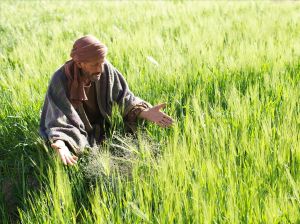
Through two parables, Jesus teaches His disciples that His kingdom is immensely precious, and in order to achieve it, we have to give up everything. We cannot cheat or steal it. We have to merit it in the right way. The teaching itself is not something novel in the gospel of Matthew. Back in chapter 10, Jesus tells that those who love their parents more than Jesus, is not worthy of Jesus. It is all or nothing for Jesus. It is the same with His kingdom.

Is it possible to give up everything for Jesus and His Kingdom? The answer depends whether we consider the Kingdom as something truly precious for us. The merchant, for example, may recognize that it is a fine pearl, but if he does not see it as extremely precious, he will not sell everything he has to buy that pearl. To simply know is existentially different from accepting it as precious. One remains in the mind and the other goes down to the heart. We may recognize that Jesus is our Savior and Lord, but do we value Him and make Him as our top priority? We may be aware that the Church is the Kingdom of God, but do we hold her a precious? Do we give up everything for Jesus and His body, the Church?

How do we make something precious? When we love someone or something, we value them. When they are valuable, we treasure them. When they are our treasures, there our hearts are. We see a little child. She loves her toys. These become valuable to her. And as her valuables, she spends her time with them and takes care of them. When we love our work, we value it and we make it our priority. When we love our family, we treasure them, and we exert our time and effort to make them happy.

We may be baptized as a Catholic and our parents teach us that Jesus is our Lord. We may study in Catholic schools and go to the Church from time to time. But, do we love Jesus and His Church? Are Jesus is valuable and precious to us that we are willing to surrender everything for Him? Do we treasure Jesus and place our hearts in Him?

Valentinus Bayuhadi Ruseno, OP

Wheat among the Weeds

16th Sunday in Ordinary Time [A]

July 19, 2020

Matthew 13:24-43

wheat n weed 1The parable of the wheat and weed is one of a kind. If we survey the details, we are supposed to raise our eyebrows. Firstly, if you become a person who will destroy your opponent’s field of wheat, you know that there are several other effective ways to accomplish that. We can simply set a small fire on the wheat, and the entire field will eventually turn to be an inferno. But, the enemy chose unorthodox tactic: to sow seeds of weed during the planting period. While the weed may disturb the growth of the wheat, they will not sufficiently damage and stop the harvest.  So, what is the purpose? What is surprising is that the decision of the field’s owner. When he was notified about the presence of the weed, he immediately knew the culprit, and instead to act promptly and protect their wheat, he decided to allow the weeds to thrive among his wheat.

As expected, the disciples were puzzled by the parable, and when the disciples asked the meaning of this parable, they found another mind-blogging answer. The owner of the field is God Himself and He allowed the children of the evil one to grow among the children of God both in the world and in the Church. Yes, God allows that! He allows His children will not have a smooth journey and growth in the world. God allows His children to be harassed, bullied, and even persecuted by the evil one. God allows His children to experience trials and difficult moments. The question is why?

We may take the cue from St. Paul. He once magnificently wrote, “We know that all things work together for good for those who love God, who are called according to his purpose [Rom 8:28].” God allows bad things to happen because these are for our good! What kind of goodness why we may ask? From our human perspective, perhaps it is nothing but absurd, but from His vantage point, things fall into its proper places.

Jesus invites us to call God as Father, and letter to the Hebrews reminds us, “for the Lord disciplines those whom he loves, and chastises every child whom he accepts [Heb 12:6].” Trials and difficulties are God’s pedagogy toward whom He loves. As parents, we know care and discipline have to work hand in hand. We are well aware that true discipline is also a way of loving. If we want our children to succeed in their lives, we need to teach them to delay their gratification. We allow them to experience pain and difficulty first before we give them a reward. My parents used to ask me to study and finish their homework first before I could enjoy watching television. It resulted not only in good grades, but also my acquired habit not to run from problems, but to endure it.

I do believe that it is also the same as our Father in heaven. He loves us by allowing us to endure the pain in this world so that we may truly appreciate the spiritual gifts. Allow me to end this reflection, by quoting St. Paul, “We also boast in our sufferings, knowing that suffering produces endurance, and endurance produces character [as children of God], and character produces hope, and hope does not disappoint us..” [Rom 5:3-5]

Valentinus Bayuhadi Ruseno, OP

Jesus the Sower

15th Sunday in Ordinary Time [A]

July 12, 2020

Matthew 13:1-23

Processed with VSCO with e1 preset

In today’s Gospel, we observe the reaction of the disciples after Jesus spoke His first parable. They were puzzled and confused. Why? because Jesus took a sudden change of method. In previous chapters, Jesus taught them plainly, like in the sermon of the Mount [Mat 5-7], and His teachings were as clear as broad daylight. Yet, Jesus made an unexpected turn that makes many people, and including His disciple lost. What really happened?

To understand the parable, we need to see that parable has been used even before Jesus, in the Old Testament. One of the classic examples is the parable of the prophet Nathan addressed to king David [See 1 King 12]. King David has done unthinkably grave sin by committing adultery with Bathsheba and orchestrating the murder of her husband, Uriah. Then, prophet Nathan confronted David, yet indirectly by narrating him a parable. It was about a rich man who forcefully robbed a ewe of a poor man. Listening to the story, David was infuriated and declared that the rich man should die. Then, Nathan dropped the bomb: “David, you are the rich man!” Fortunately, David was a kindhearted and faithful king, and he repented when he was reminded.

That is the power of a parable. It is an indirect and concealed message to make people think deeper about themselves. Jesus began to talk in parables as Jesus realizes that the opposition of the Pharisees and the scribes were worsening, and many people who just want to be entertained rather than to follow Jesus.

Thus, the parable of the sower expresses the real condition of Jesus’ ministry. The elders and the Pharisees were like the pathway. They heard Jesus’ preaching, but still chose to be under the influence of darkness, and sought to destroy Jesus. Many people were like the rocky ground because they simply looked for Jesus to satisfy their needs. Others were like soil filled with thorns because they followed Jesus for a time, but when the trials came, they abandoned Jesus. Lastly, the rich soil was the disciples.

The parable of the sower is not reflecting different kinds of hearers of Jesus during His time, but it is also revealing the reality of our time. Some of us are like the pathway, perhaps we were baptized Catholics, but we never live as such, and still living in sin. Some of us are like rocky ground. We treat Jesus and His Church as a place of entertainment, and we simply look for ourselves rather than God. Some of us are like soil filled with thorns. We are elated of being Christians, but we do not go deeper in our faith, and when the trials or doubts hit, we easily leave the Lord. And hopefully, many of us are like rich soil. We do our best to receive God’s Word and see to it that it will grow and bear fruits.

The good news is the word of God is exceedingly powerful that even it can bear fruit is the rocky ground. Yet, the initial grace is free but it is not cheap, and we need our part. It is our mission to transform even the rocky ground into the rich soil for the Lord.

Valentinus Bayuhadi Ruseno, OP

Yoke of Jesus

14th Sunday in Ordinary Time [A]

July 5, 2020

Matthew 11:25-30

finding cross 2From the previous two Sundays, we learn that Jesus lays down the cost of following Him, how to become His disciples. And they are extremely tough. One has to follow Jesus wherever He goes. One must love Jesus above anyone else. One must be ready to suffer persecutions and hardships, carry his cross, and give up his life for Jesus. It is Jesus or nothing at all. However, following Jesus is not all about hardship and sacrifice. Today we hear that to walking with Him, we receive certain “perks” that others cannot even dare to offer.
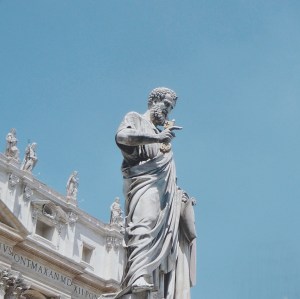
Today’s Gospel is one of my personal favorites. Here, Jesus is presenting His other side. Last Sundays, we witness Jesus, who is firm and resolve in following the Father’s will, and He demands the same thing from His disciples. Now, He is showing Himself as one who is gentle and humble. He even promises to give rest to those who come to Him. Yet, there is an interestingly powerful point that Jesus makes: that in order to have rest, we need to carry the yoke of Jesus. A yoke is a device placed on the shoulders to carry weight. For Jesus, rest is not throwing away the yoke. We need to carry our yoke, our daily responsibilities, and mission in life. Yet, despite carrying the yoke, it will be easy. How is that possible?

We remember that Jesus is a carpenter’s son and Himself a carpenter. He knows well that a yoke that does not fit the shoulder will only add more burden and hurt. Yet, the yoke that is designed perfectly to fit the shoulder, will feel easy and even comfortable. This is the yoke of Jesus, a yoke that fits each of us.

The second point is that there is a kind of yoke that can be shouldered by two animals or persons, “a double yoke.” I do believe that this is a kind of yoke that Jesus offers to us. Why double yoke? Because Jesus will bring together yoke with us. He shoulders the yoke with us. And when we feel exhausted, that’s the time He takes over and we find rest.

But, wait, there is more! In the Gospel of Matthew, twice Jesus instructs His disciples to carry something in their shoulders. The first one is to carry the cross [Mat 10:38, and the second thing is the yoke [Mat 11:29]. Jesus seems to make a real connection between the two: His yoke is our cross. If this is true, then the implication is massive. Our daily cross is actually easy because it perfectly fits us and even, Jesus is carrying it with us. I do believe most of the time, it is Jesus who carries our crosses. At first, Jesus sounds exceedingly tough with His nearly impossible demands, especially to carry our cross, but looking our Gospel deeper, we realize that most the time, it is Jesus who shoulders our crosses. That is the reason only His cross, we find the true rest and consolation.

If we find ourselves still burdened and exhausted with our lives, we may ask: Are we carrying the cross of Jesus? Are we bringing the yoke alone and relying solely on our strength? Are we shouldering unnecessary burdens that should be unloaded a long time ago?

Valentinus Bayuhadi Ruseno, OP

Jesus or Nothing

13th Sunday in Ordinary Time

June 28, 2020

Matthew 10:37-42

Processed with VSCO with p5 preset

In many cultures like Indonesia, Filipino, and Chinese, to honor our parents is of prime importance. In Indonesia, to highlight the value, a folklore “Malin Kudang” was taught even in elementary. In essence, Malin not only failed to respect his parents, but also deliberately ignored them. Thus, his mother cursed him into a stone. it is just unforgivable to disrespect someone who gave your life and raise you to life.

Respecting the parents is also one of the highest values for the Jewish people. What is remarkable is that they are not honoring their parents because it is something natural to do, but because it is a divine commandment. Going back to the Decalogue, to honor our mothers and fathers is, in fact, the fourth commandment, highest among the commandments regulating the human community. Even the Hebrew word used is “kabad”, which can mean “to honor” but may mean also to glorify. Thus, God instructed the Israelites and Christians as well not simply honor but to glorify our parents.

However, today’s Gospel tells us that Jesus demands even something unthinkable, that if we love our parents more than Jesus, we are not worthy of Him. Peter, Andrew, and John and the rest of the disciples have left their stable jobs and the comfort of their home to follow Jesus, but Jesus even lays down a more radical requirement. To follow Him is not just physically be present with Him, but the disciples have to give their total love for Jesus above everyone else. Who is this Jesus who requires His followers the love beyond our parents?

The answer is not that complicated. Jesus deserves all the love and loyalty we have simply because He is God. In Book of Deuteronomy [6:4-5], Moses instructed Israelites how to love and honor God, “Hear, O Israel! The Lord is our God, the Lord alone! Therefore, you shall love the Lord, your God, with your whole heart, and with your whole being, and with your whole strength.”

And how did Jesus know that His disciples love Him more than anybody else, and not merely lips service? As proof of their love, Jesus asks them to show this: “take up your cross and follow me!” In Jesus’ time, the cross is a most gruesome torture and execution method and is designed to prolong the agony. In essence, Jesus tells His disciples if they really love Him above all else, they need to be ready to endure prolonged suffering and even die a horrible death for Him. When we face Jesus, the choice is: all for Jesus or none at all.

Does it mean we shall stop loving our parents and children? Does it mean we no longer do good works for others and just stay in prayers for as long as we can? Not at all. Loving God above other things places us in the right perspective and orients us to the right destination. Now we may love others including our family for the love of God. It means that when we love them, we bring them closer to God. Now we may do our works and service for God, not for the sake of gaining personal benefits. When we work hard and we are blessed with success, the first thing we remember is to give praise to the Lord. And, if we encounter roadblocks in our lives or if we need to endure suffering, we are not losing hope because this is also an opportunity to love God even more.

Valentinus Bayuhadi Ruseno, OP

Be Not Afraid

12th Sunday in Ordinary Time [A]

June 21, 2020

Matthew 10:26-33

peter image 2Jesus never promises that the disciple will have easy and prosperous lives. Jesus demands the opposite. After being chosen, the twelve disciples are sent to preach that the Kingdom is at hand, and yet they will not go like any royal emissaries with their military escort. No! They will travel as simple men going on foot and carrying minimal provision. They will rely on the generosity of their hosts, and the worst part is that they are going to face rejection.

Naturally, humans as they are, they are growing fear. Yet, Jesus tells them that this mission is just “on the job training,” because they are going to undergo something even deadlier in the future. True enough, after the Pentecost, they will preach that Jesus is Lord, and they are facing severe rejection, terrible persecution, and even gruesome death. As Jesus teaches them, “the disciples are no greater than their master.” If Jesus, their master, is rejected, insulted, and condemned to death, the disciples will share the same path. Peter is crucified upside down, James, brother of John, is beheaded, and James son of Alpheus, is stoned to death.

Jesus understands their human and natural fear, but Jesus tells them that they shall not fear. Why? The answer of Jesus is simple. Why should we fear dying if we will perish anyway? The choices are whether we die as a witness to Christ or die running from Christ?

Furthermore, Jesus reveals the real reason why we should not be afraid: we have God, who is a loving and caring Father. Jesus gives a lucid yet simple explanation: how God treats a little sparrow. Sparrow is a kind of vertebrates that is practically worthless in the eyes of merchants, but for God, this little bird is His creatures, and when He created something, He has a good plan for it, and He sees to it that this plan will unfold providentially. In the word of Christian Philosopher Peter Kreeft, even God loves mosquitos. If God cares and loves the sparrow, would He not care and love for us? Again, Jesus points out a lovely truth: God knows better than we know ourselves, even He counts our hairs!

When a sparrow falls and dies, it is part of God’s perfect plan, and so when the disciples are experiencing rejections, trials, and even death, it is also part of God’s providence. Yes, often, our sufferings can be absurd. Why do we have to lose someone we love? Why do we suffer from incurable sickness? We do not understand, but even these terrible things in life are also parts of God’s providence.

We may not see it now, but perhaps we may see it at a later time, or perhaps, we never discover the reasons because of our too narrow minds. Yet, in God’s eyes, it is totally making sense. The gruesome death of martyrs, for example, is unthinkable. Still, Tertullian, a Christian apologist in 3rd century, saw it in a deeper perspective and wrote, “We spring up in greater numbers the more we are mown down by you: the blood of the Christians is the seed of Christianity.”

Jesus does not call us to enjoy a prosperous life but to be His witnesses. Though things may turn against us, Jesus tells us not to fear and worry because, in the end, all will work according to His beautiful plan because He loves us.

Valentinus Bayuhadi Ruseno, OP

Christ’s Body and Our Body

Solemnity of Body and Blood of Christ [Corpus Christi] – A

June 14, 2020

John 6:51-58

eucharist 3The solemnity of the Body and Blood of Jesus Christ takes its origin from the initiative of St. Juliana of Liege, who asked his bishop and his friends to honor, in a special way, the institution of the Eucharist, and the real presence of Jesus Christ in the Blessed Sacrament. The institution of the Eucharist itself took place in the Last Supper of the Lord, and every Holy Thursday, the Church celebrates this event. However, since Holy Thursday is an inseparable part of the Easter Triduum, the attention is given to the mystery of the Passion and Resurrection of our Lord. Because of its rootedness in Holy Thursday, the solemnity of Corpus Christi is celebrated on Thursday after the Trinity Sunday. Yet, in several countries, the celebration is moved to the next Sunday to accommodate the greater participation of the faithful.

 In the Gospel, Jesus insists that His body is real food, and everyone who wants to have eternal life shall consume His body. We may wonder: why does in His infinite wisdom, Jesus decide to give His body as food for our spiritual nourishment? Why not infuse the grace directly to our souls? The answer may surprisingly simple. It is because our body is real and good. God created man and woman in their fulness human nature, including their bodies, as something very good. Though our body comes from the ground, it has been marvelously designed to receive the bread of God, the spiritual life. Our bodies are fundamentally good, and so good that our bodies are inclined to grace. In the word of St. Augustine, “Capax Dei” (capable of knowing and receiving God).

Since the earliest time, the Church has battling perennial heresy called Gnosticism. In essence, gnosticism teaches there is dualism in our creation, and that the spiritual realm is good and the material world, including our body, is evil. Thus, any material aspect of our humanity has to be disposed of. The Church vehemently opposed this because God has created our material world as good and beautiful. The battle continues in time of St. Dominic de Guzman, the founder of Order of Preachers, who fought the Albigensians [the middle age adaptation of gnosticism). Gratefully, the Albigentians were no more, but unfortunately, the gnosticism lives on.

As Christians, we carry the battle of the Church against the modern-day gnosticism. The kind gnosticism is surprisingly simple without any need to learn a complex system of belief. When we consider our body a mere instrument to achieve success, when we abuse our bodies to feel instant pleasures, when we treat our bodies as mere economic gain, when we say that my body is my right, we unconsciously fall into the trap of this heresy.

But wait, there’s more! The feast of Corpus Christi brings us even greater truth of our body. By becoming man and finally giving His body, Jesus teaches us that body is not only capable of receiving grace, but it is also capable of becoming grace and love for others. In the Last Supper, Jesus has given as a supreme expression that is to offer His own body in love. And yet, to be shared, it has to be broken, and yet despite broken, it is offered in thanksgiving.

 In this time of the pandemic, we are not able to attend the Holy Mass, and we miss a lot the Body of Christ. Yet, the good news is that it is our time also for us to become the Body of Christ for our neighbors in need. Only through sharing our body in love, we fulfill our purpose as bodily creatures created in His image.

Valentinus Bayuhadi Ruseno, OP