Rejoice in Sufferings


16th Sunday in Ordinary Time [C]

July 20, 2025

Colossians 1:24-28

Suffering is an unavoidable part of human existence. Across religions and philosophies, people have sought to explain its purpose. Yet, what is the Christian view about sufferings? How is it different from other views?

 Some view suffering as divine punishment for wrongdoing, implying that those who suffer must be guilty and sinners. Others dismiss it as an illusion, urging total detachment. Some attribute it to karma, the result of bad actions in the previous lives. While others see it as meaningless, something to avoid at all costs.

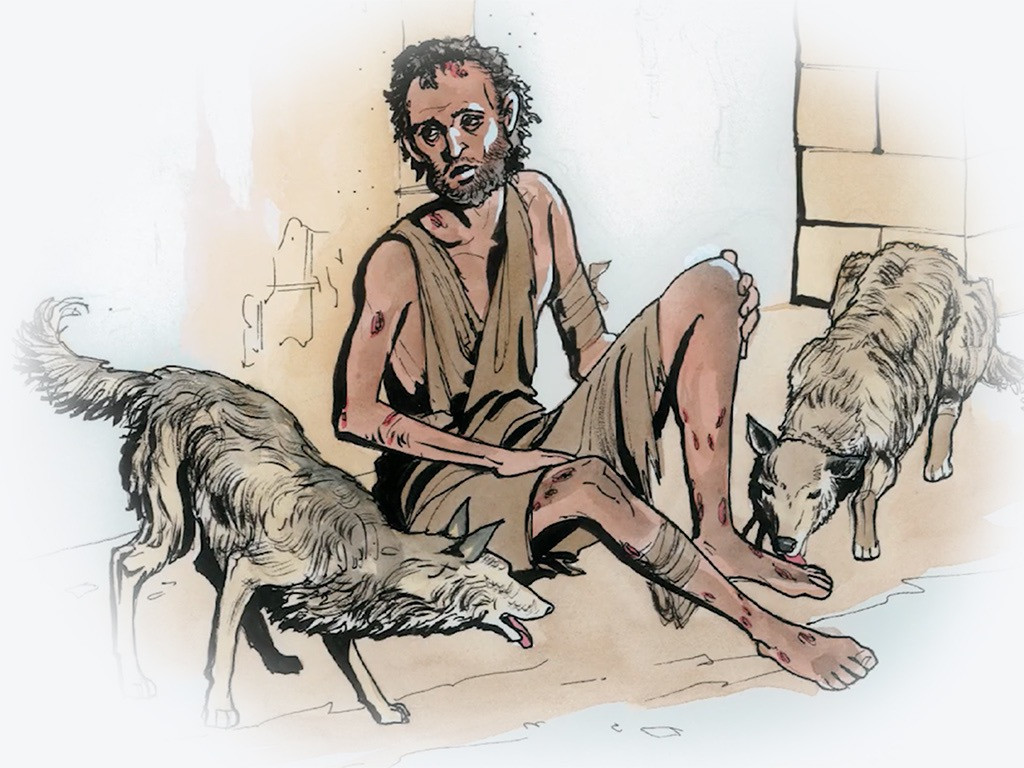
But what does Christianity teach about suffering? How does our perspective differ? The Old Testament grapples with this question, particularly in the Book of Job. Job was a righteous and sinless man, yet he endured immense suffering. Why? The Book reveals that sufferings is not a punishment, but part of God’s mysterious plan to refine his faith. This challenges the simplistic idea that suffering is always a consequence of sin.

In the New Testament, St. Paul offers a radical perspective. He writes, “I rejoice in my sufferings” (Col 1:24). At first glance, this seems astonishing—how can anyone rejoice in pain? Job of the Old Testament lamented his suffering, yet Paul expresses gratitude. Was Paul a masochist, someone who takes pleasures in pain?

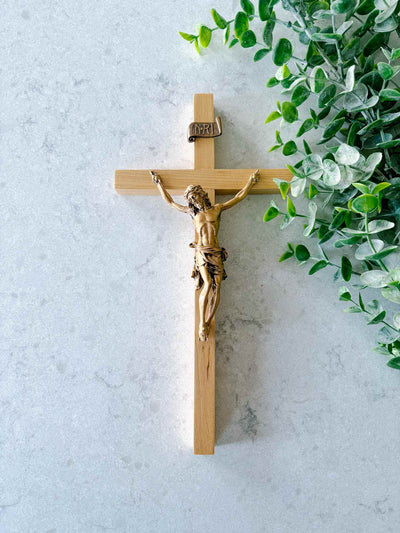
Far from it. To understand, we must read his full statement: “Now I rejoice in my sufferings for your sake, and in my flesh, I complete what is lacking in Christ’s afflictions for the sake of His body, the church.” Paul bore a lot sufferings for the sake of Christ, and His Church. He experienced beatings, imprisonment, hunger, and betrayal. Yet he saw his suffering not as meaningless, but as a way of sharing in Christ’s own redemptive suffering. Indeed, Jesus endured an extremely painful suffering and horrifying death on the cross, yet through His divine love, Jesus transformed these sufferings into a way of salvation.

Jesus’ crucifixion was the perfect sacrifice, which was completely sufficient for salvation. However, the Church, the body of Christ, continues to suffer because she still journeys in the world and walks in the way of Jesus’ cross. Jesus had warned His followers that they would face persecution for His name (Mt 10:38; Jn 15:20; Acts 9:16). Then, Paul had a choice: blame God for his suffering, or see it as an opportunity to perfect the suffering of the Church. Paul chose the latter, and offered his suffering as a means of blessing for the people in Colossae.

Some suffering results from our own mistakes, but often, we endure trials beyond our control. In those moments, we have a choice: to resent God or to embrace suffering as a share in Christ’s cross. When we unite our pain with His, it becomes more than just hardship: it becomes a path to holiness, a means of grace for ourselves and others.

Valentinus Bayuhadi Ruseno, OP

Guide Questions:

What sufferings are we facing today? How do we perceive them? How do we respond to them – with anger, despair, or trust? Do we see our struggles as part of Christ’s redemptive work?

Know Who and How to Love

15th Sunday in Ordinary Time [C]

July 13, 2025

Luke 10:25-37

If we found ourselves in the same situation as the parable Jesus told, who would we become? Would we act like the priest and the Levites—ignoring and avoiding the wounded man altogether? Or would we, like the Samaritan, show mercy and help the one in need? Or would we do something entirely different?

In today’s digital age, equipped with high-tech gadgets, we might even do the unthinkable and unimaginable especially in Jesus’ time. Instead of helping, we might pull out our smartphones to record the scene, take a selfie with the victim, or even livestream the incident! As absurd as it sounds, this is not entirely far-fetched.

We are living two millennia after the Good Samaritan, and modern life has made it even harder to do good and help those in need. Before assisting someone injured on the street, we face countless doubts and uncertainties: Is this person truly hurt, or is it a scam? Could I get in trouble for helping? Do I even have time, with work and other responsibilities? The complexities of modern living often paralyze us, making it difficult to love our neighbors, especially those who need it most. So how should we respond?

1. Love for Others Is Love for God

We need to remember that loving our neighbors must be an expression of our love for God. We are called to love God wholeheartedly in all that we do. This means that working hard to provide for our families is an act of love for God, because God entrusted them to our care. Raising our children in wisdom and faith is an expression of devotion to Him because they are gifts from God. Even taking care of our bodies, through good food and habits, honors God, as our bodies are His blessing to us.

2. Know Your Priorities in Love

We are not superheroes; we can’t help everyone at once. Our first responsibility is to love those God has placed in our care. As parents, our primary duty is to protect, provide for, and educate our children. If we spend more time serving in church while neglecting our family, something is wrong. Only when we’ve fulfilled our primary responsibilities should we extend love and help to others which comes naturally.

3. Learn How to Love Well

After knowing who we need to love, then we need to know how to love them. Parenting, for example, demands total dedication. Why? God designed children to need more than just food, shelter, and clothing—they require emotional presence, role models, and constant guidance. Many mental health struggles in children today stem from absent parents—whether physically or emotionally—who assume money alone can solve everything.

Being a Good Samaritan starts at home. If we cannot love those closest to us, how can we truly love strangers?

Valentinus Bayuhadi Ruseno, OP

Guide questions:

How do we love ourselves? How do we love our spouse? How do we love our children? How do we love our vocations? How do we see our priority of love?

Seventy

14th Sunday in Ordinary Time [C]

July 6, 2025

Luke 10:1-20

The sending of the seventy disciples is a story unique to the Gospel of Luke. This episode reveals an important truth: Jesus’ followers were far more than just the twelve apostles. But why did He choose the number seventy?

There are several possible reasons:

  1. A Reflection of Jesus’ True Following

The twelve apostles were not Jesus’ only disciples. Many others followed and learned from Him. While the Twelve were chosen as leaders of His growing community, they were not the only ones committed to His mission. The number seventy (or seventy-two, in some manuscripts) suggests a much larger group of believers dedicated to Jesus’ cause.

  • Fulfilment of the Old Testament

In the Old Testament, seventy elders were appointed to assist Moses and Aaron in leading the Israelites through the wilderness (Num 11:16-17). These elders ascended Mount Sinai, where they encountered God and even shared a meal in His presence (Exo 24:9-11). Just as Moses and Aaron relied on these leaders to guide Israel to the Promised Land, so also Jesus called and sent out the seventy to lead God’s people toward the true Promised Land, the Kingdom of God.

  • A Symbol of Fullness and Covenant

In Scripture, the number seven represents completeness and God’s covenant. For example:

  • Creation was completed in seven days (Gen 1), symbolizing divine order and perfection.
  • The Hebrew word for “seven” (sheva) is also linked to covenant-making. Thus, in Hebrew, when we say that we make “seven,” it means we make a covenant.

By multiplying seven by ten, the number seventy amplifies this meaning: God’s perfection and covenant are extended to even more people. The seventy disciples were part of God’s plan to bring redemption, order, and more souls into His family.

More Than Just a Number

These seventy were not mere statistics—each was a unique individual with their own story. Though Luke does not record their names or details, Jesus assures them (and us) that their sacrifices were known. He recognized their willingness to be sent and to go to different places, facing unknown variables. Some might fail to find a shelter, other might go hungry, while some were even rejected and mocked. Many also had to face the deadly encounter with demons which were far more powerful than their human strength. The Gospel is silent about these details, but Jesus knew them too well, and thus, even if the Gospel omits their stories, they are forever written in the Book of Life.

Like the seventy, we may feel unseen—just another face in the crowd, a mere number of statistics, our deeds too small for history books. But this Gospel reminds us: Jesus knows and loves each of us personally. Every act of love, no matter how small, is precious to Him and recorded in eternity.

Valentinus Bayuhadi Ruseno, OP

Guide questions:

What can we do to help build God’s Kingdom—no matter how small our actions may seem? Are we willing to be sent? Do we compare ourselves to others? Do we truly believe we are loved?

Peter and Paul

Solemnity of St. Peter and St. Paul [C]

June 29, 2025

Matthew 16:13-19

Why does the Church celebrate St. Peter and St. Paul together?  Several key factors bind their legacies together, making them uniquely honored in Christian tradition.

1. Prominence in the New Testament

Both Peter and Paul stand out as the most frequently mentioned figures in the New Testament. Peter (including variations like Simon, Cephas, or Simon Peter) appears approximately 190 times, while Paul is referenced even more, around 228 times—far surpassing other major figures like John the Baptist (mentioned roughly 90 times). Interestingly, though Luke’s work is titled The Acts of the Apostles, the narrative is dominated by these two men. Beyond their recorded deeds, both also contributed inspired writings to the New Testament: Peter authored two epistles (1 and 2 Peter), while Paul wrote 13 letters, forming a significant portion of the biblical canon.

2. Intertwined Lives and Ministry

Their paths crossed at critical moments in early Church history. After his dramatic conversion, Paul visited Jerusalem and spent 15 days with Peter (Galatians 1:18), likely learning firsthand about Jesus’ teachings from the chief apostle. Later, at the Council of Jerusalem (Acts 15), Paul and Barnabas argued against the imposition of the Jewish customs like circumcision on the Gentile converts. Peter, as the leader of the apostles, ultimately decided that the Gentile converts shall not be burdened by Jewish customs, thus sided with Paul. Yet their relationship wasn’t without tension. Paul later publicly criticized Peter when he withdrew from eating with Gentile Christians (Gal 2:11-14). Despite these conflicts, their mutual respect endured.

3. Shared Martyrdom in Rome

Though Scripture records only a few direct encounters, tradition holds that their ministries converged powerfully in Rome. The Acts of Apostles concludes with Paul arriving in the city around 60–61 AD as a prisoner, awaiting trial before Caesar. Even under house arrest, he preached boldly and likely wrote letters like Ephesians and Philippians. After a possible release (around 63 AD), he was re-arrested during Nero’s persecution and executed around 65–66 AD. Meanwhile, Peter likely reached Rome by the early 60s AD, where he served as the recognized leader (bishop) of the Church of Rome. The two may have collaborated there before both facing martyrdom. Peter crucified upside-down and Paul beheaded as a Roman citizen.

4. Enduring Legacy in Rome and Beyond

Their tombs remain focal points of Christian pilgrimage especially in this Jubilee year. St. Peter’s Basilica in Vatican City stands over his burial site, while St. Paul Outside the Walls at Via Appia marks where Paul was laid to rest. Intriguingly, the Basilica of St. John Lateran—Rome’s cathedral—features bronze statues of Peter and Paul above its main altar, housing relics said to be fragments of their skulls. This symbolism underscores their inseparable role as twin pillars of the Church of Rome.

Neither man began as a spiritual giant. Peter, impulsive and fearful, denied Christ three times. Paul, once a persecutor of Christians, sought to destroy the Church. Yet through God’s grace, both were transformed—ultimately giving their lives for Christ. Their shared feast not only honors their martyrdoms but also celebrates how God uses flawed people to build His Church.

Rome

Valentinus Bayuhadi Ruseno, OP

Guide Questions:

What are our weaknesses as human persons? How does the grace of God empower and transform us? Do we love the Church as St. Peter and St. Paul did? How do we love the Church?

Body Given in Love

Solemnity of Corpus Christi

June 22, 2025

Luke 9:11b-17

The Solemnity of Corpus Christi celebrates the Eucharist, the real presence of Jesus Christ in the Holy Mass. Since it is a celebration of the Eucharist, the Solemnity of Corpus Christi is intrinsically linked to Maundy Thursday, when Jesus instituted the Eucharist at the Last Supper. If Corpus Christi is fundamentally connected to Maundy Thursday, then it is also tied to the entire Easter Triduum. Jesus’ real presence is not only associated with the Last Supper but also with His Cross and Resurrection. But, how are Corpus Christi related to the Cross and Resurrection?

Jesus’ Body and Blood are, in essence, the sacrifice of the Cross (Jn 1:29; Eph 5:2). In the Old Testament, offering sacrifices was the divinely ordained way of worship. The Book of Leviticus describes various types of sacrifices, such as the burnt offering (holocaust), the sin offering, and the peace offering (communion sacrifice) (Lev 1–5). Jesus perfectly fulfills all these Old Testament sacrifices. He surrendered Himself completely on the Cross as the perfect holocaust (Heb 10:5-10). He died to save us from our sins, just as a sin offering does (2 Cor 5:21). Moreover, His Body and Blood are received by His people, much like the communion sacrifice—a type of offering that was partly given to God, partly consumed by the priest, and partly shared by the worshippers, symbolizing communion between God and His people (Eph 2:14-16).

However, Corpus Christi is also connected to His Resurrection. The Body and Blood of Christ that we receive in the Eucharist are not merely ordinary flesh but the glorified and resurrected Body of Christ. Ordinary human bodies are weak, limited, and subject to decay after death. Yet, Jesus’ resurrected body is full of grace and life-giving power—a body that transcends time and space, moves between heaven and earth, and can transform its appearance into bread and wine. This is why, in John 6:54-55, Jesus confidently declares: “Those who eat my flesh and drink my blood have eternal life, and I will raise them up on the last day; for my flesh is true food and my blood is true drink.”

The Feast of Corpus Christi reveals that Jesus, the Son of the living God, gave up everything—His life, His divinity, and His humanity—for us as the ultimate sign of His radical love. Yet Corpus Christi does not end with the Eucharist. As we carry Jesus in our lives, we are also called to share our bodies with one another in love. In fact, as human beings, the greatest expression of love is through our bodies. Married couples give themselves to each other until death separates them. Parents sacrifice their bodies for their children so they may live and grow. Religious men and women dedicate their bodies to the Church and the people of God. Just as Jesus said, “This is my body which is given for you,” we also do the same, “This is my body which is given in love!”

The Eucharist is truly central to our lives—not only because it provides perfect and acceptable worship to the Father, but also because it grants us the grace to share our bodies with others. Only by sharing our humanity in love do we find true happiness, and this is made possible through the grace we receive in the Eucharist.

Rome

Valentinus Bayuhadi Ruseno, OP

Guide Questions:

What are our understanding about the Eucharist? How often do we participate in the Eucharist and receive the Body and Blood of Christ? How do we express our reverence and love when we receive the Eucharist? How do we use our bodies to love?

Trinity in the Bible and in Our Life

The Solemnity of the Most Holy Trinity [C]

June 15, 2025

John 16:12-15

The mystery of the Holy Trinity stands at the center and foundation of our faith because it reveals the very nature of God. Our logical minds can deduce that there is one God, a perfect Being who created and sustains all things. Yet, we depend on divine revelation to grasp this profound truth. The word “Trinity” does not appear in Scripture, but the Bible, both in the Old and New Testaments, unveils this reality. Scripture affirms there is only one God, yet simultaneously reveals a plurality within His oneness.

One intriguing passage that hints at the Trinity is the very verse that declares God’s oneness—the Shema Israel (Deuteronomy 6:4). The Hebrew text reads: “שְׁמַע יִשְׂרָאֵל יְהוָה אֱלֹהֵינוּ יְהוָה אֶחָד” (Shema Yisrael Adonai Eloheinu Adonai Echad). Most English translations render this as, “Hear, O Israel: The Lord our God, the Lord is one.” However, a more literal translation would be: “Hear, O Israel: The Lord, our God, the Lord, one.” It is striking how the verse mentions the Lord three times before concluding with “one.”

Other Old Testament passages also suggest plurality within God’s unity. For example: Gen 1:1-2 and 1:26 speak of God creating with His Spirit and using the plural “Let Us make man in Our image.” The Angel of the Lord appears as a divine yet distinct figure (Gen 16:7-13; 22:11-18; Exo 3:2-6; Judg 13:18-22). The Spirit of God is active in the Psalms and prophets (Ps 51:11; Isa 63:10-11; 48:16; Eze 36:26-27). Prophet Zechariah (2:10-11) even speaks of “two Yahwehs.” Yet, the fullness of this mystery is only fully revealed in the New Testament.

One of the most definitive Trinitarian passages is Matthew 28:19: “Baptize them in the name of the Father and of the Son and of the Holy Spirit.” Here, Jesus speaks of one name, yet within that one name are three distinct Persons: Father, Son, and Holy Spirit.

However, the Trinity is more than a biblical truth, but it is the most precious gift to us. As St. Paul writes, “No one can say, ‘Jesus is Lord,’ except by the Holy Spirit” (1 Cor 12:3). The Spirit infuses faith in our hearts, enabling us to confess Christ, the Son of the Father. The same Spirit pours hope into us amid trials, especially for confessing the true God (Rom 5:3-5). And when we love, even those hardest to love, we participate in the life of the Triune God, whose very essence is love (1 Jn 4:8).

The Trinity is not merely a doctrine to profess but a mystery we live daily. We enter Christian life through Trinitarian baptism. As Catholics and Orthodox, we begin prayers with the Sign of the Cross, invoking the Father, Son, and Spirit. In the Eucharist, the Holy Spirit transforms the bread and wine into Christ’s Body and Blood, offered to the Father as the perfect sacrifice.

As we celebrate this greatest mystery of our faith, let us give thanks that God invites us into His very life—Father, Son, and Holy Spirit—now and forever.

Rome

Valentinus Bayuhadi Ruseno, OP

Guide Question:

How do we relate with the Holy Trinity? When the first time, we recognize the truth about the Trinity? How do we relate to the Father? How do we relate to Jesus? How do we relate to the Holy Spirit?

The Holy Spirit and His Gifts

Pentecost [C]

June 8, 2025

1 Cor 12:3-13

Today, the Church celebrates Pentecost, the day when the Holy Spirit descended upon Jesus’ apostles and the first disciples, marking the beginning of the Church. From that moment onward, the Holy Spirit, the third person of the Holy Trinity, has played a central role in guiding and sustaining the life of the Church, working through His grace and gifts. It is no surprise that we call Pentecost the feast of the Holy Spirit. Yet, as we reflect on these spiritual gifts, we must do so with wisdom and discernment.

We live in a time when many Christians—both Catholic and non-Catholic—are experiencing the gifts of the Holy Spirit in remarkable ways. This renewed outpouring has awakened us to the Spirit’s active presence in our lives. Some have received the gift of prophecy, speaking words that call others to repentance. Others have been given the gift of healing, becoming instruments through which the Spirit restores health to the sick. Still others pray in tongues, their praises flowing in languages they do not understand (for the list of gifts of the Holy Spirit, see 1 Cor 12:8-10). These are extraordinary encounters, even life-changing for many.

Yet while these gifts should fill us with gratitude and deepen our awareness of the Holy Spirit’s work, there is a danger in focusing too much on the experiences themselves. Some begin to fixate on the sensations rather than the Giver, treating spiritual gifts as a measure of their faith. Some of us may believe that speaking in tongues is proof of holiness, or that lacking miraculous healings means we are distant from God. Those who receive such gifts may grow prideful, while those who do not may feel like failures in their Christian life.

This mindset is not only misguided but spiritually harmful. And while it may seem like a modern problem, the same struggles existed in the early Church. Nearly two thousand years ago, the Church in Corinth were richly blessed with spiritual gifts, yet their community was plagued by division, disorder in worship, and pride. They compared gifts, competed over who had the “better” manifestations, and even used them as a measure of spiritual superiority.

Paul confronted this distortion head-on, reminding them that spiritual gifts are not for personal glory but for the building up of the Church (1 Cor 12). He taught them that the most important gift is not the gift of tongue, of healing or miracles, but the gift of love. He even wrote especially against those who seek the gift of tongue, “If I speak in the tongues of mortals and of angels, but do not have love, I am a noisy gong or a clanging cymbal (1 Cor 13:1).” He warned that pursuing spectacular gifts without love was meaningless.

Jesus Himself taught that the greatest gift the Father gives us is the Holy Spirit (Luk 11:13), and the greatest gift the Spirit gives is love.

Rome

Valentinus Bayuhadi Ruseno, OP

Guide Questions:

Do we ask the Father for the Holy Spirit? Do we pray to the Holy Spirit? What do we ask from the Holy Spirit? Do we ask the gifts of the Holy Spirit and what gifts?

We are Precious

7th Sunday of Easter [C]

June 1, 2025

John 17:20-26

Jesus died for us and rose from the dead to save us from sin and death. He did all this because He loves us deeply. As Jesus Himself said, “No one has greater love than this, to lay down one’s life for one’s friends” (John 15:13). But why does He love us so much? Why does He consider us dear enough to give His life for us?

One of the most profound answers lies in 1 John 4:8, “God is love.” Love is not just something God does; it is who He is. Because His very nature is love, He cannot help but love us. Jesus’ love flows naturally from His identity. At the same time, Scripture reveals that we are made in God’s image (Gen 1:26-27). This means we are fashioned in the likeness of Love itself. Perhaps this is why we only find true fulfilment when we live out our deepest purpose: to love as God loves (John 13:34) and to be loved by Him.

Yet, as I reflect further on Scripture, I find something even more beautiful. In today’s Gospel, Jesus prays to the Father—not only for His disciples but also for those who would come to believe through their message, which includes us. He prays that we may be united with one another and with Him, just as He and the Father are one. Then, He reveals something astonishing: “Father, I desire that those you have given me may be with me where I am” (John 17:24). We are the Father’s gift to Jesus. We are a living expression of the Father’s love for His Son.

This truth is deeply relatable. When we love someone, we often give them a precious gift as a token of our affection, and to the recipient, that gift becomes irreplaceable. A wedding ring, for example, is treasured not merely for its material value but because it symbolizes a spouse’s love. But we are far more than gold or jewels. God marvellously created us to be perfect gifts of love for His Son. Is it any wonder, then, that Jesus cherishes us so dearly? He willingly gave His life for us because every time He sees us He sees the proof of His Father’s love. He just could not bear the thought of losing us or being separated from us.

Today, in some countries like the Philippines and Italy, the Church celebrates Jesus’ Ascension into heaven. The image often shown is of Jesus rising while His disciples remain below. But He is not leaving us behind—He is drawing us closer to the Father. Why? Because we are precious to God. We are, at the very core of our being, the Father’s gift to His beloved Son.

Valentinus Bayuhadi Ruseno, OP

Questions for reflection:
Do we realize that we are precious in God’s eyes? Do we live as the precious one of God? How do we live as the Father’s gifts? How do we share the gifts we receive from God?

Two Ways of Preaching the Gospel

5th Sunday of Easter [C]

May 18, 2025

Acts 14:21-27

In the first reading, we heard about the missionary journey of St. Paul and his companion St. Barnabas. Their mission shows us how the early Church fulfilled Jesus’ commandment: “Make all nations my disciples.” So what can we discover from their example?

First, let us consider St. Paul’s story in its entirety. After his conversion, Paul remained in Antioch (in present-day Turkey), where he became a respected teacher and prophet. Then the Holy Spirit called Paul and Barnabas to be set apart for God’s work. The Christian community commissioned them to preach in places where the Gospel had not yet been heard. They travelled to various locations including the island of Cyprus and towns in southern Turkey – Pisidian Antioch, Iconium, Derbe, and Lystra.

They proclaimed the Good News to both Jews and Gentiles in these places, bringing many souls to believe in Jesus Christ. Yet Paul and Barnabas knew they were not to remain there permanently, but rather to move on to preach in even more places. To care for the newly established Churches, they appointed “elders” (presbyteroi). These elders became the stable leaders of the communities, responsible for leading worship, proclaiming the Gospel, and maintaining spiritual discipline.

What then can we learn from Paul’s missionary journey? We see at least two essential ways of preaching the Gospel. The first way involves going to preach where the Gospel has not been heard and where faith has not yet taken root. Those who follow this path are typically called missionaries. Missionaries tend to be more mobile, moving from place to place as the need for the Gospel message arises. The second way focuses on deepening the understanding of the Gospel for those who already believe, nourishing and protecting their faith. In the Catholic tradition, this second way is carried out by the “elders” – the bishops assisted by priests and deacons, who remain more stable within the communities they serve.

On the other hand, the distinction between missionaries and elders is not rigid. The same person can be both a missionary and an elder. A simple example is Pope Leo XIV. Before becoming Pope, he was a priest of the Order of St. Augustine of the United States who became a missionary in Peru. Later he became the bishop of Chiclayo, Peru. The identity of missionary and elder merged in him.

However, we must remember that the task of preaching the Gospel is not given only to missionaries or elders, but to all of us. We too can and should practice both of these ancient ways of proclaiming the Gospel. In our modern world, the opportunities to share the Gospel are abundant. We can communicate different aspects of our faith, from its truth to its beauty, through various social media platforms. Personal interactions with friends and colleagues also provide opportunities to introduce our faith. Even if we find it difficult to explain our faith in words, we can always invite our relatives and friends to join us at Mass.

Parents particularly embody both of these approaches simultaneously. They are called to introduce the faith to their children through baptism and basic catechism, teaching them how to pray and sharing the fundamental truths of our faith. Like the Church’s elders, they must then continually nurture their children’s faith through virtuous living, prayer, and guidance. We should also support our catechists who work tirelessly both to introduce and deepen faith despite the many challenges they face.

Rome
Valentinus Bayuhadi Ruseno, OP

Guide questions:

How do we preach the Gospel in our particular circumstances? Who specifically needs us to introduce them to Jesus? Have we helped those close to us grow nearer to God? Do others recognize us as people who bring Jesus with us?

Hearing the Voice of the Lord

4th Sunday of Easter [C]

May 11, 2025 

John 10:27-30

Hearing is one of the most fundamental senses that make us human. While it is true that we rely heavily on sight to navigate the world, hearing sets us apart from other animals. How is this possible? 

Certainly, humans do not have the best sense of hearing. Many animals possess far greater hearing abilities. For instance, bats have a sonar-like sense, allowing them to gauge distance through sound. Human ears are far weaker in comparison. Yet, despite our ordinary hearing capacity, we possess something other animals lack: the ability to associate sounds with meaning. In other words, we can create language. More importantly, we can distinguish meaningful words from senseless noise. 

Through hearing, ancient people built their families and communities. They listened to their leaders for guidance on defending themselves against wild animals and surviving harsh environments. By hearing, they learned the wisdom of their elders and the stories passed down through generations. Hearing meaningful words is what truly makes us alive as humans. 

Unfortunately, we now live in a world full of noise—senseless sounds, auditory pollution, and even false words. What we often hear no longer serves our survival or growth but merely what screams the loudest. We no longer listen to reason, the wisdom of the past, or—most importantly—the words of the Lord. If ancient people recognized that hearing their leaders was essential for survival, we too must realize that hearing our Lord, Jesus Christ, is not optional—it is a matter of our soul’s survival. 

So how can we learn to listen attentively to the voice of our true Shepherd? 

First, just as sheep listen to their shepherd’s voice for safety, we must recognize our Shepherd’s voice and follow His instructions—for our eternal salvation depends on it.   Second, to recognize His voice, we must become familiar with it. This comes through continual listening—by regularly reading the Bible, studying His teachings through the Church, and engaging in deep prayer. As we grow accustomed to God’s voice, we also learn to distinguish voices that do not come from Him—those of our own desires, the world, and evil spirits.   Third, listening must lead to action. Hearing without obedience is meaningless—or worse, it means following the enemy’s guidance. 

Rome

Valentinus Bayuhadi Ruseno, OP

Guide Questions:

Do we know the voice of our Lord? What kind of voices do we listen to? Are we able to distinguish the different voices in our lives? Do you believe you are following the words of the Lord?