Body Given in Love

Solemnity of Corpus Christi

June 22, 2025

Luke 9:11b-17

The Solemnity of Corpus Christi celebrates the Eucharist, the real presence of Jesus Christ in the Holy Mass. Since it is a celebration of the Eucharist, the Solemnity of Corpus Christi is intrinsically linked to Maundy Thursday, when Jesus instituted the Eucharist at the Last Supper. If Corpus Christi is fundamentally connected to Maundy Thursday, then it is also tied to the entire Easter Triduum. Jesus’ real presence is not only associated with the Last Supper but also with His Cross and Resurrection. But, how are Corpus Christi related to the Cross and Resurrection?

Jesus’ Body and Blood are, in essence, the sacrifice of the Cross (Jn 1:29; Eph 5:2). In the Old Testament, offering sacrifices was the divinely ordained way of worship. The Book of Leviticus describes various types of sacrifices, such as the burnt offering (holocaust), the sin offering, and the peace offering (communion sacrifice) (Lev 1–5). Jesus perfectly fulfills all these Old Testament sacrifices. He surrendered Himself completely on the Cross as the perfect holocaust (Heb 10:5-10). He died to save us from our sins, just as a sin offering does (2 Cor 5:21). Moreover, His Body and Blood are received by His people, much like the communion sacrifice—a type of offering that was partly given to God, partly consumed by the priest, and partly shared by the worshippers, symbolizing communion between God and His people (Eph 2:14-16).

However, Corpus Christi is also connected to His Resurrection. The Body and Blood of Christ that we receive in the Eucharist are not merely ordinary flesh but the glorified and resurrected Body of Christ. Ordinary human bodies are weak, limited, and subject to decay after death. Yet, Jesus’ resurrected body is full of grace and life-giving power—a body that transcends time and space, moves between heaven and earth, and can transform its appearance into bread and wine. This is why, in John 6:54-55, Jesus confidently declares: “Those who eat my flesh and drink my blood have eternal life, and I will raise them up on the last day; for my flesh is true food and my blood is true drink.”

The Feast of Corpus Christi reveals that Jesus, the Son of the living God, gave up everything—His life, His divinity, and His humanity—for us as the ultimate sign of His radical love. Yet Corpus Christi does not end with the Eucharist. As we carry Jesus in our lives, we are also called to share our bodies with one another in love. In fact, as human beings, the greatest expression of love is through our bodies. Married couples give themselves to each other until death separates them. Parents sacrifice their bodies for their children so they may live and grow. Religious men and women dedicate their bodies to the Church and the people of God. Just as Jesus said, “This is my body which is given for you,” we also do the same, “This is my body which is given in love!”

The Eucharist is truly central to our lives—not only because it provides perfect and acceptable worship to the Father, but also because it grants us the grace to share our bodies with others. Only by sharing our humanity in love do we find true happiness, and this is made possible through the grace we receive in the Eucharist.

Rome

Valentinus Bayuhadi Ruseno, OP

Guide Questions:

What are our understanding about the Eucharist? How often do we participate in the Eucharist and receive the Body and Blood of Christ? How do we express our reverence and love when we receive the Eucharist? How do we use our bodies to love?

Trinity in the Bible and in Our Life

The Solemnity of the Most Holy Trinity [C]

June 15, 2025

John 16:12-15

The mystery of the Holy Trinity stands at the center and foundation of our faith because it reveals the very nature of God. Our logical minds can deduce that there is one God, a perfect Being who created and sustains all things. Yet, we depend on divine revelation to grasp this profound truth. The word “Trinity” does not appear in Scripture, but the Bible, both in the Old and New Testaments, unveils this reality. Scripture affirms there is only one God, yet simultaneously reveals a plurality within His oneness.

One intriguing passage that hints at the Trinity is the very verse that declares God’s oneness—the Shema Israel (Deuteronomy 6:4). The Hebrew text reads: “שְׁמַע יִשְׂרָאֵל יְהוָה אֱלֹהֵינוּ יְהוָה אֶחָד” (Shema Yisrael Adonai Eloheinu Adonai Echad). Most English translations render this as, “Hear, O Israel: The Lord our God, the Lord is one.” However, a more literal translation would be: “Hear, O Israel: The Lord, our God, the Lord, one.” It is striking how the verse mentions the Lord three times before concluding with “one.”

Other Old Testament passages also suggest plurality within God’s unity. For example: Gen 1:1-2 and 1:26 speak of God creating with His Spirit and using the plural “Let Us make man in Our image.” The Angel of the Lord appears as a divine yet distinct figure (Gen 16:7-13; 22:11-18; Exo 3:2-6; Judg 13:18-22). The Spirit of God is active in the Psalms and prophets (Ps 51:11; Isa 63:10-11; 48:16; Eze 36:26-27). Prophet Zechariah (2:10-11) even speaks of “two Yahwehs.” Yet, the fullness of this mystery is only fully revealed in the New Testament.

One of the most definitive Trinitarian passages is Matthew 28:19: “Baptize them in the name of the Father and of the Son and of the Holy Spirit.” Here, Jesus speaks of one name, yet within that one name are three distinct Persons: Father, Son, and Holy Spirit.

However, the Trinity is more than a biblical truth, but it is the most precious gift to us. As St. Paul writes, “No one can say, ‘Jesus is Lord,’ except by the Holy Spirit” (1 Cor 12:3). The Spirit infuses faith in our hearts, enabling us to confess Christ, the Son of the Father. The same Spirit pours hope into us amid trials, especially for confessing the true God (Rom 5:3-5). And when we love, even those hardest to love, we participate in the life of the Triune God, whose very essence is love (1 Jn 4:8).

The Trinity is not merely a doctrine to profess but a mystery we live daily. We enter Christian life through Trinitarian baptism. As Catholics and Orthodox, we begin prayers with the Sign of the Cross, invoking the Father, Son, and Spirit. In the Eucharist, the Holy Spirit transforms the bread and wine into Christ’s Body and Blood, offered to the Father as the perfect sacrifice.

As we celebrate this greatest mystery of our faith, let us give thanks that God invites us into His very life—Father, Son, and Holy Spirit—now and forever.

Rome

Valentinus Bayuhadi Ruseno, OP

Guide Question:

How do we relate with the Holy Trinity? When the first time, we recognize the truth about the Trinity? How do we relate to the Father? How do we relate to Jesus? How do we relate to the Holy Spirit?

The Holy Spirit and His Gifts

Pentecost [C]

June 8, 2025

1 Cor 12:3-13

Today, the Church celebrates Pentecost, the day when the Holy Spirit descended upon Jesus’ apostles and the first disciples, marking the beginning of the Church. From that moment onward, the Holy Spirit, the third person of the Holy Trinity, has played a central role in guiding and sustaining the life of the Church, working through His grace and gifts. It is no surprise that we call Pentecost the feast of the Holy Spirit. Yet, as we reflect on these spiritual gifts, we must do so with wisdom and discernment.

We live in a time when many Christians—both Catholic and non-Catholic—are experiencing the gifts of the Holy Spirit in remarkable ways. This renewed outpouring has awakened us to the Spirit’s active presence in our lives. Some have received the gift of prophecy, speaking words that call others to repentance. Others have been given the gift of healing, becoming instruments through which the Spirit restores health to the sick. Still others pray in tongues, their praises flowing in languages they do not understand (for the list of gifts of the Holy Spirit, see 1 Cor 12:8-10). These are extraordinary encounters, even life-changing for many.

Yet while these gifts should fill us with gratitude and deepen our awareness of the Holy Spirit’s work, there is a danger in focusing too much on the experiences themselves. Some begin to fixate on the sensations rather than the Giver, treating spiritual gifts as a measure of their faith. Some of us may believe that speaking in tongues is proof of holiness, or that lacking miraculous healings means we are distant from God. Those who receive such gifts may grow prideful, while those who do not may feel like failures in their Christian life.

This mindset is not only misguided but spiritually harmful. And while it may seem like a modern problem, the same struggles existed in the early Church. Nearly two thousand years ago, the Church in Corinth were richly blessed with spiritual gifts, yet their community was plagued by division, disorder in worship, and pride. They compared gifts, competed over who had the “better” manifestations, and even used them as a measure of spiritual superiority.

Paul confronted this distortion head-on, reminding them that spiritual gifts are not for personal glory but for the building up of the Church (1 Cor 12). He taught them that the most important gift is not the gift of tongue, of healing or miracles, but the gift of love. He even wrote especially against those who seek the gift of tongue, “If I speak in the tongues of mortals and of angels, but do not have love, I am a noisy gong or a clanging cymbal (1 Cor 13:1).” He warned that pursuing spectacular gifts without love was meaningless.

Jesus Himself taught that the greatest gift the Father gives us is the Holy Spirit (Luk 11:13), and the greatest gift the Spirit gives is love.

Rome

Valentinus Bayuhadi Ruseno, OP

Guide Questions:

Do we ask the Father for the Holy Spirit? Do we pray to the Holy Spirit? What do we ask from the Holy Spirit? Do we ask the gifts of the Holy Spirit and what gifts?

We are Precious

7th Sunday of Easter [C]

June 1, 2025

John 17:20-26

Jesus died for us and rose from the dead to save us from sin and death. He did all this because He loves us deeply. As Jesus Himself said, “No one has greater love than this, to lay down one’s life for one’s friends” (John 15:13). But why does He love us so much? Why does He consider us dear enough to give His life for us?

One of the most profound answers lies in 1 John 4:8, “God is love.” Love is not just something God does; it is who He is. Because His very nature is love, He cannot help but love us. Jesus’ love flows naturally from His identity. At the same time, Scripture reveals that we are made in God’s image (Gen 1:26-27). This means we are fashioned in the likeness of Love itself. Perhaps this is why we only find true fulfilment when we live out our deepest purpose: to love as God loves (John 13:34) and to be loved by Him.

Yet, as I reflect further on Scripture, I find something even more beautiful. In today’s Gospel, Jesus prays to the Father—not only for His disciples but also for those who would come to believe through their message, which includes us. He prays that we may be united with one another and with Him, just as He and the Father are one. Then, He reveals something astonishing: “Father, I desire that those you have given me may be with me where I am” (John 17:24). We are the Father’s gift to Jesus. We are a living expression of the Father’s love for His Son.

This truth is deeply relatable. When we love someone, we often give them a precious gift as a token of our affection, and to the recipient, that gift becomes irreplaceable. A wedding ring, for example, is treasured not merely for its material value but because it symbolizes a spouse’s love. But we are far more than gold or jewels. God marvellously created us to be perfect gifts of love for His Son. Is it any wonder, then, that Jesus cherishes us so dearly? He willingly gave His life for us because every time He sees us He sees the proof of His Father’s love. He just could not bear the thought of losing us or being separated from us.

Today, in some countries like the Philippines and Italy, the Church celebrates Jesus’ Ascension into heaven. The image often shown is of Jesus rising while His disciples remain below. But He is not leaving us behind—He is drawing us closer to the Father. Why? Because we are precious to God. We are, at the very core of our being, the Father’s gift to His beloved Son.

Valentinus Bayuhadi Ruseno, OP

Questions for reflection:
Do we realize that we are precious in God’s eyes? Do we live as the precious one of God? How do we live as the Father’s gifts? How do we share the gifts we receive from God?

Two Ways of Preaching the Gospel

5th Sunday of Easter [C]

May 18, 2025

Acts 14:21-27

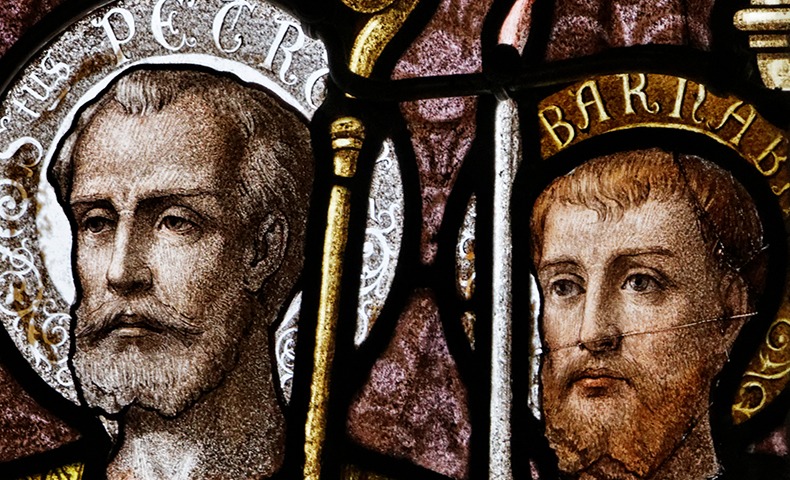
In the first reading, we heard about the missionary journey of St. Paul and his companion St. Barnabas. Their mission shows us how the early Church fulfilled Jesus’ commandment: “Make all nations my disciples.” So what can we discover from their example?

First, let us consider St. Paul’s story in its entirety. After his conversion, Paul remained in Antioch (in present-day Turkey), where he became a respected teacher and prophet. Then the Holy Spirit called Paul and Barnabas to be set apart for God’s work. The Christian community commissioned them to preach in places where the Gospel had not yet been heard. They travelled to various locations including the island of Cyprus and towns in southern Turkey – Pisidian Antioch, Iconium, Derbe, and Lystra.

They proclaimed the Good News to both Jews and Gentiles in these places, bringing many souls to believe in Jesus Christ. Yet Paul and Barnabas knew they were not to remain there permanently, but rather to move on to preach in even more places. To care for the newly established Churches, they appointed “elders” (presbyteroi). These elders became the stable leaders of the communities, responsible for leading worship, proclaiming the Gospel, and maintaining spiritual discipline.

What then can we learn from Paul’s missionary journey? We see at least two essential ways of preaching the Gospel. The first way involves going to preach where the Gospel has not been heard and where faith has not yet taken root. Those who follow this path are typically called missionaries. Missionaries tend to be more mobile, moving from place to place as the need for the Gospel message arises. The second way focuses on deepening the understanding of the Gospel for those who already believe, nourishing and protecting their faith. In the Catholic tradition, this second way is carried out by the “elders” – the bishops assisted by priests and deacons, who remain more stable within the communities they serve.

On the other hand, the distinction between missionaries and elders is not rigid. The same person can be both a missionary and an elder. A simple example is Pope Leo XIV. Before becoming Pope, he was a priest of the Order of St. Augustine of the United States who became a missionary in Peru. Later he became the bishop of Chiclayo, Peru. The identity of missionary and elder merged in him.

However, we must remember that the task of preaching the Gospel is not given only to missionaries or elders, but to all of us. We too can and should practice both of these ancient ways of proclaiming the Gospel. In our modern world, the opportunities to share the Gospel are abundant. We can communicate different aspects of our faith, from its truth to its beauty, through various social media platforms. Personal interactions with friends and colleagues also provide opportunities to introduce our faith. Even if we find it difficult to explain our faith in words, we can always invite our relatives and friends to join us at Mass.

Parents particularly embody both of these approaches simultaneously. They are called to introduce the faith to their children through baptism and basic catechism, teaching them how to pray and sharing the fundamental truths of our faith. Like the Church’s elders, they must then continually nurture their children’s faith through virtuous living, prayer, and guidance. We should also support our catechists who work tirelessly both to introduce and deepen faith despite the many challenges they face.

Rome
Valentinus Bayuhadi Ruseno, OP

Guide questions:

How do we preach the Gospel in our particular circumstances? Who specifically needs us to introduce them to Jesus? Have we helped those close to us grow nearer to God? Do others recognize us as people who bring Jesus with us?

Hearing the Voice of the Lord

4th Sunday of Easter [C]

May 11, 2025 

John 10:27-30

Hearing is one of the most fundamental senses that make us human. While it is true that we rely heavily on sight to navigate the world, hearing sets us apart from other animals. How is this possible? 

Certainly, humans do not have the best sense of hearing. Many animals possess far greater hearing abilities. For instance, bats have a sonar-like sense, allowing them to gauge distance through sound. Human ears are far weaker in comparison. Yet, despite our ordinary hearing capacity, we possess something other animals lack: the ability to associate sounds with meaning. In other words, we can create language. More importantly, we can distinguish meaningful words from senseless noise. 

Through hearing, ancient people built their families and communities. They listened to their leaders for guidance on defending themselves against wild animals and surviving harsh environments. By hearing, they learned the wisdom of their elders and the stories passed down through generations. Hearing meaningful words is what truly makes us alive as humans. 

Unfortunately, we now live in a world full of noise—senseless sounds, auditory pollution, and even false words. What we often hear no longer serves our survival or growth but merely what screams the loudest. We no longer listen to reason, the wisdom of the past, or—most importantly—the words of the Lord. If ancient people recognized that hearing their leaders was essential for survival, we too must realize that hearing our Lord, Jesus Christ, is not optional—it is a matter of our soul’s survival. 

So how can we learn to listen attentively to the voice of our true Shepherd? 

First, just as sheep listen to their shepherd’s voice for safety, we must recognize our Shepherd’s voice and follow His instructions—for our eternal salvation depends on it.   Second, to recognize His voice, we must become familiar with it. This comes through continual listening—by regularly reading the Bible, studying His teachings through the Church, and engaging in deep prayer. As we grow accustomed to God’s voice, we also learn to distinguish voices that do not come from Him—those of our own desires, the world, and evil spirits.   Third, listening must lead to action. Hearing without obedience is meaningless—or worse, it means following the enemy’s guidance. 

Rome

Valentinus Bayuhadi Ruseno, OP

Guide Questions:

Do we know the voice of our Lord? What kind of voices do we listen to? Are we able to distinguish the different voices in our lives? Do you believe you are following the words of the Lord? 

Our Weak Love and God Strong Love

Third Sunday of Easter [C]

May 4, 2025

John 21:1-19

In today’s Gospel, Jesus asks Peter three times, “Do you love me?” Some Church Fathers interpret this repetition as Jesus undoing Peter’s threefold denial. However, a closer look at the Greek text reveals that Jesus uses different words for “love” in each instance. These subtle distinctions deepen our understanding of the passage.

First, Jesus does not simply ask a question, but He makes a demand. In His first request, Jesus calls for a specific kind of love. John the Evangelist uses the Greek word “agape”, which signifies a wilful, sacrificial love, that seeks the genuine good of others. This love is not based on emotions but rather on freedom and commitment. True agape requires giving oneself completely, even to the point of sacrificing one’s life. Here, Jesus demands the highest form of agape from Peter, a love that surpasses all other things.

In His second request, Jesus once again uses “agape”, but this time without the phrase “more than these.” He still calls for sacrificial love, but not to the highest degree. In His third request, Jesus shifts from agape to “philia”, the Greek word for friendship-based love. Unlike agape, which is rooted in free will and dedication, philia depends more on emotions, mutual feelings, and shared interests. While true friendship may require acts of agape, its foundation remains philia. Once common interests fade, friendships often weaken.

But why does Jesus seem to lower His expectations—from total agape to simple agape, and finally to friendship? The answer lies in Peter’s responses. Each time Jesus questions him, Peter replies with “philia”. He cannot bring himself to profess agape, especially not in its highest form. His previous denial has left him broken, ashamed, and hesitant to love Jesus again. Fear holds him back.

Yet, despite Peter’s incomplete answers, Jesus does not rebuke him or seek a more faithful disciple. Instead, Jesus meets Peter where he is. He accepts Peter’s flawed, hesitant love and still entrusts him with the mission of shepherding His flock. Jesus does not require perfection, but He desires humility and sincerity. He sees Peter’s efforts and knows that, in time, Peter will give his life for Him.

God asks each of us for the highest form of love, yet we often fall short. Like Peter, we are wounded, weak, and full of failures. But the Good News is that God accepts our imperfect love and gently leads us toward perfection.

Rome

Valentinus Bayuhadi Ruseno, OP

Reflection Questions:

Do we love God?  Do we love Him with agape or philia?  In what ways do we fail to love God? What keeps us from loving God? How does He continue to love us despite our shortcomings? Can we recall a moment in our life when God’s unwavering love was evident despite our failures? 

Peace of Easter

Second Sunday of Easter [C]

April 27, 2025

John 20:19-31

The risen Christ’s first words to His disciples were, “Peace to you!” In Hebrew, this is literally “Shalom lakem” (שָׁלוֹם לָכֶם), a greeting frequently found in the Old Testament (Judges 6:23; 1 Samuel 1:17; 20:42; 25:6; etc.). Another Jewish variation, though not biblical, is “Shalom aleichem” (שָׁלוֹם עֲלֵיכֶם), meaning “Peace be upon you!” But was Jesus’ greeting merely cultural, or did it carry deeper significance?

To understand this, we must first explore the biblical meaning of “shalom.” One of the most common words in Scripture, appearing 237 times in the Old Testament, “shalom” is often translated as “peace.” Yet it signifies far more: the total well-being of a person, rooted in right relationships—with oneself, others, and God.

When the risen Christ appeared to the disciples, they were gripped by fear of the “Jews”. Interestingly these “Jews” may refer to three things: the Jewish authorities, Jesus Himself, a Jewish man, and even they themselves because they are Jews. They feared the authorities who had killed Jesus, knowing they could be next. They feared Jesus, remembering their failures: Judas’ betrayal, Peter’s denial, and their own abandonment. Would He now punish them? And they feared themselves: they feel unworthy and incapable disciples; they are underserved of Jesus’ mercy and forgiveness; they are broken and sinful. They fear of their own lives and future.

Yet Jesus’ words cut through their terror: “Peace to you.” This was no ordinary greeting. It was a divine assurance. They need not fear the authorities, for if they could not stop Jesus, they could not stop His followers. They need not fear Jesus, for He came not to condemn but rather to have mercy and forgive their weaknesses. When He repeated, “Peace to you,” and added, “As the Father has sent me, so I send you,” He affirmed their calling despite their flaws. Jesus assures them once again that despite their unworthiness, they remained chosen, and despite their weakness and failures, God’s grace is sufficient to perfect what is lacking in them.  

True shalom flows only from the risen Christ—a peace that reconciles us to God, heals our relationships, and silences our inner shame.  We know that we are sinners, yet we are redeemed so that we are in peace with God. We know that we often have difficult relationship with our neighbors, but we are invited to ask mercy and be merciful to other. We are aware that we are weak and incapable in loving God and others, but God’s grace is sufficient to complete what is lacking in us.

Rome

Valentinus Bayuhadi Ruseno, OP

Guide question:

Do you have peace in our lives? What are we afraid of? Do we have peace with God? Do we have peace with our neighbors? Do we have peace with ourselves? What are things that make us fail to achieve shalom?

Cross and the Tree of Life

Easter Sunday [C]

April 20, 2025

John 20:1-9

Some Church Fathers, like St. Ephrem the Syrian, St. Ambrose, and St. John Chrysostom, saw Jesus’ Cross as the new Tree of Life. The Tree of Life first appears in Genesis 2:9, where God planted it in the center of Eden alongside the Tree of the Knowledge of Good and Evil. Though Scripture doesn’t elaborate, the Tree of Life’s central placement hints at its profound significance. Just as eating from the forbidden tree brought death, partaking of the Tree of Life would have granted eternal communion with God.

Adam, Eve, and their descendants could have lived forever with God—if only they had chosen the Tree of Life over the Tree of Knowledge. Tragically, they chose disobedience, bringing death upon themselves and all humanity. Banished from Eden, they were cut off from the Tree of Life, guarded by cherubim (Genesis 3:24). Without it, humanity was doomed to perish.

Yet we are not without hope. God so loved the world that He gave His only Son (John 3:16), and Jesus, in turn, loved us “to the end” (John 13:1), laying down His life so we may “have life abundantly” (John 10:10). For Jesus, the Cross was not an inescapable fate but a free choice of love. Though crucifixion was a brutal, shameful death, Christ transformed the Cursed Tree into the Blessed Tree of Life. He teaches us that by embracing our own crosses—and uniting them to His—we find true life and resurrection.

The cross is a reality in our lives that brings us sufferings. The cross manifests in two ways. Type-One Crosses is unavoidable suffering.  These are trials we don’t choose: betrayal, illness, financial struggles, or injustice. In these moments, we ask God for grace to endure, offering our pain in union with Christ’s Cross so it may bear spiritual fruit.

Type-Two Crosses is suffering born of love. These arise from commitment and sacrifice. Good example will a dedicated mother who commits to love her young baby. In the process, she is going to lose her time, energy, and other resources. Raising and protecting little child is both physically and mentally exhausted. She also forfeits her opportunity to live more freely, to earn more money or to enjoy life more. Outwardly, she is carrying her cross, but deep inside, she is fully alive and discovering a deeper meaning in her life, then just the world can offer. Her cross becomes the tree of life for her child. That’s the true resurrection.

Happy Easter!

Rome

Valentinus Bayuhadi Ruseno, OP

Guide questions:

What are our Type-One crosses? How do we face them? What are our Type-Two crosses? How do they bring life to others? Do our crosses—borne with love—become a Tree of Life for those around us?

Jesus, Not Our Ordinary King

Palm Sunday of the Lord’s Passion

April 13, 2025

Luke 19:28-40 and Luke 22:14–23:56

Palm Sunday is one of the most unique liturgical celebrations in the Church because it features two Gospel readings: Jesus’ triumphal entry into Jerusalem (Luke 19:28-40) and the Passion of Christ (Luke 22:14–23:56). These readings are not accidental; the Church intentionally pairs them to reveal their profound connection. But what is this relationship?

The first Gospel presents Jesus entering Jerusalem, the city of King David and his successors. His disciples follow closely while some residents welcome Him, proclaiming Him as king. Yet the Gospel clarifies that Jesus is no ordinary earthly ruler. He isn’t a militarily powerful king riding a stallion, but a humble sovereign on a donkey. He comes in the name of the Lord – not through royal lineage, political systems, or deception. He reigns not over a single nation, but over all creation, as even “the stones will cry out” to declare His kingship.

The second Gospel, the Passion narrative, further reveals Christ’s kingship. He doesn’t rule through violence but embraces it and bring it to an end on the cross. His kingdom operates not through terror but through law of love, sacrificing Himself so His people might be redeemed from sin and then live.

As we enter Holy Week, we’re invited to examine our identity as God’s people. Do we love our King or fear Him? If we truly love Him, we must learn to love as He loved. For two thousand years, countless martyrs have followed Christ’s example to the point of death. Even today in the 21st century, Christians face persecution: Nigerian priests abducted and murdered; Syrian Christian communities attacked and displaced; growing anti-Christian hostility in Israel.

Many of us live where faith can be expressed freely, yet these environments present different dangers – materialism, complacency, or cowardice in witnessing to Christ. We’re tempted to prioritize self over God, to love ourselves rather than Jesus

We consider St. Catherine of Siena’s example. During her time, the pope was residing in Avignon, France rather than Rome since he was afraid of dealing with people who opposed him there. However, rather than becoming a leader in faith and example of moral, the pope involved himself more in politics. She courageously went to Avignon and confronted Gregory XI, urging his return, “If you die in Rome, you die a martyr – but if you stay here, you die a coward.” Her actions flowed from radical love for Christ the King.

If Jesus is our King, how then shall we follow Him?

Guide Questions:

Do we truly love Jesus as our King? How does our love for Christ manifest practically? Are we prepared to profess our faith in challenging environments? Would we sacrifice for others out of love for Jesus? Are we ready to endure hardship as Christians?