
Beyond Talent

33rd Sunday in Ordinary Time. November 19, 2017 [Matthew 25:14-30]

“…out of fear I went off and buried your talent in the ground” (Mat 25:25)

talent 2Talent is one of the few biblical words that has become part of our modern language. Talent connotes a God-given ability or a natural unique skill, and yet it has not fully developed. Thus, we are called to use and harness our talents in order to achieve our full potentials and contribute to the progress of society. In fact, talents have become well-sought commodity in our society. Companies only hire the talented employees. Schools are marketed as venues of talents development. Our TV channels and social media outlets are filled by shows where we perform, compete and prove that we possess the best talent in singing, dancing, and the like. How our world is now obsessed with talents!

Going back to our Gospel, we may have a different meaning of talent. The Greek “talanta” in our Gospel’s today means an extreme large sum of money. Perhaps, a talent is worth more than one million US dollar in our currency. From the parable, the man is extremely rich that he can easily entrust his talents to his servants. And those three servants are expected to work on those talents and produce more talents. In no time, the two servants double the talents, and like the master, we instinctively praise them. The third servant does nothing, but buries the talent. This causes the ire of the master and he immediately punishes the servants because of his inability and laziness. We would agree with the judgment of the master, and draw a classic lesson from the parable, that we must also develop our “talents” and avoid laziness.

However, unlike the parable of the ten virgins (we listened last Sunday), Jesus does not explicitly mention that we imitate the master or the successful servants. There is something trickier here. Examining closely today’s parable, we may ask whether the third servant is just lazy, or there is something else? If he has so much money in his hands, why would he bury them and wait for the harsh judgment? He could have just run with the money to faraway place and make a fortune out of it? The answer is revealed in the defense of the third servant. The servant is aware that his master is a harsh man who “reaps where he did not sow, and gathers where he did not scatter seed.” This means that he knows that his master gains his wealth through dishonest ways. Surprisingly, instead denying the accusation, the master admits his misdeeds. He is a harsh and corrupt man, and perhaps, he wants his servants to imitate their master’s dishonest methods in doubling their talents. Thus, to silence his deviant servant from spreading the news, he throws him into the darkness.

The third servant says that he is afraid and thus, he buries the talent. He might be afraid of his master, but it may be that he is more afraid of offending God. By dishonest conducts, he commits injustice, makes other people suffers, and creates further poverty. He might be condemned as lazy servant, but he stands with the truth. Despite pervasive culture of lies, he remains steadfast in his honesty.

This may be unusual interpretation of the parable, but this lesson is more radical and profound than simply working hard for our talents. Through the third servant, Jesus invites us to be a sign of the Kingdom in the world. With pervasiveness of fake news and hoaxes around us, we are invited to seek and speak the truth. With so many injustices and poverty, we are called to do what is right and yet be compassionate. May I end this reflection by quoting Archbishop Oscar Romero, “A church that doesn’t provoke any crisis, a gospel that doesn’t unsettle, a Word of God that doesn’t get under anyone’s skin, what kind of gospel is that? Preachers who avoid every thorny matter so as not to be harassed do not light up the world.”

Br. Valentinus Bayuhadi Ruseno, OP

 

Be Wise in Small Things

32nd Sunday in Ordinary Time. November 12, 2017 [Matthew 25:1-13]

“The foolish ones, when taking their lamps, brought no oil with them, but the wise brought flasks of oil with their lamps. (Mat 25:3-4)”

In the Jewish patriarchal society, an unmarried woman has to stay with her father. Then, when she gets married, she will move to her husband’s house. This transition from her family of origin to her new family is ritualized by an elaborate wedding procession. The groom will fetch the bride from her father’s house, and together they march back to the groom’s house where usually the wedding celebration is held. For practical reason, the procession takes place after sunset, and thus, men and women who are involved in the procession shall bring their torch or lamp.

Within this context, the presence of the ten virgins have to be understood. They are assigned to welcome the groom and the bride, and join community in the procession of light. Since there are no means communications like cellular phone with GPS, they are not able to track the location of the couple, and yet, they need to be ready with their lamps anytime the procession comes. There is element of surprise and expectation, and the virgins have to prepare themselves well for this.

Jesus compares the five wise virgins and the five foolish virgins. The wisdom of the five virgins manifests in their ability to foresee some practical considerations like the estimated distance between the house of the groom and bride, the possible delay, and the expected slow-pacing procession. Thus, bringing along extra oil for the lamp is something sensible, and in fact, necessary. Extra oil might be just a simple thing compare to the entire wedding celebration, but its absence proves to be costly for the five virgins. It is just “foolish” to miss the entire celebration just because they fail to bring simple thing like an oil. Jesus likens this to the preparation for the Kingdom of Heavens. It begins with practicality of life, to prepare apparently simple things in life and yet proved to be important for those who are welcoming Jesus and His Kingdom.

Many great saints are those who are most humble. What basically Mother Teresa of Calcutta did was to serve the poorest of the poor in India. Sometimes, she and her sisters had something to give, but often they only had themselves to share. Yet, for the lonely, sick and dying, Mo. Teresa’s loving company was what mattered most. Then, she advised us, “Not all of us can do great things. But we can do small things with great love.” When sister Breda Carroll, a Dominican nun from Drogheda, Ireland, was asked by a journalist, “Isn’t life in the monastery is completely useless? And how do you become a preacher if you never go out and preach?”  She replied, “The greatest preaching is to make people think of God, and our mere presence and constant prayer cannot but disturb people and make them think of God.” For all we know, their simple ways of life and constant prayer have saved countless souls in purgatory.

We are invited to act like this practical and wise virgins. We prepare ourselves for Jesus by faithfully doing seemingly simple and ordinary things in our lives. Preparing breakfast every morning seems nothing special, but for a mother of five children, that is her share in the Kingdom. Working hard every day looks to be normal for a young man aiming for a bright future, but for a poor and old man who needs to support his family, it is his share in the Kingdom. What are our share in the Kingdom? Are we faithfully doing simple things with love? Are we ready to welcome Christ?

  Br. Valentinus Bayuhadi Ruseno, OP

Walk the Talk

30th Sunday in Ordinary Time. November 5, 2017 [Matthew 23:1-12]

“For they preach but they do not practice. (Mat 23:3)”

walk_the_talk_main_logoReading this Sunday’s Gospel, I feel that Jesus is reprimanding His priests and ministers for “preaching and yet not practicing.” Unfortunately, many of us are failing in this matter. We preach forgiveness, but some priests are having prolonged quarrels with other co-priests and some of their parishioners. We teach kindness and friendship of God, yet some of us appear to be aloof and snobbish. We proclaim justice, but sometimes we fail to be just to the simple people working in the parish or convent.

I myself are struggling to walk the talk. Often I speak or write about asking people to do more active parts in the Church or to engage in promoting justice and peace, but I myself find it difficult to follow those invitations. I used to be a member of KADAUPAN in our formation house. It is an apostolic group of the Dominican student-brothers that was inspired by the example of St. Martin de Porres who gave his life for the poor. One of our basic tasks is to welcome and help the indigents coming to our Church. Sometimes, we give money, but often we provide food, water and clothing. I have to admit that every time an indigent comes, I struggle to go out and meet them because I prefer to stay in the library and read books.

However, despite this inconsistency, I do believe that Jesus is merciful to us, His preachers, because He understands that despite our holy intentions, we keep falling due to our human weaknesses. Even St. Paul, the apostle to the gentiles, understood our struggles with our weaknesses, “For the flesh has desires against the Spirit, and the Spirit against the flesh; these are opposed to each other, so that you may not do what you want. (Gal 5:17)”

While it is true that Lord Jesus will be very merciful to those who struggle to practice their preaching, it is also true that He will not tolerate if preaching is just for show off or for personal gains. That is the context of today’s Gospel. Jesus criticizes some Pharisees and scribes who preach the Law and teach its elaborate applications to show off their wisdom, and thus, gain respect and honor. It was their goal to earn the honorific title, “rabbi” or “father”, and to be treated as VIP in the Jewish societies. They do not serve God, but they manipulate the Law of God to serve their interest. This is unacceptable because it is a grave abuse against their sacred vocation to preach and serve the God of Israel.

The same message goes for us, the preachers and servers of the Word of God. Is there any hidden and selfish intention in our services and ministry of the Word? Is it to gain fame and pleasure? Is it to hoard riches and to have a more comfortable life? Are we making our sacred vocation to preach a career of achievements and glory? In a letter, Archbishop Socrates Villegas of Lingayen-Dagupan had a strong point to the Filipino priests, “It is a scandal for a priest to die a rich man…That is our only duty—to be Jesus and to give Jesus who alone is our treasure.”

Br. Valentinus Bayuhadi Ruseno, OP


The Greatest Commandments

30th Sunday in Ordinary Time. October 29, 2017 [Matthew 22:34-40]

“You shall love the Lord, your God, with all your heart, with all your soul, and with all your mind.  (Mat 22:34)”

love god love neighborsWhat is love? If we ask young couple who are in love, love means more time together and be connected online even up to late hours of the night. For young priests, love may mean patiently listening to confessions for hours, and attending to sick calls. For a couple who have their newly-born baby, love is changing the baby’s diapers even at middle of the night. Love is passion, dedication and sacrifice.

However, love is also one of the most abused and misused words in human history. In the name of love, a young man lures his girlfriend into premarital sex.  For the love of their country and race, some men persecute another ethic group and burn their villages. For the love of God and religion, some men blow themselves up and kill the innocent people, including children whom they consider the enemies of their God.

Surprisingly, the situation is not much different from the time of Jesus. For the love of the Law, the Pharisees keep and observe the Law even to its meticulous details in their daily lives. For the love of God and their country, the Zealots fight and kill the Romans and those who work for them. For the love of God, the Essenes separate themselves from the rest of the corrupted world and build their own exclusive communities. For the love of the Temple, the priestly clan work hard to offer sacrifices daily and is ready to die for the Temple.

When the Pharisees ask Jesus what is the greatest law, the law of laws, it is not simply about theological exercise, but it is to reveal Jesus’ fundamental attitude towards God and the Jewish Law. Is He a Pharisee who loves the Law more than anything else, a Zealot who loves the country zealously, or something else? Jesus answers, “You shall love the Lord, your God, with all your heart, with all your soul, and with all your mind.” Jesus quotes part of the Shema or the basic Jewish Creed that every devout Jews would recite every day (see Deu 6:4-5). Yet, Jesus does not stop there. He completes the first and the greatest law with another one, “You shall love your neighbor as yourself.” It also comes from the Old Testament (see Lev 19:18). To the delight of the Jews, Jesus’ answer is basically an orthodox one, but there is something novel as well.

The connection between first and second turns to be a watershed. For Jesus, true love for God has to be manifested in the love for others, and genuine love for others has to be oriented toward God. Thus, it is unthinkable for Jesus to order His disciples to kill for the love of God. Or, Jesus will not be pleased if His followers are busy with performing rituals, but blind to the injustices that plague their communities.

Once I asked my brother who is studying Canon or Church Law, what is the highest law in the Canon Law? He immediately answered, the suprema lex, all laws are governed and ordained for the salvation of souls. The Code of Canon Law contains more than 2 thousand provisions governing various aspects of Church’s life, and all these will be absurd if not for the love of God and neighbors. In the same manner, do our love for God, our prayers and celebration of sacraments bring us closer to our neighbors, to be more committed in doing justice, to be dedicated in our responsibilities as members of a family and a society? Does our love for others, our affection for our children and friends, our passion for ministry bring them closer to God?

Br. Valentinus Bayuhadi Ruseno, OP

Tax

29th Sunday in Ordinary Time. October 22, 2017 [Matthew 22:15-22]

“…repay to Caesar what belongs to Caesar and to God what belongs to God.” (Mat 22:21)

caesar and god“In this world nothing can be said to be certain, except death and taxes.”  Benjamin Franklin once said. Indeed, tax is an unpleasant and unavoidable fact in our lives as ordinary citizen. A portion of our hard-earned wage is suddenly taken away from us, and only God knows where it goes. In modern society, almost all we have, we gain, and we use are taxed. The practice of taxing people goes back to first known organized human societies. The basic idea is that tax will provide a common resource for the improvement of the community, like building roads, free education and quality health care. Yet, the ideal is often met with abuses. In olden time, the kings and chieftains taxed people so they could build their grand palaces and feed their wives. Unfortunately, the situation does not change much in our time.

In the time of Jesus, taxation is a burning issue. Ordinary Jews like Jesus himself are taxed heavily by the Roman colonizers, and for those who are not able to pay, they are dealt with severity. Their properties are confiscated, they are put to jail and even face capital punishment.  Not only that the Jews need to pay tax to the Romans, but they need also to pay the religious tax to support the Temple. These leave simple Jewish farmers or laborers with almost nothing, and the poor become even poorer. Both Jesus and the Pharisees are also victims of this unjust system.

Any Jew would abhor paying tax to the Romans and lament his obligation to support the Temple, but majority of the Jews will prefer to abide with the rules and pay the tax because they do not want to court problems. The Pharisees and other pious Jews detest using the Roman coins because there is engraved the image of Caesar as god. The entire system is simply idolatrous for them. Yet, even many Pharisees pay their share as to maintain peace and order. The usual impression of this Gospel episode is that wise Jesus outwits a team of Pharisees and Herodians, who plan to trap Him with a tricky yet politically charged question. Yet, going deeper, there are so much at stake. Though the question is directly addressed to Jesus, the same question is applicable to all Jews who are forced to pay tax to the Romans. Thus, condemning Jesus as idolatrous means they also condemn the majority of fellow Jews for paying tax.

Jesus’ answer is not a categorical yes or no, rather he formulates it in such a way that does not only save Him from the trap, but saves everyone who are forced to pay tax from the idolatry charge. Ordinary Jews are working extremely hard for their lives and families, and it is simply a merciless act to condemn them as idol worshipers simply because they need to pay tax and avoid severe punishment. Jesus’ answer removes this guilt from poor Jews struggling to feed their family as the same time enables them to be holy in the sight of the Lord. From here, to give what belongs to God does not simply mean to pay the religious tax or to offer sacrifices in the Temple, but it is primarily to help others getting closer to God. What belongs to God? It is His people.

In our own time and situation, we may pay our taxes to the governments and live as good and law-abiding citizen, but do we give what belongs to God? Do we, like the Pharisees, place unnecessary burdens on others’ shoulders? Do we ridicule other who are not able to go the Church because they need to feed their family? Do feel holy simply because we are active in the Church and donate a big amount of money? What have we done to bring people closer to God?

Br. Valentinus Bayuhadi Ruseno, OP

Challenging Our Image of God

28th Sunday in Ordinary Time. October 15, 2017 [Matthew 22:1-14]

“Go out, therefore, into the main roads and invite to the feast whomever you find!” (Mat 22:1)

made-in-the-image-of-godJesus is already in Jerusalem. The confrontations between Jesus and the Jewish authorities have turned bitter, and Jesus is approaching His final days on earth. With this context, the parable may be understood easily. The invited guests stand for some elite Israelites who refuse Jesus, and thus, reject God Himself. The burning of their towns and cities may point to the invasion of the Roman Empire and the destruction of Jerusalem in 70 AD. The commoners who are later invited represent the people from all nations who accept Christ. Yet, some people who are already at the Wedding banquet do not wear the expected wedding garment. This proper dress decorum is a basic sign that the guests are honoring the host, and also becomes the symbol of our faith, our good works and our holy lives. For those who fail to honor the King through their garment are thrown out from the banquet.
At that level, the parable is indeed easy to comprehend. We are called not to imitate the example of some elite Israelites but to receive eagerly God’s invitation. As to the wedding garment, we are also expected to live out our faith to the fullest. However, something continues to bother me within this interpretation. It presents a conflicting image of a king that is authoritarian and vengeful and a king who is exceptionally generous, seen in his persistence to invite his first set of guests, and his openness to accept the ordinary people. As to the first image, he exacts his justice in violent ways. Like any king in ancient times, he will destroy the people who dishonor him, to the point of burning their towns or throwing them into darkness. If we are not careful enough, we may identify this king with our image of God. We may believe that our God is a God who rewards the good and punishes the wrongdoers even with severe and violent ways. He is easily offended by simple mistakes, and is not compassionate enough as to give a second chance.

We remember that we are created in the image of God. Now if we have this kind of vindictive and unforgiving God, then we gradually behave like that image of violent God. In the Philippines, where the majority are Christians, the killings of alleged criminals are in steady rise. Surprisingly, some people seem to approve it and even happy with this bloody happenings. This attitude might be a reflection of our image of God that is vengeful and violent.

This kind of God’s image may manifest also in more subtle ways. Despite their sincere apology, it is difficult to forgive a friend who has hurt us, a husband who has betrayed us, or a boss who has acted unjustly. As husband and father, we act like a supreme leader, and refuse to listen to our wives and other family members. As priests, religious sisters, or lay leaders, we think that we are always right and do not accept any correction. We focus on the weakness of others, rather than their struggles to become better. Instead helping them to rise from their failures, we ridicule them and enjoy gossiping about them. These are some instances that we are influenced by the false image of God. This kind of image is only preventing our growth in faith, but also destroying our healthy relationship with others.

I believe that some asects of the parable remain true and relevant, like God’s radical openness to all people, and our faith that has to be lived fully. Yet, in more profound level, the parable challenges our false image of god, the god who is vindictive and violent. It invites us to rediscover God’s image in the person of Jesus who loves us to the end, and dies so that we may live.

Br. Valentinus Bayuhadi Ruseno, OP

God’s Co-Workers

27th Sunday in Ordinary Time. October 8, 2017 [Matthew 21:33-43]

 There was a landowner who planted a vineyard… (Mat 21:33).”

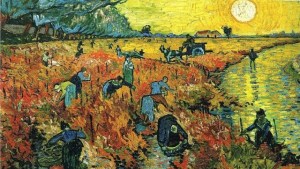
Red-Vineyard-croppedThe image of a vineyard is close to Israelites’ hearts because this springs from their prophetic tradition. Isaiah uses this metaphor to describe Israel and God (see Isa 5:1-8).  Consistent with this great prophet, Jesus crafts His parable of the vineyard to describe the relation between God and His people. God is the just and generous vineyard owner, and we are His workers. Now, it is up to us to work hard for the Lord in His vineyard and receive abundant harvest, or be lazy, and expelled from the vineyard.
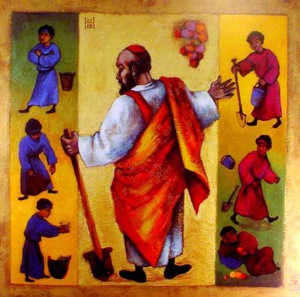
However, there is another way of looking at this parable. For three consecutive Sundays, we have listened to parables that feature a vineyard and people who are involved in this vineyard. If there is one common denominator in these three parables, it is about the difficult and often problematic relationship between the landowner and the workers.

In ancient Israel, big landowners were hiring workers or leasing their land to farmer-tenants. At the end of the day, the workers received their wage, or at the harvest, tenants got their share of their labor. Here the situation became very thorny and conflict-ridden. The owners wanted the highest profit from their land, while the workers desired the greatest income from their labor. At times, the Israelite laborers received very little wage or very small share from the harvest. With very little income, they had to pay high taxes to the Roman colonizers and contributions to the Temple. Thus, what remained was barely enough to feed the family. Disgruntled and hungry workers were very prone to violent actions. However, it was true also that some good landowners gave more than enough wages, but some workers tended to be lazy, abusive to fellow workers, and are even involved in stealing the harvest.

In our time, we seem to face more complex issues in relation to employer, employees and employment. With global networking and communication, an American company may hire Filipino workers working in Manila serving European customers. With almost unrestricted mobility, millions of workers from Indonesia or the Philippines try their luck in Middle East countries. With steady increase of automation, many manual works are gradually replaced by robots. More and more people prefer to buy things or avail service online. One of the hottest debates now in the United Nations is the usage of Artificial Intelligence (AI) to “judge” human right cases in the International Tribunal. The AI has become so sophisticated that it can predict the verdicts of human judges. Now, highly skilled human profession like a judge can even be replaced by an AI. Many professions that were trending years ago have become extinct now, and more seem to follow. Yet, despite these advancements and complexity, the fundamental issue remains: whether both the employers and the employees give what is expected and receive with are due to them?

Jesus’ parable is not only relevant for our time, but it continues to challenge our fundamental understanding of our dignity as God’s co-workers in His vineyard. As workers, do our attitudes in the workplaces reflect the good attitudes of Jesus’ followers? As owners or superiors, do we manifest that delicate balance between God’s justice and His generosity? Finally, as God’s co-workers, do we work for a better world for us and future generations, or we simply aim for our selfish interest and greed?

(Note: today is the feast day of Our Lady of the Holy Rosary of La Naval de Manila, before whom I kneel down every morning and pray for inspiration guiding my Sunday reflections. May she continue to guide us in our journey of faith. Happy Fiesta!)

Br. Valentinus Bayuhadi Ruseno, OP


Good Intention

26th Sunday in Ordinary Time. October 1, 2017 [Matthew 21:28-32]

“Which of the two did his father’s will?”  (Mat 21:31)

two_sonsThe road to hell is paved with good intentions. This old proverb attributed to St. Bernard of Clairvaux may sound rather morbid and threatening, but the truth remains. If we have only good intentions, marvelous plans, or great designs, but we never lift a finger to begin the first step, nothing will happen. We want to focus on our study, yet we are distracted by Facebook’s status and newsfeeds, our online chatting, or endless videos in YouTube, we will not make any progress. We wish to accomplish a lot of works, but our attentions and energy are consumed by so many other concerns. Then, our wish stays a wish.
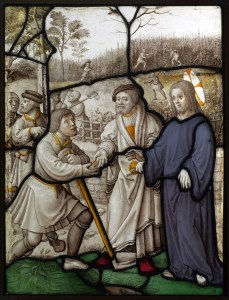
The parable Jesus shares this Sunday speaks of a good intention or ‘yes’ that can be completely useless if it does not materialize in concrete actions. Yet, more than achieving the highest productivity, the parable teaches us some more primordial truth. At the end of the parable, Jesus asks the Jewish elders, “Which of the two did his father’s will?” The parable teaches us about doing the Father’s will.

From the two sons, we learn that doing God’s will can be tough and demanding. Once I had an exposure with poor farmers in Indonesia. I was staying with a family who tilled their own small and almost barren land, and every morning, they went to the field and make sure that their plants were still alive. Part of my exposure was that I had to help them. Used to the comfort of seminary life, I barely lasted for an hour working under the scorching summer heat, and then rested the entire day while looking at the family working so hard. I imagine that the two sons in the parable are aware of the challenges that they will endure working at the vineyard, and it is expected that the resistance will build up. The first son immediately declines his father’s wish, while the second son says yes.

We might wonder why the second son changes his mind. Perhaps, he has no plan to work there, and what he says is utter lie and deception. Yet, I tend to believe that he has actually a good intention to fulfill his duty, but he is discouraged by the looming hardship he will face in vineyard, and ends up doing nothing at all. Perhaps many of us are like this second son. We intend to help more our Church, yet we are always late going to the Mass, complaining about the priest’s homily, and not participating in the various activities or organizations in the parish. We wish to give glory to God, yet our lives do not manifest a good Christian life as we indulge in gossiping, are envious with other members of the Church, and become choosy in our services. No wonder for some, the Church feels like hell!

We remember that these two men are the sons of the vineyard’s owner and thus, the vineyard essentially belongs to them. If they refuse to work, they will lose their vineyard. The poor family where I stayed for exposure, were working extremely hard despite many difficulties. I realize that all this they did because their small land was what gave them life. Doing God’s will is often challenging, yet in the end, it is for our good. I believe it is not too late to act on our good intentions, and from the second son, we transform into the first son. We are working in the Lord’s vineyard because the vineyard is also ours.

Br. Valentinus Bayuhadi Ruseno, OP

Unworthy, yet Called

25th Sunday in Ordinary Time. September 24, 2017 [Matthew 20:1-16a]

They answered, ‘Because no one has hired us.’ He said to them, ‘You too go into my vineyard.’ (Mat 20:1-16)

vineyard ownerJesus is the storyteller genius. The parable he shares to us today does not only surprise us with its unexpected ending, but it also creates a sense of puzzlement and wonder. We expect that the workers who labored the whole day would get the better wage compared to those who came late. Yet, it did not happen. All got the same wage regardless of their working hours. The vineyard owner was right to explain that he did not violate the agreement with his laborers, but deep inside us, there is something quite off. If we were militant enough, we would stage a rally to protest the vineyard owner’s decision.

This sense of puzzlement and perhaps discontent are born because we can easily identify ourselves with the laborers who came early and worked the whole day, perhaps under the scourging sun and bearing heavy load. Many of us are workers who spend 8 hours or more in the workplace, working hard, just to get something to eat and little to save. Or some of us are students who have to study hard for hours just to pass a subject. Surely, we will feel resentment and even anger when we know that some unqualified workers with less work hours or productivity, receive the same and even higher amount of salary. We, students, will get totally disappointed knowing some lazy students, with their substandard, “copy-paste” assignments, get higher grade than us. It just violates our sense of justice.

However, do we really have to identify ourselves with the laborers who worked the whole day? Who knows they are actually not representing us. In God’s eyes, all of us may be like those people who were standing idle the whole day perhaps because no other vineyard owners think that we deserve the job. Indeed, in the final analysis, we are all but unworthy sinners. Pope Francis is loved by many and working hard for the Church. In his visit to Colombia, when he greeted the people on the streets, he got tripped, his eyebrow was slightly cut, and blood came out. Yet, instead calling off the activity, he proceeded. After receiving quick medical treatment, he insisted to continue greeting the people. Despite the pain, he met the people of God even with brighter smile. Pope Francis is like one of the laborers who came early in vineyard. Once he was asked by reporters to describe himself in one word, he answered he was a sinner! If this loving and holy Pope considers himself a sinner, who are we to think that we are the righteous?

Too much focus on ourselves, we often miss the obvious actions of the vineyard owner. He exerts effort to look for laborers, not just once, but four times. This defies the business logic. Why would you hire more if you have enough workers for the day? Why would you spend much for those worked only for one hour? That’s perfect recipe for bankruptcy! The point is not really about business and profit, but about seeking diligently and embracing those who are the lost, the less and the last. It is about us sinners, unworthy of Him, yet God remains faithful in looking for us.

It is truly humbling experience to know that we are “the people idle on the streets” yet God wants us to be part of His family. Now, it is our duty to respond to his Mercy with commitment and love for others. Like the last workers, we have only “one hour”, and it is time to make the best of it for He who has been very merciful.

Br. Valentinus Bayuhadi Ruseno, OP


Justice of God and Forgiveness

24th Sunday in Ordinary Time. September 17, 2017 [Matthew 18:21-35]

“Moved with compassion the master of that servant let him go and forgave him the loan. (Mat 18:27)”

justice-law-scaleWhy is it difficult to forgive? One of the reasons is that after we are wronged, the immediate reaction is to seek justice or even revenge. We want that the pain and the loss we experienced are also felt by those who inflicted them on us. We want “a tooth for a tooth, an eye for an eye”. Unfortunately, consumed by anger and hatred, our cry for justice can easily turn into an intense desire of revenge. If justice seeks to balance scale, revenge seeks to inflict a greater punishment, or even to destroy those who have harmed us. Unless we get what is due, unless they receive what they deserve, there is no forgiveness.

Despite this intense desire for vengeance, the good news is that the longing for justice is something that is embedded in every human soul. This sense of justice we have and we embrace is what we call human justice. This kind of justice is essential for our daily life because it propels us to reward good works and punish wrong doings. If we work hard for our companies, we deserve a good wage, but if we do not our job, the company has the right to fire us. If we study hard, we expect a good grade and learning, but if we are lazy, we expect no less that a failing mark. If we pay our taxes, we want the government to provide a dependable public service. This sense of justice regulates our daily lives, the school system, work policies and government conducts. Therefore, we are angered by the violence of this justice system. We are angered knowing our officemate who does little, gets the same salary like us. Though I do not want to focus on grade, I am usually pissed off knowing that after exerting much effort, I get a lower grade compared to those who did not study. We will be indignant if our taxes go to the corrupt and incompetent government officials. With this sense of justice, there is no place for forgiveness.

Thus, Peter’s proposal to forgive seven times sounds extraordinary. Yet, Jesus invites us to understand another sense of justice, the justice of God. The human justice begins with us, what we deserve, what is due to us, but the justice of God starts with God. Like the King in the parable, he demands the servant to pay his debt of astronomical amount. This is human justice. Yet, the king knows that he is so rich that the payment of his servant’s debt would not add much to his treasury. Thus, when the servant begs for mercy, the king could easily forgive him. The servant’s debt now turns to be his richness, and from being extremely poor because of the massive debt, he becomes instantly rich. The servant then is expected to perform his master’s justice and to forgive also his fellow servants who owe him a little. Unfortunately, he remains governed by human justice and even consumed by revenge. This brings about his own doom.

We owe God everything, our lives, all what we have, and even our redemption, yet nothing we do for Him can add to his glory. In His mercy, God forgives us. Our massive debt to God has been erased and in fact, transformed into our own richness. Mercy and forgiveness is not only possible but also the hallmark of God’s justice. As we become rich in His justice, we should forgive our brothers and sisters so that they may be also enriched. We forgive because we have been forgiven. We forgive because we are rich in His mercy. We forgive because God’s justice demands it.

Br. Valentinus Bayuhadi Ruseno, OP