Jesus our High Priest

29th Sunday in Ordinary Time [B]

October 20, 2024

Heb 4:14-16

The letter to the Hebrews calls Jesus our high priest. As Catholics, we are not foreign to the word ‘priest’ since they are our liturgy or worship leaders. Yet, the author of the letter to the Hebrews does not call Jesus just as another priest but as the high priest. Why does the author of this letter address Jesus as this title? What makes a high priest different from other priests? What is it for us?
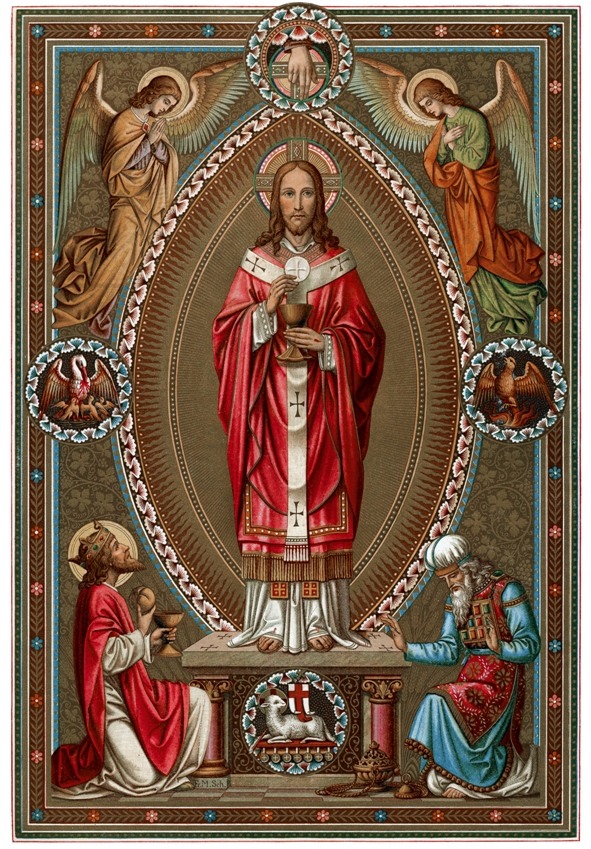
Firstly, we need to clarify the word’ priest.’ While it is true that a priest is appointed to oversee worship, he has one specific responsibility that only he can execute. In the Bible and many ancient civilizations, the most essential part of ritual worship is the sacrifice. Commonly, the sacrifice consists of offering something precious to God. In ancient agrarian societies, animals like lambs and crop yields like wheat grains may serve as sacrificial offerings. In the case of animal sacrifice, the ritual begins with the people handing the animal to the priest, and then the priest will slaughter the animal by separating the blood and the body. After this, the priest brings the animal to the altar to be burned as a symbol that God has accepted the sacrifice. In this sense, a priest serves as a mediator between God and the people.

The leader among the priests is called ‘high priest.’ The Hebrew word for high priest is כֹּהֵן גָּדוֹלkohen gadol, literally means “great priest.” In Greek, the high priest is ἀρχιερεύς, archiereus, and it can be translated as “the first priest.” Obviously, the high priest has to lead the other priests and manage the entire worship system. Yet, his fundamental function is to be the primary mediator between God and the people. Thus, only he can officiate the most solemn worship. In the Bible, only the high priest can offer the holy sacrifice on the day of atonement (Yom Kippur) and enter the holy of holies to atone for the nation’s sins (see Lev 16).

With this biblical background, we can better understand why the author of the letter to the Hebrews calls Jesus our high priest. Jesus is the supreme mediator between God the Father and us. Moreover, Jesus is far more perfect than other high priests because He is divine. Yet, Jesus is also fully human, experiencing all sufferings and various human problems and weaknesses. Because of this, He knows precisely our struggles and failures. But, most of all, our high priest also becomes the perfect sacrifice to Father as He offers Himself on the cross. Then, when we approach Jesus in humility, we can be hopeful that Jesus will accept us because He knows us, and finally, He will bring us to the Father and may receive mercy.

Questions for reflection:

How do we look at our priests in our parish/church? Do we recognize them as people who bring us closer to God? Do we know that the Eucharist is a sacrifice of Jesus Christ and, thus, our true worship of God? What sacrifice do we bring to the Eucharist? What makes us unable to approach Jesus? Shame, fear, anger, disappointment, resentment, inadequacy?

Consecrated Life

28thSunday in Ordinary Time [B]

October 13, 2024

Mark 10:17-30

The Church understands the story of Jesus and the rich man as one of the biblical foundations of vocation to consecrated life. Yet, what is consecrated life? How does this story become an inspiration for us?

The consecrated life is a radical way of life to follow Jesus. In our present time, we quickly recognize these men and women as people who wear religious habits, remain celibate (unmarried), and live inside communities like monasteries or convents. The word ‘consecrate’ here means to be separated or set aside for a particular purpose. The men and women are consecrated because they are ‘separated’ to love God more radically. But why do they have to live this kind of life? To answer this, we need to look closely at the story of Jesus and the rich man.

A man recognized that something fundamental was lacking in his life. When Jesus was coming, his heart knew that Jesus knew the answer. He rushed to Jesus and asked Him how to inherit eternal life. Jesus pointed out the commandments, especially those related to the love of neighbors (do not kill, do not steal, do not bear false witness, and honor your parents). Immediately, the man told Jesus he had been faithful to these laws. Jesus, then, looked at him intently and loved him for his courage to approach Him. Jesus knew that man had never broken the commandments, but he had also not fulfilled the first and most important commandment, “You shall love the Lord your God with all your heart and with all your soul and with all your might (Deu 6:5).”

However, Jesus did not just say this truth plainly but rather reformulated it into something more concrete and radical: “You shall love Me (Jesus) with all your heart, with all your soul, and with all your might!”  This call is radical because it required the man to abandon all that he had and walk with Jesus on His way to the cross. It is radical because Jesus’ invitation goes against the prevalent understanding of that time that to be rich is a sign of God’s blessing (see Deut 28:1–14; Prov 10:22). This is radical because all our time, energy, attention, indeed our lives, are for Jesus.

This man never killed or stole, perhaps went to synagogue every Sabbath, and occasionally went to Jerusalem to offer sacrifices at the Temple. But, deep inside, he was called to love God totally. Yet, when Jesus offered him the opportunity, he shied away because he had many possessions. Will this man be condemned? Indeed, he will not be punished and will remain the inheritor of eternal life. But he also cannot fulfill his deepest desire to love God radically.

In the present time, this radical following of Jesus manifests in men and women who totally give themselves to Jesus and the Church. These men and women do not get married, so their time may be devoted to prayers and service. They work or receive money not to be rich but simply to support their lives and ministry. Finally, they freely give up their freedom to love God and His people. Yet, the Church understands this vocation is not for everyone.

Rome

Valentinus Bayuhadi Ruseno, OP

Questions for reflections:

Do we love God totally and radically? Do we love God first, or do we love ourselves first? What hinders us from loving God? Money, wealth, professions, fame, hobby, or other things? Are we called into the consecrated life? Are we ready to answer yes to Jesus’ calling?

Why did Moses allow divorce?

27th Sunday in Ordinary Time [B]

October 6, 2024

Mark 10:2-16

The Pharisees once again put Jesus to the test. This time, they asked the question of divorce. However, Jesus did something unexpected. He ‘changed’ the law of divorce. Why did Jesus “erase” the law of divorce?

Jesus responded by inquiring about the foundation of this law of divorce. The Pharisees pointed to Moses as the source of the law as he allowed divorce by giving a certificate of divorce to the wife (see Deu 24:1). Then, immediately, Jesus fired back, “For your hardness of heart he wrote you this commandment. But from the beginning of creation, ‘God made them male and female.’” (Mar 10:5-6) Jesus made clear that divorce is not the will of God, but Moses was forced to permit it because of “the hardness of heart.” But what is this hardness of heart?

We recall that the Israelites in the time of Moses were so used to the ancient Egyptian practices including divorce. In ancient Egypt, marriage was primarily a private and cultural event, not religious. The couple themselves governed marriage. They would divorce their partner if they no longer saw their marriage viable. But divorce was not the only solution. If a man found his first wife no longer attractive, he could marry another wife without divorcing the first woman.

When God liberated Israelites from Egypt, God reintroduced His will that marriage is holy and part of God’s plan for men and women. Marriage was not just biologically or culturally driven but divinely instituted. Thus, God decreed that marriage must be monogamous and indissoluble. Yet, introducing God’s original plan to the ancient Israelites proved difficult. Indeed, the Israelites were physically liberated from Egypt, but their mentality remained enslaved. The Israelites were somehow able to accept monogamous marriage, but to add another requirement, that is, ‘no divorce’ was too much and too soon. Moses knew that the Israelites would commit more rebellions, and even men would kill their wives to get rid of them. Thus, Moses conceded that divorce should be allowed if the women were sufficiently protected through the divorce certificate.

Now, hundreds of years after Moses, God deemed the time has come to bring the original will of God into marriage. Thus, Jesus came not to ‘change’ the divorce law but to reintroduce God’s authentic will. Moreover, Jesus also brought the Holy Spirit to re-create human hearts, from the heart of stones into the heart of flesh. Now, the choice is ours. Will we follow God’s will in our lives and marriage by relying on His graces, or will we instead become stubborn and follow our own design?

Rome

Valentinus Bayuhadi Ruseno, OP

Questions for reflection

How do we understand marriage? Is it a biological necessity, social convention, or divinely instituted? How do we feel about marriage? Is it a burden, obligation, or a blessing? What do we want to achieve in marriage? Is it pleasure, welfare, comfort, or holiness? What do we do when we encounter difficulty in marriage? Do we see marriage without divorce as a curse or a path to heaven?

Sin and God’s Love

26th Sunday in Ordinary Time

September 29, 2024

Mark 9:38-48

Some people do not talk about sin. Some think that sins are no longer relevant in the modern world. The concept is a restriction on human freedom and creativity. Others see it as the Church’s invention to control its faithful, primarily through fear. Those who sin will be punished in hell! Others perceive that to talk about sin is incompatible with God, which is love. For some priests and preachers, the topic even becomes taboo to preach. Yet, this is all a misunderstanding. The proper understanding of sin will bring us a full appreciation of God’s love. Then how must we understand the concept of sin?

Firstly, the basic understanding of sin is a violation of God’s law, and God made His laws not to limit our freedom but rather the opposite. They are to protect us from harm, danger, and disasters. Every violation of God’s law brings catastrophic consequences. It destroys ourselves, others, and the world. Abortion kills innocent babies, destroys the holy vocation of motherhood, and treats sacred women’s bodies as mere tools. Masturbation seems less of a problem since it is something ‘personal’. But masturbation leads to mental health problems as we carve more and more dopamine (pleasure hormone) to satisfy us. Again, this causes us to see other people as mere tools to give us pleasure. By following God’s laws, we are not only avoiding harm in our lives but also walking on the path of happiness.

Secondly, sin is the contradiction of God’s love. God is love, and He loves us beyond our imagination. As divine Lover, He wills the best things happen to us, and He wills us to be united with Him as the only one who can satisfy our infinite desire. However, true love does not coerce and gives freedom to choose and love Him. Robots can obey all our orders, but there is no love since robots do not have freedom. A Labrador can abide by us and give us affectionate dog hugs, but this is not true love but a dog’s instinct to cling to his owner for survival. We have that true freedom. Unfortunately, we abuse our freedom to choose something much lesser than God and, thus, violate His laws. Therefore, sin is a radical choice to turn away from God. Hell is not God’s punishment but rather our decision to be separated from God, our true happiness.

Therefore, reading the Gospel, we immediately recognize that if there is one thing that Jesus hated the most, it is sin. He knows well what sin is and what it does to us humans. Adam and Eve sinned, and they brought the entire human race into a spiral of madness and despair. Jesus came to this world to get forgiveness of sin and to show God’s love on the cross so that we may be moved into repentance. Jesus loves sinners and not their sins in the sense that He wills them to embrace God’s forgiveness.

Therefore, preaching about sin and repentance and praying for sinners participates in Jesus’ mission and God’s love. But if we shy away from preaching repentance and even promote a fallacious concept of sin, we may deserve to be ‘thrown into the sea with miles stone’.

Surabaya

Valentinus Bayuhadi Ruseno, OP

Questions for reflection:

How do we understand the concept of sin? Do we speak about sins and repentance, or do we try to avoid it? Do we continue to evaluate and correct ourselves? Do we visit the sacrament of confession often? Do we invite others to reflect God’s love and repentance?

The True Greatness

25th Sunday in Ordinary Time [B]

September 22, 2024

Mark 9:30-37

The question of greatness is a major preoccupation of the disciples and many of us. What does it mean to be great? What is real greatness? What makes us great? Does Jesus teach us to pursue greatness, or does He shun it?

The disciples were arguing among themselves, ‘Who is the greatest?’ And this question was not coming out of the void but instead occasioned by Jesus’ revelation of His identity. In an earlier chapter, Jesus announced to His disciples that He is indeed the Christ, the Messiah expected by the Israelites. However, Jesus clarified further that this Christ must endure rejection, passion, and death. Unfortunately, the disciples did not understand the truth and persisted in their old beliefs. They thought Jesus was a Messiah like King David, who would lead Israel to victory against the enemies. The Messiah must not only free Israel from Roman oppression but also bring economic prosperity, religious freedom and renewal. To think a messiah would suffer and be defeated was incomprehensible and unacceptable.

Yet, Jesus seized the opportunity to teach about the true meaning of greatness. Jesus did not oppose the idea of greatness or having authority or power. Instead, Jesus clarified that to achieve true greatness, one must use his power and authority to serve and be the last. But what does it mean to serve? Is it enough to join and involve ourselves in charity programs or apostolates? Does serving mean giving donations to the poor or the Church?

After Jesus taught the disciples about true greatness, He did something extraordinary. He placed a little child amid His disciples and blessed the child. He said, “Whoever receives one child such as this in my name, receives me; and whoever receives me, receives not me but the One who sent me.” From here, we can conclude that to become great is to receive a little child in the name of Jesus. Then, where do we receive a child in the name of Jesus? The answer is in the family.

To become a parent, a father, and a mother is a call of true greatness. Accepting little and weak children in joy, raising them in faith, and finally offering them to the Lord require life-long sacrifice. This practically turns us into humble servants. This greatness does not make us famous, materially wealthy, politically powerful, or physically beautiful. In fact, we become the opposite! But this allows us to receive Jesus and the Father in our lives. Jesus seems to foresee a future where little children are rejected and even murdered.

Finally, true greatness is not here on earth but there in heaven. No wonder that in the Catholic tradition, the greatest saints in heaven are Mary, the mother of Jesus, and Joseph, Jesus’ foster father. Both Mary and Joseph accepted the little baby Jesus in their lives and raised Him in love and joy. They became the prime examples of true greatness.

Manila

Valentinus Bayuhadi Ruseno, OP

Questions for reflections:

How do we understand true greatness? Do we strive to be great? Do we serve others? How? Do we also make sacrifices for others? How? Do we recognize parenthood as a call to greatness? For parents, how do we accept and love our children? What sacrifices do we make for our children? Are we aware that we must bring our children to God? For those who are not married, how do we accept and love little children in our lives?

Sola Fide and Letter of James

24th Sunday in Ordinary Time [B]

September 15, 2024

James 2:14-18

When Martin Luther separated from the Catholic Church, he began translating the Bible into the native German language. However, he did not only translate but also segregate the books in the Bible. He placed some books in the appendix rather than in usual, and one of those books was The Letter of St. James. He dubbed the letter as ‘the epistle of straw.’  Fortunately, the Christians did not follow his advice and considered the epistle canonical. But why was Luther so eager to remove this letter from the Bible?

The reason Luther saw the letter as a mere straw is that the letter does not fit his theology. In his preface to the New Testament in 1522, he commented that the letter had ‘nothing of the nature of the Gospel about it.’ He judged that the letter contradicted his belief in salvation by faith alone (in Latin, sola fide). One particular verse that opposes the idea of sola fide is Jam 2:24. “You see that a person is justified by works and not by faith alone.”

To understand further what this verse means, we must first understand ‘sola fide.’  Martin Luther believed that man was justified before God by faith alone. When we sin, for Luther, our nature is totally corrupted, and we are destined for hell. Yet, the sacrifice of Jesus hides our broken natures, and we are justified because God did not see us, but Jesus who covers us. What we need to do is to have faith or to believe in God’s promise of salvation through Jesus Christ. Luther denied any work we do, no matter how good they are, would be beneficial for our justification.

Meanwhile, St. James, our Lord’s brother and Jerusalem’s bishop, wrote his letter around 1500 years before Luther. Indeed, he did not mainly write against Luther, yet providentially, he wrote against those with a Luther-like mentality. Aside from addressing some problems in his community, like the discrimination against poor people, especially in the celebration of the Eucharist (2:1-6) and violation of the Ten Commandments (2:6-13, James also criticized some people who had faith in Jesus Christ but neglected the works of charity. Faith based on intellect and conviction is not sufficient for salvation. James taught that saving faith would manifest in love. Here, James agreed with St. Paul as St. Paul wrote, “Only faith working through love (Gal 5:6)”.

Finally, James also taught what Jesus taught to His disciples. In today’s Gospel, Jesus asked His disciples, “Who am I.” Simon Peter correctly answered, “You are Christ.” However, Peter’s confession of faith entails a more fundamental truth. Jesus taught them that they had to carry their crosses to follow Christ. Faith in Jesus entails our cross, that is, the sacrifice of love. It is not enough to let Jesus carry His cross while we sit nicely and watch His sacrifice. We also need to take part in His cross.

The Letter of St. James is another reminder not to pick Bible verses that suit our theology but rather to live according to Jesus’ teachings, which were handed down to the apostles.

Valentinus Bayuhadi Ruseno, OP

Guide questions:

Do we have faith in God? How do we understand our faith? Do we bring our faith to live in the works of charity? What are the works of charity we do to express our faith? Are we able to explain our faith to people who ask? Do we share our faith? How do we share our faith? Do people get closer to God because of our faith? Or Do people go away from God because of us?

The Saving Word

23rd Sunday in Ordinary Time [B]

September 8, 2024

Mark 7:31-37

Jesus performed a lot of miracles, and He did that in various ways. At times, He used physical contact to bring about miracles. Yet, the most common way is by saying the words. Jesus rebuked and expelled the demons by His words (Mar 1:25). Jesus healed and forgave the sins of the paralytic by His words (Mar 2:5). In today’s Gospel, Jesus cured the deaf man by declaring ‘Ephphatha’ (Mar 7:34), and many other miracles. The question is, why did Jesus choose His words to perform His miracles? Is it simply to state the facts, or is there something more?

By performing miracles through His words, Jesus reveals that His words are as authoritative as God’s. Initially, God created the world through His mighty words, even to make something out of nothing. ‘Let be there light,’ and there was light. When Jesus said, ‘Be gone!’ the powerful entity like demons obeyed His words. When Jesus said, “Talitaku cumi,” the young girl was raised from the dead. When Jesus said, ‘Ephphatha!’ the deaf and mute can hear and speak. Jesus’ words reveal His divine identity and authority.

Just like God shared His words with Adam, Adam could name the other creatures and have authority over them, so Jesus also shared His powerful words with His Church. Jesus told Peter, “I will give you the keys of the kingdom of heaven, and whatever you bind on earth will be bound in heaven, and whatever you loose on earth will be loosed in heaven (Mt 16:19).”  Binding and loosing are rabbinic term for authority to teach, to use words that binds us even in heavens. Jesus also told His disciples, “Receive the Holy Spirit.  If you forgive the sins of any, they are forgiven them; if you retain the sins of any, they are retained (Jn 20:22–23).” Through participating in Jesus’ divine words, the apostles share the mission of healing and sanctifying.

As Jesus handed down His divine words to His apostles, the apostles handed the exact words to their successors throughout the generations. We, the Catholic Church, possess these divine words. Every time a priest repeated the words of consecration, “This is My Body” and “This is My Blood,” we have the real presence in the Eucharist. Every time, in a confession, a priest pronounces, “I absolve your sins,” our sins are forgiven.  Every time, a priest (or even a lay) pours water on our foreheads and says, “John, I baptize you in the name of the Father, and of the Son, and of the Holy Spirit. Amin,” a new creature was born.   

Yet, these divine words do not only belong to the priests. These belong to every Christian. When a man and a woman pronounce their marital consent and promise, the invisible yet indissoluble union is created. When parents bless their children with a sign of the cross on the foreheads, God’s blessing is upon these children. Our mission is to sanctify the world, and we are equipped to fulfill it because Jesus has entrusted His divine words to us.

Surabaya

Valentinus Bayuhadi Ruseno, OP

Questions for reflections:

How do we use our words? Do we build and bless people with our words? Do we hurt and destroy other people with our words? How do we bring people closer to God through our words? What are our favorite words? Are they good and edifying words? Do the words of God transform us? Do we hear and read the word of God often in the Bible?

Understanding the Purity Law

22nd Sunday in Ordinary Time [B]

September 1, 2024

Mark 7:1-8, 14-15, 21-23

The Pharisees criticized Jesus and His disciples for not washing their hands before meals. This criticism was not from genuine concern for their hygiene but rather to judge Jesus’s observance of the purity law, primarily based on the elders’ interpretations. Yet, what is the purity law? Why is it so important for the Pharisees? Then, why did Jesus choose not to observe it?

Though not strictly about morality, the purity law is integral to the Torah. The purity laws determine whether a Jew is ritually clean or unclean. When Jews are ‘pure,’ they would be allowed to enter the Temple premises in Jerusalem and then to offer sacrifice. When they can offer sacrifice, they worship the Lord God and receive blessings like the forgiveness of sins and communion with God and fellow Jews. A Jew can become impure through physical contact with various things like dead bodies, bodily discharges (menstrual blood, male semen), certain animals (pigs, camels, certain insects, etc) and skin illness (leprosy). If they are impure, they need to perform ritual cleansing, typically by washing themselves with water. Thus, the purity law intends to ensure that they enter the holy place worthily.

However, in the time of Jesus, the purity laws extended beyond the Temple and even governed their daily lives. Purity laws became their identity marker, which made them different from other nations. Thus, the Jews needed to be clean most of the time, even if they were far from the Temple, and the one group that promoted this rigorously was the Pharisees. The purity laws also expanded beyond the Torah as the respected teachers and the rabies added their interpretations. The purity law became a complex and tedious system that strangled simple people rather than help them be worthy of the Temple, the dwelling place of the Lord.

Jesus recognized the true intention of the purity law, and thus, Jesus did not follow the excesses imposed by the Pharisees. However, Jesus did not only challenge the excessive teachings of the Pharisees, He also declared that the purity law has served its purpose. If the purpose of the purity laws is to guard unworthy people entering the Temple because it is the Lord’s holy place, but now Jesus, the Lord made flesh, is walking around. He touched the lepers and made it cleaned. He was touched by the woman with the flow of blood, which made her pure. Finally, Jesus would die on the cross, and His body would be the source of impurity, and yet, He resurrected, and His body became the source of holiness.

Jesus is the Emmanuel, the Lord with us. There is no need for the purity law. Yet, Jesus also teaches us firmly that though we no longer are bound by the purity law, to sin or to be separated from God remains our choice to make. Now, every second of our lives, every place we go, and everything we do is either the opportunity to be with Jesus or to be far from Him.

Surabaya.

Valentinus Bayuhadi Ruseno, OP

Questions for reflection:

Do we recognize God’s presence in our lives? Where and when do we realize God’s presence in our lives? Are we aware that God is with us? Are we aware that every choice is an opportunity to glorify Him? Do we box God only in the Church or in prayer times? Are we aware that sins make us defile and far from God? Do we know that we cannot receive the holy communion when we persist in our grave sins? Do I go to confession regularly?

Be Subordinate to Your Husband(?)

21st Sunday in Ordinary Time [B]

August 25, 2024

Ephesus 5:21-32

In his letter to the Ephesians, St. Paul instructed wives to be subordinate to their husbands, not only in matters of economics or raising children but in everything. St. Paul’s teaching seems wrong and even sexist to modern readers. Are not women and men equal? Why did wives have to obey men in everything? Are the women mere slaves of their husbands?

Firstly, we need to know Paul’s historical context. At this time, women were indeed considered not equal to men. Save for some exceptional females, women were treated as the property of men. While men were working outside, women stayed at home. Wives were to take care of the house, give birth to the children, and raise them. Generally, women had no right to inheritance and no political rights. It was just a bad time for women to live.

Paul recognized this situation and challenged it. How? He wrote the letter addressed to wives! Women did not receive letters, and if they did, the letter must be addressed to their husbands. By this simple act alone, Paul not only challenged the cultural mentality of his time but also affirmed God’s original purpose. “So God created man in his own image, in the image of God he created him; male and female he created them (Gen 1:27).” Both men and women were created in God’s image and, thus, share the same dignity as God’s children.

Yet, Paul also acknowledged that though men and women are equal in dignity, they have different roles and functions. Biologically, men are physically stronger and, thus, are responsible for protecting and providing. In comparison, women possess the character to give and nurture life. Both men and women are complementary to each other. At the same time, this mutual relationship creates a community, marriage and family. Like other groups or communities, marriage presupposes order and hierarchy to function properly. St. Paul’s word ‘subordinating’ finds its true meaning in this understanding. To be subordinated means to be under the proper order. Thus, St. Paul began with a statement to both husband and wife, “Be subordinate to one another out of reverence for Christ!” because both must be under proper order.

Here comes Paul’s unique contribution. Husband and wife are like a relationship between Jesus and the Church, His bride. Like Jesus, husbands are the heads and figures of authority. Yet, Paul also reminded us that the order that governs Jesus and His Church is love. So also, the authority given to men is to love their women. Men love their wives to the point of dying, and only with dying can they lead their wives in holiness. Without dying, men’s authority turns to a reign of terror, and women are rebelling. Marriage becomes unhappy and even collapses. Only when men and women are subjecting themselves to the order of love will they reach the purpose of marriage, which is a way of holiness.

Surabaya

Valentinus Bayuhadi Ruseno, OP

Guide questions:

For husbands: how do you love your wife? Will you die for your wife? To what do you die? Pride, anger, selfishness? Do you hurt your wife? Do you apologize to your wife when you do something wrong? Do you lead your wife to holiness? How do you lead your wife into holiness? Are you a good head/leader of the family?

For wives: how do you love your husbands? Do you obey your husband? Do you help him to be a good husband and father? How do you help your husband in living in holiness? Do you hurt your husband (and how)?

Why Mary was Assumed into Heaven?

The Assumption of the Blessed Virgin Mary

August 15, 2024 [B]

Luke 1:39-56

Today, the Church is celebrating the great feast of the Assumption of our Blessed Virgin Mary. Through this celebration, the Church reminds us that Mary, the mother of our Lord, when the course of her life ended, was assumed both her soul and body into the heavenly glory. Yet, a question may arise: why did Mary have to go up into heaven with her soul and body immediately after her death, while the rest of us must wait until the final judgment? Is it unfair?

The reason is love. St. Thomas Aquinas teaches that love seeks the union with the beloved (see ST. I.II. q.28 a.1). In a simple way, when we love someone, we wish that we are always close to that person, and we are closer, we can have more opportunity to love. The more we love the more we are united, the more we are united, the more we love. A good example would be loving parents. They always desire to be close to their children because they can love them even more by protecting, providing, and educating them.

So also, those who love God seek to be with and please God. When we initially love God, we begin spending time in prayer and attending the Eucharist every Sunday. We start reading the Bible and learning about our faith. Yet, as we grow in love, we spend more time with the Lord, in prayers, hear the Mass more often, and are involved in ministries and community. However, we realize also that our unity with God is not perfect in this world. We need to work or go to school. We need to take care of our family. We need to attend to endless worldly affairs. Our hearts and love are divided.

However, one person loves God totally and undividedly, even in this world. She is Mary. Her life is wholly dedicated to loving Jesus, even from before His birth to the very end, the cross. She is never separated from Jesus in her life on earth. And thus, when she passed from this earth, her immense love, perfected by God’s grace, drew not only her soul but also her body into that union with God.

Mary’s assumption teaches us that union with God in heaven begins with our love here on earth. The more we love God here on earth, the easier we are drawn to heaven. Yet, how do we love God more if we also must take care of earthly matters? Indeed, we cannot pray all the time, but we can always please God by doing good and avoiding sins in everything we do. Through good moral life, we are united with God even daily. Though we are not always aware of God every second, we know that our lives and actions are oriented to God.

Surabaya

Valentinus Bayuhadi Ruseno, OP

Guide questions:

What do you have in mind when you hear the Assumption of Mary? What do you understand about this Marian dogma? What are the other three Marian dogmas? Do you have any special relationship with Mary? How do you see her?

How do you love God? How intense is your love for God? How do you improve your love for God? Do you pray often? How do you pray? Do you live a good moral life? Do you please God in your daily actions? Are you aware of God’s laws? Is there any sin that you are struggling with now?