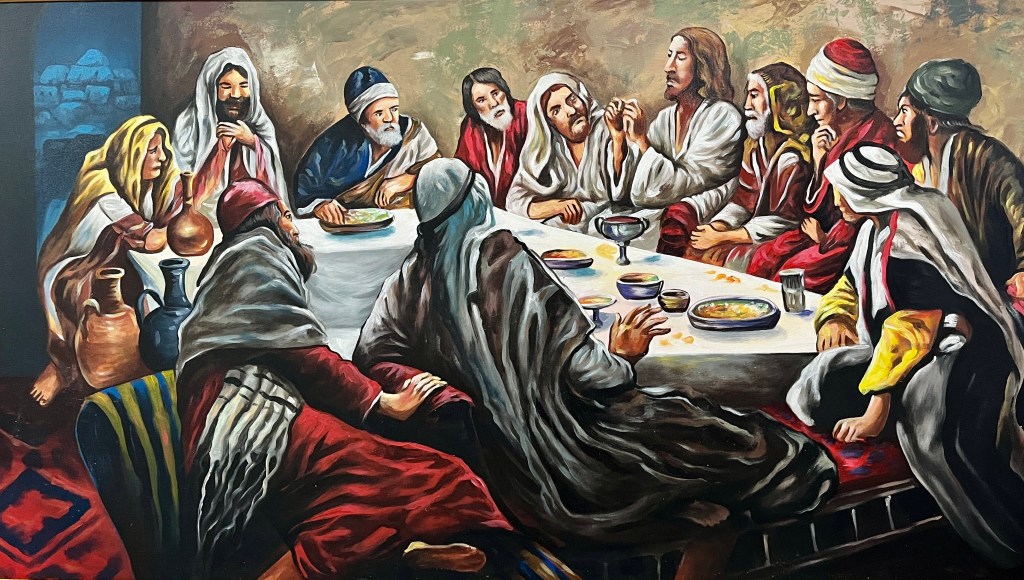
Kenapa Maria Diangkat ke Surga?

Santa Perawan Maria Diangkat ke Surga

15 Agustus 2024 [B]

Lukas 1:39-56

Hari ini Gereja merayakan hari raya Maria Diangkat ke Surga. Melalui perayaan ini, Gereja mengingatkan kita bahwa Maria, bunda Tuhan kita, ketika perjalanan hidupnya berakhir di bumi, jiwa dan raganya diangkat ke dalam kemuliaan surgawi. Namun, sebuah pertanyaan mungkin muncul: mengapa Maria harus naik ke surga dengan jiwa dan raganya segera setelah kematiannya, sementara kita semua, harus menunggu sampai penghakiman terakhir? Bukankah ini sedikit tidak adil?

Alasannya adalah kasih. Santo Thomas Aquinas mengajarkan bahwa kasih mencari persatuan dengan yang dikasihi (lihat ST. I.II. q.28 a.1). Secara sederhana, ketika kita mengasihi seseorang, kita berharap agar kita selalu dekat dengan orang tersebut, dan dengan menjadi dekat, kita dapat memiliki lebih banyak kesempatan untuk mengasihi. Semakin kita mengasihi, semakin kita dipersatukan, dan semakin kita dipersatukan, semakin kita mengasihi. Contoh yang baik adalah orang tua yang baik. Mereka selalu ingin dekat dengan anak-anak mereka karena dengan dekat, mereka dapat lebih mengasihi anak-anak mereka dengan cara melindungi, menyediakan, dan mendidik anak-anak mereka.

Demikian juga, mereka yang mengasihi Allah berusaha untuk bersama dengan Allah. Ketika kita mulai mengasihi Allah, kita mulai meluangkan waktu untuk berdoa dan menghadiri Ekaristi setiap hari Minggu. Kita mulai membaca Alkitab dan belajar tentang iman kita. Ketika kita bertumbuh dalam kasih, kita menghabiskan lebih banyak waktu dengan Tuhan, lebih banyak waktu dalam doa, lebih sering mendengarkan Misa, terlibat dalam pelayanan dan dalam komunitas. Namun, kita juga menyadari bahwa kesatuan kita dengan Tuhan tidaklah sempurna di dunia ini. Kita perlu bekerja atau bersekolah. Kita perlu mengurus keluarga kita. Kita perlu mengurus urusan duniawi yang tak ada habisnya. Hati dan kasih kita pun terbagi.

Namun, ada satu orang yang mengasihi Allah secara total dan tidak terbagi bahkan di dunia ini. Dia adalah Maria. Hidupnya sepenuhnya didedikasikan untuk mengasihi Yesus, bahkan sejak sebelum kelahiran-Nya hingga akhir hayat-Nya di kayu salib. Dia tidak pernah terpisah dari Yesus dalam kehidupannya di dunia. Dan dengan demikian, ketika ia meninggal dunia, kasihnya yang luar biasa, yang disempurnakan oleh rahmat Allah, tidak hanya menarik jiwanya tetapi juga tubuhnya ke dalam persatuan dengan Allah.

Diangkatnya Maria ke surga mengajarkan kepada kita bahwa persatuan dengan Allah di surga dimulai dengan kasih kita di bumi. Semakin kita mengasihi Allah di bumi ini, semakin mudah kita ditarik ke surga. Namun, bagaimana kita dapat mengasihi Allah lebih dalam jika kita juga harus mengurus hal-hal duniawi? Memang, kita tidak dapat berdoa setiap saat, tetapi kita dapat selalu menyenangkan hati Allah dengan berbuat baik dan menghindari dosa dalam segala hal yang kita lakukan. Kita juga dapat mengasihi Allah melalui kasih terhadap sesama. Melalui kehidupan moral yang baik, kita dipersatukan dengan Tuhan bahkan dalam kehidupan sehari-hari. Meskipun kita tidak selalu sadar akan Tuhan setiap saat, kita tahu bahwa hidup dan tindakan kita berorientasi pada Tuhan.

Surabaya

Valentinus Bayuhadi Ruseno, OP

Pertanyaan-pertanyaan panduan:

Apa yang ada di benak Saya ketika Saya mendengar Maria Diangkat ke Surga? Apa yang Saya pahami tentang dogma Maria ini? Apakah tiga dogma Maria yang lain? Apakah Saya memiliki hubungan khusus dengan Maria?

Bagaimanakah Saya mengasihi Allah? Seberapa kuatkah kasih Saya kepada Allah? Bagaimana Saya meningkatkan kasih Saya kepada Allah? Apakah Saya sering berdoa? Bagaimana cara Saya berdoa? Apakah Saya menjalani kehidupan moral yang baik? Apakah Saya menyenangkan hati Allah dalam tindakan Saya sehari-hari? Apakah Saya mengetahui hukum-hukum Allah? Apakah ada dosa yang sedang Saya hadapi sekarang?


Beyond Track Records

19th Sunday in Ordinary Time [B]

August 11, 2024

John 6:41-51

One of the ways to evaluate somebody is by looking at their track records. These records can be positive like their academic achievements, acquired skills, or excellent work experiences, but it can be also negative likes poor performances or engaged in unethical behaviour. Judging someone by their track records are natural and legitimate, but when we treat these tract records as the absolute measure, we may destroy somebody else’s life and future. This what

The reason why many Jews rejected Jesus was not only because His claim that He was the bread of life was outrageous, but also because He was a son of poor carpenter. Certainly, many were struggling with the truth of consuming Jesus’ flesh, some Jews recognized Jesus’ family background and came to believe that it was impossible for a poor carpenter from insignificant village Nazareth to tell the truth.  

However, it is only half of the story. Before Jesus made any stunning claim, Jesus proved Himself to be credible as He performed an extraordinary miracle, feeding more than five thousand people. Yet, some people readily forget that sign because they were not able to abandon their prejudices and surpass their religious preconceptions. Thus, they judged Jesus as either liar or lunatic.

While it is true that track records can speak volumes, it does not mean that a person cannot change. If someone is poor economically, does not mean that he will stay poor forever. We have a lot of stories of billionaires who started from zero, even below zero. J.K. Rowling, Jan Koum, and Steve Jobs to mention few. This truth is even more evident in the life of faith. Sinners and even Christ’s enemies that were touched by the grace and love of God transformed into saints. We have St. Paul who used to persecute early Christians, St. Augustine who used to live sins, and Bl. Bartolo Longo who used to be a satanic priest.

This gives us an important lesson that there is nothing impossible for God, and for those who are open to the grace and love of God. When we deal with difficult persons in our families or communities, do we immediately judge them to be hopeless case, or do we exert more effort to help, listen or at least to pray for them? When we see someone fall into sins, do we condemn them or do we spend more time to correct them, or at least pray for their conversion? When we see ourselves as unworthy of God, do we succumb into despair, or do we pray harder and beg for God’s mercy?

Surabaya

Valentinus Bayuhadi Ruseno, OP

Two Breads that We Need

18thSunday in Ordinary Time [B]

August 4, 2024

John 6:24-35

We are created as creatures of body and soul. Thus, to survive and thrive, our body and soul must be nourished. Feeding our bodies is quickly done through bread or other physical foods. Yet, how do we nurture our souls? What kind of ‘food’ do we need to give to our soul so that it will not perish?

For us Catholics, the answer is obvious. The Body of Christ in the Eucharist is the bread of heaven that nourishes our souls. As Jesus Himself declared, “Very truly I tell you, unless you eat the flesh of the Son of Man and drink his blood, you have no life in you (John 6:53).”  However, the real challenge is that we are often tempted, just like people of Israel, to prioritize only the earthly bread. How many of us choose to skip Sunday Mass for work or leisure?

Another challenge is that we often confuse the true living bread with the worldly things that only satisfy our bodies. We tend to equate spiritual things with emotional things. After all, both come ‘from inside’, forgetting that emotional needs remain part of bodily constitutions. Thus, we thought we were spiritually nourished when we felt emotionally charged through different religious experiences. Admittedly, to attend the Mass and to receive the Holy Communion is not always an emotion-filled experience. Yes, some of us feel incredible sensations during the Eucharist, but many are enduring ‘dryness.’ The Mass does not seem to satisfy our deepest longing.  No wonder some begin looking for other options, places, or activities that give us more sensations. We are treating religious activities as no different from other emotionally satisfying events.

The last challenge is trading our spiritual food for our bodily needs. We seek Jesus so that He may satisfy our physical needs. We go to the Church and ask Jesus to heal our sickness, solve our financial problems, or resolve our family issues. Indeed, it is okay to bring our problems to the Lord. After all, He also takes care of us. But, sometimes, we become preoccupied with our problems and then forget the real purpose of the Eucharist, which is to feed our souls. It is like the Jewish people in the Gospel who wanted to make Jesus king because of their stomach and political needs and not for the divine bread.

So, how do we know that our soul is growing through the bread of life? The answer is charity. We know our grace is working in us when we can love more and sacrifice more. We become more patient with difficult people around us. We anticipate the needs of others. We continue to do good things even without recognition. Our souls can only grow and do great things when the bread of life constantly nourishes us.

Surabaya

Valentinus Bayuhadi Ruseno, OP

The True Miracle

17th Sunday in Ordinary Time

July 28, 2024

John 6:1-15

The miracle of the multiplication of bread is a special one because this miracle is different from other Jesus’ miracles. Yet, what makes it truly unique from other miracles? How does this miracle shape our faith in Jesus?

The first thing we can observe is that this miracle is emerging from Jesus’ initiative. Jesus saw the people following Him,  He recognized their need and then, He came out with a miraculous solution. From this perspective, we can draw beautiful points about our God. He is not God who is far, aloof and only waiting for the people to approach Him and beg something from Him. Our God is a loving God who unfaillingly recognizes our needs and conditions, and even provides our needs even without us asking. God anticipates our necessities and fulfills them even without our realization. This is true and divine love, that is anticipatory, consistent and often overlooked. Do we thank the Lord for every breath we inhale? Are we grateful for the water we drink? Yet, God provides these for us.

However, the second character of this miracle makes it even more remarkable and unique. Before Jesus performed the miracle, He presented the situation to His disciples, and asked them to solve it. Philip immediately reduced the situation into an economic problem, and answered his Master that it was impossible to feed the people without spending massive amounts of money. Fortunately, Andrew recognized Jesus’ intention to test His disciples. He then brought a little but generous boy who offered his bread and fish to Jesus to be shared. Then, the miracle began to unfold.

If we try to compare with other miracles of Jesus, we discover that Jesus wills His disciples and followers to participate in the miracle. In other miracles like healings and exorcism, Jesus did it by Himself. He had no need for any help or participation from His disciples. Yet, when Jesus performed one of the greatest miracles, He wanted His disciples to generously offer what they have, and let Jesus bless their offerings, and so become a blessing for many people.

This is the true beauty of the miracle of multiplication of bread. Indeed, God can easily work without us, as many times He does, but He also chooses to work and perform His miracles through us. And, as we offer what we have and allow God’s grace to operate in us, God perfects us and makes us His miracles to many people. Through this participation, our dignity as children of God is elevated and further glorified.

As a preacher, I offer to the Lord, my time, my intellectual capacity, and my study of Sacred Scriptures, and often, I feel these are not sufficient. But, I pray that every time I preach, the Lord will multiply these tiny resources I have into the spiritual fruits in those who hear. As good parents, we offer our time, energy, and other resources to the Lord as we raise our children. Often, we feel these are not enough, but God blesses us and our children miraculously grow into mature individuals. How do you participate in God’s works and miracles?

Manila

Valentinus Bayuhadi Ruseno, OP

Featured

Jesus, Our Peace

16th Sunday in Ordinary Time [B]

July 21, 2024

Eph 2:13-18

In his letter to the Ephesians, St. Paul called Jesus ‘He is our peace.’ Yet, why did St. Paul apply this strange title to Jesus? What does it really mean? And, how does this title affect our faith?

To understand Paul, we have to understand also the Old Testament. Afterall, Paul was a member of Pharisees, and thus, not only a zelous but also learned Jew. When St. Paul called Jesus as ‘peace’, he referred to the peace offering of the Jerusalem Temple. The peace offering (in Hebrew, Shalom) is one of sacrifices instructed by the Lord to the Israelites through Moses (see Lev 3). The peace offerings together with other with other sacrifices continued being offered in the time of Jesus and Paul. The ritual sacrifices ceased when the Romans burned down the Temple of Jerusalem in 70 AD, around two decades after Paul’s martyrdom.

As its name suggests, the purpose of this sacrifice is the reconciliation between the Lord, the God of Israel, and the Israelites who have offended the Lord. However, unlike other sacrifices that emphasize on satisfactions of sins and transgressions, like sin offering (chatat) and guilt offering (asham), the peace offering focuses on the result of God’s forgiveness, that is peace. When man offends God because of his sins, man becomes far from God, like an stranger and even enemy. There is enmity between God and man because of sin. There is no peace. However, when the man is forgiven, and his sins are removed, his friendship with God is restored, and there is peace between God and men. This peace causes joy and thanksgiving. The peace offering symbolizes the joy of forgiveness, the thanksgiving of peace achieved.

When St. Paul called Jesus as ‘our peace,’ St. Paul recognized Jesus offered Himself as the peace offering in the cross. Jesus did not only remove our sins, but also reconciled us to the Father. Jesus is the peace because He broke our enmity with God, and brought us back to God in friendship. Only in Jesus, we are at peace with God.

However, peace offering is also a special kind of sacrifice because it is not burnt totally (unlike holocaust sacrifice) but rather being shared also with the priest and the offerers. The fatty parts is burnt because it is for the Lord, some other parts of the animal are for the priests to consume and other parts are for those who offer the sacrifice. Thus, the peace sacrifice is like a meal shared by everyone. The sacrifice becomes the symbol of peace because only people who are at peace with each other can share the same table and food.

However, what is even more remarkable is the Catholic Church has this peace offering. Indeed, our peace offering is the Eucharist. In the Eucharist, Jesus is offered to the God the Father, and then, consumed not only by the priest, but also the faithful who participate in the celebration. Jesus Christ is truly our peace because in the Eucharist, we share the same meal with God.

Valentinus  Bayuhadi Ruseno, OP

The Authority to Love

15th Sunday in Ordinary Time

July 14, 2024

Mark 6:7-13

In today’s Gospel, Jesus entrusted His disciples an authority. This authority is composed of several powers like to to cash out demons, to heal the sick, and to preach the repentance. The question to ponder is that why did Jesus hand down this kind authority to His disciples? Why did not Jesus give more useful tools like the power to control people, or power to produce money?

Firstly, from this story, we recognize that Jesus loves His disciples and as a proof of His love, He dares to entrust His authority to frail and sometimes, unreliable men. Jesus did not hoard everything to Himself, but rather share Himself with His disciples so that His disciples may grow, even through failures and weakness.

Secondly, the authority Jesus gave is not something that ends up manipulating people. Indeed, Jesus can possible give the authority to control people’s mind to His discciples, and this power can be extremely useful to draw more people to Jesus instantly. People will do everything for Jesus or for the disciples, but this is not real authority since it will objectify people and nothing but pure manipulation. Yes, Jesus can create an authority to control economy for His disciples, and this can generate enermous wealth for Jesus and His group. However, in the end, wealth control through manipulation is just corruption and greed.

Thirdly, if we look carefully the authority Jesus entrusted to His disciples is the authority to serve and to love. To heal the sick people without asking rewards, to cash out demons that tormented men and women, and to preach repetance for the salvation of souls are powers to bring holiness to people, to draw them closer to God. However, what even remarkable is that this authority to love requires even more love, a love that is miticulous, persistant, anticipatory but hidden. For example,  to preach the repetance, the disciples must walk miles, endure hunger and the sun’s scorge, and prepare what to say. They also had to face the fear of rejection, and eventually be at peace with unsatisfatory results. These are the small and hidden steps to reach the preaching of repetance, and these steps are also acts of love.

We, the disciples of Christ, are given the authority to love. As husbands, we have the authority to love our spouses. As parents, we posses the authority to educate our children. As priests, we are entrusted the authority to serve the people of God. Yet, these authority is even built on the small, hidden yet persistent acts of love. To love their young child, a couple have to endure lack of sleep, prepare and provide baby’s food on proper times, purchase and change the baby’s diapers, and many other small things. And, when the baby grows up, she will probably not appreciate what the parents did for her. What she is aware of is that she is now healthy, secure girl with bright future.

Love is not always grand and sensational, but oftentimes, little, constant and unappreciated. Yet, this kind of love that empowers us to fulfill our missions of life. This is our authority to love.

Valentinus Bayuhadi Ruseno, OP

Thorn in the Flesh

14th Sunday in Ordinary Time

July 7, 2024

2 Cor 12:7-10

St. Paul in his letter to the Corinthians reveals to us that he is struggling with ‘a thorn in the flesh’ caused by the devil. Yet, what does it mean for St. Paul to have ‘a thorn’ in his flesh? And, how does St. Paul deal with this situation?

There are at least three possible answers to this thorn in the flesh. The first posibility is that the thorn refers to the spiritual assaults coming from the evil spirits. Either in the forms of physical harassment or constant inner temptations. The second possible answer may refer to his health condition, especially his eye problem. One time St. Paul complained about his difficulty to read. In his letter to the Galatians, he writes, “you know that it was because of a physical illness that I originally preached the gospel to you, and you did not show disdain or contempt because of the trial caused you by my physical condition…Indeed, I can testify to you that, if it had been possible, you would have torn out your eyes and given them to me.” (Gal 4:13-15). The third possibility is that the thorn may point to his struggles and hardship he endures as he deals with different communities. He often narrates how he was slandered, backstabbed and unfaithfullness.

Which among the three possibilites is the most probable? St. Paul may in fact deal with these three conditions in the course of his ministries, but in my personal opinion, this ‘thorn’ speaks of Paul’s struggle with Christian communities he serves. Ultimately, we are not really sure, but what is important is how Paul deals with this thorn. Firstly, Paul recognizes that God allows satan to cause this thorn. It is a good theology. A perfect God does not directly cause evil since only goodness comes from Him, but God may allow evil to take place as long as He has a sufficient reason, that is to bring out the even greater goodness. Secondly, Paul asks the thorns to be removed. Yet, his prayer is not granted because God wants that thorn to stay and He will use that for His glory.

St. Paul admits that the thorn is to keep St. Paul away from being arrogant. Paul receives a lot of spiritual gifts from the Lord, and these gifts may lead to spiritual pride as he may compare himself with less mature Christians. Thus, the thorn serves as a constant reminder that he is also struggling just like other Jesus’ disciples.

Furthermore, St. Paul realizes that God allows Paul to suffer the thorn because He supplies Paul with nececssary grace. The Lord says to Paul, “My grace is sufficient for you.” It is precisely God’s grace that sustains Paul in coping with the troublesome sitaution. St. Paul discerns that he is able to survive and even flourish through sufferings and weakness because of God’s grace. Paul cannot boast of himself, of his power, his intellegence, and his eloquence because all these things crumble before the weight of sufferings. Paul only can boast of weakness, his sufferings, his hardships, his thorn because precisely in his weakness, people can see how God’s grace works and sustains Paul.

What are our thorns in our lives? Are we angry because God does not take away our thorns? Do we relly solely on our strenght? Do we ask suffient grace to endure and flourish through sufferings?

Valentinus Bayuhadi Ruseno, OP

The Mystery of Faith

13th Sunday in Ordinary Time [B]

June 30, 2024

Mark 5:21-43

Faith is fundamental to our salvation but is also one of the most misunderstood concepts. The stories of the healing of Jairus’ daughter and the woman with haemorrhage help us better understand the meaning of faith and how we need to live our faith.

The most basic understanding of faith is a belief in God, or for us Christians, a belief in Jesus Christ. This primary sense of faith relies heavily on our intellectual acceptance of the presence of God and Jesus as His only begotten Son, our Savior. However, how about those people with no opportunity to intellectually recognize Jesus? Like for example, Jairus’ daughter was gravely ill and eventually died. She was not able to have faith in her mind that Jesus would go to save her. Yet, she was saved from death, not because of her faith, but the faith of her father. St. James reminds us also that even the demons believed and knew well that God exists, but the intellectual faith does not save them.

The second type of faith is faith of conviction. This kind of faith involves not only intellectual recognition of God but also vigorous conviction and deep trust. This kind of faith is usually expressed in solid emotions and visible bodily actions like shouting the name of Jesus or bowing down in prayers. Yet again, St. Paul reminds us that this kind of faith does not bring salvation. He writes, “If I have all faith, so as to remove mountains, but have not love, I am nothing (1 Cor 13:2).”

Finally, the third class of faith is faith working through love. This faith not only accepts God intellectually and is profoundly hopeful but also manifests itself in works of charity. Compared to the previous two, this faith is more demanding yet also saving. We can see this from Jairus’s faith. His profound love for his daughter propels him to believe in Jesus, and in turn, his faith in Jesus empowers him to seek and beg for Jesus’ miraculous healing.

The story of the woman with a haemorrhage is more interesting. She seems to have a second type of faith or the faith with conviction. She sincerely believed that she would be healed if she touched Jesus, but if we go deeper, we find her faith goes beyond convictions. When she decides to approach Jesus, she does not immediately grab Jesus’ body or feet. Instead, she carefully selects to touch the tassel of Jesus’ clock. Why? The woman is aware that she has the flow of blood, and this makes her ritually impure, and anyone she touches may be contaminated by this impurity (see Lev 15:25-30). Therefore, by not making immediate contact with Jesus, the woman shows excellent care to preserve the purity of Jesus. This simple detail can show us her love for Jesus despite her limitations. Then, Jesus recognizes the true faith of the woman, and she is made well.

Do we have the saving faith? What kind of faith do we have, and how do we grow? Do we manifest our faith in God in love for Jesus and our neighbours?

Valentinus Bayuhadi Ruseno, OP

Love of Christ urges us.

12th Sunday in Ordinary Time

June 23, 2024

2 Cor 5:14-17

The relationship between St. Paul and the Church in Corinth is complicated. St. Paul was the first missionary to preach the Gospel in Corinth and establish the Church there. Yet, after St. Paul left for another mission, some members of the Church began to disobey Paul and discredit him. In his second letter, St. Paul tried to address this issue, both with tears and joy. What is the problem? How, then, did Paul answer this issue?

Corinth was one of the major cities in ancient Greece, and its strategic location made it wealthy and a major trading hub in the Roman Empire. This situation made the city attractive to many people, including Christian missionaries and preachers. When St. Paul left the city to preach in other places, other so-called ‘apostles’ came and began to teach the Christians in Corinth. Some of them seemed to intentionally discredit Paul by saying that he was not a true apostle. They would cite some proofs like Paul preached a different Gospel, Paul was not a real Israelite, and Paul was not accepting support from the Church (a preacher or missionary was expected to receive their living from the Church). Yet, now Paul was asking for donations.

In his letter, Paul defended himself. He only preached the true Gospel (2 Cor 11:1-6). He is a true Israelite from the tribe of Benjamin and, in fact, from the Pharisees’ group. And, often, he did not receive support from the Corinthians, but instead worked as a tent maker because he did not want to become a burden to the Church (2 Cor 11:7-10). Yet, Paul further explained that the donation he sought was not for himself but for the Church in Jerusalem (2 Cor 8:9).

Paul defended further his apostolic ministry that he received from God for the building of the Church. He was facing persecution both from the Jews and the Greeks; he was beaten in the Synagogue and jailed by Roman leaders. The angry mobs targeted him. Jews opposed Paul because he preached Jesus Christ. The Greeks hated Paul because he drew many people away from the pagan temples. Paul also experienced life-threatening dangers in his journeys: robbers, unfriendly weather, and shipwrecks. Beyond that, he also worked during the days to support himself and preached during the night, and his energy was restlessly spent to deal with various concerns of the Church (see 2 Cor 11:23-29). Paul explained why he was doing all these things: ‘The love of Christ urges us (2 Cor 5:14).’

Christ’s love is enormous; it empowers Paul to do the impossible: love like Jesus. Paul is not the only one who receives this overwhelming love of Jesus but all of us. Jesus loves us dearly to the point of giving up His life for us so that we may become a new creation in Him (2 Cor 5:17). Now, the question is whether we will accept this divine love and make it fruitful in our lives. Are we courageous enough to love like Jesus, as exemplified by St. Paul? Are we ready to face dangers and difficulty in preaching the Gospel? Are we willing to labour day and night for the people Jesus loves?

Valentinus Bayuhadi Ruseno, OP

The Man and the Seed

11th Sunday in Ordinary Time [B]
June 16, 2024
Mark 4:26-34

There is something ‘unusual’ in Jesus’ parable. I am not a farmer, but I can sense that the parable’s man seemed clueless about what he was doing. He simply threw the seed and went away sleeping. What is really happening here? What does Jesus want to teach us through this parable?

Though man’s way can be a valid way of cultivating a plant, it is not the best way of farming. Good farmers will ensure that the seed will grow well through constant care. They would choose the best type of seeds for the season. Seeds for spring are different from those for autumn. Then, they will prepare the soil and scatter the seeds, considering the proper spacing. Enough water is also crucial for the healthy growth of the plant. Farmers also always watch for things that may destroy their harvest, like wild animals, pests, and thieves.

However, the man in the parable just sown the seed and went away. He did not act like a good farmer. What’s really happening here? To answer this, we must look closely at the text. Jesus never described the man as a farmer. Jesus said, ’a man’ (Greek: ἄνθρωπος, Anthropos). Another interesting thing is that Jesus described the man not as ‘planting the seed’ but ‘throwing the seed’ (Greek: βάλλω, ballo). From this information, we can safely conclude that the man in the parable did not intend to cultivate the seed but rather to throw it away. Yet, despite being rejected, the seed mysteriously grew and bore fruits.

Then, the kingdom of God is a rejected seed that has survived and even produced a large harvest. This kingdom of God may refer to Jesus, the King of the Kingdom, who was rejected by the elders and crucified by the Romans and yet rose from the dead and became the source of salvation for those who believe. The kingdom of God may also point to the Church as the body of Christ that was initially persecuted severely, and both her leaders and her members were tortured and martyred. Yet, eventually, the Church grows exponentially into the most significant human community in the world.

The parable also speaks to us, especially when facing suffering and our faith is challenged. For some people, just being the disciples of Christ, we must endure hatred, discrimination, violence, and even death threats. For others, being part of the Catholic Church, our faith is questioned and ridiculed. However, the spiritual danger also threatens those practicing their faith in peace. We may take our faith for granted when things are safe and easy. We go to the Church just because everyone is going to the Church or because we feel good about it. Our understanding of our faith becomes very shallow. Another danger is that we become arrogant and self-righteous, looking down on other Christians and thus failing to love them. We turn to be ‘the man’ in the parable who rejected the seed.

For those who are like ’a rejected seed’, we have faith that God works in mysterious ways to bring us growth in suffering. Yet, at the same time, as we grow in faith, we must be careful not to become like ‘the man’ who throws a rejected seed.

Rome
Valentinus Bayuhadi Ruseno, OP