


Fifth Sunday of Lent. April 2, 2017 [John 11:1-45]
 Today’s Gospel contains my personal favorite verse: Then, Jesus wept. It is the shortest verse in the Bible, yet it is also one of the most powerful. However, its strength does not rest on any superhuman power that can multiply bread or calm the storm, but on the humanity of Jesus.
The death of Lazarus must have been overwhelming for the family. In the ancient Jewish society, man was responsible for the survival of the family. If presumably, Lazarus was the only bread winner, Martha and Mary would have a serious problem in surviving in that troubled and difficult times. But, more than any economic difficulty, a loss of a family member due to sickness and death had always crushed the entire family. Not only Martha and Mary were uncertain of their future, they also had to endure the terrible pain of losing someone they loved dearly, a brother with whom they shared a lot of good memories, and a friend to whom they could trust and rely on. Anyone of us who has lost a beloved family member can easily commensurate with Martha and Family.
When Jesus saw Martha and Mary were grieving and weeping, Jesus was groaned and was troubled. And when He saw the tomb, He began to shed tears as well. He did not pretend that He was Ok, or He did not appear as if nothing happened. He got affected by the overwhelming emotion and suffering, and He wept. We see today Jesus who is truly human and becomes one with our humanity with its all pains, sufferings, and grief. The revelation is that before Jesus does any miracle or sign, He first becomes part of our sorrow, our humanity. This very consoling.
We are living at a time where success and happiness are the determinants of a fulfilled life. No wonder, the books or seminars on ‘positive thinking’, ‘greatness’, ‘self-help’ or ‘success’ are mushrooming. Even we and some other churches follow suit and preach the ‘Gospel of Prosperity’. I guess there is nothing wrong with being successful and rich, all are a blessing of God. It becomes problematic when we tend to focus on the happy only emotions and suppress ‘negative’ emotions by reciting ‘positive thinking mantra’ or attending praise and worship. In the face of sufferings, failures, and loss of someone we love or we are crushed by burden of life, it is but natural to feel sorrow. Many psychologists would agree that suppression of this feeling will do more harm than good. In the animation film ‘Inside Out’, life of Riley, the main protagonist, turns to be a little mess when Sadness is pushed aside, and Joy is always at the helm. But, when Joy gives away to Sadness, things begin to fall in their places. God created Sadness also, and it is for a good purpose.
Certainly Jesus does not teach us to be melancholic, nor to dwell in our grief for eternity. He teaches us what it means to be fully and truly human, with all love, joy, sorrow, hope, fear, and anger. Our faith tells us that Jesus is not only fully divine, but also fully human, and this means that when we strive to know Jesus, not only we know more about God, but also about humanity. The more we love Jesus, the more we become truly human.
Br. Valentinus Bayuhadi Ruseno, OP

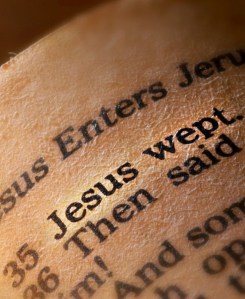 Pada Injil hari ini ada ayat favorit pribadi saya: Maka Menangislah Yesus. Ini adalah ayat terpendek dalam Alkitab, namun juga salah satu yang paling kuat. Namun, dayanya tidak terletak pada kekuatan super Yesus yang dapat memperbanyak roti atau menenangkan badai, tetapi justru pada kemanusiaan Yesus.
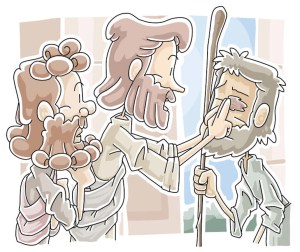 Kebutaan adalah cacat yang paling mengerikan. Kita akan kehilangan penglihatan, hidup dalam kegelapan total untuk seluruh kehidupan kita. Ketidakmampuan untuk melihat keindahan dunia dan orang-orang yang kita cintai. Dalam Perjanjian Lama, kebutaan memberikan seseorang kelemahan besar. Kita tahu cerita Ishak yang ditipu oleh Yakub, anaknya sendiri sehingga ia bisa mendapatkan berkat, dan ini semua dimulai ketika Ishak kehilangan penglihatannya. Menjadi buta juga menghambat mereka untuk memenuhi kewajiban agama. Hukum Musa mengatur bahwa orang buta tidak bisa mempersembahkan korban kepada Tuhan, bahkan hewan kurban pun tidak boleh buta (lihat Im 21-22). Orang-orang berdosa juga dikaitkan dengan kebutaan (lihat Ul 28:29). Itulah sebabnya murid-murid Yesus bertanya apakah kebutaan seseorang disebabkan oleh dosanya sendiri atau orang tuanya.
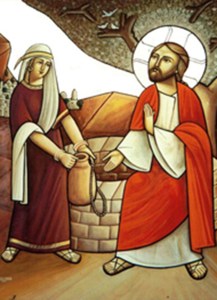 Many of us will see Jesus’ conversation with the Samaritan woman as something ordinary, a chat between a man and a woman. But, if we go back to the time of Jesus, we will discover it as unthinkable. This Samaritan woman embodied what the Jews hated most. Firstly, despite their common ancestry, the Samaritans and the Jews were excommunicating each other. Despite worshipping the same God, they condemned one another as religious heretics and they proclaimed their own religion as the true one. No wonder, sometimes, the encounter between the two turned violent and the Romans had to quell the riots.

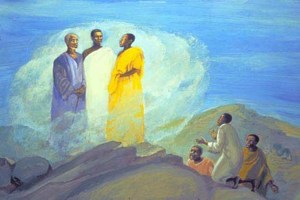 In the Bible, the mountain is the place where God meets His people. On Mount Horeb, Moses saw the burning bush and received his calling to lead Israel out of Egypt’s slavery (see Exo 3). On Mount Sinai, after the liberation of the Hebrews, Moses met the Lord and received the Law in the Mount Sinai (see Exo 19). Again on Mount Horeb, Elijah discovered the gentle presence of God (1 Kings 19:11-15).
 Dalam Alkitab, gunung adalah tempat di mana Allah bertemu umat-Nya. Musa melihat semak duri yang menyala dan menerima panggilannya untuk memimpin Israel keluar dari perbudakan Mesir di Gunung Horeb (lihat Kel 3). Setelah pembebasan, Musa bertemu dengan Tuhan dan menerima Hukum Taurat di Gunung Sinai (lihat Kel 19). Elia menemukan kehadiran Allah yang lembut di Gunung Horeb (1 Raja 19:11-15). Pemazmur juga melihat gunung sebagai tempat Tuhan bersemayam (seperti Mzm 3:5; 24:3). Bahkan, salah satu gelar Tuhan adalah El Shaddai, yang mungkin berarti Tuhan adalah gunung yang kuat (Kej 17:1).
 The reality of temptation has taken place even since the dawn of time. In the book of Genesis, we read that our first parents were tempted by the serpent and unfortunately, they were tricked, fell and sinned. Then one after another a biblical character was put into temptation and fell. Cain committed the first murder and fratricide. David was involved in adultery. Solomon worshipped and built temples for other pagan gods. Fortunately, not all fell during the time of trials. Job was pounded by all kinds of woes, but he never sinned and in fact, praised the Lord in the most miserable situation. And we have Jesus who triumphed over Satan and his temptations in the desert. Yet, why are we tempted? Why are we susceptible to this reality that lures us to sin?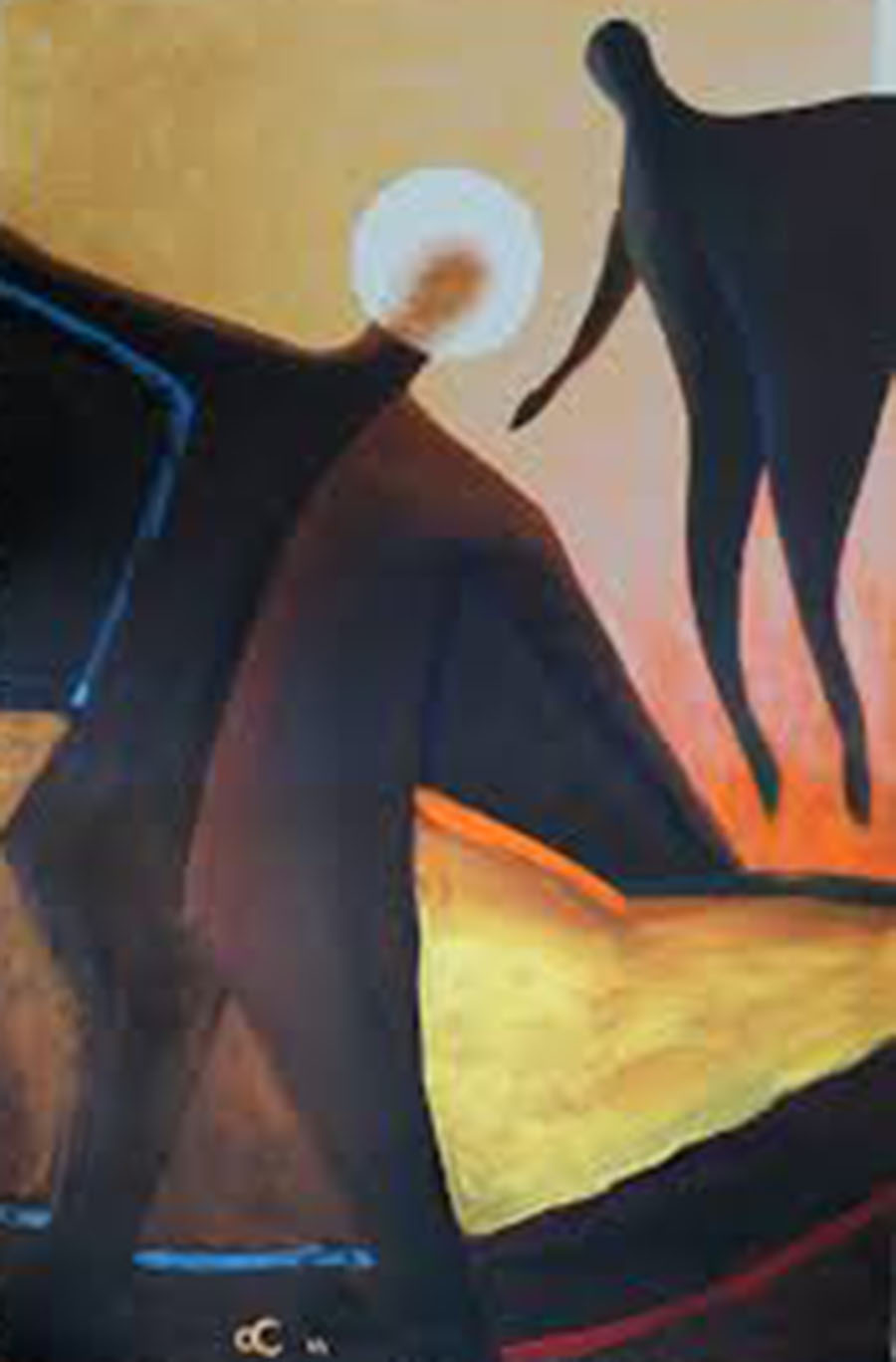
 Pencobaan telah terjadi bahkan sejak awal sejarah umat manusia. Dalam kitab Kejadian, Adam dan Hawa tergoda oleh sang ular dan sayangnya, merekapun tertipu dan berdosa. Kemudian satu demi satu tokoh di Alkitab mengalami pencobaan dan akhirnya jatuh ke dalam dosa. Kain melakukan pembunuhan pertama dalam sejarah manusia saat dia menghabisi saudaranya sendiri. Daud terlibat dalam perzinahan. Salomo menyembah dan membangun kuil untuk berbagai berhala. Syukurlah, tidak semua jatuh pada pencobaan ini. Diterpa oleh segala jenis malapetaka, tapi Ayub tidak pernah berdosa dan memuji Tuhan bahkan dalam situasi yang paling menyedihkan. Dan kita memiliki Yesus yang menang atas Iblis dan godaannya di padang gurun. Namun, mengapa kita terus masuk ke dalam pencobaan? Mengapa kita rentan terhadap godaan sang Jahat yang memikat kita untuk berbuat dosa?
 In Medio Ecclesiae