

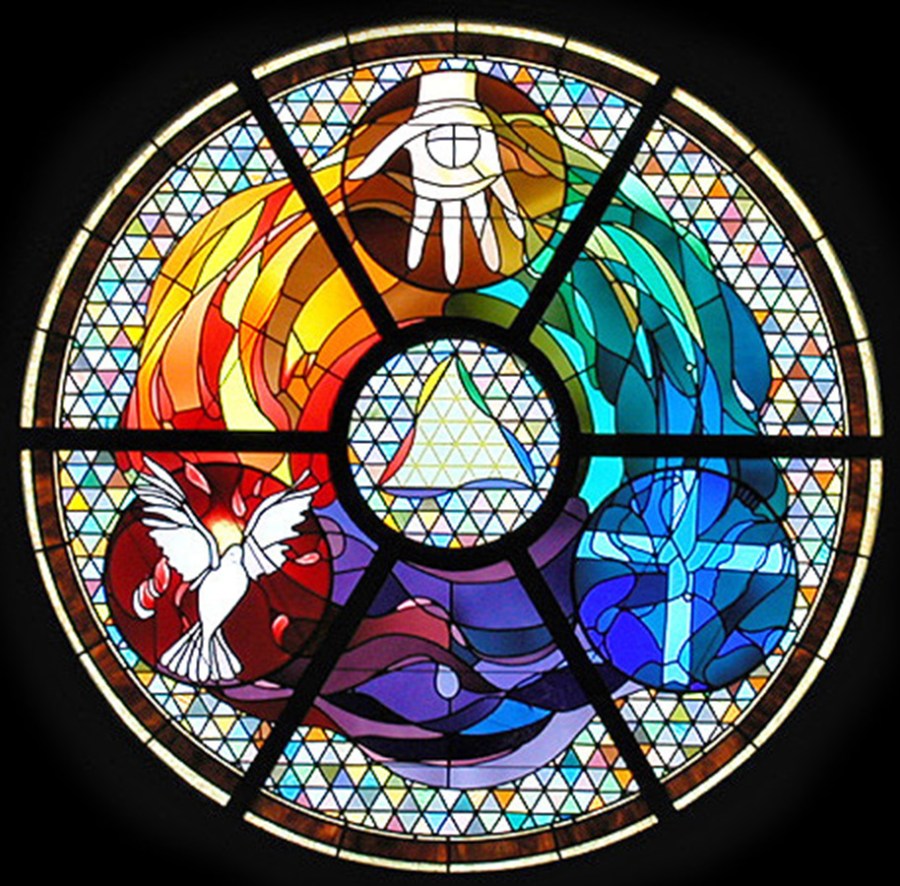
Solemnity of the Most Holy Trinity. June 11, 2017 [John 3:16-18]
“For God so loved the world that he gave his only Son, so that everyone who believes in him might not perish but might have eternal life (Joh 3:16)”
 Today, we are celebrating the Mystery of the Most Holy Trinity. This Mystery is rightly called the mystery of all the mysteries because the Holy Trinity is at the core of our Christian faith. Yet, the fundamental truth we believe is not only extremely difficult to understand, but in fact, it goes beyond our natural reasoning. How is it possible that we believe in three distinct Divine Persons, the Father, the Son and the Holy Spirit, and yet they remain One God? Many great minds have tried to explain, but at the face of such immense truth, the best explanations would seem like a drop of water in the infinite ocean. Yet, we believe it precisely because the mystery is not coming from the human mind, but is revealed to us by God Himself.
The clearest experience of the Trinity in the Scriptures will be coming from St. Matthew. Jesus said to the disciples, “Go, therefore, and make disciples of all nations, baptizing them in the name of the Father, and of the Son, and of the Holy Spirit (Mat 28:19).” We observe that we are baptized for salvation only in “one name”. Surely this one name refers to one God himself. Yet, within this one Holy Name, there are three persons: the Father, the Son and the Holy Spirit.
St. Paul, the apostle to the Gentiles, often uttered blessings in the name of Holy Trinity. In his second letter, he greeted and blessed the Corinthians, saying “The grace of the Lord Jesus Christ and the love of God and the fellowship of the Holy Spirit be with all of you (13:13).” The same practice was also followed by St. Peter. In his first letter, he greeted the fellow Christians, “in the foreknowledge of God the Father, through sanctification by the Spirit, for obedience and sprinkling with the blood of Jesus Christ: may grace and peace be yours in abundance (1:2). It is true that the term Trinity is not in the Bible because the word was coined to facilitate our understanding, but as we have read, the Holy Scriptures revealed the truth and reality of the Holy Trinity.
If then the Holy Trinity is indeed revealed by God Himself, what is the point of having faith in the Holy Trinity then? The answer may be discovered in today’s Gospel. The identity of God is love (see 1 Jn 4:6). The Father loves the Son totally, and the Son loves the Father radically, and the love that unites the Father and the Son is the Holy Spirit. In love, there is the beautiful dynamic of the three loves. Love is one, yet it is three. Now, it makes sense why God so loved the world and sent His only Son for our salvation. All because God is love.
If God is love and He wants to share His love and life with us, we have to get ready to enter that love. And the best way to prepare ourselves is that we need to become love itself. We need to be more loving, forgiving and generous. In short, we have to be more and more like the Trinity. As St. John of the Cross said, “In the twilight of life, God will not judge us on our earthly possessions and human successes, but on how well we have loved.”
Br. Valentinus Bayuhadi Ruseno, OP

 Hari ini, kita merayakan Misteri Tritunggal Mahakudus. Misteri ini disebut sebagai misteri dari semua misteri karena Tritunggal Mahakudus merupakan inti dari iman Kristiani kita. Namun, kebenaran mendasar yang kita percaya ini tidak hanya sangat sulit untuk dipahami, namun pada kenyataannya, melampaui penalaran alamiah kita. Bagaimana mungkin kita mempercayai tiga Pribadi Ilahi yang berbeda, Bapa, Putra dan Roh Kudus, namun tetap satu Tuhan? Banyak pemikir besar seperti St. Agustinus dan St. Thomas Aquinas telah mencoba menjelaskan, namun saat berhadapan dengan kebenaran yang begitu besar, penjelasan terbaik pun sepertinya setetes air di samudera raya. Namun, kita percaya justru karena misteri itu tidak berasal dari manusia, namun diwahyukan kepada kita oleh Tuhan sendiri.
 Mammon in Aramaic, the native language of Jesus, means riches, money or even properties. And nobody can serve both the true God and Mammon. In original Greek, Mathhew chose a stronger word than “to serve” Mammon, but it is to ‘become slave’ of Mammon. A slave is someone who no longer possesses freedom of his or her own; the lives are dependent on their master’s whim. Interesting to note is that the Mammon is not even a living being, and yet, people are freely laying their freedom to be its slave. It is irrational and in fact, unthinkable, but the reality narrates countless stories of people being possessed by riches and do inhuman things.
 Mamon dalam bahasa Aram, bahasa asli Yesus, berarti kekayaan, uang atau bahkan properti. Dan tidak ada yang dapat melayani Allah yang benar dan Mamon bersamaan. Dalam bahasa Yunani, Matius memilih kata yang lebih kuat dari “melayani” Mamon, tapi ia mengunakan untuk ‘menjadi budak’ Mamon. Seorang budak adalah seseorang yang tidak lagi memiliki kebebasan dan kehidupannya tergantung pada kemauan tuannya. Menarik untuk dicatat adalah bahwa Mamon itu bukan makhluk hidup, namun, banyak orang mau meletakkan kebebasan mereka untuk menjadi budaknya. Hal ini tidak rasional dan pada kenyataannya, tak terpikirkan, tetapi kenyataannya banyak orang yang memilih kekayaan dan melakukan hal-hal yang tidak manusiawi demi Mamon.
 Love is not for the fainthearted. It is difficult to love, even those whom we are supposed to love naturally and easily. At times, we feel regret in having committed ourselves in marriage to someone who turns out to be moody, demanding and no longer attractive. Sometimes, we want to kick out our children who become too stubborn and rebellious. Sometimes, we also think that we enter the wrong Congregation or convent.

 The word ‘Pharisee’ has a rather negative connotation for us. In the Gospels, they are the bad guys. They often argued with Jesus and Jesus challenged their way of life. Even some planned to get rid of Jesus (see Mat 12:14). In our time, the term ‘Pharisaic’ simply means hypocrite.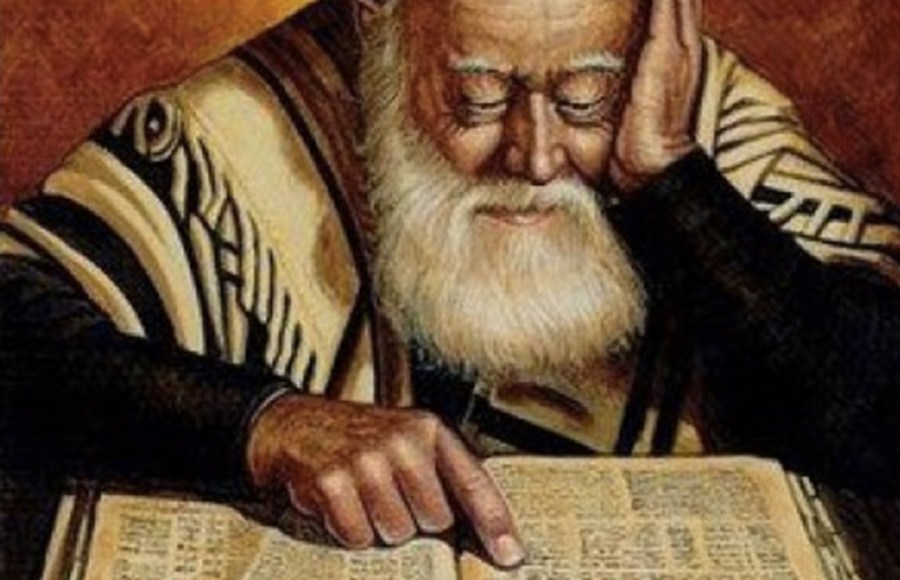
 Kata ‘Farisi’ memiliki konotasi negatif bagi kita. Dalam Injil, mereka adalah lawan-lawan Yesus. Mereka sering berdebat dengan Yesus dan Yesus mengkritik cara hidup mereka. Bahkan beberapa merencanakan untuk menyingkirkan Yesus (lihat Mat 12:14). Pada zaman sekarang, istilah ‘Farisi’ sering kali diasosiasikan dengan kemunafikan.


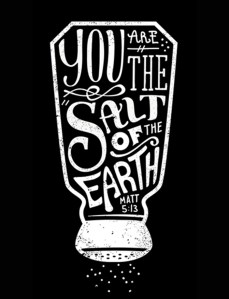 Yesus mengatakan bahwa kita adalah garam dunia. Yesus tidak berkata kita ‘seperti’ garam dunia. Keduanya sangat berbeda, seperti ‘saya adalah Bayu’ jauh berbeda dengan ‘saya seperti Bayu.’ Kalimat pertama memberi hubungan esensial antara subjek dan predikat, sedangkan kalimat kedua hanya hubungan kesamaan yang sementara. Yesus pun tahu persis hal ini.
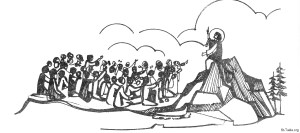 Matthew chapters 5 to 7 are well known as the Jesus’ sermons in the Mount. The section contains classic teachings and parables of Jesus like Beatitudes, the love for one’s enemy and the golden rule. Before Jesus began his sermon, He was sitting down. This gesture actually symbolizes the teaching authority of Jesus. On the Mount, Jesus was the teacher, and as a good teacher, He would expect people to listen attentively to His words. Thus, before Jesus commenced His sermon, He went up to the Mount to separate Himself from the crowd. Jesus knew that being part of the crowd was practically effortless and usually motivated selfishly: to be cured, to be fed and to be entertained. It could turn out to be very superficial, as a mass of people is drawn to one charismatic and powerful leader like Jesus, yet the moment its need is served or its leader is no longer satisfactory, it would be naturally disbanded.
 In Medio Ecclesiae